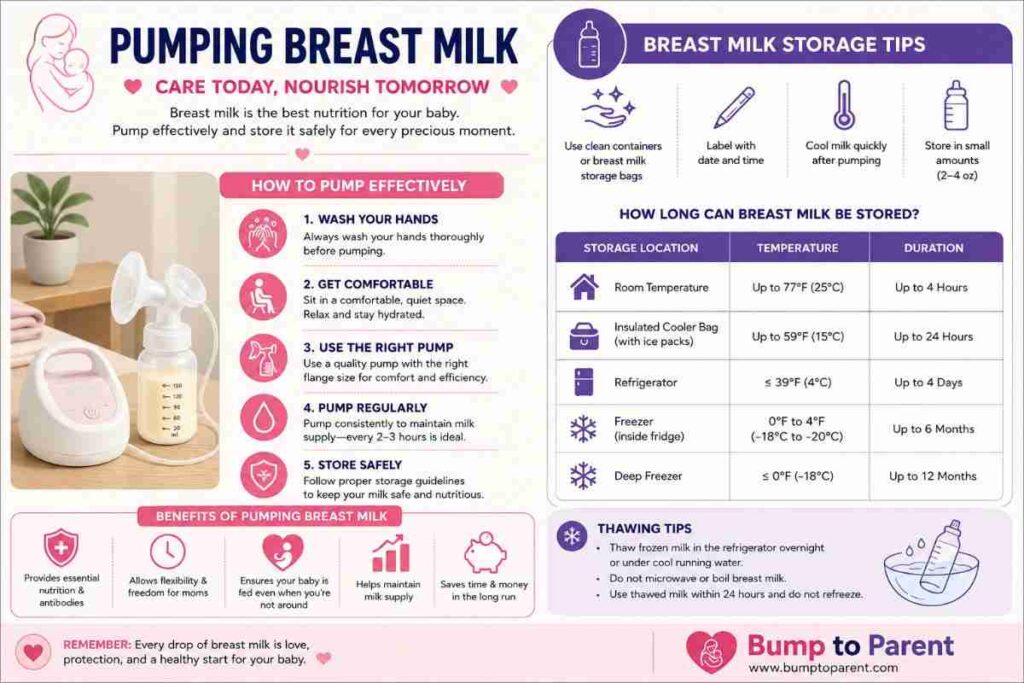

Pumping breast milk can give parents more flexibility while still providing their baby with breast milk. Whether you pump occasionally, pump while returning to work, build a small freezer supply, or exclusively pump, understanding the basics can make the process much easier.
Breast milk can be expressed by hand or with a manual or electric breast pump. Pumping may also help relieve breast fullness and allow another caregiver to feed the baby when the breastfeeding parent is away. When you are separated from your baby or exclusively pumping, expressing milk around as often as your baby drinks breast milk can help maintain milk production.
However, pumping is not a one-size-fits-all process. The amount collected, pumping frequency, comfort, and preferred equipment can differ considerably from one person to another.
This guide explains how pumping works, how often to pump, how to choose and use a breast pump, how to store expressed milk safely, and common pumping mistakes to avoid.
What Is Pumping Breast Milk?
Pumping breast milk, also called expressing milk, is the process of removing milk from the breasts using a breast pump or by hand.
Breast pumps create suction around the nipple and areola to help draw milk from the breast into a collection container. Pumps may be manual, battery-powered, or electrically powered.
Some parents pump in addition to breastfeeding, while others rely primarily or entirely on expressed milk. Pumping can be particularly useful when a baby cannot breastfeed directly, when a parent returns to work or school, or when the parent and baby need to be separated.
Why Do People Pump Breast Milk?
There are many practical reasons for pumping breast milk.
- Returning to Work or School: Pumping can help parents continue providing breast milk after returning to work or education.
- Temporary Separation: Expressed milk allows another caregiver to feed the baby when the breastfeeding parent is away.
- Building a Milk Supply: Some parents pump extra milk for later use.
- Relieving Breast Fullness: Expressing milk can provide relief when breasts become uncomfortably full.
- Supporting Milk Production: Regular milk removal can signal the body to continue producing milk.
- Feeding Difficulties: Pumping may allow a baby to receive breast milk when direct breastfeeding is temporarily difficult.
- Exclusive Pumping: Some parents choose to provide breast milk primarily or entirely through pumping.
Maintaining milk supply depends largely on how frequently milk is removed, either through breastfeeding or expressing milk when the parent and infant are separated.
Types of Breast Pumps
1. Manual Breast Pump
A manual pump is operated by hand and does not require electricity or batteries. It is generally lightweight and can be convenient for occasional pumping or travel.
2. Electric Breast Pump
Electric pumps use a motor to create suction. They can be useful for parents who pump regularly because they require less manual effort.
3. Double Electric Breast Pump
A double pump expresses milk from both breasts simultaneously. This can save time for people who pump frequently.
4. Wearable Breast Pump
Wearable pumps are designed to fit inside a bra and allow greater mobility. They may be convenient for some users, although comfort, suction, milk collection capacity, and fit can vary.
The FDA recommends considering how often you will pump, where you will use the pump, how portable it needs to be, and whether the breast shields fit comfortably when choosing a pump.
When Should You Start Pumping?
There is no single correct time for everyone.
If you expect to return to work or school, the CDC suggests considering pumping a few weeks beforehand. This gives you an opportunity to become comfortable with the pump and gives your baby time to become familiar with receiving milk another way.
If your baby is feeding effectively at the breast and you do not need to be separated, you may not need to begin regular pumping immediately.
Parents who have specific breastfeeding or milk-supply concerns should discuss their individual situation with a healthcare professional or qualified lactation support provider.
Pumping Breast Milk Schedule
| Baby’s Age | Suggested Pumping Frequency | Sample Pumping Times | Notes |
|---|---|---|---|
| Newborn (0–1 Month) | About 8–12 sessions/day if exclusively pumping | 6 AM, 9 AM, 12 PM, 3 PM, 6 PM, 9 PM, 12 AM, 3 AM | Frequent milk removal is especially important during the early weeks. |
| 1–2 Months | About 7–10 sessions/day | 6 AM, 9 AM, 12 PM, 3 PM, 6 PM, 9 PM, 12 AM | Adjust the schedule according to your baby’s feeding pattern and milk supply. |
| 2–3 Months | About 6–8 sessions/day | 6 AM, 9 AM, 12 PM, 3 PM, 6 PM, 9 PM, 1 AM | Some parents may gradually space sessions as feeding patterns change. |
| 3–6 Months | About 5–7 sessions/day | 6 AM, 9 AM, 12 PM, 3 PM, 6 PM, 9 PM | A consistent routine can help maintain milk production. |
| 6–12 Months | About 4–6 sessions/day | 6 AM, 10 AM, 2 PM, 6 PM, 10 PM | Breast milk remains important while complementary foods are introduced. |
| Returning to Work | Approximately every 3–4 hours while away | Before work, 10 AM, 1 PM, 4 PM, after work | Try to pump around the times your baby would normally feed. |
| Occasional Pumping | 1–2 sessions/day as needed | Morning or between breastfeeding sessions | Suitable for building a small supply or occasional bottle feeding. |
| Exclusive Pumping | Follow baby’s feeding pattern | Spread throughout the day and night | Your individual schedule may need adjustment based on milk production and baby’s needs. |
Important: This is a general guide, not a fixed medical schedule. The CDC recommends expressing breast milk about as often as your baby drinks when you are separated from your baby, which can help maintain milk production. Pumping needs vary by parent and baby.
How Often Should You Pump?
Pumping frequency depends on why you are pumping.
If you are away from your baby, try to pump approximately as often as your baby normally drinks breast milk. This can help maintain the milk supply your body is accustomed to producing.
If you exclusively pump, your schedule may need to resemble your baby’s feeding pattern, particularly during the early months.
If you are trying to increase milk production, adding an additional pumping session may sometimes help. However, milk production can be affected by several factors, so persistent concerns about supply are best discussed with a lactation professional or healthcare provider.
Rather than focusing only on the amount collected during one pumping session, consider your overall pattern across the day.
How to Pump Breast Milk? Step by Step
1. Wash Your Hands
Wash your hands thoroughly with soap and water before handling your pump or breast milk. The FDA recommends washing hands before using a breast pump.
2. Check Your Equipment
Make sure the pump parts that come into contact with milk are clean, dry, and properly assembled.
Inspect tubing and other components for damage, moisture, cloudiness, or mold.
3. Find a Comfortable Position
Sit somewhere comfortable with your back supported. Relaxation can make pumping easier for some people.
4. Center the Breast Shield
Place the breast shield so that the nipple is centered in the opening. The shield should fit comfortably rather than pinching or rubbing excessively.
A poorly fitting breast shield may contribute to discomfort and inefficient milk removal.
5. Start With Gentle Suction
Begin with a comfortable suction level. Stronger suction is not automatically better.
If pumping hurts, reduce the suction and reassess the breast shield position and fit.
6. Pump Until Milk Flow Slows
Continue according to your pump’s instructions and your individual routine. Some people experience more than one milk ejection or let-down during a session.
7. Switch or Finish
If using a single pump, switch breasts according to your routine. If using a double pump, both breasts can be expressed simultaneously.
8. Store the Milk Safely
Transfer the milk to an appropriate breast milk storage bag or clean food-grade container with a tight-fitting lid and label it with the date expressed.
Benefits of Pumping Breast Milk
- Maintains Milk Supply: Regular pumping removes milk from the breasts and can help signal the body to continue producing breast milk.
- Provides Feeding Flexibility: Pumped breast milk allows another caregiver to feed the baby when the breastfeeding parent is unavailable.
- Supports Breastfeeding After Returning to Work: Pumping can help parents continue providing breast milk after returning to work or school.
- Helps During Separation: Expressed milk provides a way to continue breast milk feeding when parent and baby are temporarily apart.
- Allows Milk Storage: Pumping makes it possible to refrigerate or freeze breast milk for later use.
- Relieves Breast Fullness: Expressing milk can help relieve uncomfortable breast fullness when the baby cannot feed immediately.
- Supports Exclusive Pumping: Some parents can provide breast milk primarily or entirely through pumping.
- Helps Maintain Feeding Routines: A consistent pumping routine can make breast milk availability more predictable throughout the day.
- Makes Night Feeding Easier: A prepared bottle of expressed milk may allow another caregiver to handle some nighttime feeds.
- Allows Controlled Portions: Pumped milk can be divided into smaller portions to reduce unnecessary waste.
- Provides Backup Milk: Stored breast milk can be useful when unexpected separation or schedule changes occur.
- Supports Babies With Feeding Difficulties: Expressed milk can provide breast milk when direct breastfeeding is temporarily challenging.
- Makes Travel More Convenient: Pumping can help parents maintain access to breast milk while traveling away from home.
- Encourages Shared Caregiving: Pumped milk allows partners or other caregivers to participate in feeding.
- Helps Track Milk Expression: Pumping can make it easier to monitor how much milk is being expressed during each session.
- Offers Greater Scheduling Flexibility: Parents can sometimes plan pumping sessions around work, appointments, or other responsibilities.
- Can Help With Milk Removal: Pumping provides another method of removing milk when direct breastfeeding is not possible.
- Creates a Frozen Milk Supply: Regular pumping may allow parents to build a small reserve of frozen breast milk.
- Supports Continued Breast Milk Feeding: Pumping can help parents continue offering breast milk when circumstances make direct breastfeeding difficult.
- Provides Personal Choice: Pumping gives parents another option for providing breast milk according to their individual circumstances and preferences.
Side Effects of Pumping Breast Milk
Pumping breast milk is generally safe, but some parents may experience temporary discomfort or other problems, particularly when the pump is used incorrectly or too frequently.
- Nipple Soreness: Frequent pumping or excessive suction can make the nipples tender, sensitive, or sore.
- Breast Pain: Incorrect pump settings or prolonged pumping may cause breast discomfort or pain.
- Nipple Irritation: Repeated friction from the breast shield can cause redness, dryness, or irritation.
- Swelling: Poorly fitting breast shields or strong suction may contribute to temporary swelling around the nipple and areola.
- Breast Engorgement: Inconsistent pumping or suddenly changing the pumping schedule can leave the breasts overly full and uncomfortable.
- Blocked Milk Ducts: Inadequate or incomplete milk removal may sometimes contribute to plugged or blocked areas in the breast.
- Milk Leakage: Some parents may experience breast milk leakage between pumping sessions as milk production adjusts.
- Skin Irritation: Friction, moisture, or sensitivity to pump materials can cause irritation around the nipple or breast.
- Bleeding or Cracked Nipples: Excessive suction or an improperly fitted flange can contribute to nipple damage and, in some cases, bleeding.
- Oversupply: Pumping more frequently than necessary can sometimes stimulate the breasts to produce more milk than the baby needs.
- Breast Fullness: Missing regular pumping sessions may cause uncomfortable fullness as milk accumulates.
- Fatigue: Frequent pumping, particularly during nighttime hours, can reduce sleep and contribute to tiredness.
- Time and Routine Stress: Maintaining multiple pumping sessions throughout the day can become physically and emotionally demanding.
- Reduced Milk Output: Stress, illness, poor pump fit, or an ineffective pumping routine may sometimes result in less milk being expressed.
- Skin Bruising: Excessive suction or improper positioning can occasionally cause bruising around the nipple or areola.
- Mastitis Risk: Milk stasis, breast inflammation, or other breastfeeding-related factors can contribute to mastitis, which may cause breast pain, redness, swelling, and fever.
How Much Breast Milk Should You Pump?
There is no universal amount that every parent should produce during a pumping session.
The amount collected can vary based on:
- Time since the last feeding or pumping session
- Baby’s age
- Time of day
- Pump type
- Breast shield fit
- Pumping frequency
- Individual milk production
- Whether the breasts were recently emptied
A small amount from one session does not necessarily mean that you are not producing enough milk for your baby.
The amount of milk needed can differ from baby to baby and can change as babies grow.
How to Store Pumped Breast Milk?
Safe storage is one of the most important parts of pumping.
According to current CDC guidance, freshly expressed breast milk can generally be stored at room temperature of 77°F (25°C) or colder for up to 4 hours, in the refrigerator for up to 4 days, and in the freezer for about 6 months for best quality, with up to 12 months acceptable.
| Storage Location | Freshly Expressed Breast Milk |
|---|---|
| Room temperature, 77°F (25°C) or colder | Up to 4 hours |
| Refrigerator, 40°F (4°C) | Up to 4 days |
| Freezer, 0°F (-18°C) or colder | About 6 months is best; up to 12 months acceptable |
| Insulated cooler with frozen ice packs | Up to 24 hours |
These recommendations are intended for healthy, full-term infants; storage advice can differ for premature or medically fragile babies.
Best Practices for Storing Pumped Milk
- Label Each Container: Write the date the milk was expressed on the container.
- Use Small Portions: Freezing approximately 2–4 ounces at a time can reduce waste because you can thaw only what your baby needs.
- Leave Space When Freezing: Breast milk expands when frozen, so leave space at the top of the container.
- Store Milk Toward the Back: Keep breast milk toward the back of the refrigerator or freezer rather than in the door, where temperatures fluctuate more.
- Use Older Milk First: Follow a first-in, first-out approach and thaw the oldest stored milk first.
How to Thaw and Warm Breast Milk?
Frozen breast milk can be thawed in the refrigerator overnight, under lukewarm running water, or in a container of lukewarm water.
Do not microwave breast milk. Microwaving can create hot spots that may burn a baby’s mouth and may affect milk quality.
Breast milk does not have to be warmed. Some babies are comfortable drinking it cold or at room temperature.
If you warm it, keep the container closed and gently swirl the milk afterward to redistribute separated fat.
Once previously frozen milk has completely thawed in the refrigerator, it should generally be used within 24 hours. Thawed breast milk should not be refrozen.
What If the Baby Does Not Finish the Bottle of Breast Milk?
If your baby starts drinking a bottle but does not finish it, the CDC recommends using the leftover breast milk within 2 hours after the baby finishes feeding. After that period, it should be discarded.
Using smaller feeding portions can help reduce unnecessary waste.
How to Clean a Breast Pump?
Proper pump hygiene is essential because milk residue can support bacterial growth.
After pumping, disassemble the parts that come into contact with breast milk. Rinse them, wash them separately with liquid dish soap and warm water, rinse thoroughly, and allow them to air dry completely on a clean drying surface. The FDA recommends following the manufacturer’s cleaning instructions because specific pump components can differ.
Avoid drying pump parts with a cloth towel because towels can transfer germs.
The pump’s electrical unit should not be submerged in water. Wipe the outside according to the manufacturer’s instructions.
If tubing becomes moldy, it should be replaced.
Can You Share a Breast Pump?
Not every breast pump is designed to be shared.
Manual pumps and powered pumps designed for a single user should not be shared or rented. If using a multiple-user pump, use your own accessories kit and follow the manufacturer’s instructions.
The term “hospital grade” by itself does not guarantee that a pump is safe to share because the FDA does not recognize it as a defined safety category.
Common Pumping Mistakes to Avoid
- Using Excessive Suction: Higher suction is not necessarily more effective and may cause unnecessary discomfort.
- Ignoring Poor Fit: An incorrectly sized breast shield can make pumping uncomfortable.
- Skipping Cleaning: Milk-contact parts should be cleaned properly after use.
- Storing Milk Too Long: Follow recommended storage limits rather than relying only on appearance or smell.
- Microwaving Breast Milk: Microwaving can create dangerous hot spots.
- Buying a Used Single-User Pump: Used single-user pumps may carry contamination risks.
- Focusing Only on Pump Output: One pumping session does not necessarily represent your overall milk production.
- Waiting Until the Last Minute to Learn: Practicing before returning to work or school can make pumping less stressful.
Tips to Make Pumping More Comfortable
Choose a comfortable location where you can sit without rushing.
Keep water nearby and have your pumping supplies organized before beginning.
Make sure the breast shield fits comfortably and the suction is tolerable.
If pumping becomes painful, stop and reassess the pump settings, positioning, and breast shield fit.
A qualified lactation professional can help troubleshoot problems involving latch, pumping technique, milk supply, or equipment.
Pumping Breast Milk at Work
Returning to work does not necessarily mean breastfeeding has to stop.
Planning ahead can make workplace pumping easier. Consider where you will pump, how you will clean your equipment, where you will refrigerate expressed milk, and how you will transport it home.
The CDC recommends storing expressed milk in a refrigerator when possible and keeping it toward the back where temperatures are more stable.
An insulated cooler with frozen ice packs can keep expressed milk cold for up to 24 hours during travel.
When to Talk to a Healthcare Professional?
Consider seeking professional help if pumping causes persistent or significant pain, you repeatedly notice blood in your milk, you develop breast redness or significant swelling, you have concerns about milk production, or your baby is not gaining weight as expected.
A lactation consultant or other qualified healthcare professional can assess your individual situation and help determine whether pump settings, breast shield fit, feeding frequency, or another issue may be contributing to the problem.
Babies who were born prematurely or have medical conditions may require individualized feeding and milk-storage recommendations.
FAQ’s
How long should a pumping session last?
Many pumping sessions take around 15–20 minutes, but the ideal duration varies depending on your milk flow, pump, and individual needs.
How much breast milk should I pump each time?
There is no fixed amount. Pumping output can vary depending on your baby’s age, feeding schedule, time of day, and how recently you last fed or pumped.
Can I pump and breastfeed at the same time?
Yes. Many parents breastfeed directly and pump at other times to collect extra milk or maintain a supply when separated from their baby.
How long can freshly pumped breast milk stay at room temperature?
Freshly expressed breast milk can generally stay at room temperature of 77°F (25°C) or colder for up to 4 hours.
How long does pumped breast milk last in the refrigerator?
Freshly expressed breast milk can generally be stored in the refrigerator for up to 4 days at 40°F (4°C) or colder.
Can pumped breast milk be frozen?
Yes. Freshly expressed breast milk can be frozen. The CDC states that about 6 months is best for quality, while up to 12 months is acceptable when stored at 0°F (-18°C) or colder.
Can I microwave breast milk?
No. Microwaving breast milk can create hot spots that may burn your baby’s mouth. Warm it in lukewarm water instead.
Can I combine breast milk from different pumping sessions?
Yes, but freshly expressed milk should be cooled in the refrigerator before being combined with already chilled milk. Avoid adding warm milk directly to frozen milk.
Does pumping increase milk supply?
Frequent and effective milk removal can encourage the body to produce more milk, although individual results vary.
Is pumping breast milk painful?
Pumping should not be painful. Persistent pain may indicate excessive suction, an improperly positioned breast shield, or an incorrect flange size and should be addressed.
Can I pump breast milk at work?
Yes. Many parents pump at work and transport the milk home in an insulated cooler with frozen ice packs when refrigeration is unavailable.
Can I use a second-hand breast pump?
The FDA advises against sharing single-user breast pumps. If using a multi-user pump, follow the manufacturer’s instructions and use your own accessory kit.
Is Pumping Breast Milk Good?
Yes, pumping breast milk can be a useful way to provide breast milk to your baby while allowing flexibility for feeding, work, travel, or temporary separation. It can also help maintain milk production when direct breastfeeding is not possible.
How Quickly Do Breasts Refill After Pumping?
Breasts are never completely empty and continue producing milk after pumping. Milk production begins again immediately, but the amount available can vary. Many parents notice that their breasts feel fuller again within a few hours, although the exact timing differs from person to person.
Is Pumped Milk as Good as Breast Milk?
Yes. Pumped breast milk provides the same breast milk nutrients and immune-supporting components when handled and stored safely.
How Much Pumped Breast Milk Does a 1-Week-Old Baby Need?
A 1-week-old usually takes small, frequent feeds, but the exact amount varies by baby.
Can Babies Drink Cold Breast Milk?
Yes. Babies can safely drink breast milk cold or at room temperature if they accept it.
Is Breast Milk Safe After 2 Hours?
Fresh breast milk can generally stay at room temperature for up to 4 hours, but leftover milk from a feeding should be used within 2 hours.
Can I Reuse a Breast Pump Within 4 Hours?
Pump parts should ideally be cleaned after each use; follow current CDC guidance and the manufacturer’s cleaning instructions.
What Are the Signs of Spoiled Breast Milk?
Spoiled milk may have an unusually sour smell or taste, but natural separation or a soapy smell does not necessarily mean it is spoiled.
Can I Give My Baby 5-Day-Old Breast Milk?
Fresh breast milk refrigerated for 5 days is beyond the CDC’s recommended 4-day storage limit, so it should be discarded.
Can I Reuse a Bottle of Breast Milk?
Yes, leftover milk should generally be used within 2 hours after the baby finishes feeding.
Can I Feed Baby Breast Milk Straight From the Fridge?
Yes. Breast milk can be fed cold if your baby accepts it.
Can I Mix Breast Milk From Different Days?
Yes, but cool freshly expressed milk before combining it with older refrigerated milk and follow the storage time of the oldest milk.
Can I Pump Into the Same Bottle All Day?
It is safer to use clean containers for separate sessions and refrigerate freshly expressed milk promptly.
Can I Mix Breast Milk From Last Night and This Morning?
Yes. Refrigerate the morning milk first, then combine it with the older chilled milk and follow the storage time of the older milk.
Final Thoughts
Pumping breast milk can be a valuable tool for parents who want flexibility while continuing to provide breast milk. Whether you pump once occasionally or rely on pumping for most or all feeds, the key principles are comfort, consistent milk removal when needed, appropriate equipment, careful cleaning, and safe storage.
There is no single pumping schedule that works for every parent. Your baby’s feeding needs, your milk production, work or school schedule, health, and personal preferences all matter.
If pumping is painful, milk production is persistently lower than expected, or you are uncertain about feeding or storage for a medically vulnerable baby, seek individualized guidance from a healthcare professional or qualified lactation support provider.
Sources / References:
About the Author:
Kirti Solanki — Health Content Researcher
Kirti Solanki creates reader-friendly health content based on reputable medical and public-health sources, with a focus on making complex health information practical and easy to understand.
Disclaimer:
This article is for general educational purposes only and does not replace professional medical advice, diagnosis, or treatment. Breastfeeding and pumping needs vary, so consult a qualified healthcare professional or lactation specialist for personalized guidance.
Also Read: