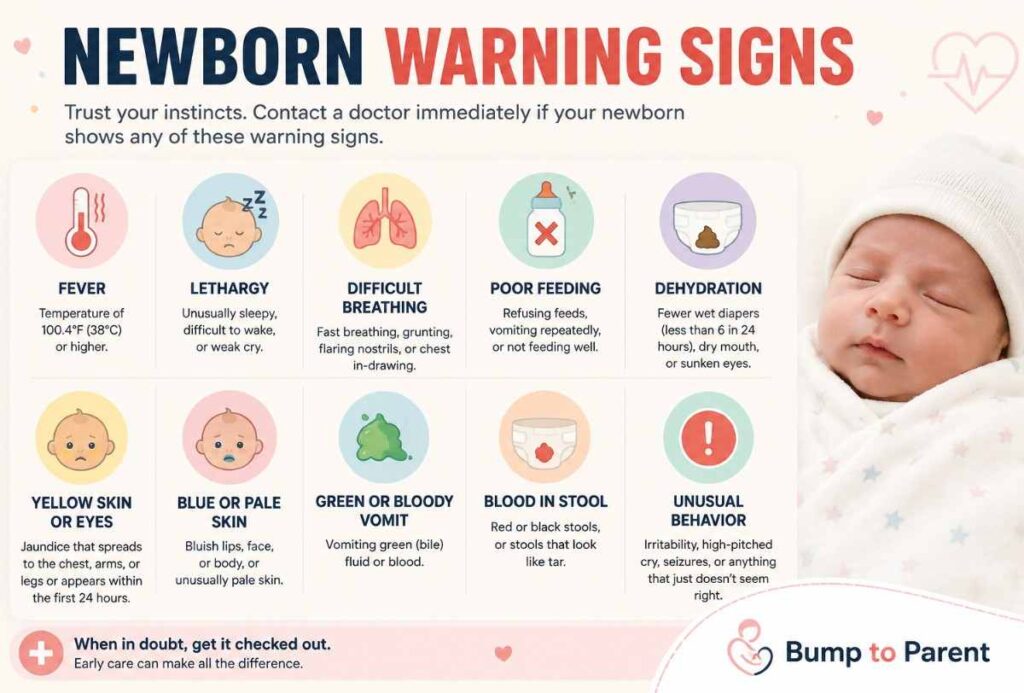

The first few weeks with a newborn can feel like a beautiful mix of excitement, exhaustion, and uncertainty. Newborn babies sleep a lot, cry for many different reasons, feed frequently, and can look slightly different from one day to the next. Because of this, it is not always easy for new parents to know what is normal and what needs medical attention.
Knowing the warning signs can make a big difference. A newborn’s health can sometimes change quickly, and symptoms that appear mild in an older child may be more concerning in a baby during the first 28 days of life. The World Health Organization (WHO) identifies problems such as poor feeding, reduced activity, breathing difficulty, fever, seizures, jaundice, and a baby feeling unusually cold as important newborn danger signs.
This guide explains the major newborn warning signs in simple language, what parents should look for, and when to seek urgent medical care.
What Are Newborn Warning Signs?
Newborn warning signs are physical or behavioral changes that may indicate infection, breathing problems, dehydration, jaundice, low blood sugar, or another medical condition requiring prompt assessment.
The newborn period refers to the first 28 days after birth. This is one of the most vulnerable periods of childhood, which is why early recognition of serious symptoms is so important.
Not every unusual behavior means that something is seriously wrong. Newborns commonly sneeze, hiccup, spit up small amounts of milk, sleep frequently, and have irregular movements. The concern is when a change is significant, persistent, sudden, or occurs together with other symptoms.
Important: If a newborn looks seriously unwell, has trouble breathing, has a seizure, is difficult to wake, or has a temperature of 38°C (100.4°F) or higher, seek urgent medical care rather than waiting to see whether the symptoms improve.
20 Newborn Warning Signs Parents Should Never Ignore
1. Difficulty Breathing
Breathing problems are among the most important newborn warning signs. Watch for very fast breathing, grunting, pauses associated with distress, nostril flaring, or the skin between or below the ribs pulling inward with each breath.
WHO newborn-care materials describe breathing faster than 60 breaths per minute and significant chest indrawing as danger signs.
If your baby’s lips, tongue, or skin appear blue or gray, or the baby seems unable to breathe comfortably, seek emergency medical care immediately.
2. Fever
A temperature of 38°C (100.4°F) or higher in a newborn requires urgent medical assessment.
Newborn infections can become serious quickly, and a baby may not always show obvious symptoms at first. Do not assume that a fever is simply caused by warm clothing, teething, or a minor illness.
Use a reliable thermometer rather than relying only on how the baby’s forehead feels.
3. Baby Feels Abnormally Cold
Parents often focus on fever, but an unusually low body temperature can also be concerning in a newborn.
A baby who feels cold despite appropriate warming, particularly when accompanied by poor feeding, lethargy, or breathing problems, should be medically assessed. WHO lists a baby feeling cold as an important danger sign.
4. Poor Feeding or Refusing Feeds
Feeding is one of the best everyday ways parents can monitor a newborn’s health.
A baby who suddenly stops feeding, has difficulty sucking, cannot swallow properly, repeatedly falls asleep before feeding, or takes substantially less milk than usual may be unwell.
Poor feeding can occur with infections, breathing difficulties, low blood sugar, jaundice, prematurity, or other conditions. WHO specifically identifies feeding problems as a newborn danger sign.
5. Extreme Sleepiness or Difficulty Waking
Newborns naturally sleep for much of the day, so sleepiness alone is not necessarily abnormal.
The warning sign is a noticeable change from the baby’s usual behavior. If your baby is unusually difficult to wake, does not respond normally to touch or feeding attempts, or seems much less alert than usual, contact a healthcare professional urgently.
Reduced activity and difficulty waking can be signs of serious illness.
6. Weak Cry or No Normal Response
A newborn’s cry can vary, but a suddenly weak, unusual, or barely audible cry may deserve attention, especially if the baby also appears sleepy or is not feeding well.
A baby who is unusually floppy, has very little movement, or does not respond when gently stimulated needs prompt medical assessment. WHO newborn-care guidance identifies reduced or absent movement as a danger sign.
7. Seizures or Repetitive Jerking Movements
Seizures in a newborn require immediate medical attention.
Parents may notice rhythmic jerking of the arms or legs, unusual stiffening, staring, abnormal eye movements, or episodes in which the baby becomes unresponsive. Not every newborn movement is a seizure; newborns can have normal startles and jitteriness.
However, parents should not try to diagnose the movement themselves. If you suspect a seizure, seek emergency medical care immediately.
8. Yellow Skin or Eyes That Appears Early or Becomes Severe
Mild jaundice is common in newborns, but certain patterns require urgent assessment.
Yellowing during the first 24 hours after birth is particularly concerning. Yellow color that becomes more intense, spreads to the palms and soles, or occurs with poor feeding, unusual sleepiness, fever, or other illness signs should not be ignored.
Parents should also contact a healthcare professional if jaundice is worsening or not improving as expected.
9. No Wet Diapers or Significantly Fewer Wet Diapers
Wet diapers provide useful clues about hydration.
A newborn who suddenly produces very few or no wet diapers, particularly while feeding poorly or vomiting, may be dehydrated or seriously unwell.
The expected number of wet diapers changes during the first days of life, so parents should discuss diaper expectations with their baby’s pediatrician or maternity care team.
10. Repeated or Persistent Vomiting
Small amounts of milk coming back after feeding can be common in newborns.
Repeated, forceful, large-volume, or green-colored vomiting is different and should be assessed promptly. Vomiting accompanied by poor feeding, lethargy, fever, abdominal swelling, or fewer wet diapers is particularly concerning.
WHO lists persistent vomiting among symptoms requiring urgent attention.
11. Green Vomit
Green or bright-green vomit can indicate bile and may sometimes signal an intestinal obstruction or another serious problem.
Do not wait for several episodes to see whether it disappears. A newborn with green vomit should receive urgent medical assessment.
12. Swollen, Red, or Infected Umbilical Cord
The umbilical stump should gradually dry and separate.
Redness spreading onto the surrounding skin, swelling, pus, bleeding that does not stop, foul-smelling discharge, or increasing tenderness around the cord can indicate infection.
WHO recommends hygienic cord care and advises families to seek care for signs such as an irritated cord with pus or blood.
Keep the cord clean and dry and avoid applying substances to it unless specifically recommended by your healthcare professional.
13. Blue or Gray Color
A blue or gray color around the lips, tongue, or face can indicate inadequate oxygen and should be treated as an emergency, particularly when accompanied by breathing difficulty.
Temporary color changes of hands and feet can sometimes occur in newborns, but persistent blue coloring or blue coloring of the tongue and inside of the mouth is much more concerning.
14. Persistent Coughing, Choking, or Difficulty During Feeds
Occasional coughing during feeding can happen, but repeated choking, coughing, struggling to breathe while feeding, or becoming exhausted during feeds should be evaluated.
Feeding and breathing are closely connected in newborns. A baby who cannot coordinate sucking, swallowing, and breathing may need medical assessment.
15. Swollen or Pus-Filled Eyes
A small amount of eye discharge can occur, but swollen eyelids, significant redness, or pus-like discharge can be signs of infection.
Newborn eye infections can require prompt treatment, so parents should contact a healthcare professional rather than treating the eyes with home remedies. WHO newborn guidance includes pus from the eyes among signs that need attention.
16. Skin Pustules or Spreading Redness
A few harmless newborn skin changes can occur, but numerous pustules, rapidly spreading redness, swelling, or skin that appears infected should be assessed.
Skin infections can spread quickly in very young babies. Seek medical advice if the rash is accompanied by fever, poor feeding, unusual sleepiness, or breathing problems.
17. Persistent Diarrhea
Newborn stools can be loose, especially in breastfed babies, so parents should not judge diarrhea by adult standards alone.
A sudden and significant change in stool frequency or appearance, especially when accompanied by blood, vomiting, fever, poor feeding, or fewer wet diapers, warrants medical advice.
WHO identifies diarrhea, particularly when accompanied by fever or dehydration signs, as a warning sign.
18. Blood in the Stool or Vomit
Blood in a newborn’s stool or vomit should not be ignored.
Although there can occasionally be less serious explanations, blood may also indicate gastrointestinal problems, infection, or other conditions requiring evaluation.
Contact your baby’s healthcare professional promptly, and seek emergency care if there is a large amount of blood or the baby appears unwell.
19. A Bulging Soft Spot
The soft spot on the top of a newborn’s head, called the fontanelle, normally has a certain degree of softness and may appear slightly different depending on the baby’s position.
A persistently bulging fontanelle, particularly when accompanied by fever, unusual sleepiness, irritability, vomiting, or seizures, requires urgent medical assessment. WHO identifies a bulging fontanelle among possible signs associated with serious newborn infection.
20. A Parent’s Strong Feeling That Something Is Wrong
Sometimes the most important warning sign is simply that your baby does not seem like themselves.
Parents spend more time observing their newborn than almost anyone else. If your baby suddenly behaves differently, looks unusually pale or unwell, feeds differently, becomes much less active, or simply seems seriously ill, it is reasonable to contact a healthcare professional.
WHO specifically encourages families to trust their instincts and seek advice when something about the baby’s health is worrying them.
When Should You Seek Emergency Care?
Do not wait for a routine appointment if your newborn has:
- Difficulty breathing or severe chest indrawing
- Blue or gray lips or tongue
- A seizure or repeated abnormal jerking
- A temperature of 38°C (100.4°F) or higher
- Very low body temperature or the baby feels unusually cold
- Severe difficulty waking or unusual unresponsiveness
- Refusal to feed or inability to suck
- Severe or persistent vomiting
- Green vomit
- Significant bleeding
- Severe jaundice with unusual sleepiness or poor feeding
- No wet diapers together with other signs of illness
These signs can indicate serious illness and need prompt medical evaluation.
Common Newborn Behaviors That May Be Normal
Knowing what can be normal can help parents avoid unnecessary panic.
Many healthy newborns:
- Sleep frequently and wake repeatedly for feeds.
- Sneeze without having a cold.
- Have occasional hiccups.
- Spit up small amounts of milk.
- Have irregular breathing patterns during sleep.
- Startle suddenly in response to sound or movement.
- Have mild skin peeling during the early days.
- Have some temporary changes in skin color of the hands and feet.
- Cry frequently, particularly when hungry, uncomfortable, or tired.
The important point is to look at the whole baby, not just one isolated symptom. A baby who spits up a small amount but is alert, feeding normally, breathing comfortably, and producing wet diapers is very different from a baby who is repeatedly vomiting and becoming lethargic.
How Parents Can Monitor a Newborn at Home
You do not need to become a medical professional to monitor your newborn. A simple daily awareness routine can be helpful.
1. Watch Feeding
Notice whether your baby is feeding with their usual strength and frequency. Sudden changes deserve attention.
2. Track Wet and Dirty Diapers
Diapers provide useful information about hydration and feeding. Ask your baby’s healthcare provider what pattern is expected for your baby’s age.
3. Observe Breathing
Look at your baby’s chest while they are calm. Watch for persistent fast breathing, grunting, nostril flaring, or the chest pulling inward.
4. Check Temperature When Your Baby Seems Unwell
If your newborn feels unusually hot or cold or behaves differently, use a reliable thermometer and follow your healthcare professional’s advice.
5. Look at Skin and Eyes
Notice significant changes in color, particularly increasing yellowing, blue or gray discoloration, or unusual paleness.
6. Keep the Umbilical Cord Clean and Dry
Follow the cord-care instructions provided by your maternity or pediatric care team. WHO recommends keeping the umbilical cord dry and avoiding applications such as ointments unless medically advised.
Why Newborn Warning Signs Should Be Taken Seriously
Newborns have developing immune, respiratory, digestive, and nervous systems. Serious infections and other medical conditions can progress rapidly, and symptoms may be less obvious than they are in older children.
WHO identifies premature birth, birth complications, neonatal infections, and congenital abnormalities among major causes of newborn deaths globally. Early recognition and access to appropriate care are therefore important parts of newborn health.
This does not mean parents should be frightened by every change. Instead, the goal is to recognize significant departures from normal and act promptly when something looks concerning.
Tips for New Parents
- Keep your pediatrician or newborn care team’s contact information easily available.
- Know where the nearest emergency department or hospital capable of caring for newborns is located.
- Do not rely on internet searches to diagnose a seriously ill newborn.
- Avoid giving medicines, herbal preparations, or home remedies to a newborn unless directed by an appropriate healthcare professional.
- If you are worried, explain exactly what has changed: feeding, breathing, temperature, diapers, alertness, skin color, vomiting, or behavior.
- When seeking medical care, take information about the baby’s birth, gestational age, feeding pattern, medications or supplements, vaccination history, and recent symptoms when available.
FAQs
Is it normal for a newborn to sleep all day?
Newborns sleep frequently, but they should wake for feeds and have periods of normal alertness. If your baby is unusually difficult to wake or cannot be awakened enough to feed, contact a healthcare professional promptly.
What temperature is dangerous for a newborn?
A temperature of 38°C (100.4°F) or higher in a baby younger than 3 months requires urgent medical assessment.
Is fast breathing normal in newborns?
Newborns can have irregular breathing, but persistent rapid breathing, grunting, nostril flaring, chest pulling inward, or blue coloring can indicate a breathing problem and requires medical attention.
How do I know if my newborn is not getting enough milk?
Possible signs include poor sucking, consistently refusing feeds, unusually long or difficult feeds, fewer wet diapers, excessive sleepiness, or poor weight gain. Contact your baby’s healthcare professional if feeding suddenly changes.
Is newborn jaundice always dangerous?
No. Mild jaundice is common in newborns. However, jaundice appearing during the first 24 hours, rapidly worsening yellowing, yellow palms or soles, or jaundice combined with poor feeding or unusual sleepiness requires prompt medical evaluation.
What does green vomit mean in a newborn?
Green or bright-green vomit can contain bile and may indicate an intestinal problem. A newborn with green vomit should receive urgent medical assessment.
How many wet diapers should a newborn have?
The number changes during the first few days after birth. As feeding becomes established, parents generally expect several wet diapers each day. A sudden decrease in wet diapers, especially with poor feeding or vomiting, can be a sign of dehydration.
Is it normal for a newborn to spit up milk?
Small amounts of milk coming back up after feeding can be normal. Forceful, repeated, large-volume, or green vomiting is different and should be medically assessed.
When is newborn crying a warning sign?
Crying is normal, but a sudden weak or unusual cry, inconsolable crying accompanied by fever or vomiting, or crying with unusual sleepiness or poor feeding can require medical evaluation.
Is a red umbilical cord normal?
A small amount of dried blood around the umbilical stump can occur. Spreading redness, swelling, pus, foul-smelling discharge, or increasing tenderness may indicate infection and should be checked by a healthcare professional.
Can a newborn infection develop quickly?
Yes. Newborn infections can become serious quickly. Fever, unusually low temperature, poor feeding, breathing difficulty, reduced movement, extreme sleepiness, or seizures should be taken seriously.
What should I do if my newborn has a seizure?
Seek emergency medical care immediately. Do not put anything in the baby’s mouth or attempt to restrain the baby’s movements.
What if my newborn feels cold?
If your baby feels unusually cold, warm them appropriately according to medical guidance and check their temperature. If the temperature remains low or the baby is also sleepy, feeding poorly, or breathing abnormally, seek urgent medical care.
Can parents trust their instincts about newborn health?
Yes. If your baby suddenly seems different or seriously unwell, it is appropriate to contact a healthcare professional even if you cannot identify a specific symptom.
Is it normal for a newborn to sleep a lot?
Yes, newborns normally sleep frequently. However, being unusually difficult to wake, refusing feeds, or showing significantly reduced activity is not something to ignore.
What should I do if my newborn is not feeding?
Contact your baby’s healthcare professional promptly. If the baby cannot suck, refuses several feeds, is very sleepy, or has breathing difficulty, seek urgent medical care.
Can newborn infections develop quickly?
Yes. Serious infections can progress quickly in newborns, which is why signs such as fever, low temperature, poor feeding, reduced activity, breathing difficulty, or seizures should be taken seriously.
Final Thoughts
Caring for a newborn is a learning experience, and it is completely normal for parents to question whether a particular change is normal. The most useful approach is to become familiar with your baby’s usual feeding, sleeping, breathing, diaper, and behavior patterns.
Warning signs such as breathing difficulty, fever, poor feeding, unusual sleepiness, seizures, severe jaundice, abnormal temperature, or signs of infection should never be dismissed. Prompt medical assessment can be especially important during the first 28 days of life.
When in doubt, it is better to contact a qualified healthcare professional and describe what you are seeing. Newborn care is not about being perfectly confident—it is about recognizing when your baby may need help and acting without unnecessary delay.
Sources / References:
About the Author:
Written by: Kirti Solanki, Health Content Researcher
Kirti Solanki creates reader-friendly health and wellness content using reputable medical and public-health sources. Her work focuses on presenting complex health information in a clear, practical, and easy-to-understand format.
Disclaimer:
This article is for general educational purposes only and does not replace professional medical advice, diagnosis, or treatment. If a newborn shows any serious or concerning symptom, contact a qualified healthcare professional or seek emergency medical care promptly.
Also Read: