
Pregnancy is one of the most important stages in a woman’s life, and nutrition plays a vital role in supporting both the mother and the growing baby. A balanced pregnancy diet helps provide the nutrients needed for healthy fetal development, reduces the risk of complications, and supports the mother’s changing body throughout each trimester.
Contrary to the popular saying, pregnancy is not about “eating for two.” Instead, it’s about eating smarter by choosing nutrient-dense foods that supply vitamins, minerals, protein, healthy fats, and fiber.
This complete pregnancy diet plan explains what to eat, what to avoid, recommended nutrients, sample meal plans, and practical tips to help you maintain a healthy pregnancy.
Why Is a Healthy Pregnancy Diet Important?
A nutritious pregnancy diet supports:
- Healthy fetal growth and organ development
- Proper brain and nervous system development
- Strong bones and teeth
- Healthy birth weight
- Reduced risk of neural tube defects
- Better maternal energy levels
- Lower risk of gestational diabetes and high blood pressure
- Healthy immune function
- Faster postpartum recovery
Good nutrition before and during pregnancy can have lifelong benefits for your child.
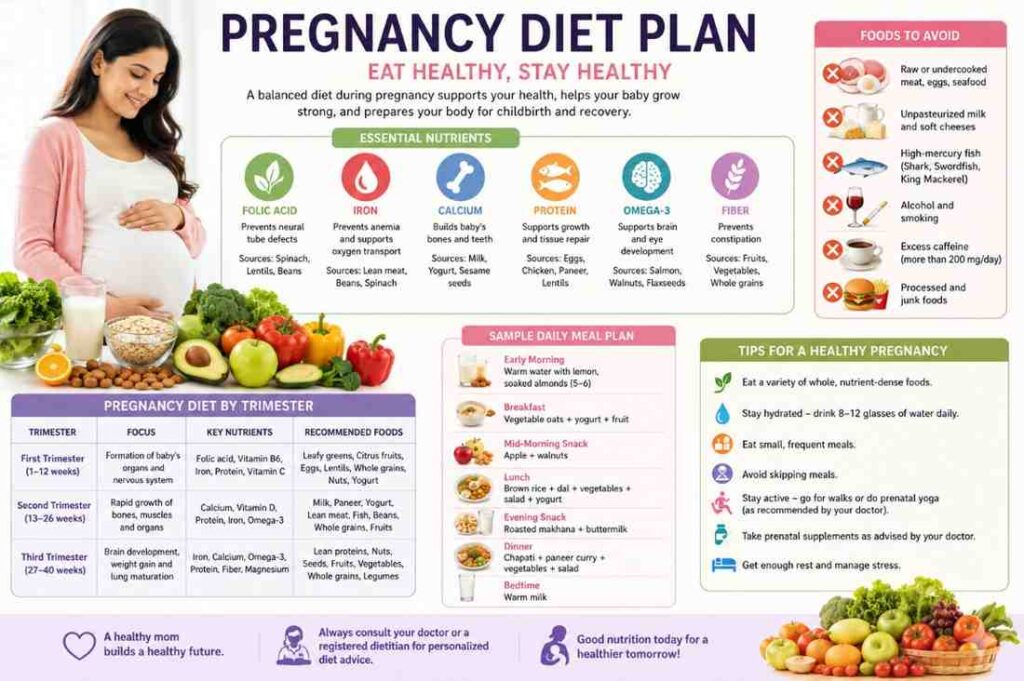
Essential Nutrients During Pregnancy
| Nutrient | Why It’s Important | Best Food Sources |
|---|---|---|
| Folic Acid | Prevents neural tube defects | Spinach, lentils, beans, fortified cereals |
| Iron | Prevents anemia and supports oxygen transport | Lean meat, beans, spinach, tofu |
| Calcium | Builds baby’s bones and teeth | Milk, yogurt, cheese, sesame seeds |
| Vitamin D | Improves calcium absorption | Eggs, fortified dairy, sunlight, fatty fish |
| Protein | Supports baby’s growth | Eggs, chicken, fish, paneer, lentils |
| Omega-3 Fatty Acids | Brain and eye development | Salmon, walnuts, flaxseeds |
| Iodine | Supports thyroid and brain development | Dairy, iodized salt, seafood |
| Zinc | Cell growth and immunity | Pumpkin seeds, meat, beans |
| Fiber | Prevents constipation | Fruits, vegetables, oats, whole grains |
| Vitamin C | Helps absorb iron | Citrus fruits, guava, kiwi, strawberries |
Daily Pregnancy Diet Plan
Early Morning
Start your day with one of the following:
- Warm water with lemon
- A glass of milk
- Soaked almonds (5–8)
- Walnuts (2–3)
- Fresh fruit
These foods provide hydration and healthy fats while helping maintain energy.
Breakfast
A nutritious breakfast should include protein, whole grains, and fruits.
Healthy choices include:
- Vegetable oats with yogurt
- Whole wheat toast with peanut butter
- Vegetable poha with peanuts
- Idli with sambar
- Vegetable upma
- Egg omelet with whole wheat toast
- Greek yogurt with berries and oats
Mid-Morning Snack
Choose light, nutrient-rich snacks such as:
- Seasonal fruits
- Coconut water
- Buttermilk
- Mixed nuts
- Roasted chickpeas
- Fruit smoothie without added sugar
Lunch
A balanced lunch should include carbohydrates, protein, vegetables, and healthy fats.
Example meal:
- Brown rice or whole wheat chapati
- Dal or beans
- Grilled chicken, fish, paneer, or tofu
- Mixed vegetable sabzi
- Fresh salad
- Yogurt
Evening Snack
Healthy options include:
- Sprout salad
- Boiled corn
- Fruit with peanut butter
- Vegetable sandwich
- Handful of nuts
- Roasted makhana
Dinner
Dinner should be lighter but nutrient-rich.
Example:
- Chapati
- Vegetable curry
- Dal
- Paneer or grilled fish
- Salad
Avoid eating very late at night.
Bedtime Snack
Choose foods rich in protein and calcium.
Examples include:
- Warm milk
- Banana
- Yogurt
- Handful of nuts
This may also help reduce nighttime hunger.
Sample Pregnancy Meal Plan
| Time | Meal |
| Early Morning | Warm water + soaked almonds |
| Breakfast | Vegetable oats + yogurt + fruit |
| Mid-Morning | Apple + walnuts |
| Lunch | Brown rice + dal + vegetables + salad |
| Evening Snack | Roasted makhana + buttermilk |
| Dinner | Chapati + paneer curry + vegetables |
| Bedtime | Warm milk |
Best Foods to Eat During Pregnancy
1. Eggs
Eggs provide high-quality protein, choline, vitamin D, and healthy fats.
2. Dairy Products
Milk, yogurt, and cheese supply calcium, protein, and probiotics.
3. Green Leafy Vegetables
Spinach, kale, fenugreek, and mustard greens provide folate, iron, calcium, and fiber.
4. Lentils and Beans
Rich in plant protein, folate, iron, and fiber.
5. Fruits
Include a variety of fruits such as:
- Apples
- Oranges
- Bananas
- Berries
- Guava
- Mangoes (in moderation)
- Kiwi
6. Whole Grains
Choose:
- Brown rice
- Oats
- Quinoa
- Whole wheat
- Millets
These provide long-lasting energy and fiber.
7. Lean Protein
Healthy protein choices include:
- Chicken
- Turkey
- Fish low in mercury
- Paneer
- Tofu
8. Healthy Fats
Consume healthy fats from:
- Avocados
- Nuts
- Seeds
- Olive oil
- Fatty fish
9. Fish
Low-mercury fish provide omega-3 fatty acids essential for brain development.
Safe options include salmon, sardines, and trout.
10. Hydrating Foods
Stay hydrated with:
- Water
- Coconut water
- Soups
- Fruits with high water content
- Homemade lemonade
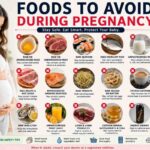
Foods to Avoid During Pregnancy
Some foods increase the risk of foodborne illness or may harm fetal development.
Avoid:
- Raw eggs
- Raw seafood
- Unpasteurized milk
- Soft cheeses made from unpasteurized milk
- High-mercury fish
- Raw sprouts
- Excess caffeine
- Alcohol
- Tobacco products
- Undercooked meat
- Processed junk food
- Excess sugary drinks
Always wash fruits and vegetables thoroughly before eating.
Pregnancy Diet Plan by Trimester
| Trimester | Baby’s Development Focus | Key Nutrients | Recommended Foods | Foods to Limit/Avoid |
|---|---|---|---|---|
| First Trimester (Weeks 1–12) | Formation of the brain, spinal cord, and major organs | Folic acid, Vitamin B6, Iron, Protein, Vitamin C | Spinach, lentils, beans, fortified cereals, citrus fruits, eggs, yogurt, whole grains, bananas, nuts | Alcohol, raw or undercooked eggs, unpasteurized dairy, excessive caffeine, high-mercury fish |
| Second Trimester (Weeks 13–26) | Rapid growth of bones, muscles, and organs | Calcium, Vitamin D, Protein, Iron, Omega-3 fatty acids | Milk, yogurt, cheese, tofu, paneer, salmon, chicken, beans, leafy greens, oats, brown rice, fruits | Fried foods, sugary snacks, processed foods, excessive salt, sugary drinks |
| Third Trimester (Weeks 27–40) | Brain development, weight gain, lung maturation, and immune system growth | Protein, Iron, Calcium, Omega-3 fatty acids, Fiber, Magnesium | Lean meats, eggs, lentils, fish (low-mercury), nuts, seeds, vegetables, fruits, whole grains, avocados, legumes | High-sodium processed foods, excessive sweets, alcohol, raw seafood, deli meats unless heated thoroughly |
Quick Nutrition Tips for Each Trimester
| Trimester | Diet Tips |
|---|---|
| First Trimester | Eat small, frequent meals to help manage morning sickness, stay hydrated, and prioritize folic acid-rich foods. |
| Second Trimester | Increase protein and calcium intake to support your baby’s growing bones and muscles. Include healthy snacks between meals. |
| Third Trimester | Eat fiber-rich foods to help prevent constipation, stay well hydrated, and consume iron-rich foods with vitamin C sources to improve iron absorption. |
Healthy Pregnancy Snacks
Nutritious snack ideas include:
- Greek yogurt
- Mixed nuts
- Fresh fruit
- Cottage cheese
- Peanut butter on toast
- Roasted chickpeas
- Hummus with vegetables
- Boiled eggs
- Smoothies
- Oatmeal
How Much Water Should Pregnant Women Drink?
Most pregnant women should aim for approximately 2.3–3 liters (about 8–12 cups) of fluids daily, though individual needs vary based on climate, activity level, and medical advice.
Good hydration helps:
- Maintain amniotic fluid
- Reduce constipation
- Lower the risk of urinary tract infections
- Improve circulation
- Prevent dehydration
Water should be your primary beverage.
Tips for Healthy Weight Gain During Pregnancy
Healthy weight gain depends on your pre-pregnancy Body Mass Index (BMI).
General tips:
- Eat balanced meals.
- Avoid skipping meals.
- Choose whole foods over processed foods.
- Include protein in every meal.
- Stay physically active if approved by your healthcare provider.
- Attend regular prenatal checkups.
Common Pregnancy Nutrition Mistakes
Avoid these common mistakes:
- Eating too much junk food
- Skipping breakfast
- Drinking too little water
- Taking supplements without medical advice
- Consuming excessive caffeine
- Following restrictive diets
- Ignoring iron-rich foods
FAQs
Can I eat eggs while pregnant?
Yes. Fully cooked eggs are an excellent source of protein, choline, and several essential nutrients.
Which fruits are best during pregnancy?
Apples, bananas, oranges, berries, guava, kiwi, pears, and mangoes (in moderation) are nutritious choices.
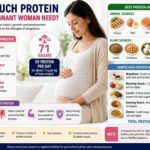
How much protein does a pregnant woman need?
Most pregnant women need around 71 grams of protein per day, though requirements vary depending on individual health, activity level, and pregnancy stage.
Can I drink coffee during pregnancy?
Yes, but limit caffeine intake to less than 200 mg per day, unless your healthcare provider recommends otherwise.
Is it safe to diet while pregnant?
Weight-loss diets are generally not recommended during pregnancy unless specifically advised and monitored by your healthcare provider.
Should I take prenatal vitamins?
Most healthcare professionals recommend prenatal vitamins, but they should only be taken under medical guidance.
What foods should I eat daily during pregnancy?
Include leafy green vegetables, seasonal fruits, whole grains, eggs, milk or yogurt, legumes, nuts, seeds, and lean protein sources like chicken, fish, paneer, or tofu.
How many extra calories do I need during pregnancy?
Calorie needs depend on the trimester. Generally, no extra calories are needed during the first trimester, about 340 extra calories per day during the second trimester, and about 450 extra calories per day during the third trimester.
Is it okay to eat spicy food during pregnancy?
Yes. Spicy foods are generally safe unless they cause heartburn, acid reflux, or stomach discomfort.
Can pregnant women eat seafood?
Yes, but choose low-mercury fish such as salmon, sardines, trout, and anchovies. Avoid high-mercury fish like shark, swordfish, king mackerel, and tilefish.
When should I consult a doctor about my pregnancy diet?
Consult your healthcare provider if you have severe morning sickness, gestational diabetes, food allergies, significant weight changes, nutritional deficiencies, or any medical condition that affects your diet.
Final Thoughts
A healthy pregnancy diet is one of the best investments you can make for both yourself and your baby. By focusing on nutrient-rich foods, staying hydrated, and following your healthcare provider’s recommendations, you can support healthy fetal development while maintaining your own well-being.
Remember that every pregnancy is unique. Nutritional needs may vary depending on age, weight, medical history, and any pregnancy-related conditions. Always discuss dietary changes and supplements with your obstetrician, midwife, or registered dietitian to receive personalized guidance.
Sources / References:
- World Health Organization (WHO)
- American College of Obstetricians and Gynecologists (ACOG)
- Centers for Disease Control and Prevention (CDC)
- National Health Service (NHS)
- Office on Women’s Health (U.S. Department of Health & Human Services)
- Academy of Nutrition and Dietetics
- National Institutes of Health (NIH) – Office of Dietary Supplements
- UNICEF – Maternal Nutrition
About the Author:
Written by: Kirti Solanki (Health Content Researcher)
Kirti Solanki is a Health Content Researcher who specializes in creating evidence-based, reader-friendly health and nutrition articles. Her content is developed using trusted medical guidelines and reputable health organizations, with a focus on providing accurate, practical, and easy-to-understand information for everyday readers.
Disclaimer:
This guide is intended for educational and informational purposes only and should not be considered medical advice. Every pregnancy is different, and nutritional needs vary from person to person. Always consult a qualified obstetrician, gynecologist, registered dietitian, or healthcare professional before making significant dietary changes, taking supplements, or following any pregnancy nutrition plan.
Also Read: