
If you think you might be pregnant, one of the first questions that comes to mind is: When should I take a pregnancy test?
Taking a pregnancy test at the right time is important because testing too early can lead to inaccurate or false-negative results. Understanding how pregnancy tests work, when they become reliable, and what factors can affect the outcome can help reduce confusion and anxiety.
This guide explains everything you need to know about when to take a pregnancy test, how pregnancy tests work, signs that may indicate pregnancy, and what steps to take after receiving your results.
What Is a Pregnancy Test?
A pregnancy test is a medical screening tool used to detect pregnancy by identifying the presence of human chorionic gonadotropin (hCG) in the body.
hCG is often called the “pregnancy hormone” because it is produced after a fertilized egg attaches to the lining of the uterus.
Pregnancy tests are available in two main forms:
Home Pregnancy Tests
These tests detect hCG in urine and are widely available at pharmacies and online.
Blood Pregnancy Tests
Performed by healthcare professionals, blood tests can detect lower levels of hCG and may identify pregnancy earlier than urine tests.
How Does a Pregnancy Test Work?
- After fertilization, the embryo travels to the uterus and implants into the uterine lining.
- Once implantation occurs, the body begins producing hCG.
- The amount of hCG increases rapidly during early pregnancy, often doubling every 48–72 hours during the first few weeks.
- Pregnancy tests work by detecting this hormone.
- If sufficient hCG is present, the test will show a positive result.
When Is the Best Time to Take a Pregnancy Test?
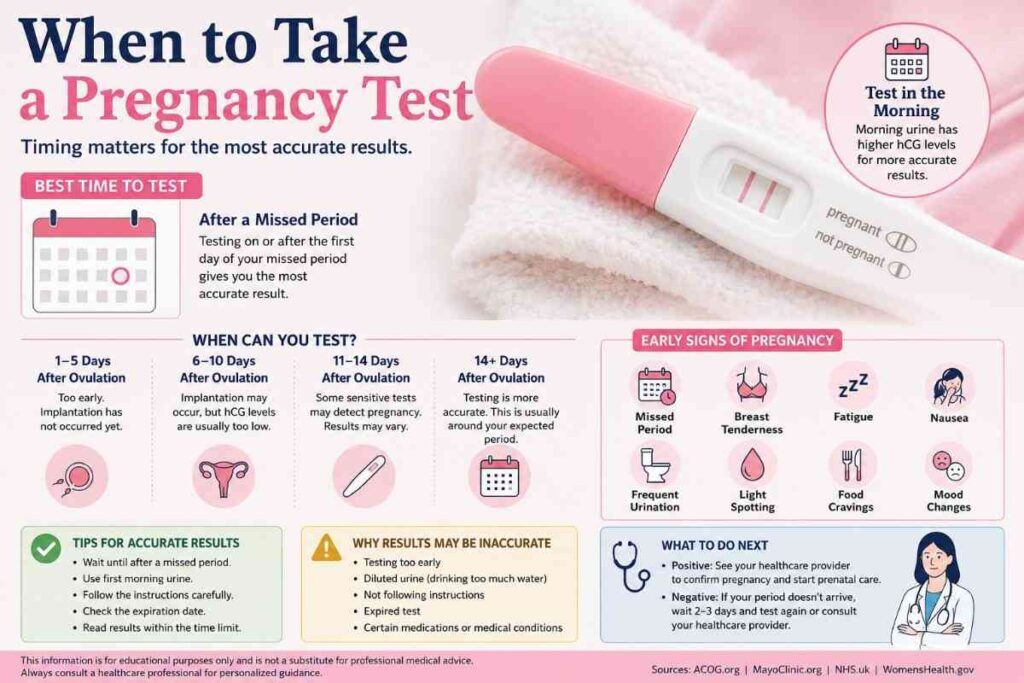
The most accurate time to take a pregnancy test is:
After you have missed your period.
Most home pregnancy tests are designed to provide reliable results from the first day of a missed period.
Testing after a missed period gives your body enough time to produce detectable levels of hCG.
Can You Take a Pregnancy Test Before a Missed Period?
Yes, some highly sensitive pregnancy tests claim they can detect pregnancy several days before a missed period.
However, testing early may increase the risk of receiving a false-negative result because hCG levels may still be too low to detect.
If you test early and receive a negative result, wait a few days and test again.
Pregnancy Test Timing Based on Ovulation
Understanding ovulation can help determine the best testing time.
1–5 Days After Ovulation
Too early to test.
Implantation usually has not occurred yet.
6–10 Days After Ovulation
Implantation may occur during this period, but hCG levels are often too low for reliable detection.
11–14 Days After Ovulation
Some sensitive tests may detect pregnancy.
Results may still vary.
14+ Days After Ovulation
Testing becomes significantly more accurate.
This is typically around the time a period is expected.
How Soon Can Pregnancy Be Detected?
Home Urine Tests
Usually accurate from the first day of a missed period.
Blood Tests
May detect pregnancy approximately 6–8 days after ovulation.
Blood tests can identify lower hCG levels than urine tests.
Early Signs That May Prompt a Pregnancy Test
While symptoms alone cannot confirm pregnancy, several signs may indicate it’s time to test.
1. Missed Period
A missed menstrual period is one of the most common early pregnancy signs.
2. Breast Tenderness
Hormonal changes may cause breast swelling or soreness.
3. Fatigue
Increased progesterone levels can lead to unusual tiredness.
4. Nausea
Morning sickness may begin a few weeks after conception.
5. Frequent Urination
Hormonal changes can increase the need to urinate.
6. Light Spotting
Some women experience implantation bleeding.
7. Food Cravings or Aversions
Changes in taste and smell sensitivity may occur.
8. Mood Changes
Hormonal fluctuations can affect emotions and mood.
How Accurate Are Home Pregnancy Tests?
When used correctly and at the appropriate time, many home pregnancy tests are approximately 99% accurate.
Accuracy depends on:
- Timing of the test
- Following instructions correctly
- Sensitivity of the test
- Individual hCG levels
Testing too early is one of the most common reasons for inaccurate results.
Best Time of Day to Take a Pregnancy Test
For the most accurate result:
Use your first morning urine.
Morning urine is usually more concentrated and contains higher levels of hCG.
This is particularly important if you are testing before or shortly after a missed period.
After a missed period, testing later in the day may still provide reliable results.
What Can Cause a False-Negative Pregnancy Test?
A false-negative occurs when the test says you are not pregnant even though you are.
Common reasons include:
1. Testing Too Early
The most common cause of false-negative results.
2. Diluted Urine
Drinking excessive fluids before testing can lower hCG concentration.
3. Incorrect Test Usage
Not following instructions may affect results.
4. Expired Test
An expired test may not work properly.
5. Late Implantation
Some pregnancies implant later than expected, delaying hCG production.
What Can Cause a False-Positive Pregnancy Test?
False-positive results are less common but can happen.
Possible causes include:
1. Recent Pregnancy
hCG may remain in the body after childbirth, miscarriage, or abortion.
2. Fertility Medications
Certain fertility treatments contain hCG.
3. Medical Conditions
Rare medical conditions can elevate hCG levels.
4. User Error
Reading the test outside the recommended time frame may result in confusion.
What Should You Do After a Positive Pregnancy Test?
If you receive a positive result:
1. Confirm the Pregnancy
Consider scheduling an appointment with a healthcare provider.
2. Start Prenatal Care
Early prenatal care supports maternal and fetal health.
3. Begin Taking Prenatal Vitamins
Folic acid is especially important during early pregnancy.
4.4 Review Medications
Discuss current medications with a healthcare professional.
5. Adopt Healthy Lifestyle Habits
Focus on nutrition, hydration, sleep, and avoiding harmful substances.
What Should You Do After a Negative Pregnancy Test?
If your period has not started and the result is negative:
1. Wait and Retest
Retest after 48–72 hours.
2. Monitor Symptoms
Keep track of menstrual changes and pregnancy symptoms.
3. Consult a Healthcare Provider
Seek medical advice if your period remains absent or symptoms continue.
Pregnancy Testing for Irregular Periods
Women with irregular menstrual cycles may find pregnancy testing more challenging.
If your cycles vary significantly:
- Track ovulation if possible
- Wait at least 14 days after suspected ovulation
- Repeat testing if needed
- Consult a healthcare provider for guidance
Blood tests may be particularly useful in these situations.
Types of Pregnancy Tests
Strip Tests
Affordable and commonly used.
Midstream Tests
Convenient and easy to use.
Digital Pregnancy Tests
Display results in words such as “Pregnant” or “Not Pregnant.”
Blood Tests
Performed in healthcare settings for earlier detection and confirmation.
Common Mistakes to Avoid
To improve accuracy:
- Do not test too early.
- Check the expiration date.
- Read instructions carefully.
- Use first morning urine when testing early.
- Avoid excessive fluid intake before testing.
- Read results within the recommended time frame.
FAQs
How soon will a pregnancy test read positive?
A pregnancy test may read positive as early as 10–14 days after ovulation or around the first day of a missed period. Testing too early can result in a false-negative because hCG levels may not be high enough yet.
Can I be 2 weeks pregnant and still test negative?
Yes. If implantation occurred later than expected or hCG levels are still low, you may be 2 weeks pregnant and receive a negative test result. Retest after 2–3 days for a more accurate result.
How long will it take to see a positive pregnancy test?
Most people can see a positive pregnancy test about 14 days after ovulation or after a missed period. Blood tests may detect pregnancy slightly earlier than urine tests.
What is a 2 finger test in pregnancy?
A “2 finger test” refers to a vaginal examination performed by a healthcare professional to assess the cervix during pregnancy or labor. It is not a method for confirming pregnancy and should only be performed when medically necessary.
Can a 2 hour urine hold a pregnancy test?
Yes. If you have not consumed excessive fluids, urine held for about 2 hours may contain enough hCG for testing. However, first morning urine generally provides the most accurate results, especially in early pregnancy.
How many days after unprotected sex can I take a pregnancy test?
Most experts recommend waiting at least 14 days after unprotected sex or until the first day of a missed period for the most reliable result.
Can drinking water affect a pregnancy test?
Yes. Drinking large amounts of water before testing can dilute your urine and lower hCG concentration, potentially affecting the result.
Can a pregnancy test be wrong?
Although uncommon, pregnancy tests can produce false-negative or false-positive results due to early testing, medication use, or certain medical conditions.
How soon after implantation can a pregnancy test detect pregnancy?
Some sensitive tests may detect pregnancy a few days after implantation, but results are generally more reliable after a missed period.
What if my pregnancy test is negative but my period is late?
Wait 2–3 days and test again. If your period still doesn’t arrive, consult a healthcare professional.
Can irregular periods affect pregnancy test timing?
Yes. If your periods are irregular, it may be harder to determine the best testing date. Consider testing at least 14 days after suspected ovulation.
Can stress cause a late period instead of pregnancy?
Yes. Stress can affect hormone levels and delay ovulation or menstruation, leading to a late period even when you’re not pregnant.
Which pregnancy test is the most accurate?
Both digital and traditional home pregnancy tests are highly accurate when used correctly. Blood tests performed by a healthcare provider can detect pregnancy earlier.
When to take a pregnancy test after missed period?
You can take a pregnancy test on the first day of your missed period. Waiting a few additional days may improve accuracy.
Can a pregnancy test be positive after one week?
Yes. Some sensitive tests may detect pregnancy about one week after implantation, but results vary.
Is morning urine necessary for a pregnancy test?
Morning urine is recommended when testing early because it typically contains the highest concentration of hCG.
Can I be pregnant if the test is negative?
Yes. Testing too early can cause a false-negative result. Retest after a few days if pregnancy is still suspected.
How long should I wait to retest after a negative result?
Most experts recommend waiting 48–72 hours before testing again.
Are digital pregnancy tests more accurate?
Digital tests are generally similar in accuracy to traditional tests, but they may be easier to interpret.
Can medications affect pregnancy test results?
Most medications do not affect results, but fertility medications containing hCG may cause false-positive readings.
Should I see a doctor after a positive pregnancy test?
Yes. Scheduling an appointment helps confirm the pregnancy and begin prenatal care.
Final Thoughts
Knowing when to take a pregnancy test can make a significant difference in obtaining accurate results. For most people, the best time to test is after a missed period, when hCG levels are high enough to be detected reliably.
If you test too early and receive a negative result, don’t panic. Waiting a few days and testing again often provides a clearer answer. Whether the result is positive or negative, consulting a healthcare professional can help you understand your next steps and ensure the best possible care.
Disclaimer:
This guide is for educational purposes only and should not be considered medical advice, diagnosis, or treatment. Always consult a qualified healthcare professional regarding pregnancy concerns, testing, symptoms, or medical decisions.
Sources / References:
- American College of Obstetricians and Gynecologists (ACOG) – Pregnancy Tests
- National Health Service (NHS) – Pregnancy Testing Information
- Mayo Clinic – Home Pregnancy Tests Guide
- Cleveland Clinic – Pregnancy Test Accuracy and Timing
- Office on Women’s Health – Pregnancy Testing Basics
- MedlinePlus – Pregnancy Test Overview
- World Health Organization (WHO) – Maternal Health Resources