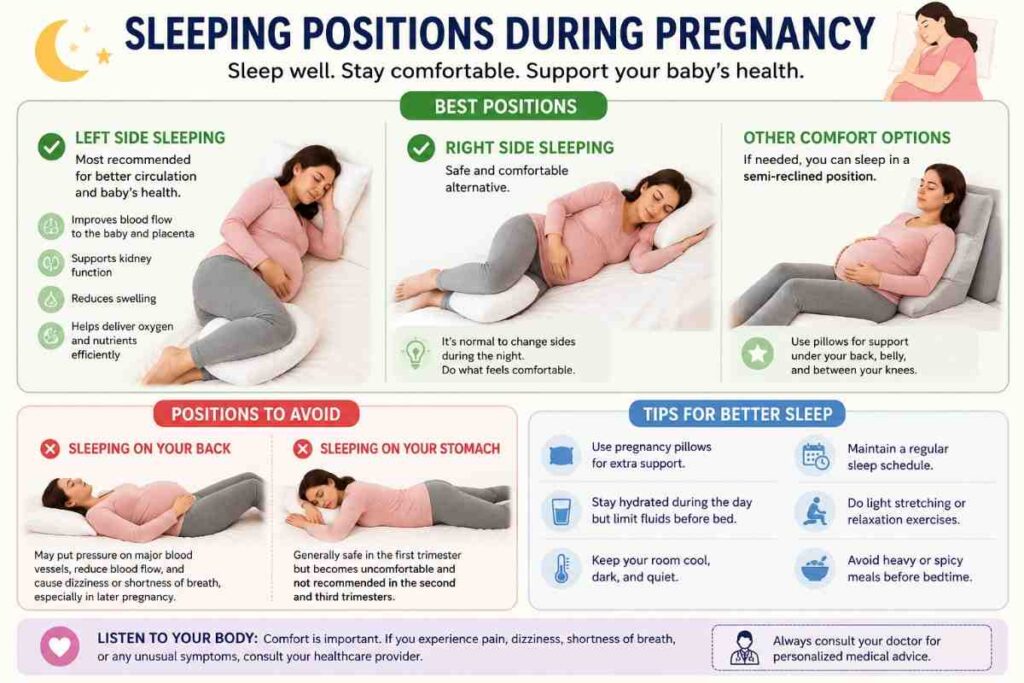

Pregnancy brings many exciting changes, but it can also make getting a good night’s sleep challenging. As your baby grows, your body undergoes physical and hormonal changes that may affect comfort, breathing, circulation, and overall sleep quality. One of the most common questions expectant mothers ask is: What is the best sleeping position during pregnancy?
While there is no perfect sleeping position that works for everyone, medical experts generally recommend sleeping on your side, especially during the second and third trimesters. Certain positions may improve blood flow, reduce discomfort, and help both mother and baby stay healthy.
This comprehensive guide covers the best sleeping positions during pregnancy, positions to avoid, trimester-wise recommendations, benefits, risks, practical tips, and frequently asked questions.
What Are Sleeping Positions During Pregnancy?
Sleeping positions during pregnancy refer to the posture or body alignment a pregnant woman adopts while sleeping. As pregnancy progresses, some sleeping positions become safer and more comfortable than others.
The most common sleeping positions include:
- Side sleeping
- Left-side sleeping
- Right-side sleeping
- Back sleeping
- Stomach sleeping
- Semi-reclined sleeping
Healthcare providers generally encourage side sleeping because it supports healthy circulation and reduces pressure on important organs.
Why Sleeping Position Matters During Pregnancy
Your sleeping position can influence:
- Blood circulation to the placenta
- Maternal comfort
- Back and pelvic pain
- Heartburn and acid reflux
- Breathing quality
- Swelling in the legs and feet
- Sleep quality and duration
As the uterus expands, it places pressure on blood vessels and internal organs. Choosing an appropriate sleeping position can help minimize discomfort and support healthy blood flow.
What is the Safest Sleeping Position During Pregnancy?
Left-Side Sleeping (SOS – Sleep on Side)
The left-side sleeping position is widely considered the preferred sleeping position during pregnancy.
Benefits of Sleeping on the Left Side
- Improves blood flow to the baby
- Enhances circulation to the uterus and kidneys
- Helps reduce swelling in feet and ankles
- May improve nutrient delivery through the placenta
- Reduces pressure on the liver
- Supports kidney function and waste removal
Many healthcare providers recommend sleeping on the left side, especially during the second and third trimesters.
How to Sleep Comfortably on Your Left Side
- Bend your knees slightly.
- Place a pillow between your knees.
- Use a pregnancy pillow for support.
- Keep your back aligned.
- Support your abdomen with a small pillow.
Is Right-Side Sleeping Safe During Pregnancy?
Yes, sleeping on the right side is generally considered safe.
While the left side may offer some circulation advantages, research suggests that sleeping on either side is usually acceptable. Many doctors advise pregnant women not to worry if they occasionally switch between the left and right sides during sleep.
Benefits of Right-Side Sleeping
- Relieves pressure on the spine
- Improves comfort
- Supports healthy sleep
- Provides an alternative when the left side becomes uncomfortable
The most important goal is often side sleeping rather than remaining exclusively on one side.
Sleeping Positions to Avoid During Pregnancy
1. Sleeping on Your Back
Back sleeping becomes less ideal as pregnancy advances.
Why Back Sleeping May Cause Problems
The growing uterus can compress a major vein called the inferior vena cava. This may:
- Reduce blood flow
- Cause dizziness
- Increase back pain
- Lead to breathing difficulties
- Worsen hemorrhoids
- Increase swelling
Some women may also experience low blood pressure symptoms while lying flat on their backs.
What If You Wake Up on Your Back?
Do not panic.
Many pregnant women naturally change positions while sleeping. If you wake up on your back, simply return to your side. Occasional back sleeping is common and usually not a cause for concern.
2. Sleeping on Your Stomach
First Trimester
Stomach sleeping is generally safe during early pregnancy because the uterus remains protected within the pelvis.
Second and Third Trimesters
As the belly grows, stomach sleeping becomes increasingly uncomfortable and impractical.
Although it is not usually dangerous, most women naturally stop sleeping on their stomach due to discomfort.
Best Sleeping Positions by Trimester
First Trimester (Weeks 1–13)
During early pregnancy:
- Most sleeping positions remain safe.
- Hormonal changes may increase fatigue.
- Frequent urination may disrupt sleep.
- Breast tenderness can affect comfort.
Recommended Positions
- Left side
- Right side
- Stomach sleeping if comfortable
- Back sleeping in moderation
Second Trimester (Weeks 14–27)
As the uterus grows:
- Back sleeping may become less comfortable.
- Side sleeping becomes increasingly important.
- Leg cramps and heartburn may develop.
Recommended Positions
- Left-side sleeping
- Right-side sleeping
- Use pregnancy pillows
Third Trimester (Weeks 28–40)
The third trimester often presents the greatest sleep challenges.
Common issues include:
- Back pain
- Frequent urination
- Heartburn
- Shortness of breath
- Hip discomfort
Recommended Positions
- Left-side sleeping
- Supported right-side sleeping
- Semi-reclined sleeping when needed
Benefits of Side Sleeping During Pregnancy
1. Better Blood Circulation
Side sleeping reduces pressure on major blood vessels and helps maintain healthy circulation.
2. Improved Kidney Function
Good circulation supports kidney efficiency and may help reduce swelling.
3. Reduced Back Pain
Sleeping on the side helps align the spine and reduce pressure on the lower back.
4. Better Breathing
Many women experience easier breathing while sleeping on their sides.
5. Less Heartburn
Elevating the upper body while side sleeping may help reduce acid reflux symptoms.
How Pregnancy Pillows Can Help
Pregnancy pillows are specially designed to support the changing body during pregnancy.
Types of Pregnancy Pillows
U-Shaped Pillow
Provides full-body support and helps maintain side sleeping.
C-Shaped Pillow
Supports the back, abdomen, neck, and knees.
Wedge Pillow
Supports the belly or lower back.
Body Pillow
Offers simple, full-length support.
Tips for Sleeping Comfortably During Pregnancy
1. Use Multiple Pillows
Place pillows:
- Between the knees
- Under the belly
- Behind the back
- Under the head
2. Stay Hydrated During the Day
Drink enough water but reduce excessive fluid intake close to bedtime to minimize nighttime bathroom trips.
3. Follow a Consistent Sleep Schedule
Going to bed and waking up at the same time daily may improve sleep quality.
4. Create a Relaxing Bedtime Routine
Try:
- Reading
- Meditation
- Warm showers
- Gentle stretching
5. Wear Comfortable Clothing
Choose loose, breathable sleepwear.
6. Keep Your Bedroom Cool
A cool sleeping environment may improve comfort and sleep quality.
Managing Common Pregnancy Sleep Problems
Back Pain
- Sleep on your side.
- Use supportive pillows.
- Maintain proper posture during the day.
Heartburn
- Avoid heavy meals before bedtime.
- Elevate your upper body slightly.
- Sleep on your left side.
Leg Cramps
- Stretch before bed.
- Stay hydrated.
- Discuss supplements with your healthcare provider if needed.
Frequent Urination
- Empty your bladder before bedtime.
- Limit large amounts of fluid immediately before sleep.
Shortness of Breath
- Use additional pillows.
- Try a semi-reclined position if recommended by your healthcare provider.
Can Poor Sleeping Position Harm the Baby?
Most occasional position changes during sleep are unlikely to harm your baby.
However, consistently sleeping flat on the back in later pregnancy may affect circulation in some women. This is why side sleeping is generally recommended.
The body often provides warning signs such as:
- Dizziness
- Shortness of breath
- Nausea
- Discomfort
If these occur, changing positions usually helps.
Signs Your Sleeping Position Needs Adjustment
Consider changing positions if you experience:
- Numbness
- Tingling sensations
- Dizziness
- Difficulty breathing
- Increased back pain
- Hip discomfort
- Severe heartburn
Comfort and circulation should guide your sleeping posture.
Sleeping Positions for Pregnancy-Related Conditions
For Sciatica
- Sleep on the unaffected side.
- Place a pillow between the knees.
For Pelvic Pain
- Use a pillow between the legs.
- Keep knees aligned.
For Swollen Feet
- Sleep on your side.
- Elevate legs when possible.
For Acid Reflux
- Sleep on the left side.
- Raise the head slightly.
Myths About Sleeping During Pregnancy
Myth 1: Sleeping on the Right Side Is Dangerous
Reality: Right-side sleeping is generally safe for most pregnancies.
Myth 2: One Night on Your Back Will Harm the Baby
Reality: Accidentally rolling onto your back occasionally is common and usually not harmful.
Myth 3: Pregnancy Means You Must Sleep Sitting Up
Reality: Most women can safely sleep on their sides with proper support.
Myth 4: Stomach Sleeping Always Harms the Baby
Reality: Early in pregnancy, stomach sleeping is generally safe and protected by the uterus and surrounding tissues.
When to Contact Your Healthcare Provider
Seek medical advice if you experience:
- Severe sleep disturbances
- Persistent breathing difficulties
- Loud snoring with pauses in breathing
- Severe swelling
- Persistent dizziness
- Unusual fetal movement concerns
- Chronic insomnia
Professional guidance is important when sleep issues affect daily functioning or pregnancy health.
Final Thoughts
Sleeping comfortably during pregnancy can become more challenging as your baby grows, but choosing the right sleeping position can make a significant difference. Side sleeping, particularly on the left side, is generally considered the most beneficial option because it promotes healthy circulation and supports maternal comfort. However, sleeping on the right side is also usually safe and comfortable for many women.
Using supportive pillows, maintaining healthy sleep habits, and listening to your body’s signals can help improve sleep quality throughout pregnancy. If you have concerns about sleep, breathing difficulties, or persistent discomfort, consult your healthcare provider for personalized guidance.
FAQs
Can I sleep on my back during pregnancy?
Back sleeping is usually safe during early pregnancy. However, healthcare providers often recommend side sleeping during the second and third trimesters to reduce pressure on major blood vessels.
Can sleeping on my stomach hurt my baby?
No. During the first trimester, stomach sleeping is generally safe because the uterus and surrounding tissues protect the baby. As pregnancy progresses, it typically becomes uncomfortable.
When should I stop sleeping on my stomach during pregnancy?
Most women naturally stop sleeping on their stomach during the second trimester as the baby bump grows and sleeping in that position becomes less comfortable.
Why is the left side recommended during pregnancy?
The left side may improve circulation, support kidney function, reduce swelling, and help deliver oxygen and nutrients efficiently to the baby.
How many hours should a pregnant woman sleep?
Most pregnant women should aim for 7–9 hours of sleep per night. Some may need additional rest or short daytime naps, especially during the first and third trimesters.
Are pregnancy pillows worth using?
Yes. Pregnancy pillows can support the belly, back, hips, knees, and neck, helping improve comfort and maintain a healthy sleeping position.
How can I sleep better during pregnancy?
Using supportive pillows, maintaining a regular sleep schedule, staying active during the day, avoiding heavy meals before bedtime, and sleeping on your side can help improve sleep quality.
Can sleeping position cause back pain during pregnancy?
Yes. Certain sleeping positions may worsen back pain. Side sleeping with a pillow between the knees often helps maintain proper spinal alignment and reduces discomfort.
Is it normal to have trouble sleeping during pregnancy?
Yes. Hormonal changes, frequent urination, heartburn, anxiety, leg cramps, and physical discomfort commonly affect sleep during pregnancy.
Does sleeping on the left side improve baby growth?
Research suggests that left-side sleeping may support optimal blood flow to the placenta, which helps deliver oxygen and nutrients to the baby.
Can I sleep in a recliner while pregnant?
Occasionally sleeping in a reclined position may help women who experience severe heartburn, breathing difficulties, or back pain. Consult your healthcare provider if this becomes a regular need.
What should I do if side sleeping hurts my hips?
Place a pillow between your knees and another under your belly for support. A pregnancy pillow may also help reduce pressure on the hips.
Is sleeping too much during pregnancy harmful?
Generally, no. Increased fatigue is common, especially during the first trimester. However, excessive sleep combined with other symptoms should be discussed with your healthcare provider.
Can lack of sleep affect pregnancy?
Chronic sleep deprivation may contribute to fatigue, mood changes, stress, and overall discomfort. Prioritizing healthy sleep habits is important for both mother and baby.
What is the best pillow arrangement for pregnant women?
Many experts recommend placing one pillow under the head, one between the knees, one under the belly, and another behind the back for maximum support and comfort.
How can I sleep better in the third trimester?
Use pregnancy pillows, maintain a regular sleep schedule, sleep on your side, and avoid large meals close to bedtime.
Is insomnia common during pregnancy?
Yes. Hormonal changes, discomfort, frequent urination, and anxiety can contribute to insomnia during pregnancy.
Sources / References:
- American College of Obstetricians and Gynecologists (ACOG) – Pregnancy and Sleep
- National Health Service (NHS) – Sleep Position in Pregnancy
- March of Dimes – Healthy Pregnancy Sleep Tips
- Cleveland Clinic – Pregnancy Sleep Recommendations
- Mayo Clinic – Pregnancy Week by Week Guide
- Sleep Foundation – Sleeping During Pregnancy
- National Institute of Child Health and Human Development (NICHD)
Also Read:
- When to Take a Pregnancy Test: The Best Time for Accurate Results
- 15 Early Pregnancy Symptoms Every Woman Should Know
Disclaimer:
This guide is for educational and informational purposes only and should not be considered medical advice, diagnosis, or treatment. Always consult a qualified healthcare professional, obstetrician, or gynecologist regarding pregnancy-related concerns, sleep problems, or any medical condition. Never disregard professional medical advice because of information read online.