
Pregnancy is an exciting journey filled with important milestones, and one of the biggest responsibilities during these nine months is maintaining a healthy diet. While many foods provide essential nutrients for your growing baby, some foods can increase the risk of foodborne illness, birth defects, miscarriage, or pregnancy complications.
Understanding which foods to avoid during pregnancy can help protect both you and your developing baby. Fortunately, avoiding risky foods doesn’t mean giving up delicious meals. With a few simple changes, you can enjoy a nutritious, satisfying, and safe pregnancy diet.
In this guide, we’ll explain which foods should be limited or avoided, why they can be harmful, and what safer alternatives you can choose instead.
Why Food Safety Matters During Pregnancy?
During pregnancy, your immune system naturally changes to support your growing baby. These changes make you more vulnerable to bacteria, parasites, and viruses that may not affect healthy adults as severely.
Certain foodborne infections such as Listeria, Salmonella, and Toxoplasma can cross the placenta and affect the developing baby, sometimes leading to:
- Miscarriage
- Stillbirth
- Premature birth
- Birth defects
- Low birth weight
- Serious infections in newborns
Choosing safe foods and following proper food hygiene significantly reduces these risks.
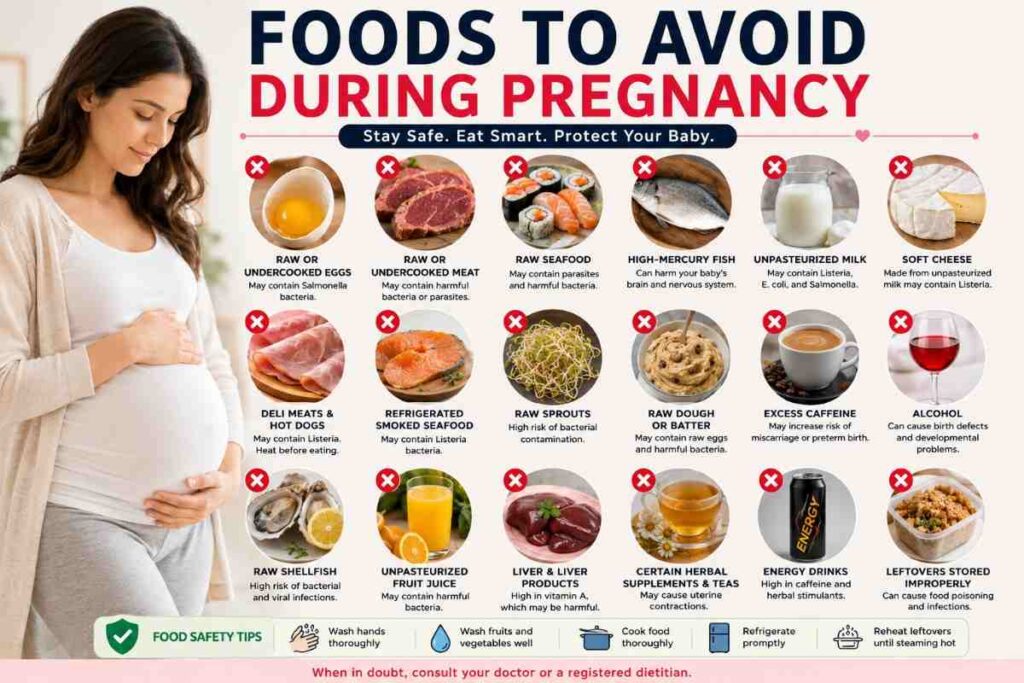
20 Foods to Avoid During Pregnancy
1. Raw or Undercooked Eggs
Raw eggs may contain Salmonella, which can cause severe food poisoning.
Avoid:
- Homemade mayonnaise
- Raw cookie dough
- Fresh Caesar dressing
- Homemade ice cream
- Hollandaise sauce
Safer option:
Choose pasteurized eggs or fully cooked egg dishes.
2. Raw or Undercooked Meat
Undercooked beef, pork, lamb, or poultry may contain harmful bacteria and parasites.
Risks include:
- Salmonella
- E. coli
- Toxoplasma gondii
Always cook meat until it reaches the recommended internal temperature.
3. Raw Seafood
Sushi made with raw fish, oysters, clams, mussels, and sashimi should be avoided.
Raw seafood may contain:
- Parasites
- Vibrio bacteria
- Listeria
- Hepatitis A virus
Cooked seafood is generally much safer.
4. High-Mercury Fish
Mercury can interfere with your baby’s brain and nervous system development.
Avoid:
- Shark
- Swordfish
- King mackerel
- Marlin
- Tilefish
- Orange roughy
- Bigeye tuna
Safer fish choices include:
- Salmon
- Sardines
- Tilapia
- Trout
- Anchovies
- Pollock
5. Unpasteurized Milk
Raw milk may contain dangerous bacteria including:
- Listeria
- E. coli
- Campylobacter
- Salmonella
Always choose pasteurized dairy products.
6. Soft Cheese Made from Unpasteurized Milk
Certain soft cheeses can harbor Listeria.
Avoid unless labeled pasteurized:
- Brie
- Camembert
- Blue cheese
- Queso fresco
- Feta made with raw milk
Pasteurized versions are generally safe.
7. Deli Meats and Hot Dogs (Unless Heated)
Ready-to-eat meats may become contaminated with Listeria during processing.
Examples:
- Ham
- Turkey slices
- Salami
- Bologna
- Roast beef
Heat until steaming hot before eating.
8. Refrigerated Smoked Seafood
Avoid refrigerated smoked fish unless cooked in a casserole or another hot dish.
Examples include:
- Smoked salmon
- Smoked trout
- Smoked mackerel
Shelf-stable canned smoked seafood is generally considered safe.
9. Raw Sprouts
Raw sprouts are difficult to clean thoroughly because bacteria can grow inside the seeds.
Avoid:
- Alfalfa sprouts
- Clover sprouts
- Radish sprouts
- Mung bean sprouts
Cook sprouts completely before eating.
10. Unwashed Fruits and Vegetables
Fresh produce may carry:
- Toxoplasma
- Listeria
- E. coli
Wash fruits and vegetables thoroughly under running water before eating.
11. Liver and Liver Products
Although liver is rich in iron, it also contains extremely high levels of vitamin A (retinol).
Too much vitamin A during pregnancy may increase the risk of birth defects.
Limit:
- Beef liver
- Chicken liver
- Liver pâté
12. Excess Caffeine
Large amounts of caffeine may increase the risk of miscarriage, low birth weight, and fetal growth restriction.
Experts generally recommend limiting caffeine to 200 mg per day.
Sources include:
- Coffee
- Tea
- Energy drinks
- Chocolate
- Cola
13. Alcohol
There is no known safe amount of alcohol during pregnancy.
Alcohol can cause:
- Fetal Alcohol Spectrum Disorders (FASDs)
- Developmental delays
- Learning disabilities
- Growth problems
Avoid alcohol entirely throughout pregnancy.
14. Raw Shellfish
Raw oysters, mussels, scallops, and clams carry a higher risk of bacterial and viral contamination.
Cook shellfish thoroughly before consumption.
15. Unpasteurized Fruit Juice
Fresh juices sold at roadside stalls or farmers’ markets may not be pasteurized.
These juices can contain harmful bacteria.
Choose pasteurized juices whenever possible.
16. Raw Dough or Batter
Raw dough often contains:
- Uncooked eggs
- Raw flour contaminated with bacteria
Avoid tasting cake batter or cookie dough before baking.
17. Herbal Supplements and Certain Herbal Teas
Many herbal products have not been studied adequately during pregnancy.
Avoid taking herbal supplements unless approved by your healthcare provider.
18. Energy Drinks
Energy drinks often contain:
- Excess caffeine
- Herbal stimulants
- High sugar levels
They are not recommended during pregnancy.
19. Mold-Ripened Foods
Some mold-ripened foods may increase exposure to harmful bacteria if made from unpasteurized ingredients.
Always read food labels carefully.
20. Leftovers Stored Improperly
Cooked food left at room temperature for more than two hours can allow bacteria to multiply rapidly.
Store leftovers promptly and reheat thoroughly before eating.
Foods That Should Be Limited Instead of Completely Avoided
Some foods are safe in moderation.
These include:
| Food | Recommendation |
|---|---|
| Coffee | Up to 200 mg caffeine daily |
| Dark chocolate | Small portions |
| Artificial sweeteners | Consume within recommended limits |
| Tuna | Limit according to healthcare guidelines |
| Salt | Avoid excessive intake |
Essential Food Safety Tips During Pregnancy
Following proper food safety habits is just as important as choosing healthy foods.
Remember to:
- Wash your hands before preparing food.
- Wash fruits and vegetables thoroughly.
- Cook meat completely.
- Keep raw and cooked foods separate.
- Refrigerate leftovers within two hours.
- Reheat leftovers until steaming hot.
- Check expiration dates.
- Avoid foods with damaged packaging.
- Drink safe, clean water.
Common Pregnancy Food Myths
Myth 1: Eating for Two Means Double Portions
Reality: Pregnancy increases nutrient needs more than calorie needs. Quality matters more than quantity.
Myth 2: All Fish Are Unsafe
Reality: Many fish are excellent sources of omega-3 fatty acids. Choose low-mercury varieties.
Myth 3: Spicy Foods Harm the Baby
Reality: Spicy foods generally do not harm the baby, although they may worsen heartburn or indigestion for some women.
Myth 4: Pineapple Causes Miscarriage
Reality: Eating normal amounts of fresh pineapple is considered safe during pregnancy.
Myth 5: Papaya Is Always Dangerous
Reality: Ripe papaya is generally safe. Unripe or semi-ripe papaya contains latex, which may stimulate uterine contractions and is best avoided.
Signs of Food Poisoning During Pregnancy
Seek medical attention immediately if you experience:
- High fever
- Persistent vomiting
- Severe diarrhea
- Bloody stools
- Severe abdominal pain
- Dehydration
- Reduced fetal movement (later pregnancy)
Early treatment can reduce complications.
When to Contact Your Healthcare Provider
Contact your doctor if:
- You accidentally eat high-risk food and develop symptoms.
- You suspect food poisoning.
- You cannot keep fluids down.
- You experience contractions after illness.
- You notice reduced fetal movement.
- You have persistent fever.
Never hesitate to seek medical advice during pregnancy.
FAQs
Which 5 fruits should be avoided during pregnancy?
Avoid unripe papaya. Limit pineapple, grapes, and dates only if advised by your doctor. Always eat clean, ripe, and well-washed fruits.
What Indian foods should I avoid during pregnancy?
Avoid raw or undercooked foods, unpasteurized dairy, unhygienic street food, raw sprouts, high-mercury fish, alcohol, and energy drinks.
Can I eat momos during pregnancy?
Yes, if they are fresh, fully cooked, and served hot. Avoid raw fillings and unhygienic street food. Homemade or hygienically prepared momos are the safest choice.
Which fish are unsafe during pregnancy?
Avoid high-mercury fish such as shark, swordfish, king mackerel, marlin, orange roughy, tilefish, and bigeye tuna. Choose low-mercury options like salmon, sardines, trout, and tilapia instead.
Can I eat eggs during pregnancy?
Yes. Eggs are safe and nutritious when fully cooked. Avoid raw or undercooked eggs and foods made with raw eggs, such as homemade mayonnaise or cookie dough.
Is coffee safe during pregnancy?
Yes, but limit caffeine intake to no more than 200 mg per day, which is about one regular cup of brewed coffee, depending on its strength.
Why should pregnant women avoid alcohol?
There is no known safe amount of alcohol during pregnancy. Alcohol can interfere with your baby’s brain and organ development and may cause Fetal Alcohol Spectrum Disorders (FASDs).
Can I eat sushi while pregnant?
You should avoid sushi made with raw fish. Sushi prepared with cooked seafood, vegetables, or fully cooked ingredients is generally considered safe.
Is unpasteurized milk harmful during pregnancy?
Yes. Unpasteurized milk and dairy products may contain harmful bacteria such as Listeria, Salmonella, and E. coli, which can cause serious infections during pregnancy.
Are deli meats safe during pregnancy?
Deli meats are safest when heated until steaming hot before eating. This helps reduce the risk of Listeria contamination.
Can I eat pineapple during pregnancy?
Yes. Fresh, ripe pineapple is generally safe when eaten in moderation as part of a balanced diet.
Is papaya safe during pregnancy?
Ripe papaya is generally safe to eat. However, unripe or semi-ripe papaya should be avoided because it contains latex, which may stimulate uterine contractions.
Are herbal teas safe during pregnancy?
Some herbal teas may be safe, while others are not recommended. Always consult your healthcare provider before drinking herbal teas or taking herbal supplements during pregnancy.
Can pregnant women eat cheese?
Yes, as long as the cheese is made from pasteurized milk. Avoid soft cheeses made from unpasteurized milk.
Is it safe to eat spicy food during pregnancy?
Yes. Spicy foods do not harm your baby, although they may cause heartburn or indigestion in some pregnant women.
What should I do if I accidentally eat a food that is not recommended during pregnancy?
Don’t panic. Monitor yourself for symptoms such as fever, vomiting, diarrhea, or severe abdominal pain. Contact your healthcare provider if you develop symptoms or have concerns.
What are the safest foods to eat during pregnancy?
A healthy pregnancy diet includes fresh fruits, vegetables, whole grains, lean proteins, fully cooked eggs, pasteurized dairy products, beans, nuts, seeds, and low-mercury fish.
Can I eat leftovers during pregnancy?
Yes, provided they have been refrigerated within two hours of cooking and reheated thoroughly until steaming hot before eating.
Why are raw sprouts not recommended during pregnancy?
Raw sprouts can harbor harmful bacteria like Salmonella and E. coli that are difficult to wash away. Cook sprouts thoroughly before eating.
Can I drink fresh fruit juice during pregnancy?
Choose pasteurized fruit juice whenever possible. Fresh, unpasteurized juice may contain harmful bacteria that can increase the risk of foodborne illness.
Is chocolate safe during pregnancy?
Yes. Chocolate can be enjoyed in moderation, but remember that it contains caffeine and added sugar, so excessive intake should be avoided.
Why is food safety especially important during pregnancy?
Pregnancy lowers your body’s ability to fight certain infections. Practicing good food safety helps reduce the risk of foodborne illnesses that could affect both you and your baby.
What should I do if I accidentally eat raw food?
Do not panic. Monitor yourself for symptoms such as fever, vomiting, diarrhea, or abdominal pain. Contact your healthcare provider if symptoms develop or if you have concerns.
Is canned tuna safe during pregnancy?
Yes, in moderation. Choose light canned tuna more often than albacore tuna and follow your healthcare provider’s guidance regarding weekly intake.
Final Thoughts
Knowing which foods to avoid during pregnancy is one of the simplest ways to support a healthy pregnancy. While the list of restricted foods may seem long, most are easy to replace with safer, equally nutritious alternatives.
Focus on eating a balanced diet rich in fruits, vegetables, whole grains, lean proteins, and pasteurized dairy products while practicing good food hygiene. Every healthy choice you make contributes to your baby’s growth and your own well-being.
If you’re ever unsure about whether a food is safe during pregnancy, consult your obstetrician, midwife, or a registered dietitian. Personalized guidance is always the safest approach.
Sources / References:
- American College of Obstetricians and Gynecologists (ACOG) – Nutrition During Pregnancy
- Centers for Disease Control and Prevention (CDC) – Food Safety for Pregnant Women
- U.S. Food & Drug Administration (FDA) – Advice About Eating Fish
- National Health Service (NHS) – Foods to Avoid in Pregnancy
- World Health Organization (WHO) – Healthy Diet
- Academy of Nutrition and Dietetics
About the Author:
Written by: Kirti Solanki (Health Content Researcher)
Kirti Solanki is a Health Content Researcher specializing in evidence-based nutrition, wellness, pregnancy health, and preventive healthcare. She creates medically reviewed, reader-friendly articles by interpreting guidance from trusted organizations. Her goal is to provide practical, reliable, and easy-to-understand health information that empowers readers to make informed decisions.
Disclaimer:
This guide is intended for educational and informational purposes only and should not be considered medical advice, diagnosis, or treatment. Nutritional needs and medical conditions vary from person to person, especially during pregnancy. Always consult your obstetrician, gynecologist, midwife, or a qualified healthcare professional before making significant dietary changes or if you have concerns about foods consumed during pregnancy.
Also Read: