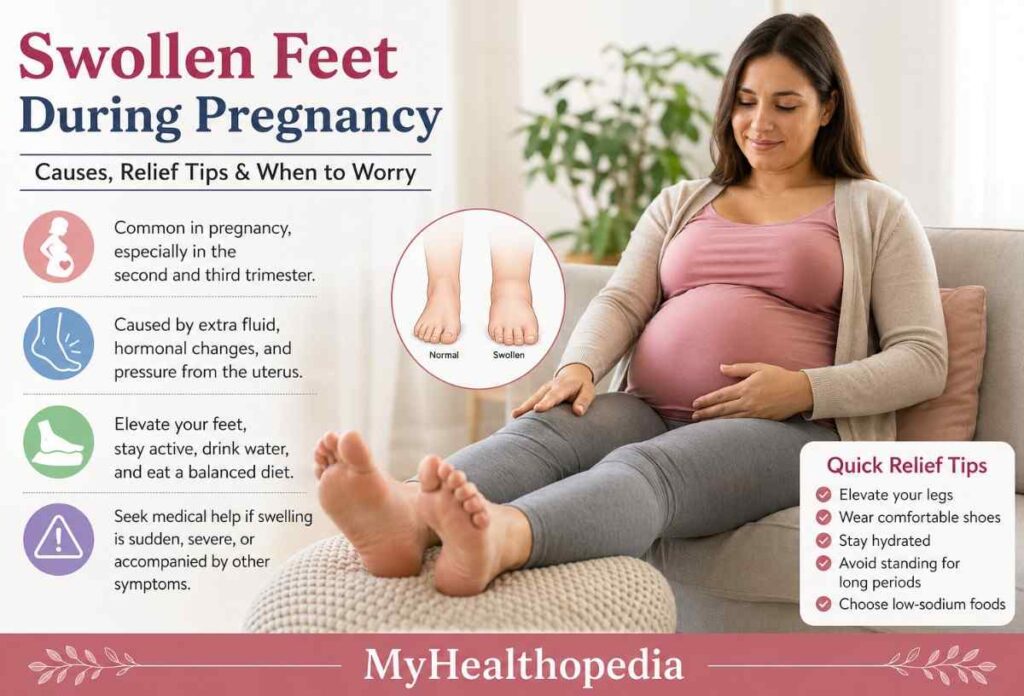

Pregnancy brings many wonderful changes, but it also comes with a few uncomfortable symptoms. One of the most common is swollen feet, also known as pregnancy edema. Many women notice that their shoes suddenly feel tight or their ankles appear puffy, especially during the third trimester.
In most cases, swollen feet during pregnancy are completely normal and happen because your body naturally retains more fluid to support your growing baby. However, while mild swelling is expected, sudden or severe swelling can sometimes signal a serious pregnancy complication that requires immediate medical attention.
This guide explains why swollen feet happen during pregnancy, how to reduce swelling naturally, when to contact your healthcare provider, and practical daily tips to stay comfortable.
What Is Swollen Feet During Pregnancy?
Swollen feet during pregnancy refer to the buildup of excess fluid (edema) in the tissues of the feet, ankles, and sometimes the lower legs.
Edema affects nearly 75% of pregnant women, particularly during the third trimester. The swelling often becomes more noticeable:
- Later in the day
- After standing for long periods
- During hot weather
- After traveling
- Near the end of pregnancy
Usually, both feet swell equally.
Why Do Feet Swell During Pregnancy?
Several normal pregnancy changes contribute to swollen feet.
1. Increased Blood Volume
During pregnancy, blood volume increases by approximately 40–50% to nourish your baby. This extra fluid can leak into surrounding tissues, causing swelling.
2. Hormonal Changes
Pregnancy hormones relax blood vessel walls, making it easier for fluid to collect in your legs and feet.
3. Pressure from the Growing Uterus
As your uterus grows, it puts pressure on the veins that return blood from your legs to your heart. This slows circulation and allows fluid to build up.
4. Water Retention
Your body naturally stores extra water during pregnancy to support fetal growth and prepare for childbirth.
5. Gravity
Gravity causes fluids to settle in the feet and ankles, especially after standing or sitting for long periods.
Symptoms of Swollen Feet During Pregnancy
Swollen feet during pregnancy may include:
- Puffy feet and ankles
- Tight shoes
- Stretched or shiny skin
- Mild discomfort
- Temporary indentations after pressing the skin
- Swollen toes
- Heavy feeling in the legs
- Difficulty wearing rings if hands are swollen too
Symptoms usually improve after resting or sleeping.
Which Trimester Is Swelling Most Common?
First Trimester
Mild swelling is uncommon but can occur due to hormonal changes.
Second Trimester
Swelling gradually becomes more noticeable as blood volume increases.
Third Trimester
This is when swelling is usually at its peak because the baby is larger and puts more pressure on pelvic veins.
Is Swollen Feet During Pregnancy Normal?
Yes.
Mild swelling in both feet and ankles is considered a normal part of pregnancy.
Normal swelling usually:
- Appears gradually
- Affects both feet
- Improves overnight
- Gets worse later in the day
- Increases during warm weather
15 Safe Ways to Reduce Swollen Feet During Pregnancy
1. Elevate Your Feet
Raise your feet above heart level whenever possible to improve circulation.
2. Avoid Standing Too Long
Take breaks every 30–60 minutes if your job requires standing.
3. Stay Physically Active
Gentle walking encourages healthy blood circulation.
4. Wear Comfortable Shoes
Choose supportive, wide-fitting shoes that allow room for swelling.
5. Sleep on Your Left Side
This position improves blood flow and reduces pressure on major blood vessels.
6. Wear Compression Stockings
Doctor-approved maternity compression socks may help reduce swelling.
7. Stay Hydrated
Drinking enough water helps your body regulate fluid balance.
8. Limit Excess Sodium
Too much salt can worsen water retention.
Choose fresh foods whenever possible.
9. Eat Potassium-Rich Foods
Foods containing potassium may help maintain fluid balance.
Examples include:
- Bananas
- Sweet potatoes
- Spinach
- Avocados
- Yogurt
10. Avoid Crossing Your Legs
Crossing your legs can slow circulation.
11. Take Frequent Walking Breaks
Even five minutes of walking every hour can help.
12. Cool Your Feet
Soaking your feet in cool (not ice-cold) water may temporarily reduce swelling.
13. Wear Loose Clothing
Avoid tight socks or pants that restrict circulation.
14. Exercise Regularly
Prenatal yoga and swimming are excellent low-impact options.
15. Maintain Healthy Weight Gain
Following your healthcare provider’s recommended pregnancy weight gain may reduce excessive swelling.
Foods That May Help Reduce Pregnancy Swelling
A healthy pregnancy diet supports circulation and fluid balance.
Helpful foods include:
- Cucumbers
- Watermelon
- Oranges
- Leafy greens
- Berries
- Celery
- Greek yogurt
- Beans
- Oats
- Salmon
- Nuts
- Seeds
Foods to Limit
These foods may contribute to water retention when eaten in excess.
- Highly processed foods
- Fast food
- Salty snacks
- Processed meats
- Instant noodles
- Sugary beverages
You do not need to eliminate salt completely during pregnancy, but moderation is recommended.
Exercises That May Help
Always consult your healthcare provider before beginning new exercises during pregnancy.
Safe activities include:
- Walking
- Swimming
- Prenatal yoga
- Ankle circles
- Foot flexes
- Gentle calf stretches
Even simple foot movements while sitting may improve circulation.
Home Remedies for Swollen Feet During Pregnancy
Several simple home remedies may provide relief.
- Rest with your feet elevated.
- Drink adequate water throughout the day.
- Wear supportive footwear.
- Apply cool compresses.
- Walk regularly.
- Avoid prolonged sitting.
- Wear maternity compression socks if recommended.
- Eat a balanced diet rich in fruits and vegetables.
- Sleep on your left side.
- Avoid overheating during hot weather.
When Swollen Feet May Be a Sign of a Problem?
Although swelling is common, certain symptoms require immediate medical attention.
Contact your healthcare provider immediately if you experience:
- Sudden swelling of the face
- Rapid swelling of the hands
- Severe headache
- Blurred vision
- Upper abdominal pain
- High blood pressure
- Swelling in only one leg
- Redness, warmth, or severe pain in one calf
- Difficulty breathing
- Chest pain
These symptoms may indicate:
- Preeclampsia
- Deep vein thrombosis (DVT)
- Heart or kidney problems
Prompt evaluation is essential.
Can Swollen Feet Affect the Baby?
Normal pregnancy swelling does not harm your baby.
However, swelling caused by conditions such as preeclampsia can affect both maternal and fetal health if left untreated.
Routine prenatal checkups help monitor for these complications.
Does Swelling Go Away After Delivery?
Yes.
Most pregnancy-related swelling begins improving within a few days after childbirth.
Your body gradually removes excess fluid through:
- Increased urination
- Sweating
- Normal recovery processes
Most women notice significant improvement within one to two weeks.
Prevention Tips for Swollen Feet During Pregnancy
Although swelling cannot always be prevented, these habits may reduce its severity:
- Stay active every day.
- Drink enough water.
- Limit excess sodium.
- Wear supportive shoes.
- Elevate your feet often.
- Avoid standing for long periods.
- Sleep on your left side.
- Maintain regular prenatal appointments.
- Avoid tight clothing.
- Eat a balanced pregnancy diet.
FAQs
When do swollen feet usually start during pregnancy?
Swelling often begins around the second trimester (around 20 weeks) and becomes more noticeable during the third trimester.
Why are my feet more swollen at night?
Gravity causes fluid to collect in your lower legs and feet throughout the day, making swelling worse in the evening.
Is it normal if only one foot is swollen during pregnancy?
No. Swelling in only one foot or leg—especially if accompanied by pain, redness, or warmth—should be evaluated immediately, as it could indicate a blood clot (deep vein thrombosis).
Can swollen feet be a sign of labor?
Swollen feet alone are not a reliable sign of labor. However, swelling often increases in the final weeks of pregnancy due to increased fluid retention.
Does drinking more water help swollen feet?
Yes. Staying hydrated helps your body maintain a healthy fluid balance and may reduce water retention.
Are compression socks safe during pregnancy?
Yes. Compression socks are generally safe and can improve circulation, but it’s best to consult your healthcare provider before using them.
Can walking reduce swollen feet?
Yes. Gentle walking improves blood circulation and can help reduce fluid buildup in your feet and ankles.
Is swelling worse in hot weather?
Yes. Warm temperatures can cause blood vessels to expand, making swelling more noticeable.
Is it safe to soak swollen feet in cold water?
Yes. Soaking your feet in cool (not ice-cold) water for 10–15 minutes may help relieve discomfort and reduce swelling.
Should I massage swollen feet during pregnancy?
A gentle foot massage may help improve circulation and provide relief. Avoid deep massage if you have severe swelling or if your healthcare provider advises against it.
Can exercise make swollen feet worse?
No. Low-impact exercises such as walking, swimming, and prenatal yoga usually improve circulation and help reduce swelling.
Does sleeping on my left side help swollen feet?
Yes. Sleeping on your left side reduces pressure on a major vein (the inferior vena cava), improving blood flow and reducing swelling.
Can swollen feet be prevented during pregnancy?
While swelling cannot always be prevented, staying active, drinking enough water, limiting excess salt, elevating your feet, and wearing supportive footwear can help minimize it.
Can dehydration cause swollen feet?
Yes. Dehydration can encourage the body to retain more fluid, making swelling worse.
Why is one foot more swollen than the other?
Swelling in one leg or foot—especially if accompanied by pain, redness, or warmth—should be evaluated promptly because it may indicate a blood clot.
When should I call my doctor?
Seek medical care immediately if swelling is sudden, severe, affects your face or hands, or is accompanied by headaches, vision changes, chest pain, or swelling in only one leg.
How swollen is too swollen for pregnant feet?
Mild swelling in both feet and ankles is usually normal during pregnancy. However, swelling that appears suddenly, is severe, affects only one leg, or is accompanied by symptoms such as a severe headache, blurred vision, chest pain, or high blood pressure requires immediate medical attention, as it may indicate preeclampsia or a blood clot.
In which month does swelling occur in pregnancy?
Swelling commonly begins around the fifth month (second trimester) and becomes more noticeable during the seventh to ninth months (third trimester), when the growing uterus places more pressure on the veins in your legs.
How long until swollen feet go down?
Pregnancy-related swelling usually starts to improve within a few days after delivery as your body eliminates excess fluid. Most women notice significant improvement within one to two weeks postpartum.
Should I rub my swollen feet?
Yes, gentle rubbing or a light foot massage can help relieve discomfort and improve circulation for normal pregnancy swelling. Avoid vigorous massage, especially if you have swelling in only one leg, significant pain, or redness, as these may be signs of a more serious condition.
Can sitting too long cause swelling?
Yes. Sitting for extended periods can slow blood circulation, allowing fluid to collect in your feet and ankles. Taking short walking breaks, stretching your legs, flexing your ankles, and elevating your feet whenever possible can help reduce swelling.
Key Takeaways
Swollen feet are one of the most common discomforts during pregnancy and are usually a normal response to increased blood volume, hormonal changes, and pressure from the growing uterus. While mild swelling typically improves with rest, hydration, movement, and supportive footwear, sudden or severe swelling should never be ignored. Recognizing the difference between normal pregnancy edema and warning signs of conditions such as preeclampsia or deep vein thrombosis is essential for protecting both mother and baby. Regular prenatal care remains the best way to monitor your health throughout pregnancy.
Sources / References:
- American College of Obstetricians and Gynecologists (ACOG)
- Mayo Clinic – Pregnancy Week by Week
- NHS (UK) – Pregnancy Swelling (Edema)
- March of Dimes – Common Pregnancy Discomforts
- Cleveland Clinic – Swelling During Pregnancy
About the Author:
Written by: Kirti Solanki (Health Content Researcher)
Kirti Solanki researches evidence-based health and wellness topics, translating reliable medical information into easy-to-understand articles that help readers make informed lifestyle and healthcare decisions. All content is created using trusted medical resources and is intended for educational purposes.
Disclaimer:
This guide is for educational purposes only and should not replace professional medical advice, diagnosis, or treatment. Always consult your obstetrician, midwife, or qualified healthcare provider regarding pregnancy-related symptoms or concerns.
Also Read: