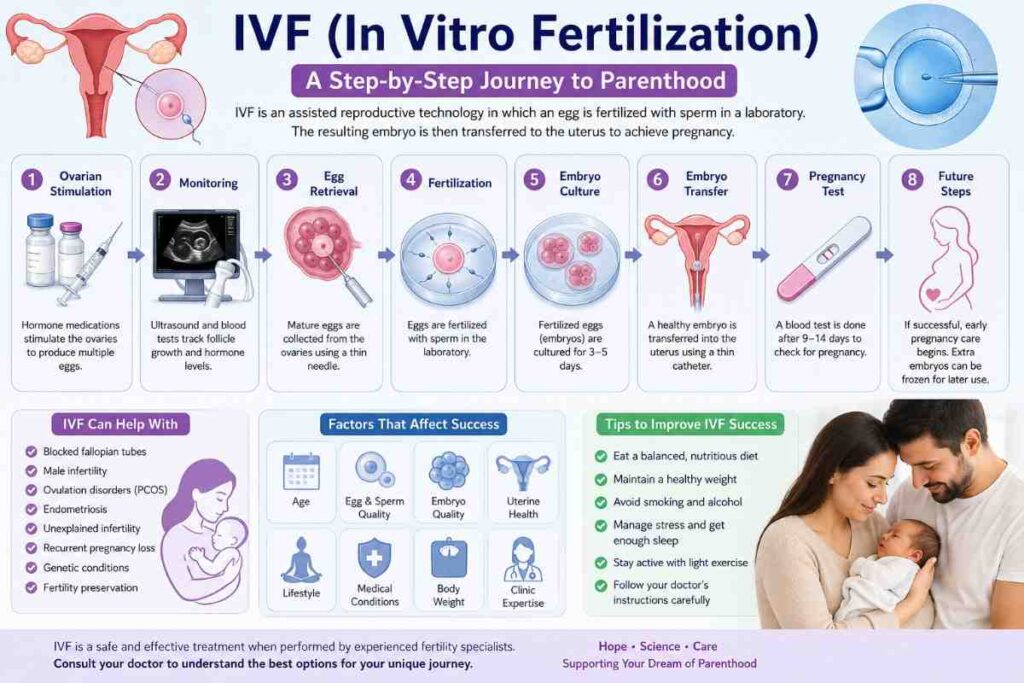

For many individuals and couples, starting or expanding a family happens naturally. For others, the journey to parenthood can be filled with uncertainty, emotional challenges, and difficult decisions. Infertility affects millions of people worldwide, but advances in reproductive medicine have made parenthood possible for many who once believed they had no options.
One of the most effective fertility treatments available today is In Vitro Fertilization (IVF). Since the birth of the world’s first IVF baby in 1978, the procedure has helped millions of families welcome healthy children. Modern IVF techniques continue to improve, offering higher success rates, safer procedures, and personalized treatment plans based on each patient’s unique circumstances.
In this guide, you’ll learn what IVF is, who may benefit from it, how the procedure works step by step, what affects success rates, and the potential benefits and risks involved.
What Is IVF (In Vitro Fertilization)?
In Vitro Fertilization (IVF) is an assisted reproductive technology (ART) in which an egg is fertilized by sperm outside the body in a specialized laboratory. After fertilization, one or more healthy embryos are carefully transferred into the uterus, where implantation may occur and result in pregnancy.
The term “in vitro” means “in glass,” referring to the laboratory environment where fertilization takes place.
Unlike natural conception, where fertilization occurs inside the fallopian tubes, IVF allows fertility specialists to closely monitor embryo development before transferring the healthiest embryo to the uterus.
Today, IVF is used to treat many different causes of infertility and has become one of the most successful reproductive treatments available.
Who May Need IVF?
IVF is not the first treatment recommended for everyone experiencing fertility problems. Many couples conceive with medication, lifestyle changes, or less invasive fertility treatments. However, IVF may be recommended when other options have not been successful or when certain medical conditions make natural conception unlikely.
Common reasons include:
1. Blocked or Damaged Fallopian Tubes
Healthy fallopian tubes are essential for natural fertilization. If both tubes are blocked or severely damaged, sperm and egg cannot meet naturally. IVF bypasses the fallopian tubes completely.
2. Male Infertility
Male fertility problems may include:
- Low sperm count
- Poor sperm movement (motility)
- Abnormal sperm shape
- Ejaculation disorders
- Previous vasectomy
- Genetic conditions affecting fertility
In some cases, doctors use a specialized IVF technique called Intracytoplasmic Sperm Injection (ICSI), where a single healthy sperm is injected directly into an egg.
3. Ovulation Disorders
Women who ovulate irregularly or not at all may have difficulty becoming pregnant.
Common causes include:
- Polycystic Ovary Syndrome (PCOS)
- Premature ovarian insufficiency
- Hormonal disorders
- Thyroid disease
If medications fail to restore ovulation, IVF may be recommended.
4. Endometriosis
Endometriosis occurs when tissue similar to the uterine lining grows outside the uterus.
It may:
- Damage reproductive organs
- Affect egg quality
- Block fallopian tubes
- Reduce implantation rates
IVF often provides better pregnancy outcomes for women with moderate to severe endometriosis.
5. Unexplained Infertility
Sometimes all fertility tests appear normal, yet pregnancy does not occur after a year or more of trying.
This is known as unexplained infertility.
IVF may improve the chances of conception by overcoming factors that cannot be detected through standard testing.
6. Advanced Maternal Age
Female fertility naturally declines with age, especially after age 35.
Egg quality decreases over time, increasing the risk of:
- Difficulty conceiving
- Miscarriage
- Chromosomal abnormalities
IVF may improve pregnancy chances, particularly when combined with genetic testing of embryos.
7. Recurrent Pregnancy Loss
Couples experiencing multiple miscarriages may benefit from IVF with Preimplantation Genetic Testing (PGT) to identify chromosomally normal embryos before transfer.
8. Genetic Disorders
Parents who carry inherited genetic conditions may choose IVF with embryo testing to reduce the risk of passing certain diseases to their child.
Examples include:
- Cystic fibrosis
- Sickle cell disease
- Tay-Sachs disease
- Huntington’s disease
9. Fertility Preservation
Individuals diagnosed with cancer or other medical conditions may freeze eggs, sperm, or embryos before treatments that could affect fertility.
IVF later allows these preserved reproductive cells to be used for pregnancy.
10. LGBTQ+ Family Building
IVF provides family-building opportunities for:
- Same-sex couples
- Single parents by choice
- Individuals using donor eggs
- Donor sperm
- Gestational carriers (surrogates)
How Does IVF Work? (Step-by-Step Process)
Although every fertility clinic follows slightly different protocols, the IVF process generally includes several carefully monitored stages.
Step 1: Initial Fertility Evaluation
Before beginning IVF, both partners undergo comprehensive testing.
This may include:
For Women
- Medical history
- Hormone blood tests
- Ultrasound examination
- Ovarian reserve testing
- Uterine evaluation
- Infectious disease screening
For Men
- Semen analysis
- Medical history
- Hormone testing (if needed)
- Genetic testing in selected cases
These evaluations help doctors create an individualized treatment plan.
Step 2: Ovarian Stimulation
Normally, a woman releases one egg each month.
During IVF, fertility medications stimulate the ovaries to mature multiple eggs at once.
Common medications include:
- Follicle-stimulating hormone (FSH)
- Luteinizing hormone (LH)
- GnRH agonists or antagonists
The goal is to produce several mature eggs, increasing the likelihood of creating healthy embryos.
Step 3: Monitoring Follicle Growth
Throughout ovarian stimulation, the fertility team closely monitors progress using:
- Blood hormone tests
- Transvaginal ultrasounds
These appointments help determine:
- Number of developing follicles
- Egg maturity
- Medication adjustments
- Best timing for egg retrieval
Monitoring usually lasts around 8–14 days.
Step 4: Trigger Shot
Once the eggs reach the ideal size, a hormone injection—often called the trigger shot—is given.
This injection completes final egg maturation.
Egg retrieval is scheduled approximately 34–36 hours later, before natural ovulation occurs.
Step 5: Egg Retrieval
Egg retrieval is a minimally invasive outpatient procedure performed under light sedation or anesthesia.
Using ultrasound guidance, the fertility specialist inserts a thin needle through the vaginal wall into each ovarian follicle.
The eggs are gently collected into sterile laboratory containers.
The procedure usually takes about:
- 20–30 minutes
Most patients return home the same day.
Mild cramping, bloating, or spotting afterward is common and usually resolves within a few days.
Step 6: Sperm Collection
On the day of egg retrieval, a sperm sample is typically collected from the male partner.
If donor sperm is being used, frozen donor sperm is carefully thawed and prepared.
The laboratory selects the healthiest sperm for fertilization.
Step 7: Fertilization
Fertilization takes place in a highly controlled embryology laboratory.
There are two primary methods:
Conventional IVF
Thousands of sperm are placed with each mature egg, allowing fertilization to occur naturally.
Intracytoplasmic Sperm Injection (ICSI)
A single healthy sperm is injected directly into one mature egg.
ICSI is commonly recommended for:
- Severe male infertility
- Previous fertilization failure
- Frozen eggs
- Genetic testing cycles
Step 8: Embryo Culture
After fertilization, embryos continue growing inside specialized incubators.
Embryologists monitor:
- Cell division
- Embryo appearance
- Growth rate
- Development quality
Embryos are usually cultured for:
- 3 to 5 days
Many clinics prefer transferring or freezing embryos at the blastocyst stage (Day 5) because implantation rates are often higher.
Step 9: Genetic Testing (Optional)
Some patients choose Preimplantation Genetic Testing (PGT).
A few cells are removed from the embryo without harming its development.
Testing may identify:
- Chromosomal abnormalities
- Certain inherited diseases
- Embryos with the highest implantation potential
Not every patient requires genetic testing, and your fertility specialist will discuss whether it is appropriate for your situation.
Step 10: Embryo Transfer
Embryo transfer is usually quick and painless.
A thin catheter is inserted through the cervix into the uterus, where the selected embryo is gently placed.
Unlike egg retrieval, anesthesia is generally not needed.
Many patients resume normal daily activities shortly afterward, although doctors may recommend avoiding strenuous exercise for a short period.
Step 11: Pregnancy Test
Approximately 9–14 days after embryo transfer, a blood test measures human chorionic gonadotropin (hCG) to determine whether implantation has occurred.
If the test is positive, an ultrasound is scheduled several weeks later to confirm the pregnancy and monitor early fetal development.
IVF Success Rates
IVF success varies from person to person. While the treatment has helped millions achieve pregnancy, no fertility treatment can guarantee success.
Several factors influence the likelihood of a successful pregnancy.
Age
Age remains one of the strongest predictors of IVF success because both egg quantity and quality decline over time. In general:
| Age Group | General IVF Success Trend |
|---|---|
| Under 35 | Highest success rates |
| 35–37 years | Good success rates |
| 38–40 years | Moderate success rates |
| 41–42 years | Lower success rates |
| Over 42 years | Significantly lower with own eggs; donor eggs may improve outcomes |
Other Factors That Affect IVF Success
Success is also influenced by:
- Egg quality
- Sperm quality
- Embryo quality
- Uterine health
- Body weight
- Smoking and alcohol use
- Underlying medical conditions
- Previous pregnancies
- Fertility diagnosis
- Laboratory quality
- Experience of the fertility clinic
Many couples require more than one IVF cycle before achieving a successful pregnancy.
Benefits of IVF
IVF has transformed reproductive medicine by providing effective treatment for many causes of infertility. Some of its key benefits include:
1. Effective Treatment for Many Fertility Conditions
IVF can help overcome issues related to blocked fallopian tubes, ovulation disorders, male infertility, endometriosis, and unexplained infertility.
2. Higher Pregnancy Rates Compared With Many Other Fertility Treatments
For suitable candidates, IVF generally offers higher success rates than treatments such as ovulation induction or intrauterine insemination (IUI), particularly in more complex infertility cases.
3. Ability to Screen for Certain Genetic Conditions
When appropriate, preimplantation genetic testing (PGT) allows specialists to identify embryos with specific chromosomal or inherited genetic conditions before transfer, helping some families reduce the risk of passing on certain genetic disorders.
4. Family-Building Options for Diverse Needs
IVF can support family building for individuals and couples using donor eggs, donor sperm, frozen embryos, or gestational carriers, making it an option for many different family situations.
5. Fertility Preservation
Eggs, sperm, or embryos can be frozen for future use. This is especially valuable for people undergoing treatments, such as chemotherapy, that may affect fertility, or for those who wish to delay parenthood for personal reasons.
Risks and Side Effects of IVF
Although IVF is considered a safe and well-established fertility treatment, like any medical procedure, it carries some risks and potential side effects. Most people complete treatment without serious complications, but understanding the possible risks can help you make informed decisions and know when to seek medical care.
1. Ovarian Hyperstimulation Syndrome (OHSS)
OHSS is a reaction to fertility medications used to stimulate the ovaries. It occurs when the ovaries respond too strongly, causing them to become enlarged and leak fluid into the abdomen.
Symptoms may include:
- Abdominal bloating
- Pelvic pain
- Rapid weight gain
- Nausea or vomiting
- Shortness of breath in severe cases
Most cases are mild and improve with rest and hydration, while severe OHSS is uncommon and may require medical treatment or hospitalization.
2. Multiple Pregnancy
Transferring more than one embryo increases the chance of twins or higher-order multiples.
Multiple pregnancies are associated with a higher risk of:
- Premature birth
- Low birth weight
- Gestational diabetes
- High blood pressure during pregnancy
- Cesarean delivery
Today, many fertility clinics recommend single embryo transfer (SET) for appropriate candidates to reduce these risks while maintaining good pregnancy outcomes.
3. Ectopic Pregnancy
An ectopic pregnancy occurs when a fertilized embryo implants outside the uterus, most commonly in a fallopian tube.
Although uncommon after IVF, it is still possible, especially in women with previous tubal disease.
Warning signs include:
- Severe abdominal pain
- Vaginal bleeding
- Shoulder pain
- Dizziness or fainting
An ectopic pregnancy requires immediate medical attention.
4. Miscarriage
Unfortunately, IVF cannot completely eliminate the risk of miscarriage.
Factors that may increase miscarriage risk include:
- Advanced maternal age
- Chromosomal abnormalities
- Certain medical conditions
- Uterine abnormalities
Using genetically tested embryos may reduce miscarriage related to chromosomal abnormalities in selected patients, but it does not guarantee a successful pregnancy.
5. Egg Retrieval Complications
Egg retrieval is generally safe, but rare complications may occur.
These include:
- Bleeding
- Infection
- Injury to nearby organs
- Reaction to anesthesia
Experienced fertility specialists use ultrasound guidance to minimize these risks.
6. Emotional Stress
IVF is physically and emotionally demanding.
Many people experience:
- Anxiety
- Disappointment
- Depression
- Emotional exhaustion
- Relationship stress
Seeking support from counselors, fertility support groups, or mental health professionals can make the journey easier.
7. Financial Burden
IVF treatment can be expensive, and more than one treatment cycle may be needed before pregnancy occurs.
Patients should discuss:
- Total treatment costs
- Medication expenses
- Embryo freezing fees
- Storage costs
- Insurance coverage (if available)
Planning financially before treatment begins can reduce unexpected stress.
How to Prepare for IVF?
Good preparation can improve your overall health and help create the best possible environment for fertility treatment.
1. Schedule a Complete Fertility Evaluation
Before starting IVF, your fertility specialist will review your medical history, perform examinations, and recommend appropriate laboratory tests and imaging.
2. Reach a Healthy Weight
Being significantly underweight or overweight may affect hormone levels, ovulation, and pregnancy outcomes.
Aim for gradual, healthy weight management through balanced nutrition and regular physical activity if recommended by your healthcare provider.
3. Eat a Nutrient-Dense Diet
A balanced diet supports reproductive health.
Include foods such as:
- Fresh fruits
- Vegetables
- Whole grains
- Lean protein
- Healthy fats
- Nuts and seeds
- Dairy or fortified alternatives
Limit highly processed foods, sugary beverages, and excessive saturated fats.
4. Start Prenatal Vitamins
Most fertility specialists recommend beginning a prenatal vitamin before IVF.
Important nutrients include:
- Folic acid
- Vitamin D
- Iron (if needed)
- Iodine
- Vitamin B12 (especially for vegetarians or vegans)
Always follow your healthcare provider’s recommendations regarding supplements.
5. Stop Smoking
Smoking has been linked to reduced fertility, poorer egg quality, lower IVF success rates, and increased pregnancy complications.
Quitting before treatment can improve reproductive health for both partners.
6. Limit Alcohol
Many fertility specialists recommend avoiding or significantly limiting alcohol during IVF treatment and pregnancy planning.
7. Reduce Caffeine Intake
Moderate caffeine intake is generally considered acceptable, but excessive consumption may not be advisable during fertility treatment.
Discuss appropriate limits with your fertility specialist.
8. Exercise Regularly
Gentle to moderate exercise can support overall health.
Examples include:
- Walking
- Swimming
- Yoga
- Stretching
- Light strength training
Avoid intense workouts during ovarian stimulation unless your doctor advises otherwise.
9. Prioritize Sleep
Aim for 7–9 hours of quality sleep each night.
Good sleep supports hormone regulation, immune function, and overall well-being.
10. Manage Stress
Stress alone does not cause infertility, but reducing stress may improve your overall treatment experience.
Helpful strategies include:
- Meditation
- Deep breathing exercises
- Journaling
- Counseling
- Spending time with loved ones
- Relaxing hobbies
Lifestyle Tips to Improve IVF Success
While no lifestyle change can guarantee pregnancy, healthy habits may positively influence fertility and support a healthy pregnancy.
1. Follow Your Medication Schedule Carefully
Take fertility medications exactly as instructed.
Missing doses or taking medications at the wrong time may affect treatment.
2. Attend Every Appointment
Frequent monitoring helps your fertility team adjust medications and determine the ideal timing for egg retrieval and embryo transfer.
3. Stay Hydrated
Drink enough water throughout the day, especially during ovarian stimulation, unless your healthcare provider recommends otherwise.
4. Choose Balanced Meals
Focus on nutrient-rich foods rather than restrictive diets.
Consistent, balanced eating supports your body’s increased nutritional needs during treatment.
5. Avoid Recreational Drugs
Substances such as marijuana and other recreational drugs may affect fertility and pregnancy outcomes.
Discuss any substance use openly with your fertility specialist.
6. Limit Environmental Toxins
Although more research is needed, minimizing unnecessary exposure to certain chemicals may be beneficial.
Examples include:
- Tobacco smoke
- Certain pesticides
- Industrial solvents
- Excessive heat exposure to the reproductive organs in men
7. Follow Your Doctor’s Activity Recommendations
After embryo transfer, most people can continue normal daily activities, but your doctor may advise avoiding:
- Heavy lifting
- High-impact exercise
- Hot tubs
- Saunas
Follow your clinic’s specific instructions.
IVF Timeline: What to Expect
Every treatment plan is unique, but a typical IVF cycle follows a similar schedule.
| Stage | Approximate Time |
|---|---|
| Initial consultation and testing | 2–6 weeks |
| Ovarian stimulation | 8–14 days |
| Egg retrieval | 1 day |
| Fertilization and embryo culture | 3–5 days |
| Fresh embryo transfer (if planned) | Day 3–5 after retrieval |
| Frozen embryo transfer (if used) | Future cycle |
| Pregnancy blood test | 9–14 days after transfer |
The entire IVF process often takes 4 to 8 weeks, although frozen embryo transfers may occur months later depending on the treatment plan.
IVF vs. IUI: What’s the Difference?
Both IVF and intrauterine insemination (IUI) are fertility treatments, but they differ in complexity, cost, and success rates.
| Feature | IVF | IUI |
|---|---|---|
| Fertilization | Occurs in a laboratory | Occurs naturally inside the body |
| Egg retrieval | Required | Not required |
| Fertility medications | Usually required | Sometimes used |
| Success rates | Generally higher | Lower than IVF |
| Cost | Higher | Lower |
| Best for | Complex infertility, blocked tubes, severe male infertility | Mild infertility, unexplained infertility, ovulation issues |
Your fertility specialist will recommend the most appropriate treatment based on your age, medical history, fertility diagnosis, and previous treatments.
How Much Does IVF Cost?
The cost of In Vitro Fertilization (IVF) varies depending on the country, fertility clinic, medications, laboratory procedures, and whether additional treatments are needed.
Average IVF Cost by Country
| Country | Estimated Cost per IVF Cycle |
|---|---|
| India | ₹1,00,000–₹2,50,000 |
| United States | $12,000–$20,000+ |
| United Kingdom | £3,500–£7,500 |
| Canada | CAD $10,000–$15,000 |
| Australia | AUD $9,000–$15,000 |
These are approximate costs and may not include medications or additional procedures.
Additional Costs to Consider
Besides the IVF procedure itself, you may also need to budget for:
- Fertility medications
- Initial consultations and fertility tests
- Ultrasound scans and blood tests
- Intracytoplasmic Sperm Injection (ICSI), if required
- Preimplantation Genetic Testing (PGT)
- Egg, sperm, or embryo freezing
- Frozen Embryo Transfer (FET)
- Donor eggs or donor sperm (if needed)
- Embryo storage fees
Does Insurance Cover IVF?
Insurance coverage for IVF varies by country, state, and individual health insurance plan. Some policies cover part of the treatment, while others may not provide any fertility benefits. Check with your insurance provider and fertility clinic to understand your coverage and potential out-of-pocket expenses.
Tips to Manage IVF Costs
- Request a detailed cost estimate before treatment.
- Ask about package plans or multi-cycle programs.
- Check whether financing or payment plans are available.
- Review your insurance benefits carefully.
- Compare clinics based on both success rates and overall treatment costs.
Emotional Well-Being During IVF
The emotional side of IVF is often overlooked, but it is just as important as the medical aspects of treatment.
Waiting for test results, managing medications, attending frequent appointments, and coping with uncertainty can be emotionally exhausting. Some people may also experience feelings of grief, frustration, guilt, or isolation—especially if treatment is unsuccessful.
Ways to support your emotional health include:
- Talk openly with your partner or trusted family members.
- Join a fertility support group where you can connect with others who share similar experiences.
- Consider speaking with a licensed mental health professional or fertility counselor.
- Practice relaxation techniques such as mindfulness, gentle yoga, or meditation.
- Continue enjoyable hobbies and maintain social connections when possible.
- Give yourself permission to rest and acknowledge your emotions without judgment.
Remember that needing emotional support during fertility treatment is common and does not reflect your strength or commitment. Caring for your mental well-being is an important part of the IVF journey.
Conclusion:
IVF has helped millions of people overcome infertility and build families. While success varies based on individual factors, advances in reproductive medicine continue to improve outcomes. If you’re considering IVF, consult a qualified fertility specialist to determine the most appropriate treatment plan for your needs.
FAQ’s
Is IVF 100% successful?
No. In Vitro Fertilization improves the chances of pregnancy, but no fertility treatment can guarantee success.
Is IVF good for pregnancy?
Yes. In Vitro Fertilization is a safe and effective treatment for many causes of infertility and has helped millions of people have healthy pregnancies.
At what age is IVF most successful?
In Vitro Fertilization generally has the highest success rates for women under 35 years of age, as egg quality and quantity are typically better.
Is 7 rounds of IVF a lot?
Yes. While some people conceive after one cycle, others may require multiple cycles. The appropriate number depends on your individual situation and your fertility specialist’s advice.
Why are IVF babies usually boys?
They are not. In Vitro Fertilization does not naturally increase the chance of having a boy. Without sex selection, the chances of having a boy or girl are similar to natural conception.
Is 37 too late for IVF?
No. Many women have successful IVF pregnancies at 37, although success rates are generally lower than for women under 35.
Is IVF risky after 40?
Pregnancy risks and IVF success rates change with age, but many women over 40 still achieve pregnancy through In Vitro Fertilization. Your fertility specialist can assess your individual chances.
What are the chances of twins with IVF?
The chance of twins depends mainly on the number of embryos transferred. Single embryo transfer greatly reduces the likelihood of twins.
How successful is IVF on the first try?
First-cycle success varies depending on age, embryo quality, and overall fertility health. Younger women generally have higher first-cycle success rates.
Do IVF babies come early?
Most In Vitro Fertilization babies are born healthy. However, pregnancies involving twins or other complications may have a higher chance of preterm birth.
Do IVF babies look different?
No. In Vitro Fertilization babies look no different from babies conceived naturally.
Are IVF babies bigger?
Not necessarily. Birth weight depends on many factors, including gestational age, maternal health, and whether it is a multiple pregnancy.
Is 2 eggs enough for IVF?
Yes, pregnancy is possible with two eggs, although having more healthy eggs may increase the chances of developing viable embryos.
Do IVF babies have problems later in life?
Most In Vitro Fertilization children grow and develop normally. Long-term research shows that the vast majority are healthy.
How many embryos are usually transferred in IVF?
Many clinics now recommend transferring one embryo for suitable candidates to reduce the risk of multiple pregnancy.
Why are IVF babies mostly twins?
They are not. Twin pregnancies mainly occur when more than one embryo is transferred during treatment.
What is the hardest stage of IVF?
Many people find the two-week wait between embryo transfer and the pregnancy test to be the most emotionally challenging stage.
What is the riskiest part of IVF?
The greatest medical risks include ovarian hyperstimulation syndrome (OHSS), multiple pregnancy, and egg retrieval complications, though serious complications are uncommon.
Can I walk 10,000 steps during IVF?
Light to moderate walking is generally safe, but strenuous activity should be avoided during ovarian stimulation. Always follow your fertility specialist’s advice.
What is the most successful round of IVF?
Success depends on individual factors such as age, embryo quality, and fertility diagnosis. Some people conceive on the first cycle, while others may need multiple IVF rounds.
Is IVF painful?
Most people experience only mild discomfort. Egg retrieval is performed under sedation, and embryo transfer is usually painless.
How long does an IVF cycle take?
A complete In Vitro Fertilization cycle typically takes 4–8 weeks, depending on the treatment plan.
Can IVF guarantee pregnancy?
No. In Vitro Fertilization improves the chances of pregnancy but cannot guarantee a successful outcome.
How many IVF cycles are usually needed?
Some people conceive after one cycle, while others may need multiple In Vitro Fertilization cycles to achieve pregnancy.
Can IVF help with male infertility?
Yes. In Vitro Fertilization, especially with Intracytoplasmic Sperm Injection (ICSI), is an effective treatment for many male infertility issues.
Can frozen embryos be used later?
Yes. Frozen embryos can be stored for future use and transferred in a later treatment cycle.
Is IVF safe for the baby?
Yes. Most babies born through In Vitro Fertilization are healthy, and the procedure is considered safe when performed by experienced fertility specialists.
What should I avoid during IVF treatment?
Avoid smoking, excessive alcohol, recreational drugs, and follow your doctor’s advice regarding diet, exercise, and medications.
Can I live a normal life during IVF?
Yes. Most people can continue their daily routine, but strenuous exercise and heavy lifting may need to be limited during certain stages of treatment.
Sources / References:
- World Health Organization (WHO)
- American Society for Reproductive Medicine (ASRM)
- Centers for Disease Control and Prevention (CDC)
- Human Fertilisation and Embryology Authority (HFEA)
- NHS – IVF
About the Author:
Written by: Kirti Solanki (Health Content Researcher)
Kirti Solanki is a Health Content Researcher who creates evidence-based, easy-to-understand health content using trusted medical sources and current scientific research.
Disclaimer:
This guide is for informational purposes only and is not a substitute for professional medical advice, diagnosis, or treatment. Always consult a qualified fertility specialist or healthcare provider regarding your reproductive health or fertility treatment options.
Also Read: