
Pregnancy is an exciting journey filled with many important decisions, including how to protect your health and your baby’s well-being. One of the most effective ways to reduce the risk of serious infections during pregnancy is through vaccination. Vaccines help your immune system recognize and fight harmful viruses and bacteria before they can cause severe illness.
Many expectant mothers worry about whether vaccines are safe during pregnancy. This concern is understandable because every choice during pregnancy feels significant. Fortunately, decades of scientific research and continuous safety monitoring have shown that certain vaccines are not only safe but also strongly recommended during pregnancy. These vaccines help protect both the mother and the baby from potentially life-threatening diseases.
During pregnancy, your immune system, heart, and lungs undergo significant changes, making you more vulnerable to severe illness from infections such as influenza and COVID-19. At the same time, your unborn baby depends on your immune protection until they are old enough to receive their own vaccinations after birth.
This guide explains everything you need to know about vaccines during pregnancy, including which vaccines are recommended, when to receive them, how they work, and why they play an essential role in supporting a healthy pregnancy.
What Are Vaccines During Pregnancy?
Vaccines during pregnancy are immunizations that help protect pregnant women from infectious diseases while also providing early immunity to their babies before birth.
Vaccines work by safely exposing your immune system to inactive or weakened parts of a virus or bacteria, or by using modern technologies such as mRNA. This stimulates your immune system to produce protective antibodies without causing the disease itself.
These antibodies can cross the placenta during pregnancy and provide your baby with passive immunity. This temporary protection helps shield newborns during the first few months of life when they are most vulnerable to infections and are too young to receive certain vaccines.
Vaccination during pregnancy serves two important purposes:
- Protecting the mother’s health by reducing the risk of severe illness.
- Providing early immune protection for the newborn.
Not every vaccine is appropriate during pregnancy. Healthcare providers recommend only vaccines that have been carefully studied for safety and effectiveness in pregnant women.
Why Are Vaccines Important During Pregnancy?
Pregnancy naturally changes the body’s immune response. While these changes help support the growing baby, they can also make expectant mothers more susceptible to infections and complications.
Vaccination provides protection when it is needed most.
1. Helps Prevent Serious Illness
Pregnant women who develop infections such as influenza may have a higher risk of hospitalization, pneumonia, and other complications compared with non-pregnant adults.
Vaccination significantly lowers these risks.
2. Protects the Baby Before Birth
The mother’s antibodies pass through the placenta to the developing baby.
These antibodies continue protecting the newborn during the first several weeks or months of life before routine childhood vaccinations begin.
3. Reduces Pregnancy Complications
Certain infections during pregnancy can increase the risk of:
- Premature birth
- Low birth weight
- Maternal hospitalization
- Severe respiratory illness
- Pregnancy complications requiring intensive medical care
Vaccination helps reduce these risks.
4. Supports Community Protection
Vaccination also lowers the spread of infectious diseases within families and communities, helping protect newborns and people with weakened immune systems.
5. Prevents Diseases That Can Be Life-Threatening
Diseases such as:
- Influenza
- Pertussis (whooping cough)
- COVID-19
can become much more dangerous during pregnancy.
Recommended vaccines greatly reduce the likelihood of severe illness from these infections.
How Vaccines Protect Both Mother and Baby?
Vaccines provide a unique benefit during pregnancy because they safeguard two lives at the same time.
Step 1: The Mother’s Immune System Responds
After vaccination, the immune system recognizes harmless parts of the virus or bacteria and begins producing antibodies.
These antibodies remain available if the real infection occurs later.
Step 2: Antibodies Cross the Placenta
During pregnancy, maternal antibodies naturally pass through the placenta into the baby’s bloodstream.
This transfer is especially effective during the third trimester.
Step 3: Baby Receives Passive Immunity
The newborn is born with protective antibodies received from the mother.
This temporary immunity helps reduce the risk of serious infections during the baby’s first few months of life.
Step 4: Breastfeeding Provides Additional Support
Although breastfeeding does not replace vaccination, breast milk contains antibodies and immune-supporting components that continue helping protect infants after birth.
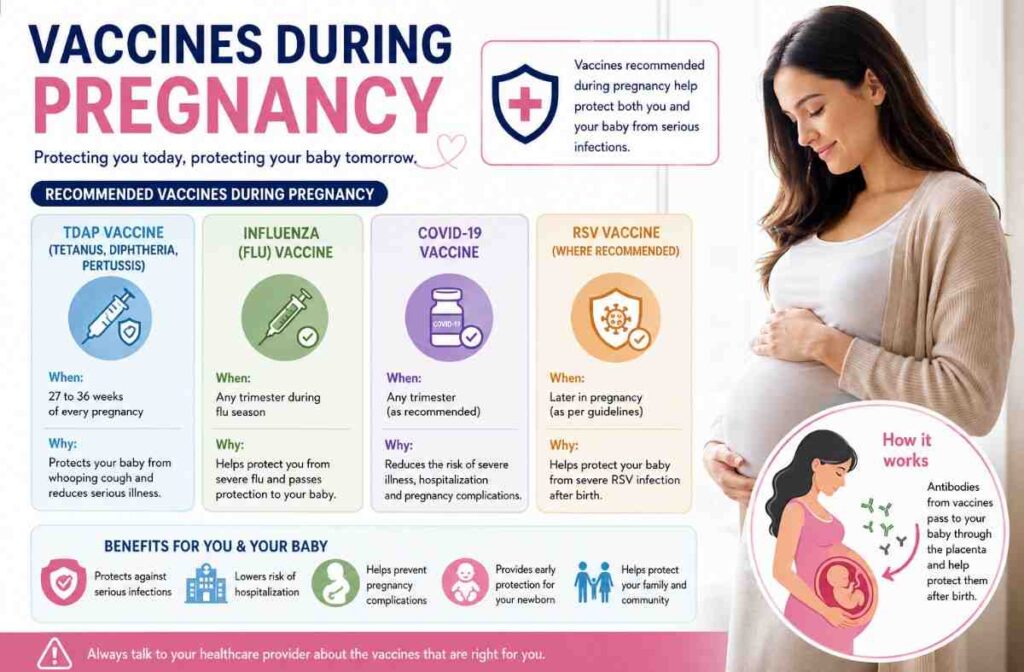
Recommended Vaccines During Pregnancy
Health experts recommend only a few vaccines during pregnancy because these have demonstrated strong safety records and clear health benefits.
1. Tdap Vaccine (Tetanus, Diphtheria, and Pertussis)
The Tdap vaccine is recommended during every pregnancy, even if you received it previously.
Best Time to Receive It
Between 27 and 36 weeks of pregnancy, ideally during the early part of this window.
Why It Is Important
Pertussis (whooping cough) can be extremely dangerous for newborns.
Receiving the Tdap vaccine during pregnancy allows protective antibodies to pass to the baby before birth.
Benefits
- Protects against whooping cough
- Reduces newborn hospitalization
- Lowers the risk of infant death from pertussis
- Protects the mother against infection
2. Influenza (Flu) Vaccine
The flu vaccine is recommended during any trimester of pregnancy during flu season.
Only the inactivated flu vaccine is recommended during pregnancy.
Why It Is Important
Pregnant women have a higher chance of severe illness from influenza.
The vaccine helps prevent:
- Severe flu infection
- Pneumonia
- Hospitalization
- Pregnancy complications
It also provides flu antibodies to the baby after birth.
3. COVID-19 Vaccine
Current medical guidelines recommend COVID-19 vaccination for pregnant women.
Vaccination lowers the risk of:
- Severe COVID-19 illness
- Hospitalization
- Intensive care admission
- Pregnancy complications associated with severe infection
Your healthcare provider can recommend the most appropriate vaccine schedule based on current public health guidance and your vaccination history.
4. RSV Vaccine (Respiratory Syncytial Virus)
The maternal RSV vaccine may be recommended during certain pregnancies to help protect newborns from severe RSV disease, depending on the season, availability, and local public health recommendations.
Timing
It is generally recommended during the later weeks of pregnancy, following national guidelines.
Benefits
- Protects newborns against severe RSV infection
- Reduces hospitalization
- Lowers the risk of serious lung infections during infancy
Always discuss eligibility with your healthcare provider.
Pregnancy Vaccination Schedule
| Vaccine | Recommended Timing | Purpose | Protects Baby? |
|---|---|---|---|
| Influenza (Flu) | Any trimester during flu season | Prevents seasonal flu | Yes |
| Tdap | 27–36 weeks | Prevents whooping cough | Yes |
| COVID-19 | Any trimester (as recommended) | Prevents severe COVID-19 illness | Yes |
| RSV (where recommended) | Later pregnancy (per guidelines) | Protects against severe RSV in newborns | Yes |
How Safe Are Vaccines During Pregnancy?
One of the most common concerns among expectant mothers is whether vaccines can harm their developing baby. Extensive research conducted over many years has consistently shown that the vaccines routinely recommended during pregnancy have excellent safety records.
Before any vaccine is recommended for pregnant women, it undergoes rigorous evaluation by health authorities. Even after approval, scientists continue monitoring vaccine safety through large surveillance systems and ongoing research.
Studies involving hundreds of thousands of pregnant women have found no evidence that recommended vaccines increase the risk of miscarriage, birth defects, infertility, or developmental problems. Instead, these vaccines help reduce the risk of severe infections that could threaten both maternal and newborn health.
It is also important to understand that the vaccines recommended during pregnancy do not contain live viruses capable of causing the diseases they protect against (with the exception that certain live vaccines are not recommended during pregnancy and will be discussed in Part 2).
For most pregnant women, the benefits of receiving recommended vaccines greatly outweigh the small risk of temporary side effects such as soreness at the injection site or mild fatigue.
Vaccines to Avoid During Pregnancy
While several vaccines are recommended during pregnancy, some vaccines should generally not be given because they contain live, weakened viruses. Although there is no strong evidence that these vaccines cause harm to an unborn baby, healthcare providers avoid them during pregnancy as a precaution.
If you receive one of these vaccines before realizing you are pregnant, do not panic. Contact your healthcare provider for guidance, but in most cases, this is not considered a reason to end the pregnancy.
1. MMR Vaccine (Measles, Mumps, and Rubella)
The MMR vaccine is a live vaccine and is usually given before pregnancy if immunity is lacking.
If you are planning a pregnancy, your healthcare provider may recommend receiving the MMR vaccine at least one month before conception.
2. Varicella (Chickenpox) Vaccine
The chickenpox vaccine is also a live vaccine and is not recommended during pregnancy.
Women who are not immune should consider vaccination before becoming pregnant.
3. Live Attenuated Influenza Vaccine (Nasal Spray)
The nasal spray flu vaccine contains a weakened live virus and should not be used during pregnancy.
Instead, pregnant women should receive the inactivated flu shot, which has been extensively studied for safety.
4. Certain Travel Vaccines
Some travel vaccines may not be suitable during pregnancy.
Examples include certain vaccines for:
- Yellow fever (may be considered only if travel is unavoidable and the risk of disease is high)
- Oral typhoid vaccine
- Other live vaccines
If you are planning international travel, speak with your healthcare provider well in advance to determine which vaccines are recommended and which should be postponed.
Benefits of Vaccines During Pregnancy
Vaccination during pregnancy offers important health benefits for both the mother and the developing baby.
1. Protects Against Serious Infections
Vaccines reduce the risk of illnesses that can become severe during pregnancy, including influenza, COVID-19, and whooping cough.
2. Lowers the Risk of Hospitalization
Vaccinated pregnant women are less likely to require hospitalization due to vaccine-preventable infections.
3. Helps Prevent Pregnancy Complications
Serious infections during pregnancy may increase the risk of complications such as:
- Premature birth
- Severe maternal illness
- Respiratory complications
- Intensive care admission
Vaccination helps lower these risks.
4. Provides Early Protection for Newborns
Babies receive protective antibodies through the placenta before birth, helping defend them against infections during their first months of life.
5. Reduces the Risk of Whooping Cough in Infants
Receiving the Tdap vaccine during pregnancy significantly reduces the likelihood of severe pertussis in newborns, who are especially vulnerable before they can begin their own vaccination schedule.
6. Supports a Healthier Pregnancy
Preventing infections allows the mother’s body to focus on supporting the baby’s growth and development.
7. Helps Protect Family Members
Vaccination lowers the spread of certain infectious diseases within households, creating a safer environment for newborns.
8. Offers Long-Term Public Health Benefits
High vaccination rates contribute to community immunity, helping protect infants and individuals who cannot be vaccinated due to medical conditions.
Possible Side Effects of Vaccines During Pregnancy
Most vaccine side effects are mild and temporary.
Common side effects may include:
- Pain, redness, or swelling at the injection site
- Mild fever
- Fatigue
- Headache
- Muscle aches
- Chills
- Nausea
These symptoms usually resolve within one or two days.
When to Contact a Healthcare Provider?
Seek medical advice if you experience:
- A high fever that does not improve
- Difficulty breathing
- Severe allergic reactions
- Persistent swelling or rash
- Any symptoms that concern you after vaccination
Severe allergic reactions are rare but require immediate medical attention.
Who Should Get Vaccinated During Pregnancy?
Most pregnant women benefit from receiving the vaccines recommended by their healthcare provider.
Vaccination is particularly important if you:
- Are pregnant during flu season
- Work in healthcare, education, or childcare
- Have asthma, diabetes, heart disease, or other chronic medical conditions
- Have a weakened immune system (consult your specialist for individualized recommendations)
- Are at increased risk of exposure to infectious diseases
- Are expecting during the RSV season, where maternal RSV vaccination is recommended
Every pregnancy is unique, so your healthcare provider will recommend the vaccines that best fit your health history and stage of pregnancy.
Who Should Consult Their Doctor Before Vaccination?
Although vaccines are safe for most pregnant women, some individuals should discuss vaccination carefully with their healthcare provider.
This includes women who:
- Have had a severe allergic reaction to a previous vaccine dose
- Are allergic to a vaccine ingredient
- Have experienced certain rare vaccine-related complications
- Have recently received blood products or immunoglobulin therapy
- Have complex medical conditions requiring specialist care
Your healthcare provider can help determine the safest vaccination plan for your situation.
Myths About Vaccines During Pregnancy
Myth: Vaccines can give my baby the disease.
Fact: Recommended vaccines used during pregnancy cannot cause the diseases they protect against.
Myth: Healthy pregnant women do not need vaccines.
Fact: Pregnancy itself increases the risk of severe illness from certain infections, even in otherwise healthy women.
Myth: Vaccines increase the risk of miscarriage.
Fact: Large scientific studies have found no evidence that recommended vaccines increase the risk of miscarriage.
Myth: Vaccines cause birth defects.
Fact: Recommended vaccines have not been shown to increase the risk of birth defects.
Myth: Natural immunity is always better.
Fact: While natural infection can produce immunity, it may also lead to serious complications for both the mother and baby. Vaccination provides protection without exposing you to the risks of the disease.
Conclusion
Vaccination during pregnancy is one of the most effective ways to protect both mother and baby from serious infectious diseases. Recommended vaccines such as the Tdap, influenza, COVID-19, and, where appropriate, the maternal RSV vaccine have strong safety records and provide valuable protection during pregnancy and the early months of a baby’s life.
Every pregnancy is different, and vaccine recommendations may vary based on your medical history, vaccination status, travel plans, and local public health guidance. Always discuss any questions or concerns with your obstetrician, midwife, or healthcare provider before receiving a vaccine.
FAQ’s
Are vaccines safe during pregnancy?
Yes. Vaccines recommended during pregnancy are considered safe and help protect both the mother and baby.
When should I get the Tdap vaccine during pregnancy?
The Tdap vaccine is recommended between 27 and 36 weeks of every pregnancy.
Can I get the flu vaccine while pregnant?
Yes. The inactivated flu vaccine is safe during any trimester during flu season.
Is the COVID-19 vaccine safe during pregnancy?
Yes. COVID-19 vaccination is recommended to help reduce the risk of severe illness during pregnancy.
Do vaccines protect my baby too?
Yes. Protective antibodies pass through the placenta and help protect your baby during the first few months after birth.
Can vaccines cause miscarriage or birth defects?
No. Research has found no evidence that recommended vaccines increase the risk of miscarriage or birth defects.
Can I receive vaccines during the first trimester?
Some vaccines, such as the flu and COVID-19 vaccines, may be given during any trimester if recommended by your healthcare provider.
Can vaccines affect fertility?
No. There is no scientific evidence that recommended vaccines affect fertility.
Is it safe to breastfeed after vaccination?
Yes. Most vaccines recommended during pregnancy and after delivery are safe while breastfeeding.
What if I accidentally received a live vaccine before knowing I was pregnant?
Contact your healthcare provider. In most cases, this is not considered a reason to end the pregnancy, but your provider may recommend monitoring.
Should every pregnant woman get vaccinated?
Most pregnant women benefit from recommended vaccines, but your healthcare provider will determine the best vaccination schedule based on your medical history and pregnancy.
Can vaccines harm my unborn baby?
Current evidence shows that recommended vaccines do not harm fetal development and instead help protect newborns through passive immunity.
Should I get vaccinated if I had COVID-19 before pregnancy?
Previous infection may provide some immunity, but vaccination can strengthen and prolong protection. Your healthcare provider can recommend the best timing based on current guidance.
Sources / References:
- Centers for Disease Control and Prevention (CDC)
- American College of Obstetricians and Gynecologists (ACOG)
- World Health Organization (WHO)
- CDC – Influenza Vaccination During Pregnancy
- CDC – Tdap Vaccination During Pregnancy
- CDC – COVID-19 Vaccination During Pregnancy
- WHO – Vaccines and Immunization
- Society for Maternal-Fetal Medicine (SMFM)
About the Author:
Written by: Kirti Solanki (Health Content Researcher)
Kirti Solanki is a health content researcher who creates evidence-based articles on pregnancy, nutrition, and wellness using trusted medical sources and current clinical guidelines.
Disclaimer:
This guide is for informational purposes only and is not a substitute for professional medical advice, diagnosis, or treatment. Always consult your healthcare provider before making decisions about vaccinations or your pregnancy.
Also Read: