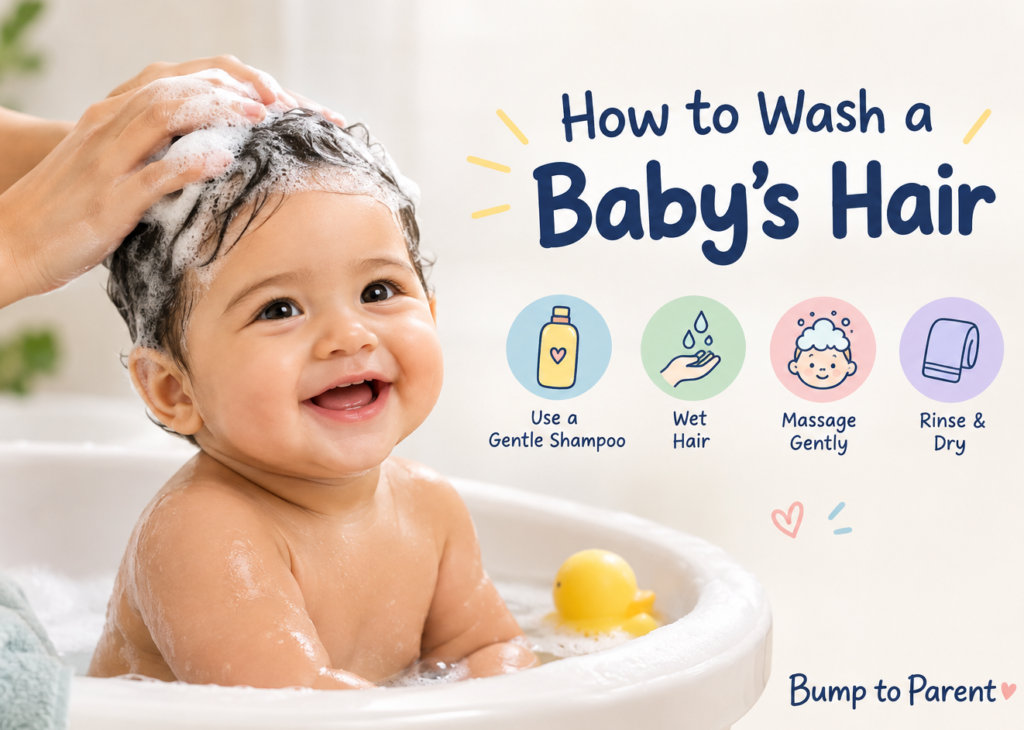

Washing a baby’s hair can feel surprisingly difficult, especially during the first few weeks. Babies have delicate scalps, limited head control, and very little hair, so parents often wonder how often to wash it, whether shampoo is necessary, and how to prevent water from getting into the baby’s eyes.
The good news is that washing your baby’s hair does not need to be complicated. A gentle approach, warm water, a suitable baby shampoo when needed, and good head support are usually all you need.
Newborns do not need daily bathing or hair washing. Bathing about three times a week may be enough during the first year, while frequent bathing can dry a baby’s skin.
When Can You Start Washing a Baby’s Hair?
You can gently clean a newborn baby’s hair from the early days of life. However, the method may depend on whether the umbilical cord stump has fallen off and healed.
Before the cord stump falls off, many pediatric guidance sources recommend sponge bathing rather than placing the baby in a bath. You can gently clean the baby’s scalp with a damp, soft washcloth or wash the hair while supporting the baby safely over a basin. Once the umbilical area has healed, you can usually wash your baby’s hair during a regular bath.
How Often Should You Wash a Baby’s Hair?
Most babies do not need their hair washed every day.
For many babies, washing the hair a few times a week is sufficient. Washing too frequently, especially with cleansers, may contribute to dry skin. You may need to wash your baby’s hair more often if:
- The scalp becomes sweaty: Hot weather can make the scalp sweaty, particularly under hats or during sleep.
- Milk or spit-up gets into the hair: Gently clean the affected area rather than waiting for the next bath.
- The scalp has cradle cap: More frequent gentle shampooing may help loosen and remove scales.
- Your pediatrician recommends a different schedule: Babies with certain scalp or skin conditions may need individualized care.
What You Need to Wash Your Baby’s Hair
Before starting, collect everything you need so you do not have to leave your baby unattended.
You may need:
- A soft baby washcloth
- Warm water
- A clean towel
- A mild baby shampoo, if needed
- A soft baby hairbrush
- A clean diaper
- Clean clothes
The NHS recommends preparing all bathing supplies before beginning and keeping the room comfortably warm because babies can become cold quickly.
Step-by-Step: How to Wash a Baby’s Hair
1. Choose a Calm Time
Choose a time when your baby is awake and relatively calm.
Avoid starting immediately after a feed or when your baby is extremely hungry or tired. A calm baby is generally easier to handle during hair washing.
2. Prepare the Room
Keep the room warm and have the towel, shampoo, clothes, and other supplies within easy reach.
Never leave your baby unattended to fetch something after the washing has started.
3. Check the Water Temperature
Use warm water rather than hot water.
Test the water with your wrist or elbow before washing your baby. Mix the water thoroughly so there are no areas that are significantly hotter than others.
4. Support Your Baby’s Head and Neck
Babies cannot reliably support their own heads, particularly during the newborn period.
Keep one hand supporting your baby’s head and neck while using the other hand to wash the hair. When washing over a basin or baby bath, keep the baby’s head well supported and positioned safely.
5. Wet the Hair Gently
Use your free hand or a soft washcloth to gently wet your baby’s scalp.
Avoid pouring a large amount of water directly over the baby’s face. Instead, work slowly from the top and sides of the head.
6. Use a Small Amount of Mild Baby Shampoo
If shampoo is needed, use a small amount of a mild product designed for babies.
You do not need a large amount of shampoo to clean a baby’s hair. Gently massage the scalp with your fingertips rather than scratching with your nails.
For very young babies, plain water may be sufficient, particularly during the first month. The plain water is best for a baby’s skin during the first month and that cleansers are not essential.
7. Be Gentle Around the Soft Spot
A baby’s fontanelle, commonly called the soft spot, can make parents nervous.
You do not need to avoid washing the area completely. Gentle washing and light fingertip movements are appropriate. Avoid pressing, rubbing aggressively, or scratching the scalp.
8. Rinse Thoroughly
Use clean, warm water to rinse away the shampoo.
Try to prevent shampoo from running into your baby’s eyes. A soft washcloth can help control the flow of water around the forehead and face.
9. Dry the Hair Gently
Wrap your baby’s head in a soft towel and gently pat the hair dry.
Avoid vigorous rubbing because a baby’s scalp and hair are delicate.
10. Keep Your Baby Warm
Once the hair is dry, dress your baby promptly if the room is cool.
Babies can lose body heat quickly, so keeping the room warm and drying them promptly is an important part of bath-time care.
Should You Use Shampoo on a Baby’s Hair?
Not always.
A baby’s scalp may often be cleaned effectively with warm water, particularly during the early newborn period. If shampoo is used, choose a mild baby-specific product and use only a small amount.
Avoid automatically using adult shampoos, strong cleansing products, or heavily fragranced products on a baby’s scalp. The NHS specifically advises avoiding adult shampoos and fragranced or perfumed products when managing cradle cap.
If your baby develops irritation, redness, itching, or a rash after using a particular hair product, stop using it and discuss the reaction with a healthcare professional.
How to Wash a Newborn’s Hair Before the Umbilical Cord Falls Off
If the umbilical cord stump is still attached, sponge bathing is commonly recommended instead of putting the newborn into a bath.
You can:
- Prepare warm water and a clean washcloth.
- Keep your baby wrapped in a towel to stay warm.
- Support the baby’s head and neck securely.
- Gently dampen the scalp with the washcloth.
- Use plain water or an appropriate mild baby product if needed.
- Gently wipe the scalp without rubbing.
- Pat the hair dry immediately.
- Keep the umbilical stump clean and dry.
The umbilical cord area itself should be kept clean and dry. If you notice redness around the base, foul-smelling discharge, or other signs of infection, contact your baby’s healthcare professional.
How to Wash a Baby’s Hair in the Bath
Once your baby’s umbilical area has healed, hair washing can become part of regular bath time. A simple routine is:
- Support: Keep your baby’s head and neck supported.
- Wet: Gently wet the scalp with warm water.
- Clean: Apply a small amount of mild baby shampoo if needed.
- Massage: Use your fingertips to gently massage the scalp.
- Rinse: Thoroughly rinse the shampoo away.
- Dry: Pat the hair dry with a soft towel.
- Warm: Dress your baby once they are dry.
The NHS recommends washing the baby’s hair before lowering the baby into the bath and keeping the baby’s head clear of the water.
What If Your Baby Hates Hair Washing?
Some babies cry as soon as water touches their heads. This does not necessarily mean anything is wrong.
Try making hair washing shorter and calmer.
You can:
- Use a calm voice: Talking gently can reassure your baby.
- Keep the routine predictable: Washing the hair in the same general order can make bath time easier.
- Avoid getting water on the face: This may reduce fear and discomfort.
- Use a soft washcloth: A washcloth can provide more control than pouring water.
- Keep the bath brief: Babies do not need long baths.
- Choose the right time: Avoid washing when your baby is hungry, overtired, or immediately after feeding.
If your baby becomes very distressed, stop and try again another time rather than turning hair washing into a stressful experience.
How to Wash a Baby’s Hair Without Getting Water in the Eyes
Getting shampoo or water into the eyes can make babies uncomfortable.
Try these techniques:
- Use a washcloth: Wet the washcloth and gently wipe the scalp rather than pouring water directly over the head.
- Tilt the head slightly backward: Keep the baby’s head securely supported while rinsing.
- Use a small amount of shampoo: Less shampoo means less product to rinse away.
- Rinse slowly: Use small amounts of clean water rather than a large splash.
- Protect the forehead: Your hand can help direct water away from the face.
If shampoo gets into your baby’s eyes, gently rinse the area with clean water.
How to Deal With Cradle Cap
Cradle cap is a common, usually harmless condition that causes greasy, white, yellow, or brown scales on a baby’s scalp. It generally resolves on its own.
Gentle hair washing can help manage the flakes.
A basic approach includes:
- Soften the scales: An appropriate emollient or coconut oil may help loosen scales, according to NHS guidance.
- Use a soft brush: Gently brush the scalp to loosen scales.
- Wash the hair: Use a mild baby shampoo.
- Rinse thoroughly: Remove shampoo and loosened scales.
- Do not pick: Avoid scratching or pulling off crusts.
Do not try to scrape the scales from the scalp. Picking can damage the skin and increase the risk of infection.
The NHS advises avoiding adult shampoos, fragranced products, peanut oil, and olive oil when managing cradle cap.
Can You Brush a Baby’s Hair After Washing?
Yes, but be gentle.
A soft-bristled baby brush can be used once the hair is clean. Brush slowly and avoid pressing the brush firmly against the scalp.
If your baby has cradle cap, gentle brushing while shampooing may help loosen scales, but there is no need to force them off.
What Is the Best Shampoo for a Baby’s Hair?
The best shampoo for a baby’s hair is a mild, baby-specific shampoo that is gentle on the scalp, fragrance-free or minimally fragranced, and easy to rinse. Babies have delicate skin, so there is usually no need for strong cleansing ingredients or heavily perfumed hair products.
When choosing a baby shampoo, look for:
- Gentle formulation: Choose a product specifically designed for babies and sensitive skin.
- Fragrance-free option: Fragrance-free products may be preferable for babies with sensitive or easily irritated skin.
- Mild cleansing ingredients: Avoid unnecessarily harsh cleansers that may dry the scalp.
- Easy rinsing: A shampoo that rinses away easily can help reduce residue on the scalp.
- Minimal ingredients: A simple formulation can make it easier to identify a product that may cause irritation.
- Pediatrician-recommended products: If your baby has eczema, cradle cap, or another scalp condition, ask your pediatrician which product is appropriate.
For a young newborn, plain water may be enough for routine scalp cleaning, so shampoo does not necessarily need to be used at every hair wash. The NHS recommends plain water for a baby’s skin during the first month and advises avoiding adult shampoos and strongly fragranced products, particularly when caring for cradle cap.
If a particular shampoo causes redness, dryness, rash, or irritation, stop using it and speak with your baby’s healthcare professional.
Mistakes to Avoid When Washing Baby Hair
1. Using Hot Water
Hot water can burn a baby’s delicate skin. Always check the temperature before washing.
2. Washing Hair Too Frequently
Daily hair washing is generally unnecessary for most babies and can contribute to dry skin.
3. Using Adult Shampoo
Adult hair products may be too harsh for a baby’s sensitive scalp.
4. Scrubbing the Scalp
A baby’s scalp should be massaged gently rather than scrubbed.
5. Picking Cradle Cap
Picking or scratching scales can injure the skin and increase infection risk.
6. Leaving Your Baby Alone
Never leave a baby alone in or near bath water, even for a very short time. The NHS emphasizes that babies should be supervised continuously during bathing.
7. Using Too Much Product
A small amount of baby shampoo is generally enough. Using more does not necessarily make the scalp cleaner.
How Often Should You Wash a Baby’s Hair in Different Ages?
| Baby’s Age | Typical Hair-Washing Approach |
|---|---|
| Newborn | Gentle cleaning with water as needed; avoid unnecessary products |
| 1–3 months | A few times per week may be enough |
| 3–6 months | A few times per week, depending on sweat and scalp condition |
| 6–12 months | A few times per week or as needed |
| Toddler | Frequency can gradually increase based on activity, sweat, and hair type |
These are general guidelines rather than strict rules. Babies with cradle cap or another scalp condition may need a different routine based on professional advice.
Is It Safe to Wash a Baby’s Hair Every Day?
For most babies, daily hair washing is not necessary.
Frequent bathing and cleansing can dry the skin, particularly when soaps or cleansers are used.
However, there may be situations where a healthcare professional recommends more frequent scalp washing, such as for cradle cap. The appropriate frequency depends on the baby’s scalp and skin condition.
What Products Should You Avoid on a Baby’s Scalp?
Parents should be cautious about using unnecessary products on an infant’s scalp.
Avoid or discuss with your baby’s healthcare professional before using:
- Adult shampoos
- Strongly fragranced products
- Perfumed scalp products
- Medicated shampoos without professional guidance
- Products that cause redness or irritation
- Harsh scrubs
- Essential oils directly on the scalp
For cradle cap specifically, the NHS recommends avoiding adult shampoos and fragranced or perfumed products.
When Should You See a Doctor About Your Baby’s Scalp?
Most mild scalp dryness and cradle cap do not require medical treatment.
Contact your baby’s healthcare professional if you notice:
- Bleeding: The scalp is bleeding without an obvious minor cause.
- Oozing: The scalp produces fluid or pus.
- Swelling: The affected area becomes noticeably swollen.
- Severe redness: Redness is spreading or becoming more pronounced.
- Pain: Your baby appears uncomfortable when the scalp is touched.
- Persistent rash: A scalp rash does not improve with gentle care.
- Spread beyond the scalp: The rash becomes widespread or affects other areas significantly.
- Unusual odor: The affected skin develops a strong or unusual smell.
These symptoms can indicate infection or another skin condition and should be evaluated by a healthcare professional.
FAQ’s
Can I wash my baby’s hair before the umbilical cord falls off?
Yes, you can gently clean the baby’s scalp, but sponge bathing is generally recommended until the umbilical cord stump falls off and the area heals.
Can I wash my baby’s hair if they have cradle cap?
Yes, gentle shampooing can help loosen cradle-cap flakes, but the scales should not be scratched or forcibly removed.
How often should I wash a baby’s hair with cradle cap?
Some babies with cradle cap may benefit from more frequent gentle shampooing, but the appropriate routine depends on the severity of the condition.
Can I use coconut oil on my baby’s scalp?
Coconut oil is sometimes used to soften cradle-cap scales, but it should be used gently and stopped if it causes irritation.
Can I use adult shampoo on a baby’s hair?
Adult shampoo is generally not necessary for babies and may be too harsh for their sensitive scalp.
What should I do if shampoo gets into my baby’s eyes?
Gently rinse the baby’s eyes with clean water and avoid using additional products around the eyes.
Why does my baby cry when I wash their hair?
Babies may cry because they dislike water on their face, feel uncomfortable with the position, or are tired or hungry during bath time.
What temperature should water be for washing a baby’s hair?
The water should feel comfortably warm rather than hot, and it should always be tested before touching your baby’s skin.
Can I wash my baby’s hair with just water?
Yes, plain water can be enough for routine cleaning, particularly for young newborns whose scalp is not dirty or oily.
How do I dry my baby’s hair after washing?
Gently pat the baby’s hair and scalp dry with a soft, clean towel rather than rubbing vigorously.
Is it safe to wash a baby’s hair at night?
Yes, you can wash your baby’s hair at night as long as the baby is kept warm and the hair and scalp are dried properly afterward.
When can babies start using regular shampoo?
There is no specific age when every baby should switch to regular shampoo. A mild baby shampoo can generally continue to be used while the child’s scalp remains sensitive.
Final Thoughts
Learning how to wash a baby’s hair is mostly about being gentle, prepared, and consistent. You do not need complicated products or a long bath routine. Support your baby’s head and neck, use comfortably warm water, choose mild products when needed, rinse carefully, and pat the scalp dry.
Remember that every baby is different. A little crying or fussiness during hair washing is common, and you can gradually develop a routine that works comfortably for both you and your baby.
For newborns, especially those with an unhealed umbilical cord, follow your pediatrician’s bathing recommendations. If your baby develops persistent scalp irritation, bleeding, swelling, oozing, or significant discomfort, seek professional medical advice.
Disclaimer:
This guide is for general educational purposes and is not a substitute for personalized medical advice. Consult your baby’s pediatrician for concerns about bathing, scalp conditions, or skin problems.
Sources / References:
Also Read:



Pingback: Baby Post-Bath Care: What to Do Before & After Bathing
Pingback: How to Clean a Baby’s Nose Safely: A Step-by-Step Guide