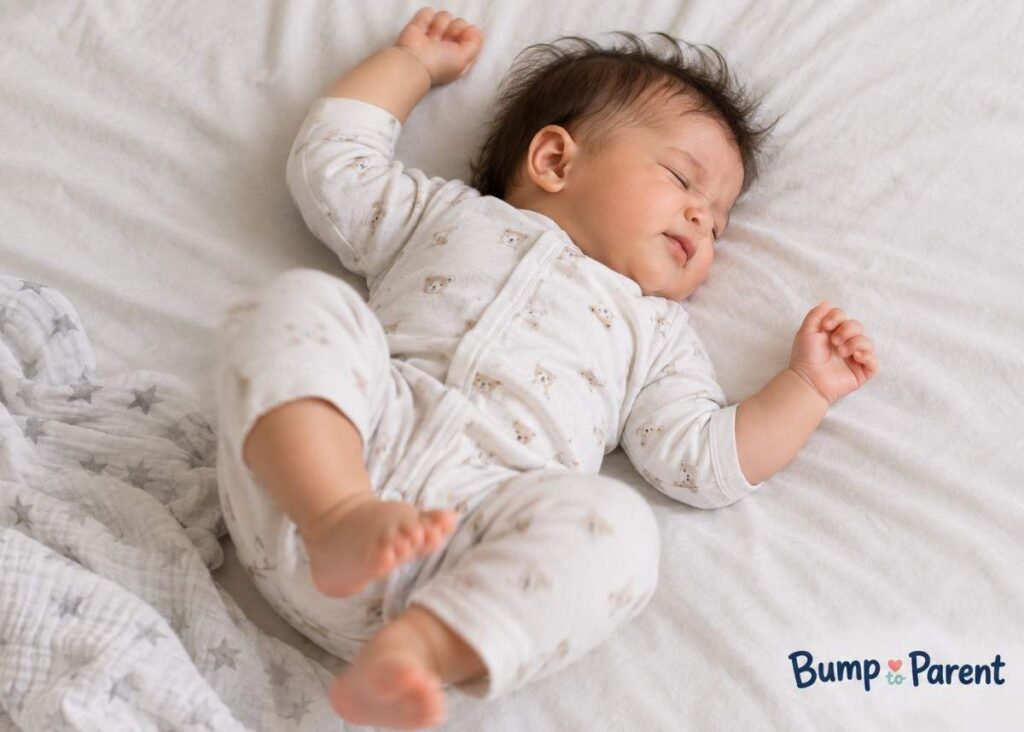

Seeing your baby squirm, wiggle, grunt, stretch, or move their arms and legs while sleeping can be surprising, especially for new parents. You may wonder whether your baby is uncomfortable, hungry, having a bad dream, or experiencing a health problem.
In many cases, baby squirming while sleeping is completely normal, particularly in newborns and young infants. Babies spend a significant amount of time in active sleep, a lighter stage of sleep during which they may move, twitch, make noises, change facial expressions, or briefly open their eyes.
However, not every movement should automatically be considered normal. Squirming accompanied by breathing difficulties, unusual color changes, persistent crying, fever, vomiting, or other concerning symptoms deserves medical attention.
This guide explains why babies squirm while sleeping, what different movements may mean, how to tell normal sleep activity from possible discomfort, and how to maintain a safe sleep environment.
Is It Normal for a Baby to Squirm While Sleeping?
Yes. Some squirming during sleep is normal, especially in newborns.
Newborn sleep differs considerably from adult sleep. During active sleep, babies may twitch their arms and legs, jerk suddenly, move their eyes beneath closed eyelids, make sounds, or breathe somewhat irregularly. These movements can make it appear as though the baby is awake or uncomfortable even when they are still asleep.
A baby may also:
- Wiggle their arms and legs
- Turn their head from side to side
- Stretch their body
- Pull their knees toward their stomach
- Grunt or make squeaking sounds
- Smile, frown, or make sucking movements
- Briefly open their eyes
- Rub their face
- Suddenly jerk an arm or leg
- Move more actively between sleep cycles
These behaviors can be particularly noticeable during the first few months of life.
Why Is My Baby Squirming While Sleeping?
There are several possible explanations for baby squirming while sleeping. Some are part of normal infant development, while others may indicate that your baby needs attention.
1. Active Sleep
One of the most common explanations is active sleep.
During active sleep, babies can be surprisingly restless. They may move their limbs, twitch, make noises, or briefly change their facial expressions.
This does not necessarily mean that your baby is uncomfortable or fully awake.
As babies mature, their sleep patterns gradually become more organized, and parents may notice fewer dramatic movements during sleep.
2. Developing Nervous System
A newborn’s nervous system is still developing. Because neurological control is not yet as mature as it is in older children, babies can make sudden, uncoordinated movements while sleeping.
A brief jerk or twitch can therefore occur without indicating a problem.
3. Hunger
Young babies have small stomachs and need frequent feeds. A baby who is becoming hungry may become restless before fully waking.
You may notice squirming accompanied by:
- Sucking movements
- Turning the head toward the breast or bottle
- Opening the mouth
- Bringing hands toward the mouth
- Increased restlessness
These can be early feeding cues.
4. Gas
Gas is another common reason a baby may become restless.
A baby with trapped gas may pull their legs toward their abdomen, stretch, squirm, grunt, or briefly cry.
If your baby seems comfortable after passing gas or having a bowel movement, gas may have contributed to the restlessness.
5. A Wet or Dirty Diaper
Some babies become restless when their diaper is wet or soiled.
If squirming repeatedly occurs around the same time as diaper changes, checking the diaper may help determine whether discomfort is contributing to the movement.
6. Temperature
Babies can become restless when they are too hot or too cold.
Rather than judging temperature only by your baby’s hands or feet, check their chest or back. Avoid excessive layers and overheating.
A comfortable room temperature and appropriate clothing can help promote better sleep.
7. Reflux or Spitting Up
Some babies experience gastroesophageal reflux, in which stomach contents move back toward the esophagus.
A baby with reflux may sometimes arch their back, squirm, swallow repeatedly, spit up, or become unsettled after feeding.
However, reflux does not mean a baby should be placed on their stomach or on an inclined sleep surface. The American Academy of Pediatrics recommends placing infants on their backs on a firm, flat, non-inclined sleep surface, including babies with reflux.
8. Need for Comfort
Babies can become restless when they need physical comfort. They may move around, make small sounds, or briefly fuss without fully waking.
Sometimes simply observing the baby for a moment is enough to determine whether they settle on their own.
9. Normal Movement Between Sleep Cycles
Babies naturally move between different stages of sleep.
During these transitions, they may become temporarily more active. A baby might squirm, stretch, grunt, or move their head before settling again.
If the baby remains comfortable and their breathing and color appear normal, there may be no need to intervene immediately.
Age-Based Symptoms of Baby Squirming While Sleeping
Baby sleep movements can change significantly during the first year. What is common in a newborn may look different as the baby gets older.
| Baby’s Age | Common Sleep Movements | What Parents Should Watch For |
|---|---|---|
| 0–3 months | Squirming, twitching, stretching, grunting, facial movements, sucking motions, moving arms and legs | Persistent crying, difficulty breathing, poor feeding, fever, unusual lethargy, or movements that appear repetitive or seizure-like |
| 3–6 months | Rolling attempts, kicking, stretching, brief fussing, changing positions during sleep | Difficulty breathing, repeated vomiting, unusual stiffness, frequent episodes of distress, or significant changes in feeding |
| 6–9 months | Rolling, kicking, repositioning, brief waking, moving arms and legs | Breathing problems, unusual repetitive movements, persistent pain or crying, or difficulty waking |
| 9–12 months | Changing positions, rolling, crawling-like movements, sitting or pulling up during sleep | Persistent distress, breathing difficulty, unusual movements, or symptoms suggesting illness |
| 12+ months | More purposeful repositioning, kicking, turning, sitting up, and occasional waking | New or unusual movements accompanied by pain, breathing problems, altered responsiveness, or other concerning symptoms |
0–3 Months: The Most Active Sleep Period
Newborns commonly spend a large portion of their sleep in active sleep. During this stage, they may squirm, twitch, stretch, grunt, briefly open their eyes, or make facial expressions.
These movements are often normal when the baby otherwise appears comfortable and is feeding and behaving normally when awake.
3–6 Months: More Organized Movement
As babies mature, their movements become more coordinated. They may kick, roll, stretch, or move around more deliberately.
This is also an important period for safe sleep because many babies begin attempting to roll. Once a baby shows signs of trying to roll, swaddling should be stopped.
6–12 Months: More Position Changes
Older babies can move around their sleep space considerably more. Rolling from back to stomach and stomach to back, kicking, and repositioning can all occur.
Continue placing your baby on their back at the beginning of every sleep and maintain a clear sleep surface.
Baby Squirming While Sleeping and Grunting
Parents often become particularly concerned when squirming is accompanied by grunting.
Occasional grunting or other noises can occur during active sleep, particularly in newborns.
However, persistent grunting with every breath is different from occasional sleep noises. If your baby appears to be working hard to breathe, has unusual breathing patterns, develops a blue or gray color, or seems distressed, seek urgent medical evaluation.
The overall appearance of your baby matters more than a single sound or movement.
Baby Squirming and Pulling Legs Up While Sleeping
A baby who pulls their legs toward their stomach while squirming may simply be moving normally during active sleep.
However, repeated leg pulling can sometimes occur with gas or abdominal discomfort.
Look for accompanying symptoms such as:
- Persistent crying
- A swollen or unusually firm abdomen
- Repeated vomiting
- Poor feeding
- Fever
- Blood in the stool
- Significant changes in bowel movements
If these symptoms occur, contact your baby’s pediatrician.
Baby Squirming While Sleeping but Not Crying
If your baby is squirming but remains asleep, has normal skin color, breathes comfortably, and otherwise appears well, the movement is often not a cause for concern.
Parents sometimes wake their baby because they assume that every movement means the baby is uncomfortable. However, babies can be quite active while remaining asleep.
Before picking up or waking your baby, pause and observe.
If the baby’s eyes remain closed, breathing looks comfortable, and the movement settles, your baby may simply be experiencing active sleep.
Baby Squirming While Sleeping and Eyes Moving
Eye movement beneath closed eyelids can occur during active sleep.
Newborns spend substantial time in active sleep, and eye movements, facial movements, and limb movements may all occur during this stage.
This can look unusual to parents but is generally part of normal infant sleep development.
Baby Squirming While Sleeping With Eyes Open
Some babies briefly open their eyes during light or active sleep.
A baby may appear awake for a few seconds, look around, and then close their eyes again.
If your baby is not crying and settles independently, you generally do not need to wake them fully.
Baby Squirming While Sleeping After Feeding
Restlessness after feeding can have several explanations.
Your baby may be:
- Digesting a feed
- Passing gas
- Experiencing mild spit-up
- Becoming tired
- Transitioning into sleep
- Still looking for additional milk
If your baby frequently appears uncomfortable after feeds, vomits forcefully, refuses feeds, has poor weight gain, or cries persistently, discuss the pattern with a pediatrician.
Urgent Warning Signs: When Baby Squirming Needs Immediate Medical Attention
Most sleep squirming is harmless, but certain symptoms should never be dismissed as normal sleep movements. Seek urgent medical care if your baby has:
1. Difficulty Breathing
Watch for:
- Breathing that appears labored or unusually difficult
- Ribs or skin pulling inward with each breath
- Persistent grunting with breathing
- Very rapid breathing
- Long pauses in breathing
- Gasping or struggling for air
2. Blue, Gray, or Very Pale Color
A blue or gray color around the lips, face, or skin can indicate inadequate oxygen and requires immediate medical attention.
3. Baby Is Difficult to Wake
If your baby is unusually sleepy, floppy, unresponsive, or difficult to wake compared with their normal behavior, seek urgent medical evaluation.
4. Seizure-Like or Repetitive Movements
Get medical attention if movements are:
- Repetitive and rhythmic
- Occurring in repeated episodes
- Difficult to stop or interrupt
- Associated with staring or reduced responsiveness
- Accompanied by unusual stiffening or jerking
If possible, safely record an episode to show the pediatrician, but do not delay emergency care to make a recording.
5. Persistent or Inconsolable Crying
Squirming accompanied by prolonged, intense crying may indicate pain or illness, particularly when the baby cannot be comforted.
6. Repeated Vomiting or Significant Abdominal Swelling
Seek medical advice for repeated vomiting, especially when accompanied by a swollen or unusually firm abdomen, poor feeding, lethargy, or significant distress.
7. Poor Feeding or Fewer Wet Diapers
A baby who suddenly refuses feeds, feeds substantially less than usual, or has noticeably fewer wet diapers may need prompt medical assessment.
8. Fever in a Young Infant
A temperature of 100.4°F (38°C) or higher in a baby younger than 3 months requires prompt medical evaluation. Do not assume that accompanying restlessness or squirming is simply a sleep issue.
A Simple Rule for Parents
When your baby squirms during sleep, ask three questions:
Is the baby breathing comfortably?
Does the baby have normal skin color and responsiveness?
Does the baby otherwise appear well?
If the answer is yes, occasional squirming is often part of normal infant sleep.
If the answer is no, particularly when there is breathing difficulty, blue or gray coloration, unusual unresponsiveness, seizure-like movements, or severe distress, seek urgent medical care rather than trying to settle the baby back to sleep.
How to Tell Normal Squirming From Discomfort
A useful approach is to look at the whole picture, rather than focusing on one movement.
| Normal Sleep Activity | Possible Discomfort or Illness |
|---|---|
| Brief squirming | Persistent restlessness |
| Occasional twitching | Repeated unusual movements |
| Eyes moving under closed eyelids | Difficulty waking |
| Mild grunting during sleep | Persistent grunting with breathing difficulty |
| Baby settles independently | Baby remains distressed |
| Normal skin color | Blue, gray, or unusually pale color |
| Comfortable breathing | Labored breathing |
| Normal feeding | Poor feeding |
| Normal behavior when awake | Unusual lethargy |
This table is a general guide, not a diagnosis. When you are unsure about your baby’s symptoms, contacting a pediatrician is appropriate.
Should You Wake a Squirming Baby?
Not necessarily.
If your baby is moving but appears comfortable, breathing normally, and remains asleep, you can usually observe for a short time.
You may not need to intervene when your baby:
- Has their eyes closed
- Is breathing comfortably
- Has normal skin color
- Is making typical sleep movements
- Is not crying persistently
- Settles without assistance
If the baby wakes fully and appears hungry or uncomfortable, respond according to their needs.
Safe Sleep Is More Important Than Stopping the Squirming
Parents may be tempted to use pillows, positioners, wedges, sleep nests, rolled blankets, or other products to keep a squirming baby still.
These should not be used as substitutes for a safe sleep environment.
The American Academy of Pediatrics recommends placing babies on their backs for every sleep on a firm, flat, non-inclined sleep surface designed for infants. The sleep space should be free of loose blankets, pillows, stuffed toys, bumpers, and other soft objects.
A safe sleep setup includes:
- A safety-approved crib, bassinet, or portable play yard
- A firm, flat mattress
- A fitted sheet
- Baby placed on their back for sleep
- No pillows or loose blankets
- No stuffed toys in the sleep space
- No crib bumpers
- No sleep positioners
- No weighted sleep products
What If Your Baby Rolls Over?
Babies should be placed on their backs for every sleep.
If an infant can independently roll from back to stomach and stomach to back, the AAP states that they can be left in the position they choose after rolling, while the sleep environment should remain free of soft or loose bedding.
If your baby is beginning to show signs of rolling, swaddling should be discontinued. Weighted swaddles should not be used.
How Parents Can Help a Squirmy Baby Sleep More Comfortably?
You do not need to stop every movement. Instead, focus on creating conditions that support comfortable and safe sleep.
1. Check the Diaper
A wet or soiled diaper may cause discomfort. Check it when your baby is genuinely awake or appears unsettled.
2. Consider Feeding Cues
If your baby is showing hunger cues, feeding may be more appropriate than trying to settle them back to sleep.
3. Burp After Feeding
If your baby tends to become restless after feeds, appropriate burping may help with swallowed air.
4. Avoid Overheating
Dress your baby appropriately for the room and avoid excessive layers.
5. Keep the Sleep Environment Simple
A clear crib is safer than a sleep space filled with products intended to keep a baby still.
6. Give Your Baby a Moment
If your baby is simply moving or making small noises, pause before immediately picking them up. Some babies become quieter without intervention.
Does Squirming Mean My Baby Is Having a Bad Dream?
Not necessarily.
It can be tempting to interpret facial expressions, sudden movements, or small noises as signs that a baby is having a nightmare. However, newborn and young infant sleep is different from adult sleep, and these movements commonly occur during active sleep.
A squirming baby is therefore not automatically experiencing a bad dream.
Baby Squirming While Sleeping at Night
Squirming can be especially noticeable at night because the environment is quiet and parents are more alert to every movement.
Newborns also have immature sleep patterns and do not yet follow the predictable sleep schedule of older children.
Nighttime squirming can therefore be part of normal early infancy.
As your baby grows, sleep patterns and sleep cycles gradually mature.
Does Baby Squirming Affect Sleep Quality?
Occasional movement does not necessarily mean your baby is sleeping poorly.
Babies can move considerably during sleep while still obtaining restorative sleep.
What matters more is how your baby behaves overall. A baby who feeds well, grows normally, has periods of alertness when awake, and appears comfortable is generally less concerning than a baby whose sleep movements are accompanied by persistent distress or other symptoms.
When to Talk to a Pediatrician?
Consider discussing your baby’s sleep movements with a pediatrician if:
- The movements are becoming increasingly frequent or intense.
- Your baby appears uncomfortable during most sleep periods.
- Squirming is associated with feeding difficulties.
- Your baby frequently arches their back and cries.
- Your baby has repeated vomiting.
- Your baby has poor weight gain.
- You notice unusual repetitive movements.
- You are unsure whether the movements are normal.
If possible, recording a short video of an unusual movement can help your pediatrician understand what you are seeing.
FAQ’s
Why does my baby pull their legs up while sleeping?
Pulling the legs toward the stomach can be a normal sleep movement, but it can also occur with gas or abdominal discomfort. Persistent crying, vomiting, abdominal swelling, or feeding problems should be discussed with a pediatrician.
Can gas cause a baby to squirm while sleeping?
Yes. Trapped gas can make some babies restless and may cause them to squirm, pull their legs up, stretch, or grunt.
Can reflux make a baby squirm while sleeping?
Reflux can contribute to discomfort and restlessness in some babies. However, babies should still be placed on their backs on a firm, flat, non-inclined sleep surface.
Why does my baby move their arms and legs while sleeping?
Arm and leg movements are common during active sleep, particularly in young babies. Immature nervous-system control can also contribute to brief twitching and jerking.
Why does my baby squirm and make noises while sleeping?
Babies can grunt, squeak, sigh, or make other noises during active sleep. These sounds do not necessarily mean that the baby is awake or uncomfortable.
Why does my baby squirm more at night?
Nighttime squirming may seem more noticeable because the environment is quiet and parents are more aware of small movements. Young babies also have immature sleep patterns and frequent sleep-state transitions.
Is baby squirming while sleeping a sign of hunger?
Sometimes. Hunger may cause restlessness along with feeding cues such as sucking movements, rooting, opening the mouth, or bringing the hands toward the mouth.
Can baby squirming while sleeping mean they are uncomfortable?
It can. Gas, hunger, a wet diaper, temperature, reflux, or other discomfort may cause restlessness. However, many babies squirm simply because of normal active sleep.
Is it safe to use a pillow or sleep positioner to stop my baby from squirming?
No. Pillows, sleep positioners, wedges, loose blankets, and similar products should not be used to restrain or position an infant during sleep. Babies should sleep on a firm, flat, non-inclined surface with the sleep area free of loose and soft objects.
Does baby squirming while sleeping get better with age?
For many babies, sleep movements become less noticeable as sleep patterns and nervous-system control mature. However, babies may continue to move and change positions during sleep as they become more mobile.
Should I record my baby’s unusual sleep movements?
If your baby has an unusual movement that is not an emergency, a short video can be useful to show your pediatrician. Do not delay urgent medical care just to record an episode.
What is the difference between normal baby squirming and seizure-like movements?
Normal sleep movements are usually brief and occur during active sleep. Repetitive, rhythmic, persistent, or unusual jerking or stiffening, particularly with reduced responsiveness or changes in breathing or color, requires prompt medical assessment.
Why does my baby squirm so much when trying to fall asleep?
Babies may squirm while falling asleep because they are transitioning between wakefulness and sleep, experiencing active sleep, passing gas, feeling hungry, or adjusting to a comfortable position. If your baby is otherwise comfortable, breathing normally, and settling after a while, this is usually normal.
Is it normal for babies to moan and groan while sleeping?
Yes. Young babies can moan, groan, grunt, squeak, or make other noises during active sleep. These sounds are often normal, especially in newborns. However, persistent grunting with difficulty breathing, changes in skin color, or obvious distress requires prompt medical attention.
Final Thought
Baby squirming while sleeping is often a normal part of infant sleep, especially during the newborn period. Active sleep can involve twitching, stretching, jerking, facial movements, eye movements, grunting, and other forms of restlessness.
The key is to consider the baby’s overall condition. Normal color, comfortable breathing, good feeding, normal growth, and periods of normal alertness are reassuring signs.
At the same time, parents should never ignore significant breathing problems, unusual movements, persistent distress, poor feeding, or other symptoms of illness.
Most importantly, do not try to stop normal squirming by adding pillows, positioners, loose blankets, or other products to the crib. Following safe-sleep practices remains the priority. The AAP recommends back sleeping on a firm, flat, non-inclined surface with no loose bedding or soft objects.
Sources / References:
Disclaimer:
This guide is for general educational purposes only and is not a substitute for professional medical advice, diagnosis, or treatment. Consult a pediatrician for concerns about your baby’s sleep, breathing, feeding, development, or unusual movements.
Also Read: