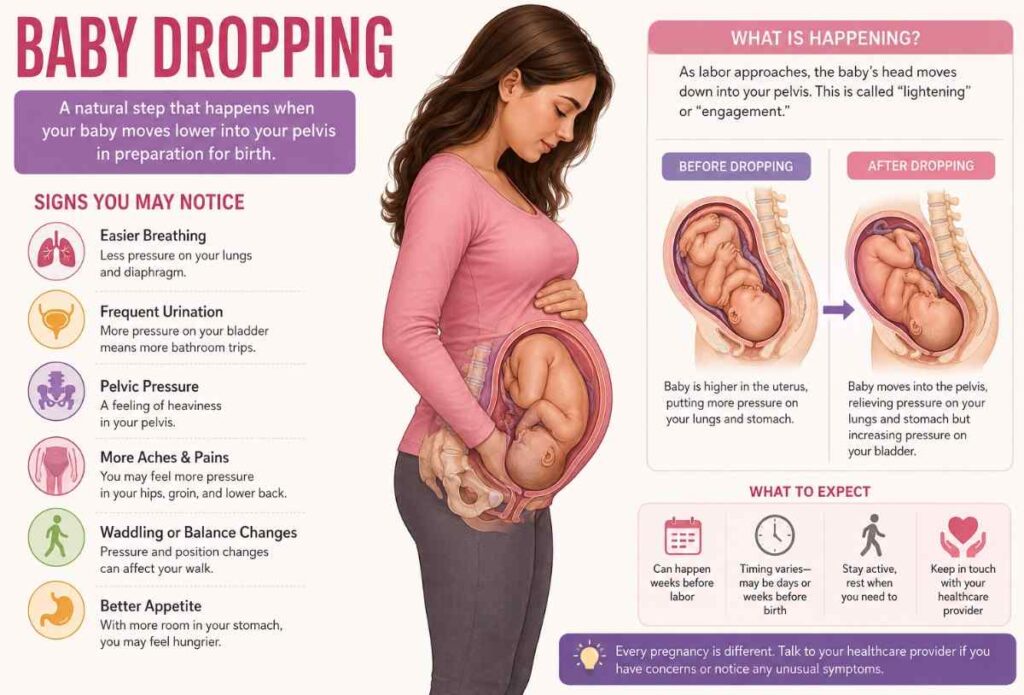

Pregnancy brings many exciting milestones, and one of the final changes before labor is baby dropping, also known as lightening. Many expectant mothers notice that their baby feels lower in the pelvis during the last few weeks of pregnancy. This change often makes breathing easier but may increase pelvic pressure and frequent urination.
While baby dropping can be a sign that your body is preparing for labor, it does not always mean labor will begin immediately. Every pregnancy is unique, and the timing can vary significantly from one woman to another.
This guide explains what baby dropping is, when it happens, common signs, causes, benefits, possible discomforts, and when you should contact your healthcare provider.
What Is Baby Dropping?
Baby dropping, medically known as lightening, occurs when the baby’s head moves down into the mother’s pelvis in preparation for birth. This process helps position the baby for a vaginal delivery.
As the baby’s head settles lower, the uterus shifts downward. This reduces pressure on the diaphragm and lungs while increasing pressure on the bladder, pelvic floor, and hips.
Baby dropping is a normal part of late pregnancy and usually occurs during the third trimester.
When Does Baby Dropping Happen?
The timing varies from pregnancy to pregnancy.
| Pregnancy | Typical Timing |
|---|---|
| First pregnancy | Around 2–4 weeks before labor |
| Second or later pregnancies | May occur shortly before labor or even during labor |
| Multiple pregnancy | Timing varies depending on fetal position |
Some women never notice a dramatic “drop,” while others experience obvious physical changes.
Why Does Baby Dropping Happen?
Several natural changes prepare your body for childbirth.
1. Baby Moves Into Birth Position
As labor approaches, the baby gradually rotates so the head points downward.
2. Pelvic Ligaments Relax
Pregnancy hormones soften the pelvic joints and ligaments, making it easier for the baby to descend.
3. Uterine Changes
Braxton Hicks contractions and uterine tightening may help encourage the baby into the pelvis.
4. Gravity
Standing, walking, and normal daily movement may assist the baby in settling lower.
10 Symptoms of Baby Dropping
1. Easier Breathing
Many women notice they can take deeper breaths because the baby is no longer pressing heavily against the diaphragm.
2. Increased Pelvic Pressure
A feeling of heaviness or pressure develops in the lower pelvis.
3. Frequent Urination
Pressure on the bladder increases, leading to more bathroom trips.
4. Waddling While Walking
Changes in balance and pelvic pressure may alter your walking pattern.
5. More Pelvic Pain
You may experience discomfort around the hips, groin, or pubic bone.
6. Lower Belly Appearance
Friends or family may comment that your belly “looks lower.”
7. Increased Vaginal Pressure
Some women describe feeling as though the baby is pressing downward.
8. Improved Appetite
Because there is less pressure on the stomach, eating larger meals may become easier.
9. Increased Back or Hip Discomfort
Lower positioning can increase strain on the pelvis and lower back.
10. Changes During Cervical Exams
Your healthcare provider may notice the baby’s head has engaged in the pelvis.
What Does Baby Dropping Feel Like?
Every woman experiences baby dropping differently. Common sensations include:
- Pelvic heaviness
- Pressure between the legs
- Sharp pelvic twinges
- Increased need to urinate
- More pressure while walking
- Easier breathing
- Less heartburn
- Feeling that the baby is “lower”
These symptoms may develop gradually over several days rather than all at once.
Benefits of Baby Dropping
Although it may cause discomfort, baby dropping has several advantages.
1. Easier Breathing
Reduced pressure on the lungs allows deeper breaths.
2. Less Heartburn
The stomach often has more room, reducing acid reflux symptoms.
3. Better Baby Positioning
Engagement in the pelvis helps prepare for vaginal birth.
4. Improved Labor Readiness
Baby dropping is one of several signs that the body is getting ready for labor.
Possible Discomforts After Baby Drops
Some temporary discomforts are common.
- Pelvic pain
- Groin discomfort
- Frequent urination
- Difficulty walking long distances
- Pressure during sitting
- Increased hemorrhoids
- More vaginal pressure
- Lower back pain
These symptoms are generally normal unless they become severe or are accompanied by concerning signs.
Does Baby Dropping Mean Labor Is Near?
Not necessarily.
For first-time mothers, baby dropping often occurs weeks before labor.
For women who have given birth before, the baby may not drop until labor actually begins.
Baby dropping alone does not predict exactly when labor will start.
Can Baby Dropping Happen Early?
Sometimes.
If the baby drops before 37 weeks, it may simply reflect fetal position changes. However, if early dropping occurs alongside symptoms such as:
- Regular contractions
- Vaginal bleeding
- Fluid leakage
- Severe pelvic pressure
- Persistent back pain
contact your healthcare provider promptly because these may be signs of preterm labor.
Can You Encourage Baby Dropping?
There is no guaranteed way to make the baby drop, but some activities may support natural positioning after discussing them with your healthcare provider.
1. Walking
Gentle walking may encourage gravity-assisted positioning.
2. Sitting Correctly
Sit upright with knees below hip level when possible.
3. Pregnancy Ball Exercises
Gentle pelvic rocking on a birth ball may improve comfort and encourage optimal positioning.
4. Good Posture
Maintaining proper posture may provide more room for the baby to settle.
Avoid attempting any techniques without medical advice, especially if you have pregnancy complications.
What Happens After Baby Dropping?
After the baby drops, your body continues preparing for labor.
Possible changes include:
- Cervix begins softening
- Cervix starts thinning (effacement)
- Cervix gradually opens (dilation)
- Braxton Hicks contractions may become stronger
- Increased vaginal discharge
- Loss of mucus plug
- Water breaking
- Labor contractions
These events may occur over days or weeks.
When Should You Call Your Healthcare Provider?
Seek medical advice immediately if you experience:
- Heavy vaginal bleeding
- Leaking amniotic fluid
- Regular contractions before 37 weeks
- Decreased fetal movement
- Severe abdominal pain
- High fever
- Persistent severe headache
- Sudden swelling of the face or hands
- Vision changes
These symptoms require prompt medical evaluation.
Tips for Staying Comfortable After Baby Drops
- Wear supportive footwear.
- Sleep with a pregnancy pillow.
- Stay hydrated.
- Avoid standing for long periods.
- Perform gentle stretching if approved by your healthcare provider.
- Change positions frequently.
- Rest when needed.
- Wear supportive maternity clothing if recommended.
Myths About Baby Dropping
Myth: Baby dropping means labor will start within 24 hours.
Fact: Labor may still be days or weeks away.
Myth: Every pregnant woman notices baby dropping.
Fact: Some women notice very little change.
Myth: A low belly always means baby has dropped.
Fact: Belly shape varies depending on body type, baby’s position, and previous pregnancies.
Myth: Baby dropping guarantees an easy labor.
Fact: Labor depends on many factors beyond fetal engagement.
FAQs
At how many weeks does baby dropping usually happen?
It commonly occurs between 36 and 38 weeks in first pregnancies but may happen later in subsequent pregnancies.
Can baby drop without contractions?
Yes. Many women experience baby dropping before regular labor contractions begin.
How can I tell if my baby has dropped?
Common signs include easier breathing, increased pelvic pressure, frequent urination, and a lower-looking belly.
Is baby dropping painful?
It can cause pelvic discomfort, groin pain, and pressure, but the experience varies from person to person.
Does baby dropping make breathing easier?
Yes. As the baby moves lower, there is usually less pressure on the lungs and diaphragm.
Why do I urinate more after the baby drops?
The baby’s head presses more on the bladder, reducing its capacity and increasing the urge to urinate.
Can baby dropping happen before 37 weeks?
Yes, but if it is accompanied by contractions, fluid leakage, or bleeding, contact your healthcare provider immediately.
Can I encourage my baby to drop naturally?
Gentle walking, maintaining good posture, and using a birthing ball may help, but always consult your healthcare provider first.
Can the baby move back up after dropping?
Yes. Some babies may change position slightly before labor, especially in women who have given birth before.
Does every pregnant woman notice baby dropping?
No. Some women notice obvious changes, while others may not feel any significant difference.
Does baby dropping reduce heartburn?
For many women, yes. Less pressure on the stomach can help reduce acid reflux and heartburn.
Is baby dropping a sign of a healthy pregnancy?
In most full-term pregnancies, it is a normal part of the body’s preparation for childbirth.
When should I call my doctor after my baby drops?
Contact your healthcare provider if you have heavy bleeding, leaking amniotic fluid, decreased fetal movement, severe pain, or regular contractions before 37 weeks.
Does baby dropping happen suddenly?
Not always. Baby dropping can happen gradually over several days or seem to occur suddenly, depending on the pregnancy.
Is baby dropping the same as head down?
No. A baby can be head down for weeks before actually dropping into the pelvis. Baby dropping means the baby’s head has moved lower into the birth canal.
What does baby dropping look like?
Your belly may appear lower than before, and you may notice more space between your breasts and the top of your bump.
How long after the baby drops will I go into labor?
It varies. First-time mothers may go into labor 2–4 weeks after the baby drops, while those who have given birth before may not experience dropping until labor begins.
What does baby dropping indicate?
Baby dropping usually indicates that your baby is moving into position for birth and your body is preparing for labor.
Can your baby drop at 34 weeks?
Yes. Some babies drop as early as 34 weeks, especially in first pregnancies. If it happens with contractions, bleeding, or fluid leakage, contact your healthcare provider immediately.
Key Takeaways
Baby dropping is a normal milestone that signals your baby is moving into position for birth. While it often brings welcome relief from shortness of breath and heartburn, it can also increase pelvic pressure and bladder discomfort. The timing varies widely, so baby dropping alone cannot predict when labor will begin. Stay in regular contact with your prenatal care provider, monitor fetal movements, and seek medical attention if you experience warning signs such as heavy bleeding, fluid leakage, or decreased fetal movement.
Sources / References:
- American College of Obstetricians and Gynecologists (ACOG)
- MedlinePlus – Pregnancy
- National Health Service (NHS)
- March of Dimes
- Cleveland Clinic – Pregnancy Health Library
- Mayo Clinic – Pregnancy Week by Week
About the Author:
Written by: Kirti Solanki (Health Content Researcher)
Kirti Solanki is a Health Content Researcher who creates evidence-based, reader-friendly articles on pregnancy, nutrition, wellness, and preventive healthcare. Her content is developed using trusted medical guidelines and reputable health organizations to help readers make informed health decisions.
Disclaimer:
This guide is for educational purposes only and should not replace professional medical advice, diagnosis, or treatment. Always consult your obstetrician, midwife, or other qualified healthcare provider regarding any questions or concerns about your pregnancy.
Also Read: