
Pregnancy is one of the most important stages of life, and the food you eat plays a major role in supporting both your health and your baby’s growth. Every meal provides nutrients that help build your baby’s brain, bones, muscles, organs, and immune system while also helping your body adapt to the many physical changes of pregnancy.
Rather than “eating for two,” experts recommend focusing on eating smarter by choosing nutrient-dense foods. A balanced pregnancy diet can help reduce the risk of nutritional deficiencies, support healthy fetal development, maintain your energy levels, and contribute to a healthy pregnancy.
This guide explains what to eat during pregnancy, which nutrients matter most, foods to limit or avoid, trimester-specific nutrition tips, and practical meal ideas to help you eat well throughout pregnancy.
Why Nutrition During Pregnancy Matters?
Your nutritional needs increase during pregnancy because your body is supporting another growing human. Healthy eating helps:
- Support fetal growth and development
- Promote healthy brain and nervous system development
- Reduce the risk of certain birth defects
- Lower the risk of anemia
- Support healthy weight gain
- Maintain maternal energy levels
- Strengthen immunity
- Support healthy bones and teeth
- Reduce constipation
- Help prepare the body for labor and breastfeeding
A healthy pregnancy diet isn’t about perfection. It’s about making consistent, balanced food choices every day.
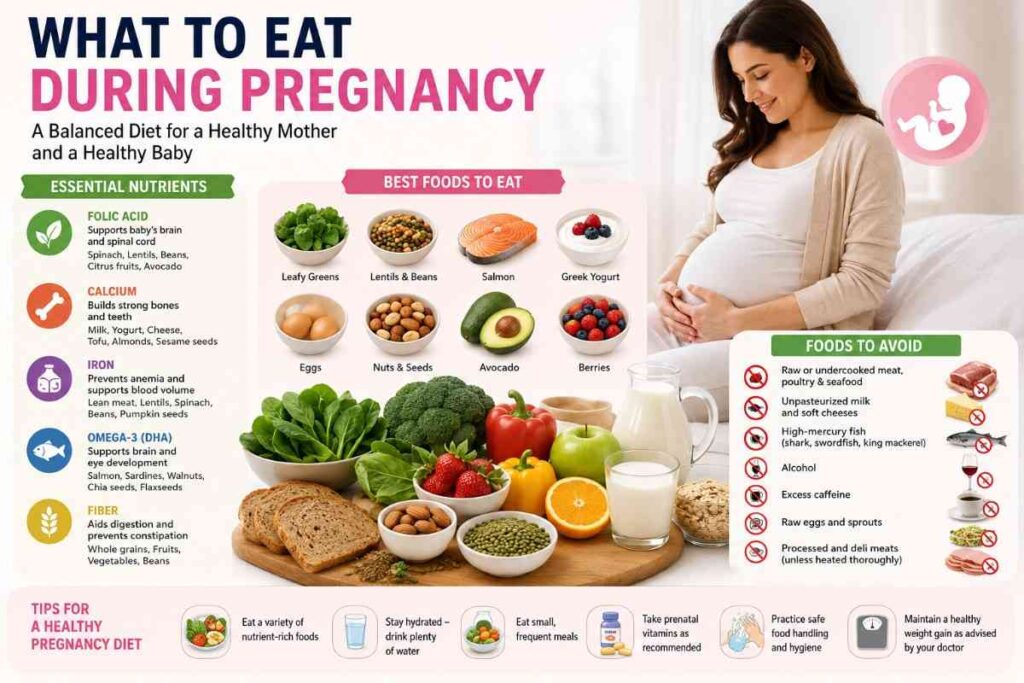
Essential Nutrients During Pregnancy
1. Folic Acid (Vitamin B9)
Folic acid is one of the most important nutrients during early pregnancy because it helps prevent neural tube defects.
Good food sources include:
- Spinach
- Kale
- Lentils
- Chickpeas
- Black beans
- Fortified breakfast cereals
- Oranges
- Avocados
Recommended intake:
600 mcg daily during pregnancy.
2. Protein
Protein supports the growth of your baby’s tissues, muscles, skin, and organs.
Healthy protein sources include:
- Eggs
- Chicken
- Turkey
- Fish (low-mercury)
- Greek yogurt
- Cottage cheese
- Lentils
- Beans
- Tofu
- Tempeh
- Nuts
- Seeds
Aim for approximately 71 grams of protein per day.
3. Iron
Iron helps produce extra blood needed during pregnancy and prevents iron-deficiency anemia.
Iron-rich foods include:
- Lean red meat
- Chicken
- Turkey
- Lentils
- Spinach
- Kidney beans
- Pumpkin seeds
- Fortified cereals
Pair iron-rich foods with vitamin C-rich fruits like oranges or strawberries for better absorption.
4. Calcium
Calcium helps build your baby’s bones and teeth.
Excellent sources include:
- Milk
- Yogurt
- Cheese
- Fortified plant milk
- Tofu made with calcium
- Sardines
- Sesame seeds
- Almonds
Pregnant women generally need around 1,000 mg daily.
5. Vitamin D
Vitamin D supports calcium absorption and healthy bone development.
Sources include:
- Fortified milk
- Eggs
- Fatty fish
- Mushrooms exposed to sunlight
Sunlight exposure also contributes to vitamin D production.
6. Omega-3 Fatty Acids
DHA supports your baby’s brain and eye development.
Healthy sources include:
- Salmon
- Sardines
- Trout
- Chia seeds
- Flaxseeds
- Walnuts
7. Fiber
Fiber helps prevent constipation, which is common during pregnancy.
Choose:
- Oats
- Whole grains
- Fruits
- Vegetables
- Lentils
- Beans
- Seeds
Aim for around 28 grams daily.
8. Iodine
Iodine supports healthy thyroid function and brain development.
Sources include:
- Dairy
- Eggs
- Seafood
- Iodized salt
What to Eat During Pregnancy?
Here are the best foods to eat during pregnancy:
1. Eggs
Eggs provide protein, choline, vitamin D, and B vitamins.
Choline is particularly important for fetal brain development.
2. Greek Yogurt
Greek yogurt provides:
- Protein
- Calcium
- Probiotics
- Vitamin B12
Choose plain varieties with minimal added sugar.
3. Leafy Green Vegetables
Examples include:
- Spinach
- Kale
- Swiss chard
These vegetables contain:
- Folate
- Calcium
- Iron
- Fiber
- Vitamin C
4. Lentils and Beans
They are rich in:
- Protein
- Fiber
- Folate
- Iron
- Potassium
5. Salmon
Salmon is one of the safest oily fish choices because it contains high amounts of DHA while remaining relatively low in mercury.
Consume 2–3 servings of low-mercury fish per week unless advised otherwise by your healthcare provider.
6. Sweet Potatoes
Sweet potatoes are packed with:
- Beta-carotene
- Fiber
- Potassium
- Vitamin C
7. Avocados
Avocados provide:
- Healthy fats
- Potassium
- Folate
- Fiber
They may also help support healthy weight gain.
8. Whole Grains
Examples include:
- Brown rice
- Oats
- Whole wheat bread
- Quinoa
These provide sustained energy throughout the day.
9. Fruits
Pregnancy-friendly fruits include:
- Bananas
- Apples
- Oranges
- Berries
- Kiwi
- Mango
- Pears
These offer vitamins, antioxidants, and hydration.
10. Nuts and Seeds
Choose:
- Almonds
- Walnuts
- Pistachios
- Pumpkin seeds
- Chia seeds
- Flaxseeds
These provide healthy fats, protein, magnesium, and fiber.
Foods to Eat During Each Trimester
First Trimester
Morning sickness may make eating difficult.
Focus on:
- Crackers
- Toast
- Bananas
- Applesauce
- Rice
- Yogurt
- Smoothies
- Small frequent meals
Hydration is especially important.
Second Trimester
Appetite often improves.
Increase intake of:
- Lean protein
- Dairy
- Fruits
- Vegetables
- Whole grains
- Healthy snacks
Third Trimester
Your baby grows rapidly during the final months.
Prioritize:
- Protein
- Iron-rich foods
- Calcium-rich foods
- Healthy fats
- Fiber-rich foods
Eat smaller meals if heartburn becomes a problem.
Healthy Pregnancy Snacks
Nutritious snack ideas include:
- Apple slices with peanut butter
- Greek yogurt with berries
- Cottage cheese and fruit
- Mixed nuts
- Whole-grain crackers with hummus
- Boiled eggs
- Homemade trail mix
- Fresh fruit
- Cheese with whole-grain crackers
- Vegetable sticks with hummus
Sample One-Day Pregnancy Meal Plan
| Meal | Foods |
|---|---|
| Breakfast | Oatmeal with berries, walnuts, and milk |
| Morning Snack | Apple with peanut butter |
| Lunch | Grilled chicken, brown rice, steamed broccoli, salad |
| Afternoon Snack | Greek yogurt with chia seeds |
| Dinner | Baked salmon, sweet potato, green beans |
| Evening Snack | Cottage cheese with sliced peaches |
Hydration During Pregnancy
Water supports:
- Amniotic fluid
- Digestion
- Blood circulation
- Nutrient transport
- Temperature regulation
Aim for approximately 8–12 cups of fluids daily, depending on your healthcare provider’s advice, activity level, and climate.
Good beverage choices include:
- Water
- Milk
- Coconut water (occasionally)
- Unsweetened smoothies
- Soups
Foods to Limit or Avoid During Pregnancy
Certain foods may increase the risk of foodborne illness or expose the baby to harmful substances.
Avoid or limit:
- Raw seafood
- Raw eggs
- Unpasteurized milk and cheese
- Deli meats unless heated thoroughly
- High-mercury fish (such as shark, swordfish, king mackerel, and tilefish)
- Excess caffeine
- Alcohol
- Raw sprouts
- Undercooked meat and poultry
Wash fruits and vegetables thoroughly before eating.
Healthy Weight Gain During Pregnancy
Weight gain depends on your pre-pregnancy Body Mass Index (BMI).
General recommendations include:
- Underweight: 28–40 pounds
- Healthy weight: 25–35 pounds
- Overweight: 15–25 pounds
- Obesity: 11–20 pounds
Your healthcare provider can recommend a personalized weight gain goal.
Tips for Healthy Eating During Pregnancy
- Eat a variety of colorful fruits and vegetables.
- Include protein with every meal.
- Choose whole grains over refined grains.
- Stay hydrated throughout the day.
- Eat smaller meals if nausea occurs.
- Avoid skipping meals.
- Limit sugary beverages.
- Read food labels carefully.
- Practice safe food handling.
- Take prenatal vitamins as prescribed.
Common Pregnancy Nutrition Mistakes
Avoid these common mistakes:
- Eating too little because of morning sickness
- Relying heavily on processed snacks
- Skipping prenatal vitamins
- Drinking insufficient water
- Consuming excessive caffeine
- Following restrictive diets without medical advice
- Ignoring food safety recommendations
- Not getting enough protein
FAQs
What is the best breakfast for pregnant women?
A healthy pregnancy breakfast includes protein, whole grains, healthy fats, and fruit. Good options include oatmeal with berries and nuts, whole-grain toast with eggs, Greek yogurt with fruit, or a vegetable omelet.
What foods help a fetus grow?
Foods rich in protein, folate, iron, calcium, omega-3 fatty acids, and vitamins support fetal growth. These include eggs, lean meat, fish, dairy products, leafy greens, beans, lentils, whole grains, fruits, and nuts.
What should I eat every 2 hours during pregnancy?
Choose small, nutrient-rich meals or snacks every 2–3 hours, such as fresh fruit, Greek yogurt, boiled eggs, nuts, whole-grain crackers with cheese, hummus with vegetables, or peanut butter on whole-grain toast to help maintain energy levels and reduce nausea.
How much protein do I need during pregnancy?
Most pregnant women need about 71 grams of protein per day, although individual needs may vary.
Is it safe to eat eggs during pregnancy?
Yes. Fully cooked eggs are safe and provide high-quality protein, choline, and other essential nutrients.
Can I eat fish while pregnant?
Yes. Choose low-mercury fish like salmon, sardines, trout, cod, and tilapia. Avoid high-mercury fish such as shark, swordfish, king mackerel, and tilefish.
Is milk good during pregnancy?
Yes. Milk is an excellent source of calcium, protein, and vitamin D. Fortified plant-based milk can also be a good alternative.
Can I drink coffee during pregnancy?
Yes, but limit caffeine intake to no more than 200 mg per day unless your healthcare provider advises otherwise.
How many extra calories do I need during pregnancy?
Most women do not need extra calories during the first trimester. Calorie needs typically increase by about 340 calories per day in the second trimester and 450 calories per day in the third trimester.
Is it okay to eat spicy food during pregnancy?
Yes. Spicy foods are generally safe during pregnancy, although they may worsen heartburn or indigestion in some women.
Can I eat cheese during pregnancy?
Yes, as long as it is made from pasteurized milk. Avoid soft cheeses made from unpasteurized milk.
Should I take prenatal vitamins if I eat healthy?
Yes. Prenatal vitamins help fill nutritional gaps and provide important nutrients such as folic acid, iron, and iodine. Take them as recommended by your healthcare provider.
Can I eat chocolate during pregnancy?
Yes. Chocolate can be enjoyed in moderation as part of a balanced diet, but choose varieties with less added sugar.
Is vegetarian food healthy during pregnancy?
Yes. A well-planned vegetarian diet can support a healthy pregnancy if it includes adequate protein, iron, calcium, vitamin B12, and other essential nutrients.
How can I manage morning sickness through diet?
Eat small, frequent meals, stay hydrated, choose bland foods like crackers or toast, and avoid foods or smells that trigger nausea.
Should I eat more during pregnancy?
Calorie needs increase gradually during pregnancy. Focus on nutrient-rich foods rather than simply eating larger amounts.
Final Thoughts:
Eating well during pregnancy is one of the best investments you can make in your own health and your baby’s future. A varied diet rich in fruits, vegetables, whole grains, lean proteins, healthy fats, and dairy or fortified alternatives provides the essential nutrients needed for a healthy pregnancy.
Remember that every pregnancy is unique. If you have medical conditions, food allergies, gestational diabetes, or dietary restrictions, work closely with your obstetrician or a registered dietitian to create a meal plan that meets your individual needs. Combined with regular prenatal care, healthy eating can help support a smoother pregnancy and give your baby a strong nutritional foundation from the very beginning.
Sources / References:
- American College of Obstetricians and Gynecologists (ACOG)
- Centers for Disease Control and Prevention (CDC) – Pregnancy Nutrition
- World Health Organization (WHO)
- Office of Dietary Supplements (National Institutes of Health)
- U.S. Department of Agriculture – MyPlate for Pregnancy
- March of Dimes
About the Author:
Written by: Kirti Solanki (Health Content Researcher)
Kirti Solanki is a Health Content Researcher who creates evidence-based health and nutrition content using trusted medical sources to help readers make informed wellness decisions.
Disclaimer:
This guide is for educational purposes only and is not a substitute for professional medical advice, diagnosis, or treatment. Always consult your healthcare provider before making dietary or lifestyle changes during pregnancy.
Also Read: