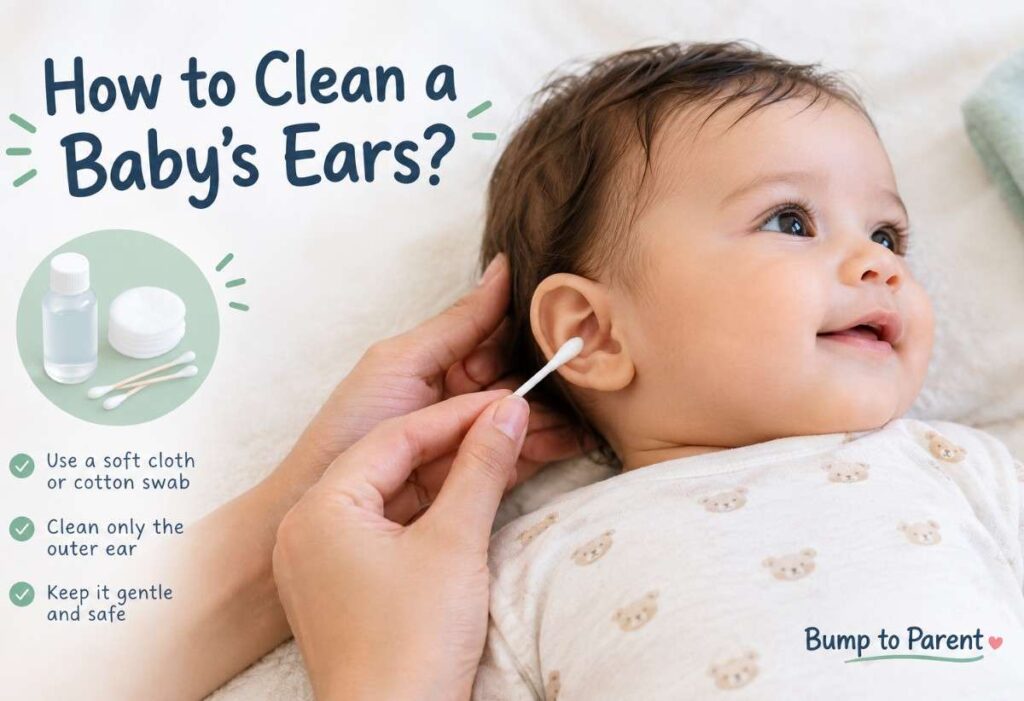

Cleaning a baby’s ears can seem like a simple part of bath time, but infant ears need a very gentle approach. One of the most important things parents should know is that you usually do not need to clean inside a baby’s ear canal. Earwax is natural and helps protect the ear from dirt, germs, and irritation. It normally moves toward the opening of the ear and comes out on its own.
The safest routine is to clean only the outer ear and the area around it. Cotton buds, fingers, hairpins, or other objects should never be inserted into the ear canal because they can push wax deeper or injure the delicate ear canal and eardrum.
This guide explains how to clean a baby’s ears safely, what to avoid, how to manage visible earwax, and when a pediatrician should check your baby’s ears.
Why Do Babies Have Earwax?
Earwax, also called cerumen, is a normal substance produced inside the ear canal. It is not simply dirt that needs to be removed.
Earwax helps:
- Protect the skin lining of the ear canal
- Trap dust and small particles
- Keep the ear canal from becoming excessively dry
- Provide some protection against germs
- Move debris toward the outside of the ear naturally
Because of these protective functions, a small amount of earwax is usually nothing to worry about.
Do You Need to Clean Inside a Baby’s Ears?
No, not as part of routine cleaning.
Parents should generally leave the ear canal alone unless a healthcare professional has specifically recommended treatment for an earwax blockage or another ear problem.
If you can see a small amount of wax near the entrance of the ear, you can gently wipe the outer area. You do not need to reach inside the canal to remove every visible trace of wax.
How to Clean a Baby’s Ears Safely
Cleaning your baby’s ears can be very simple.
1. Wash Your Hands
Wash your hands thoroughly with soap and water before touching your baby’s ears. This reduces the chance of transferring dirt or germs to the skin.
2. Use a Soft, Clean Cloth
Take a soft washcloth or clean piece of cotton wool and dampen it with warm water. It should be moist rather than soaking wet.
3. Clean the Outer Ear
Gently wipe the visible outside of the ear, including the folds of the outer ear and behind the ear.
Do not push the cloth, cotton wool, or your finger into the ear canal.
The NHS similarly recommends using clean cotton wool to clean around a baby’s ears rather than inside them.
4. Wipe Away Visible Wax at the Opening
If a little earwax has naturally reached the opening of the ear, gently wipe it away.
Do not try to dig out wax that is deeper inside.
5. Clean Behind the Ears
Milk, spit-up, sweat, and bathwater can sometimes collect in the folds behind a baby’s ears. Gently clean this area and dry it afterward.
6. Dry the Outer Ear
After cleaning or bathing, gently pat the outside of the ear dry with a soft towel.
There is generally no need to insert anything into the ear canal to dry it.
Can You Use Cotton Buds to Clean a Baby’s Ears?
No. Cotton buds should not be inserted into a baby’s ear canal.
Cotton buds can push earwax deeper into the canal instead of removing it. They can also scratch the delicate skin or, if inserted too far, injure the eardrum.
Even if the cotton tip looks soft, the ear canal of a young child is small and delicate. This makes inserting objects into the ear particularly risky.
Safe rule: Cotton wool or a soft cloth can be used around the outside of the ear, but nothing should be pushed inside the ear canal.
What If You See a Lot of Earwax?
Seeing earwax does not automatically mean that it needs to be removed.
If the wax is only around the outer opening and your baby is comfortable, gently wipe what you can easily see.
If the wax appears to be blocking the ear canal, do not try to remove it yourself with a cotton bud, finger, or other object. Earwax removal in young children can require professional assessment. Children under 6 should not have ear drops or ear flushing used for wax unless advised by their doctor.
Should You Use Ear Drops for a Baby?
Do not routinely use earwax-removal drops in a baby unless your pediatrician recommends them.
Some earwax treatments may be appropriate for older children in specific situations, but infants require more cautious management.
Ear drops should also not be used when there is a known or suspected hole in the eardrum, ear tubes, or certain ear infections unless a healthcare professional specifically recommends a product.
Should You Flush a Baby’s Ear With Water?
Routine ear flushing is not recommended for babies at home.
Young children’s ear canals are delicate, and improper flushing can cause pain, irritation, dizziness, or injury. Pediatric guidance recommends that ear flushing in children under 6 be done only if advised by the child’s doctor.
For a baby, it is safer to have a healthcare professional evaluate significant earwax buildup rather than attempting to flush the ear at home.
How to Clean a Baby’s Ears During Bath Time
Bath time is a convenient opportunity to clean the outside of your baby’s ears.
A simple routine is:
- Wash your baby’s face and outer ears gently.
- Use a clean, soft cloth or cotton wool.
- Wipe around the ear and behind it.
- Avoid putting anything inside the ear canal.
- Gently dry the outer ear afterward.
You do not need to clean the ears aggressively. Gentle cleaning is enough for normal daily hygiene.
What Should You Never Put Inside a Baby’s Ear?
Avoid putting the following inside your baby’s ear canal:
- Cotton buds or Q-tips
- Fingernails
- Hairpins
- Bobby pins
- Toothpicks
- Matchsticks
- Ear-cleaning tools
- Ear candles
- Water jets
- Homemade earwax-removal mixtures
Objects can push wax farther inside or damage the ear canal. Some methods, such as ear candles, can also cause burns or other injuries and are not recommended.
Is Ear Pulling Always a Sign of an Ear Infection?
Not necessarily.
Babies often touch, rub, or pull their ears simply because they are discovering their bodies. Ear pulling by itself, especially without fever, significant crying, or other symptoms, does not necessarily mean that a baby has an ear infection.
However, ear pulling combined with other symptoms may deserve medical attention.
Watch for:
- Fever
- Persistent crying
- Obvious ear pain
- Trouble feeding
- Fluid or pus coming from the ear
- Redness or swelling around the ear
- Changes in hearing or responsiveness
- Baby appearing unusually unwell
When Should You Call a Pediatrician?
Contact your baby’s healthcare professional if you notice unusual ear symptoms rather than trying to clean deeper inside the ear. Medical advice is particularly important if your baby has:
- Ear drainage: Yellow, green, cloudy, foul-smelling, or persistent drainage should be evaluated.
- Ear pain or significant crying: Ear pain in a young baby should not be treated simply by trying to remove wax.
- Bleeding: Blood after something has been inserted into the ear needs medical assessment.
- Possible hearing changes: A blocked ear or middle-ear problem can affect hearing and should be assessed when suspected.
- Fever with other ear symptoms: Fever combined with increased crying, ear pain, or drainage can indicate an illness requiring evaluation.
- An object in the ear: Do not attempt to dig out a foreign object yourself.
For babies younger than 6 months, the American Academy of Pediatrics’ symptom guidance recommends contacting a doctor within 24 hours for ear pain or ear drainage.
What About Water Getting Into a Baby’s Ears?
A small amount of water around the outer ear during bathing is usually manageable. Simply wipe and dry the outside of the ear.
Avoid deliberately pouring or squirting water into the ear canal to clean it.
If water gets into the ear, you generally do not need to insert a cotton bud to absorb it. Gently tilting the baby’s head as appropriate and drying the outer ear is preferable.
How Often Should You Clean a Baby’s Ears?
There is no need for a strict ear-cleaning schedule.
You can gently clean the outside of your baby’s ears during normal bathing or whenever you notice milk, dirt, sweat, or other residue.
The inside of the ear canal generally cleans itself naturally, so frequent attempts to remove earwax can actually cause problems.
Common Mistakes Parents Should Avoid
1. Cleaning Too Deeply
Trying to make the ear completely wax-free can push wax deeper into the canal and irritate the skin.
2. Using Cotton Buds
Cotton buds are one of the most common ways parents accidentally push wax farther into a child’s ear.
3. Scratching the Ear
Using fingernails or sharp objects can damage the delicate skin of the ear canal.
4. Using Adult Earwax Products
A product that is appropriate for an adult may not be appropriate for an infant. Always ask your pediatrician before using earwax-removal drops in a baby.
5. Treating Earwax Without Checking Symptoms
Earwax is not always responsible for ear pulling, crying, or changes in behavior. Ear infections and other conditions can produce similar symptoms, and an examination may be needed to identify the cause.
A Simple Baby Ear-Cleaning Routine
For most healthy babies, keep ear care simple:
- During bath time: Gently wash the outside of the ears.
- After bathing: Pat the outer ears dry.
- If you see wax at the opening: Wipe it away gently without entering the canal.
- If wax is deeper inside: Leave it alone.
- If there is pain, drainage, bleeding, fever, or hearing concern: Contact your baby’s healthcare professional.
This simple approach protects the ear while avoiding unnecessary irritation.
Can Earwax Be Good for Babies?
Yes. Earwax serves a useful protective function.
It helps keep the ear canal lubricated and acts as a barrier against dirt and germs. Removing too much wax can leave the ear canal dry and irritated.
So, when it comes to babies, clean does not mean completely free of earwax.
FAQ’s
Can I clean my baby’s ears with water?
Yes, you can use a soft cloth slightly dampened with clean water to wipe the outer ear, but avoid putting water directly into the ear canal.
Why does my baby have so much earwax?
Earwax production varies between babies, and some naturally produce more wax than others; earwax is also a normal protective substance.
Is yellow earwax normal in babies?
Yes, yellow or light-brown earwax can be normal, particularly when there are no other symptoms such as pain, fever, or unusual discharge.
Can I use baby oil to clean my baby’s ears?
Do not put baby oil or other oils into your baby’s ear unless your pediatrician specifically recommends it.
Can I use hydrogen peroxide to clean my baby’s ears?
Hydrogen peroxide should not be used in a baby’s ear unless specifically recommended by a healthcare professional.
Can I use Q-tips to clean my newborn’s ears?
No, Q-tips or cotton buds should never be inserted into a newborn’s ear canal because they can push wax deeper or cause injury.
What happens if I accidentally put a cotton bud inside my baby’s ear?
If your baby develops bleeding, significant pain, unusual crying, discharge, or other symptoms after something enters the ear, contact a healthcare professional promptly.
Why does my baby keep rubbing or pulling their ears?
Ear rubbing can be normal behavior, but persistent ear pulling accompanied by crying, fever, discharge, or other symptoms may require medical evaluation.
How can I clean behind my baby’s ears?
Use a soft, damp cloth to gently wipe behind the ears and then pat the area dry to prevent moisture from remaining in the skin folds.
Should I clean my baby’s ears after every bath?
You do not need to clean inside the ears after every bath; simply dry the outer ear and clean any visible dirt or moisture.
Can earwax block a baby’s hearing?
A large buildup of earwax can sometimes interfere with hearing, but suspected blockage should be assessed by a pediatrician rather than treated with objects inserted into the ear.
What does infected ear drainage look like in a baby?
Drainage that is yellow, green, cloudy, foul-smelling, bloody, or persistent should be checked by a healthcare professional.
Can I remove hard earwax from my baby’s ear?
Do not try to scrape or dig out hard earwax; if it appears deeply impacted or is causing symptoms, ask your pediatrician about safe removal.
Is it normal for babies to have earwax every day?
Yes, regular earwax production is normal because the ear naturally produces wax to protect the ear canal.
Can I clean my baby’s ears while they are sleeping?
It is safer to clean only the easily visible outer ear when your baby is awake and settled, rather than inserting anything into the ear canal while they are sleeping.
When should I take my baby to a doctor for earwax?
Seek medical advice if earwax appears to block the canal or is accompanied by pain, fever, drainage, hearing concerns, or unusual behavior.
Can breastfeeding or formula milk get behind a baby’s ears?
Yes, milk and spit-up can collect around the outer ear and behind the ears, so gently cleaning and drying these areas can help keep the skin clean.
What is the safest way to clean a newborn’s ears?
The safest approach is to gently wipe the outer ear and behind the ear with a soft, damp cloth while leaving the ear canal alone.
Final Takeaway
The safest way to clean a baby’s ears is to clean only the outside. Use a soft, damp cloth or cotton wool to gently wipe the outer ear and behind the ear, but never insert cotton buds, fingers, or other objects into the ear canal.
Remember that earwax is normal and protective, and most of it does not need to be removed. If your baby develops ear pain, drainage, bleeding, fever, or possible hearing problems, let a pediatrician examine the ears rather than trying to solve the problem with deeper cleaning.
Sources / References:
Disclaimer:
This guide is for general educational purposes and does not replace professional medical advice. Consult your baby’s pediatrician for persistent ear symptoms, earwax blockage, pain, discharge, or concerns about hearing.
Also Read:



Pingback: How to Clean a Baby’s Eyes Safely: A Step-by-Step Guide
Pingback: How to Clean a Baby’s Tongue Safely: A Step-by-Step Guide