
Pregnancy cravings are one of the most talked-about parts of pregnancy. From suddenly wanting pickles at midnight to craving chocolate, ice cream, spicy foods, or fresh fruit, these strong food desires are experienced by many expectant mothers. While cravings are usually normal, they can sometimes raise questions about nutrition, health, and whether they signal something your body needs.
In this guide, you’ll learn why pregnancy cravings happen, the most common cravings by trimester, what they may (or may not) mean, healthy ways to satisfy them, and when cravings could indicate a medical condition.
What Are Pregnancy Cravings?
Pregnancy cravings are intense urges to eat certain foods or flavors during pregnancy. They can appear suddenly, become very specific, and disappear just as quickly.
Some women crave sweet foods, while others prefer salty, sour, spicy, or savory meals. Cravings may also change throughout pregnancy, and some women experience no cravings at all.
Research suggests that approximately 50–90% of pregnant women report experiencing food cravings at some point during pregnancy.
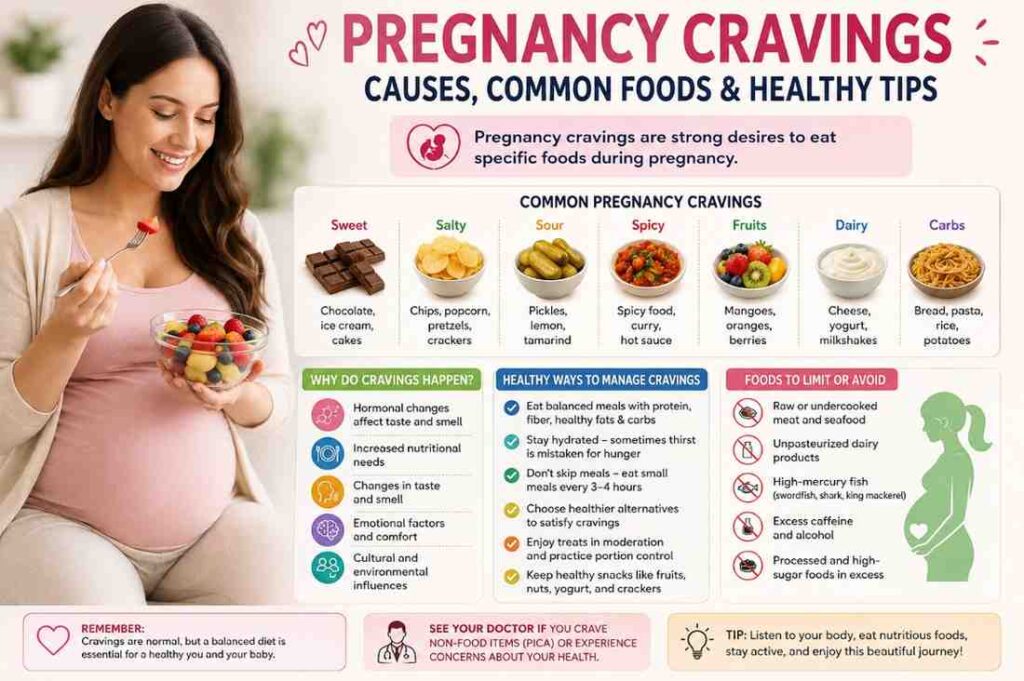
Why Do Pregnancy Cravings Happen?
There isn’t one single cause. Instead, several physical and psychological factors likely work together.
1. Hormonal Changes
Pregnancy hormones such as estrogen and progesterone can alter your sense of taste and smell, making certain foods more appealing while others become unappealing.
2. Increased Nutritional Needs
Growing a baby requires extra nutrients. Although cravings don’t always reflect nutrient deficiencies, your body does need more vitamins, minerals, protein, and calories during pregnancy.
3. Changes in Taste and Smell
Many pregnant women become more sensitive to odors and flavors, especially during the first trimester.
4. Emotional Comfort
Food often provides comfort during times of stress, fatigue, excitement, or emotional changes associated with pregnancy.
5. Cultural and Environmental Influences
Availability of foods, family traditions, advertisements, and personal memories may influence cravings.
Most Common Pregnancy Cravings
Pregnant women may crave almost any food, but some cravings occur more frequently than others.
| Food Category | Examples |
|---|---|
| Sweet foods | Chocolate, ice cream, cakes, cookies |
| Fruits | Mangoes, oranges, watermelon, berries |
| Dairy | Cheese, yogurt, milkshakes |
| Salty snacks | Chips, popcorn, crackers |
| Sour foods | Pickles, lemons, tamarind |
| Spicy foods | Curry, hot sauce, spicy noodles |
| Carbohydrates | Bread, pasta, rice, potatoes |
| Fast food | Pizza, burgers, fries |
| Protein-rich foods | Eggs, meat, peanut butter |
| Cold foods | Ice cream, smoothies, frozen fruit |
Pregnancy Cravings by Trimester
First Trimester
During the first 12 weeks, cravings often appear alongside nausea and morning sickness.
Common cravings include:
- Crackers
- Citrus fruits
- Ginger-based foods
- Bread
- Cold beverages
Many women also develop food aversions during this stage.
Second Trimester
As nausea improves, appetite usually increases.
Common cravings include:
- Chocolate
- Dairy products
- Fruits
- Sandwiches
- Pasta
- Peanut butter
Third Trimester
In late pregnancy, cravings may continue while hunger increases because of the baby’s rapid growth.
Women may crave:
- Protein-rich meals
- Fresh fruits
- Yogurt
- Healthy snacks
- Smoothies
Do Pregnancy Cravings Mean Nutrient Deficiencies?
Not necessarily.
Although some cravings may coincide with increased nutritional needs, there is little scientific evidence that specific cravings reliably indicate vitamin or mineral deficiencies.
For example:
| Craving | Possible Explanation |
|---|---|
| Chocolate | Taste preference, comfort food |
| Ice | May be associated with iron deficiency in some cases |
| Salty foods | Hormonal changes and taste preferences |
| Fruit | Desire for refreshing, hydrating foods |
| Dairy | Increased calcium needs, although not always |
If you suspect a nutritional deficiency, consult your healthcare provider rather than relying on cravings alone.
Strange Pregnancy Cravings (Pica)
Some pregnant women crave non-food items such as:
- Ice
- Clay
- Chalk
- Dirt
- Laundry starch
- Soap
- Paper
This condition is called pica.
Pica is not considered normal and may be associated with iron deficiency anemia or other nutritional deficiencies. Eating non-food substances can be dangerous for both mother and baby.
Seek medical advice immediately if you experience these cravings.
Healthy Ways to Manage Pregnancy Cravings
1. Choose Healthier Alternatives
Instead of highly processed foods every time, try healthier versions.
Examples include:
- Frozen yogurt instead of ice cream
- Dark chocolate instead of candy bars
- Fresh fruit instead of sugary desserts
- Air-popped popcorn instead of chips
2. Eat Balanced Meals
Meals containing:
- Protein
- Whole grains
- Healthy fats
- Fruits
- Vegetables
help maintain stable blood sugar levels and may reduce intense cravings.
3. Stay Hydrated
Sometimes thirst is mistaken for hunger.
Aim to drink plenty of water throughout the day unless your healthcare provider recommends otherwise.
4. Don’t Skip Meals
Long gaps between meals may increase cravings.
Eating smaller meals every 3–4 hours often helps.
5. Practice Portion Control
It’s perfectly okay to enjoy your favorite treats occasionally.
Moderation is healthier than completely restricting foods, which may increase cravings later.
6. Keep Healthy Snacks Available
Stock your kitchen with:
- Nuts
- Greek yogurt
- Fresh fruit
- Cheese
- Whole-grain crackers
- Hummus
- Trail mix
Foods to Limit During Pregnancy
While satisfying cravings is generally safe, some foods should be limited or avoided. These include:
- Raw seafood
- Undercooked meat
- Unpasteurized dairy products
- High-mercury fish
- Excess caffeine
- Alcohol
If you’re craving these foods, ask your healthcare provider about safe alternatives.
Are Sweet Cravings Harmful?
Occasional sweets are usually acceptable within a balanced diet.
However, frequent consumption of sugary foods may contribute to:
- Excess pregnancy weight gain
- Blood sugar fluctuations
- Increased risk of gestational diabetes in susceptible women
- Poor overall nutrition
Choose naturally sweet options like fruit when possible.
Are Spicy Foods Safe During Pregnancy?
Yes.
Spicy foods generally do not harm the baby.
However, they may worsen:
- Heartburn
- Acid reflux
- Indigestion
If spicy foods cause discomfort, reduce portion sizes or choose milder options.
Can You Ignore Pregnancy Cravings?
Usually, yes.
Not every craving needs to be satisfied immediately.
Sometimes a craving fades after:
- Drinking water
- Taking a short walk
- Eating a balanced snack
- Waiting 15–20 minutes
If the craving persists, enjoying a moderate portion is often reasonable.
Tips for a Healthy Pregnancy Diet
- Eat a variety of colorful fruits and vegetables.
- Include lean protein with every meal.
- Choose whole grains over refined grains.
- Consume healthy fats from nuts, seeds, and avocados.
- Drink enough water daily.
- Take prenatal vitamins as prescribed.
- Limit highly processed foods.
- Avoid skipping breakfast.
- Practice mindful eating.
When Should You Contact Your Doctor?
Speak with your healthcare provider if you experience:
- Cravings for non-food items (pica)
- Sudden inability to eat due to severe nausea
- Rapid or excessive weight gain
- Signs of gestational diabetes
- Persistent vomiting
- Concerns about nutrition
- Iron deficiency symptoms such as fatigue, dizziness, or pale skin
Regular prenatal visits help ensure both mother and baby receive appropriate nutrition throughout pregnancy.
Myths About Pregnancy Cravings
Myth 1: Cravings Predict Your Baby’s Gender
There is no scientific evidence that sweet cravings mean you’re having a girl or salty cravings mean you’re having a boy.
Reality: Food cravings cannot predict fetal sex.
Myth 2: You Must Eat for Two
Pregnancy increases nutritional needs, but calorie requirements rise only modestly depending on the trimester.
Reality: Focus on nutrient quality rather than simply eating more.
Myth 3: Every Craving Means Your Body Needs That Food
Scientific evidence does not support this belief.
Reality: Many cravings are influenced by hormones, emotions, and personal preferences.
FAQ’s
What happens if you ignore pregnancy cravings?
Ignoring pregnancy cravings is usually harmless. Many cravings fade on their own after eating a healthy snack, drinking water, or waiting a short time. However, if you have persistent cravings for non-food items, consult your healthcare provider.
Can you have cravings after pregnancy?
Yes. Some women continue to experience food cravings after giving birth, especially while breastfeeding, due to hormonal changes and increased energy needs. These cravings typically lessen over time.
When do pregnancy cravings start?
They usually begin during the first trimester, often around weeks 5–12, and may continue throughout pregnancy.
When do pregnancy cravings stop?
Most cravings decrease after delivery, although some women may continue to experience them while breastfeeding.
Are pregnancy cravings normal?
Yes. Most pregnant women experience cravings at some point, though some women have none.
Is it okay to satisfy pregnancy cravings?
Yes, as long as you enjoy them in moderation and maintain a balanced, nutritious diet.
What should I do if I crave sweets all the time?
Choose healthier options like fresh fruit, yogurt, or dark chocolate, and discuss persistent sugar cravings with your healthcare provider if you have concerns.
Can pregnancy cravings predict my baby’s gender?
No. There is no scientific evidence that cravings can determine whether you’re having a boy or a girl.
What is pica during pregnancy?
Pica is the craving for non-food items such as ice, chalk, clay, dirt, or paper. It may indicate a nutritional deficiency and should be evaluated by a healthcare provider.
Is craving ice during pregnancy normal?
Frequent ice cravings can sometimes be associated with iron-deficiency anemia. Speak with your healthcare provider if this craving is persistent.
Can I ignore pregnancy cravings?
Yes. Many cravings pass on their own. Eating a healthy snack or drinking water may help reduce them.
What foods should I avoid even if I crave them?
Avoid raw or undercooked meat, raw seafood, unpasteurized dairy products, high-mercury fish, alcohol, and excessive caffeine during pregnancy.
Is it normal to have no pregnancy cravings?
Yes. Every pregnancy is different, and many women have few or no cravings.
Can pregnancy cravings change throughout pregnancy?
Yes. Cravings often change from one trimester to another and may vary from day to day.
Can stress increase pregnancy cravings?
Yes. Emotional stress, fatigue, and mood changes may make cravings more intense for some women.
Should I worry if I have no pregnancy cravings?
No. Every pregnancy is different, and not experiencing cravings is completely normal.
Key Takeaways
Pregnancy cravings are a common and usually harmless part of pregnancy. Hormonal changes, altered taste and smell, emotional factors, and increased nutritional needs all likely contribute to these food desires. While occasional treats are perfectly acceptable, maintaining a balanced, nutrient-rich diet remains the best way to support both maternal and fetal health. If cravings involve non-food items or are accompanied by concerning symptoms, consult your healthcare provider promptly.
Sources / References:
- American College of Obstetricians and Gynecologists (ACOG)
- Office on Women’s Health (U.S. Department of Health & Human Services)
- Centers for Disease Control and Prevention (CDC) – Pregnancy Nutrition
- National Institutes of Health (NIH)
- Academy of Nutrition and Dietetics
- NHS (UK) – Healthy Eating in Pregnancy
- World Health Organization (WHO)
About the Author::
Written by: Kirti Solanki (Health Content Researcher)
Kirti Solanki is a Health Content Researcher who creates evidence-based, reader-friendly articles on pregnancy, nutrition, wellness, and preventive healthcare. Her content is developed using trusted medical guidelines and reputable scientific sources to help readers make informed health decisions.
Disclaimer
This guide is for educational purposes only and should not replace professional medical advice, diagnosis, or treatment. Always consult your obstetrician, gynecologist, or qualified healthcare provider regarding any pregnancy-related concerns or dietary changes.
Also Read: