
Pregnancy brings many physical and emotional changes, and while many expectant mothers anticipate symptoms like morning sickness or fatigue, headaches are another common complaint. For some women, headaches become more frequent during pregnancy, while others who previously suffered from migraines may notice an improvement.
Most pregnancy headaches are harmless and result from hormonal changes, dehydration, stress, or lack of sleep. However, in certain cases, headaches can signal a more serious condition that requires immediate medical attention.
This guide explains why headaches happen during pregnancy, what they feel like, safe treatment options, home remedies, prevention tips, and warning signs that should never be ignored.
What Are Headaches During Pregnancy?
Headaches during pregnancy refer to pain or discomfort in the head, neck, or upper shoulders that occurs while expecting a baby. They are especially common during the first trimester because of rapidly changing hormone levels and increased blood circulation.
As pregnancy progresses, different factors such as weight gain, poor posture, high blood pressure, or stress may also contribute to headaches.
Although headaches are common, they should never be ignored if they become severe, sudden, or are accompanied by other concerning symptoms.
How Common Are Pregnancy Headaches?
Research suggests that headaches affect a significant number of pregnant women, particularly during the first trimester.
Many women experience:
- Mild tension headaches
- Migraine headaches
- Sinus headaches
- Neck-related headaches
- Dehydration headaches
Women with a history of migraines before pregnancy are more likely to experience headaches during pregnancy, although some notice that migraines improve after hormone levels stabilize.
Are Headaches Normal During Pregnancy?
Yes. Headaches are a common pregnancy symptom, especially during the first trimester. They are often caused by hormonal changes, increased blood volume, dehydration, fatigue, stress, or low blood sugar. Most headaches are mild and improve with rest, hydration, and healthy lifestyle habits.
However, if you experience a severe, persistent headache or one accompanied by blurred vision, swelling, or high blood pressure, seek medical attention promptly, as it could indicate a serious condition such as preeclampsia.
What Causes Headaches During Pregnancy?
Several factors may trigger headaches during pregnancy.
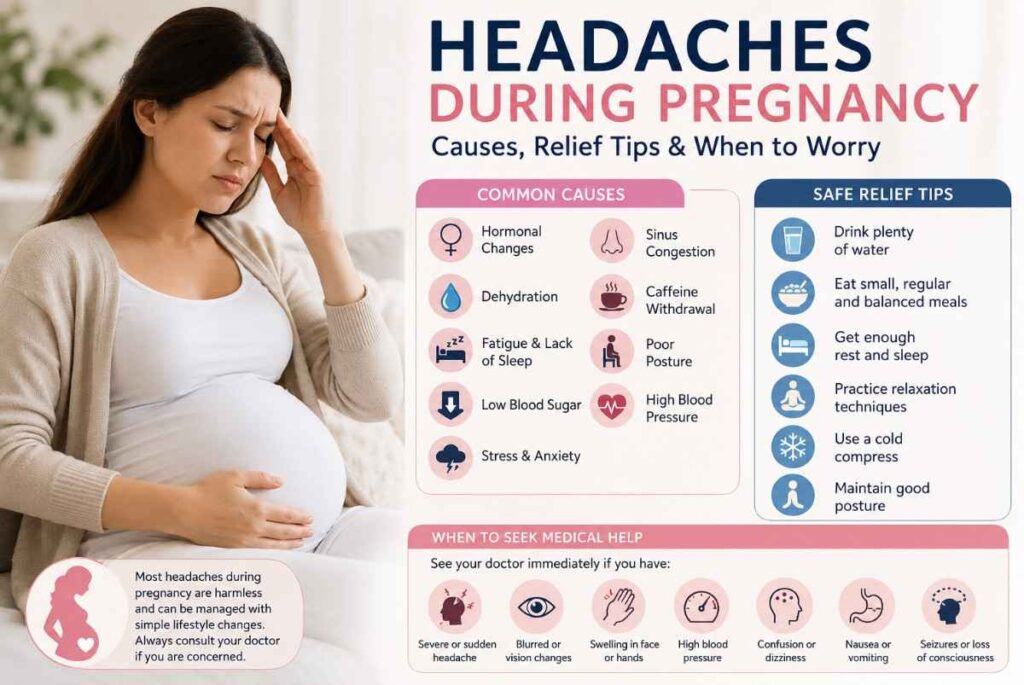
1. Hormonal Changes
Pregnancy hormones, especially estrogen, fluctuate dramatically during early pregnancy and can affect blood vessels and pain pathways.
2. Increased Blood Volume
Blood volume increases by nearly 40–50% during pregnancy. This adjustment may contribute to headaches in some women.
3. Dehydration
Even mild dehydration can trigger headaches. Pregnant women require extra fluids to support both maternal health and fetal development.
4. Low Blood Sugar
Skipping meals or going too long without eating may cause blood sugar levels to drop, leading to headaches, dizziness, and weakness.
5. Fatigue
Growing a baby requires extra energy. Lack of sleep and exhaustion are common headache triggers.
6. Stress and Anxiety
Emotional stress increases muscle tension around the neck and shoulders, often resulting in tension headaches.
7. Caffeine Withdrawal
Women who reduce caffeine intake after becoming pregnant may experience withdrawal headaches for several days.
8. Sinus Congestion
Pregnancy hormones can cause swelling of nasal tissues, increasing sinus pressure and facial pain.
9. Poor Posture
As pregnancy advances, changes in posture may strain neck and shoulder muscles, causing headaches.
10. High Blood Pressure
Headaches during the second or third trimester may occasionally be related to pregnancy-induced hypertension or preeclampsia.
Types of Headaches During Pregnancy
1. Tension Headaches
These are the most common pregnancy headaches.
Symptoms include:
- Dull, aching pain
- Tightness around the forehead
- Pressure on both sides of the head
- Neck or shoulder stiffness
2. Migraine Headaches
Migraines are more intense and may include:
- Throbbing pain
- Pain on one side of the head
- Nausea
- Vomiting
- Sensitivity to light and sound
Some women also experience visual disturbances known as aura.
3. Sinus Headaches
Usually caused by congestion.
Symptoms include:
- Facial pressure
- Pain around the eyes
- Nasal congestion
- Forehead pain
4. Cluster Headaches
These are uncommon but cause severe pain around one eye and may occur in repeated episodes.
Symptoms of Pregnancy Headaches
Depending on the type of headache, symptoms may include:
- Dull aching pain
- Sharp or throbbing pain
- Pressure around the forehead
- Neck pain
- Shoulder tension
- Sensitivity to light
- Sensitivity to sound
- Nausea
- Blurred vision (requires medical evaluation if severe)
- Fatigue
Which Trimester Has the Most Headaches?
First Trimester
Headaches are most common during early pregnancy because of:
- Hormonal changes
- Morning sickness
- Dehydration
- Fatigue
- Blood sugar fluctuations
Second Trimester
Many women notice fewer headaches as hormone levels become more stable.
However, headaches may still occur due to:
- Stress
- Eye strain
- Muscle tension
- Poor posture
Third Trimester
Headaches may return because of:
- Poor sleep
- Increased body weight
- Muscle strain
- High blood pressure
- Preeclampsia
Any new or severe headache during late pregnancy should be discussed with a healthcare provider.
Third Trimester Headache Warning Signs
While mild headaches can occur during the third trimester due to poor sleep, muscle tension, dehydration, or stress, a new or severe headache should never be ignored. In late pregnancy, headaches can sometimes be a warning sign of a serious condition such as preeclampsia, which requires immediate medical attention.
Contact your healthcare provider immediately if your headache is accompanied by:
- Severe or sudden headache that doesn’t improve with rest
- Blurred vision, double vision, or temporary vision loss
- High blood pressure
- Swelling of the face, hands, or around the eyes
- Severe pain below the ribs or in the upper abdomen
- Persistent nausea or vomiting
- Confusion or difficulty speaking
- Shortness of breath
- Seizures or loss of consciousness
- Decreased fetal movement
Never ignore persistent headaches after 20 weeks of pregnancy. Early diagnosis and treatment can help protect both mother and baby.
How to Relieve Headaches During Pregnancy?
Here are the safe ways to relieve headaches during pregnancy:
1. Drink Plenty of Water
Aim for adequate daily fluid intake unless your healthcare provider advises otherwise.
2. Eat Small, Frequent Meals
Avoid skipping meals to maintain stable blood sugar levels.
3. Get Enough Sleep
Most pregnant women benefit from 7–9 hours of quality sleep each night.
4. Apply a Cold Compress
A cool cloth placed on the forehead or back of the neck may reduce pain.
5. Rest in a Dark, Quiet Room
Reducing light and noise often helps relieve migraine symptoms.
6. Practice Relaxation Techniques
Gentle breathing exercises, prenatal yoga, and meditation may reduce stress-related headaches.
7. Improve Posture
Maintain proper posture when sitting, standing, and sleeping.
8. Gentle Neck Massage
Massaging tense neck and shoulder muscles may reduce tension headaches.
Safe Headache Medicine During Pregnancy
Pregnant women should never take pain-relieving medications without consulting their healthcare provider.
Medicines generally considered safe
Acetaminophen (Paracetamol): It is generally considered the preferred pain reliever during pregnancy when taken as directed by a healthcare professional.
Medicines to avoid unless specifically prescribed
- Ibuprofen
- Naproxen
- Aspirin (except low-dose aspirin when prescribed)
- Other nonsteroidal anti-inflammatory drugs (NSAIDs)
These medications may increase certain risks, particularly during the second and third trimesters.
Before taking any medicine
- Read the medicine label carefully.
- Never exceed the recommended dose.
- Inform your healthcare provider about all prescription medicines, supplements, and herbal products you are using.
- Avoid self-medicating, even with over-the-counter drugs.
Foods That May Help Prevent Headaches During Pregnancy
A balanced pregnancy diet supports overall health and may reduce headache frequency.
Helpful foods include:
- Fresh fruits
- Vegetables
- Whole grains
- Lean proteins
- Nuts
- Yogurt
- Eggs
- Oats
- Bananas
- Water-rich fruits such as watermelon
Foods That May Trigger Pregnancy Headaches
Some women notice headaches after consuming certain foods.
Possible triggers include:
- Processed meats
- Excess chocolate
- Artificial sweeteners
- Very salty foods
- Foods containing monosodium glutamate (MSG)
- Too much caffeine
Keeping a food diary may help identify personal triggers.
Can Migraines Affect Pregnancy?
Most migraines do not directly harm the developing baby.
However, severe migraines can affect:
- Sleep quality
- Hydration
- Nutrition
- Daily activities
Women with migraines may have a slightly higher risk of pregnancy complications such as high blood pressure, making regular prenatal care important.
When to Worry About Headaches During Pregnancy?
Seek immediate medical attention if a headache is accompanied by:
- Sudden severe headache
- Vision changes
- Blurred vision
- Double vision
- Swelling of the face or hands
- High blood pressure
- Fever
- Confusion
- Difficulty speaking
- Seizures
- Loss of consciousness
- Severe abdominal pain
- Persistent vomiting
These symptoms may indicate preeclampsia, stroke, meningitis, or another serious medical condition requiring urgent care.
Can Headaches Be Prevented During Pregnancy?
While headaches cannot always be prevented, healthy habits may reduce their frequency. Tips include:
- Stay hydrated throughout the day.
- Eat balanced meals regularly.
- Get enough sleep each night.
- Exercise with your healthcare provider’s approval.
- Limit stress whenever possible.
- Maintain good posture.
- Avoid known headache triggers.
- Attend regular prenatal appointments.
- Limit excessive screen time if it worsens headaches.
FAQs
Can headaches be an early sign of pregnancy?
They can be. Hormonal changes in early pregnancy may cause headaches, but headaches alone are not a reliable sign of pregnancy.
Are migraines common during pregnancy?
Some women continue to experience migraines during pregnancy, while others notice that their migraines improve, especially after the first trimester.
Can dehydration cause pregnancy headaches?
Yes. Dehydration is one of the most common causes of headaches during pregnancy, so drinking enough water is important.
Can stress trigger headaches during pregnancy?
Yes. Emotional stress and anxiety can lead to tension headaches by causing muscle tightness in the neck and shoulders.
Can high blood pressure cause headaches during pregnancy?
Yes. Persistent headaches, especially in the second or third trimester, can be a sign of pregnancy-related high blood pressure or preeclampsia.
Are headaches normal in the third trimester?
Occasional headaches can occur due to poor sleep or muscle strain, but new or severe headaches in late pregnancy should always be evaluated by a healthcare provider.
Can low blood sugar cause headaches during pregnancy?
Yes. Skipping meals or going long periods without eating can lower blood sugar levels and trigger headaches.
Does caffeine affect pregnancy headaches?
Suddenly stopping caffeine may cause withdrawal headaches. Talk to your healthcare provider about a safe amount of caffeine during pregnancy.
Can lack of sleep cause headaches during pregnancy?
Yes. Poor sleep and fatigue are common headache triggers throughout pregnancy.
Can sinus problems cause headaches during pregnancy?
Yes. Pregnancy hormones can cause nasal congestion and sinus pressure, leading to sinus headaches.
How can I prevent headaches during pregnancy?
Stay hydrated, eat healthy meals on time, sleep well, manage stress, maintain good posture, and attend regular prenatal checkups.
Is it safe to take paracetamol for headaches during pregnancy?
Paracetamol (acetaminophen) is commonly considered the preferred pain reliever during pregnancy when recommended by a healthcare provider.
Do pregnancy headaches affect the baby?
Most routine headaches do not affect fetal development. However, headaches caused by conditions like preeclampsia require immediate treatment.
Should I worry about headaches in the third trimester?
Any new, severe, or persistent headache during late pregnancy should be evaluated promptly, especially if accompanied by swelling, vision changes, or high blood pressure.
What are red flags for headaches while pregnant?
Seek immediate medical attention if you have a severe or sudden headache, blurred vision, swelling of the face or hands, high blood pressure, fever, confusion, seizures, or persistent vomiting. These may be signs of a serious pregnancy complication, such as preeclampsia.
Is it normal to get headaches every day while pregnant?
Occasional headaches are common during pregnancy, but daily or persistent headaches are not considered normal and should be evaluated by your healthcare provider.
Are headaches more common with boys or girls?
No. There is no scientific evidence that frequent headaches during pregnancy can predict whether you’re carrying a boy or a girl.
Where are pregnancy headaches located?
The location depends on the type of headache. Tension headaches often affect both sides of the head or the forehead, migraines usually occur on one side of the head, and sinus headaches typically cause pain around the eyes, cheeks, and forehead.
Is medicine safe for pregnancy headaches?
Yes, some medications, such as acetaminophen (paracetamol), are generally considered safe during pregnancy when taken as directed by your healthcare provider. Avoid self-medicating or using NSAIDs like ibuprofen or naproxen unless specifically prescribed by your healthcare professional.
Final Thoughts
Headaches during pregnancy are common and are usually linked to normal hormonal and physical changes. Staying hydrated, eating nutritious meals, sleeping well, and managing stress can help reduce their frequency. While most headaches are not dangerous, severe or persistent headaches—especially during the second or third trimester—should never be ignored.
Always consult your obstetrician or healthcare provider before taking any medication or trying new treatments during pregnancy. Prompt medical care can help identify serious conditions early and protect the health of both mother and baby.
Sources / References:
- American College of Obstetricians and Gynecologists (ACOG)
- Mayo Clinic – Pregnancy Health
- National Institute of Neurological Disorders and Stroke (NINDS)
- National Health Service (NHS)
- March of Dimes
- MedlinePlus
- World Health Organization (WHO)
About the Author:
Written by: Kirti Solanki (Health Content Researcher)
Kirti Solanki is a Health Content Researcher who creates evidence-based, reader-friendly articles on pregnancy, nutrition, wellness, and preventive healthcare. Her work focuses on simplifying complex medical information using trusted clinical guidelines and reputable health sources.
Disclaimer:
This guide is for educational purposes only and should not replace professional medical advice, diagnosis, or treatment. Always consult your obstetrician or qualified healthcare provider regarding any pregnancy-related symptoms or concerns.
Also Read: