
Preparing for pregnancy begins long before you see a positive pregnancy test. A healthy pregnancy starts with a healthy body, and the months leading up to conception provide an excellent opportunity to improve your physical, nutritional, and emotional well-being.
Whether you are planning your first baby or expanding your family, taking care of your body before pregnancy can help increase your chances of conceiving, support your baby’s healthy development, and reduce the risk of pregnancy complications.
This guide explains how to prepare your body for pregnancy with science-backed recommendations that focus on nutrition, lifestyle, medical care, mental health, and overall wellness.
Why Preparing for Pregnancy Matters
The first few weeks of pregnancy are critical for your baby’s development. Many women do not realize they are pregnant until several weeks after conception. By that time, important organs such as the brain, spinal cord, and heart have already started developing.
Preparing your body before pregnancy can help:
- Improve fertility
- Reduce the risk of birth defects
- Support healthy fetal growth
- Lower the risk of miscarriage
- Reduce pregnancy complications
- Promote a healthier pregnancy and delivery
- Improve postpartum recovery
Experts generally recommend beginning preconception care at least three months before trying to conceive.
20 Natural Ways to Prepare Your Body for Pregnancy
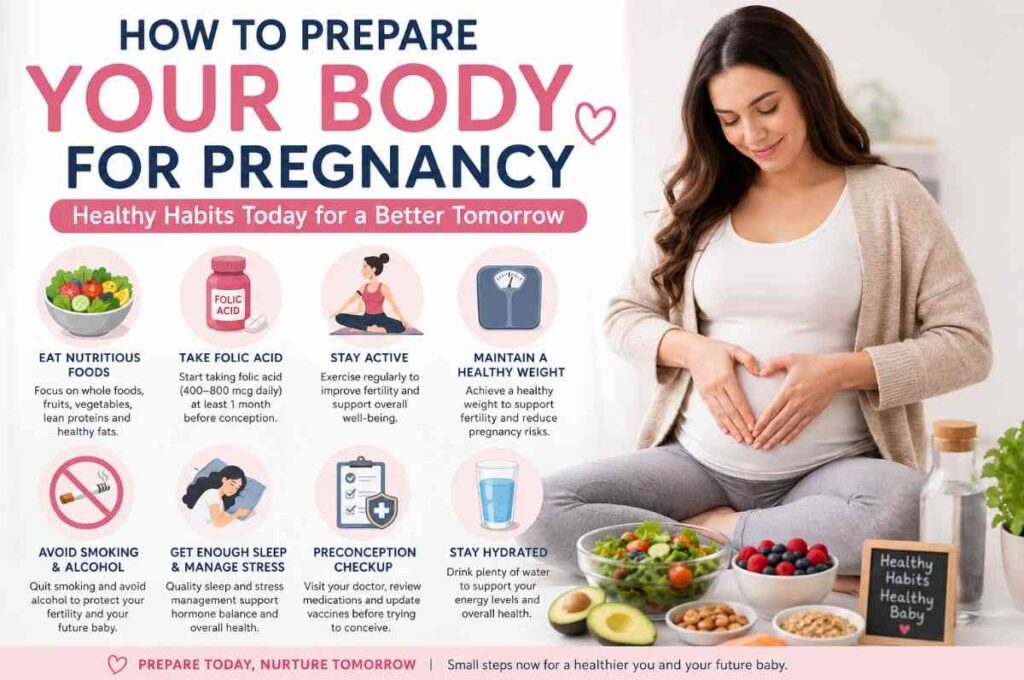
1. Schedule a Preconception Health Checkup
One of the most important first steps is visiting your healthcare provider.
During a preconception appointment, your doctor may:
- Review your medical history
- Discuss previous pregnancies
- Evaluate chronic health conditions
- Review medications and supplements
- Check your vaccination status
- Recommend blood tests if necessary
- Discuss family history and genetic risks
- Provide personalized fertility advice
If you have conditions such as diabetes, thyroid disease, high blood pressure, epilepsy, or autoimmune disorders, managing them before pregnancy is especially important.
2. Start Taking Folic Acid
Folic acid is one of the most important nutrients before pregnancy.
It helps prevent neural tube defects, including spina bifida and anencephaly, which develop during the first month of pregnancy.
Most healthcare organizations recommend:
- 400–800 mcg of folic acid daily for women planning pregnancy
- Starting supplementation at least one month before conception
- Continuing through the first trimester
Women with certain medical conditions or previous pregnancies affected by neural tube defects may require higher doses under medical supervision.
3. Improve Your Nutrition
Your body needs a steady supply of nutrients before conception.
Focus on a balanced diet that includes:
Fruits:
Fresh fruits provide antioxidants, vitamins, minerals, and fiber.
Examples include:
- Apples
- Berries
- Oranges
- Bananas
- Kiwi
- Pomegranate
Vegetables:
Aim for a variety of colorful vegetables every day.
Choose:
- Spinach
- Broccoli
- Kale
- Carrots
- Sweet potatoes
- Bell peppers
Leafy greens are especially rich in folate.
Whole Grains:
Whole grains provide sustained energy and fiber.
Good choices include:
- Brown rice
- Oats
- Quinoa
- Whole wheat bread
- Barley
Lean Protein:
Protein supports healthy cell growth.
Include:
- Eggs
- Fish low in mercury
- Chicken
- Turkey
- Lentils
- Beans
- Tofu
Healthy Fats:
Healthy fats are essential for hormone production.
Sources include:
- Avocados
- Nuts
- Seeds
- Olive oil
- Fatty fish such as salmon
4. Reach a Healthy Weight
Both being underweight and overweight can affect fertility.
Maintaining a healthy body weight may:
- Improve ovulation
- Increase fertility
- Reduce miscarriage risk
- Lower the chances of gestational diabetes
- Reduce pregnancy-related complications
Crash diets are not recommended. Instead, aim for gradual, sustainable lifestyle changes through balanced eating and regular physical activity.
5. Exercise Regularly
Regular exercise helps prepare your body for pregnancy by improving cardiovascular health, muscle strength, and endurance.
Recommended activities include:
- Walking
- Swimming
- Cycling
- Yoga
- Pilates
- Light strength training
Aim for at least 150 minutes of moderate physical activity per week, unless advised otherwise by your healthcare provider.
Avoid excessive or extremely intense exercise if you’re trying to conceive.
6. Quit Smoking
Smoking can negatively affect fertility in both women and men.
It also increases the risk of:
- Miscarriage
- Ectopic pregnancy
- Placental complications
- Preterm birth
- Low birth weight
- Sudden Infant Death Syndrome (SIDS)
Quitting before pregnancy offers significant health benefits for both mother and baby.
7. Avoid Alcohol
There is no known safe amount of alcohol during pregnancy.
Since pregnancy may not be recognized immediately after conception, experts recommend avoiding alcohol while trying to become pregnant.
Alcohol exposure during early pregnancy may increase the risk of fetal alcohol spectrum disorders.
8. Limit Caffeine Intake
High caffeine intake may affect fertility and has been associated with a higher risk of miscarriage in some studies.
Many healthcare organizations recommend limiting caffeine to less than 200 mg per day, which is approximately one 12-ounce cup of coffee.
Remember that caffeine is also found in:
- Tea
- Energy drinks
- Soft drinks
- Chocolate
9. Get Enough Sleep
Sleep is essential for hormonal balance and reproductive health.
Aim for:
- 7–9 hours of quality sleep every night
- A consistent sleep schedule
- A relaxing bedtime routine
Poor sleep may contribute to stress, weight gain, and hormonal imbalance.
10. Manage Stress
Trying to conceive can sometimes be emotionally challenging.
Although stress alone does not necessarily cause infertility, chronic stress can affect overall health and well-being.
Healthy ways to reduce stress include:
- Meditation
- Deep breathing
- Gentle yoga
- Journaling
- Reading
- Spending time outdoors
- Talking with supportive family or friends
If anxiety becomes overwhelming, consider speaking with a mental health professional.
11. Stay Hydrated
Water supports nearly every function in the body.
Proper hydration helps:
- Regulate body temperature
- Support digestion
- Improve circulation
- Maintain healthy energy levels
Most adults benefit from drinking enough fluids throughout the day, with needs varying based on activity level, climate, and overall health.
12. Review Your Medications
Some medications are not considered safe during pregnancy.
Never stop prescribed medication without medical advice.
Discuss with your healthcare provider:
- Prescription medications
- Over-the-counter medicines
- Herbal supplements
- Vitamins
- Weight-loss supplements
Your doctor may recommend safer alternatives if necessary.
13. Update Your Vaccinations
Certain infections during pregnancy can be harmful to both mother and baby.
Before pregnancy, your healthcare provider may review immunity against:
- Rubella
- Chickenpox (Varicella)
- Hepatitis B
- Influenza
- COVID-19 (if appropriate)
Some vaccines should be given before pregnancy because they are not recommended during pregnancy.
14. Check Your Iron Levels
Iron helps produce healthy red blood cells.
Iron deficiency before pregnancy can increase the risk of anemia during pregnancy.
Iron-rich foods include:
- Lean meat
- Spinach
- Lentils
- Chickpeas
- Beans
- Fortified cereals
Pair iron-rich foods with vitamin C-rich foods to improve absorption.
15. Include Calcium and Vitamin D
Strong bones are important for both mother and baby.
Good calcium sources include:
- Milk
- Yogurt
- Cheese
- Fortified plant milk
- Tofu
Vitamin D supports calcium absorption and immune health.
Some women may require supplements based on their blood levels.
16. Know Your Menstrual Cycle
Tracking your menstrual cycle can help identify your fertile window.
Methods include:
- Calendar tracking
- Ovulation predictor kits
- Basal body temperature
- Cervical mucus monitoring
Knowing when ovulation occurs may improve your chances of conception.
17. Encourage Your Partner to Prepare Too
Pregnancy preparation is not only for women.
Male fertility also benefits from healthy lifestyle habits.
Partners should:
- Stop smoking
- Limit alcohol
- Maintain a healthy weight
- Exercise regularly
- Eat a nutritious diet
- Get enough sleep
- Manage stress
Healthy sperm production takes approximately three months, so lifestyle improvements may take time to show benefits.
18. Reduce Exposure to Harmful Chemicals
Some environmental chemicals may affect reproductive health.
Reduce exposure by:
- Avoiding tobacco smoke
- Using protective equipment when handling chemicals
- Limiting pesticide exposure
- Following workplace safety recommendations
- Avoiding unnecessary exposure to solvents and toxic substances
19. Care for Your Dental Health
Healthy gums contribute to overall health.
Schedule a dental checkup before pregnancy.
Maintain good oral hygiene by:
- Brushing twice daily
- Flossing every day
- Visiting your dentist regularly
Untreated gum disease has been associated with adverse pregnancy outcomes in some studies.
20. Build Healthy Habits Before Pregnancy
Rather than making sudden changes after becoming pregnant, begin building sustainable habits now.
Healthy routines include:
- Eating nutritious meals
- Staying active
- Sleeping well
- Managing stress
- Attending regular medical checkups
- Taking prenatal vitamins as recommended
- Avoiding harmful substances
These habits support both fertility and a healthier pregnancy.
Foods to Focus on Before Pregnancy
| Food Group | Examples |
|---|---|
| Fruits | Apples, berries, oranges, bananas |
| Vegetables | Spinach, broccoli, carrots, kale |
| Whole Grains | Brown rice, oats, quinoa |
| Lean Protein | Eggs, chicken, lentils, beans |
| Dairy | Milk, yogurt, cheese |
| Healthy Fats | Olive oil, avocado, nuts, seeds |
| Fish | Salmon, sardines (low-mercury options) |
Foods and Habits to Limit
- Smoking
- Alcohol
- Recreational drugs
- Excess caffeine
- Highly processed foods
- Sugary beverages
- Excess trans fats
When Should You Start Preparing for Pregnancy?
Most healthcare professionals recommend starting at least three months before trying to conceive.
However, even small healthy lifestyle changes made today can positively influence your future pregnancy.
Final Thoughts
Preparing your body for pregnancy is one of the best investments you can make for your future health and your baby’s development. Good nutrition, regular exercise, adequate sleep, stress management, and preconception medical care all work together to create the healthiest possible environment for conception and pregnancy.
Every pregnancy journey is unique, and there is no single “perfect” way to prepare. By focusing on gradual, sustainable lifestyle improvements and working closely with your healthcare provider, you can enter pregnancy feeling healthier, more confident, and better prepared for the months ahead.
FAQs
Which vitamin is most important before pregnancy?
Folic acid is considered one of the most important vitamins before pregnancy because it helps reduce the risk of neural tube defects.
Should I lose weight before getting pregnant?
If you are overweight or underweight, achieving a healthier weight before pregnancy may improve fertility and reduce pregnancy-related complications. Speak with your healthcare provider for personalized guidance.
Can exercise improve fertility?
Regular moderate exercise supports overall health and may improve fertility, hormone balance, and weight management.
Should my partner prepare for pregnancy too?
Yes. Healthy lifestyle habits in men can improve sperm quality and contribute to a healthy pregnancy.
Can I drink coffee while trying to conceive?
Moderate caffeine intake (generally under 200 mg per day) is considered acceptable for most people trying to become pregnant, but consult your healthcare provider for individualized advice.
What foods should I eat before pregnancy?
Choose fruits, vegetables, whole grains, lean proteins, healthy fats, dairy, and folate-rich foods like spinach and beans.
Can stress affect my chances of getting pregnant?
Chronic stress may impact overall well-being and hormone balance, so managing stress is beneficial when trying to conceive.
Should I stop drinking alcohol before pregnancy?
Yes. It’s best to avoid alcohol while trying to conceive because early pregnancy often occurs before you know you’re pregnant.
Why is folic acid important before pregnancy?
Folic acid helps support your baby’s brain and spinal cord development and reduces the risk of neural tube defects.
Should I see a doctor before trying to get pregnant?
Yes. A preconception checkup can identify health issues, review medications, and help you prepare for a healthy pregnancy.
What should I avoid before pregnancy?
Avoid smoking, alcohol, recreational drugs, excessive caffeine, and exposure to harmful chemicals whenever possible.
Do I need prenatal vitamins before pregnancy?
Yes. Many healthcare providers recommend starting prenatal vitamins before conception, especially those containing folic acid.
Is it safe to take my regular medications while trying to conceive?
Not all medications are safe during pregnancy. Speak with your healthcare provider before starting, stopping, or changing any medication.
What helps get pregnant faster?
Track ovulation, eat a healthy diet, take folic acid, maintain a healthy weight, and have regular intercourse during your fertile window.
Which juice is not good for early pregnancy?
Avoid unpasteurized juices and juices with added sugar. Choose pasteurized 100% fruit juice in moderation.
Sources / References:
- American College of Obstetricians and Gynecologists (ACOG)
- Centers for Disease Control and Prevention (CDC) – Preconception Health
- World Health Organization (WHO)
- National Institutes of Health (NIH)
- Office on Women’s Health
- NHS (UK) – Pregnancy Planning
- Academy of Nutrition and Dietetics
About the Author:
Written by: Kirti Solanki (Health Content Researcher)
Kirti Solanki is a Health Content Researcher who creates evidence-based content on pregnancy, nutrition, and wellness using trusted medical sources to provide accurate and practical health information.
Disclaimer:
This guide is for informational purposes only and is not a substitute for professional medical advice, diagnosis, or treatment. Always consult your healthcare provider before making health or pregnancy-related decisions.
Also Read: