
Pregnancy is one of the most important stages in a woman’s life, and nutrition plays a major role in supporting both the mother and her growing baby. Among all essential nutrients, protein is often considered one of the most important because it helps build new cells, tissues, organs, muscles, and hormones. As your baby grows, your body needs extra protein to support healthy development while also maintaining your own health.
Many expecting mothers wonder, “How much protein do I actually need during pregnancy?” The answer depends on several factors, including your body weight, stage of pregnancy, activity level, and whether you’re carrying one baby or multiples.
In this guide, you’ll learn exactly how much protein a pregnant woman needs, why it’s important, the best protein-rich foods, signs of protein deficiency, whether protein supplements are necessary, and practical ways to meet your daily protein goals naturally.
Why Protein Is Important During Pregnancy
Protein is made up of amino acids, often called the building blocks of life. During pregnancy, your body uses these amino acids to create nearly every part of your baby’s body.
Protein helps support:
- Growth of the baby’s organs
- Brain development
- Muscle formation
- Healthy skin and tissues
- Development of the placenta
- Production of amniotic fluid
- Increased maternal blood supply
- Breast tissue growth
- Uterine growth
- Hormone and enzyme production
Without adequate protein, your baby’s growth may not occur as expected, and the mother’s body may struggle to adapt to pregnancy’s increased nutritional demands.
How Much Protein Does a Pregnant Woman Need?
According to health experts, protein needs increase during pregnancy.
General Recommendation
Most healthy pregnant women need approximately:
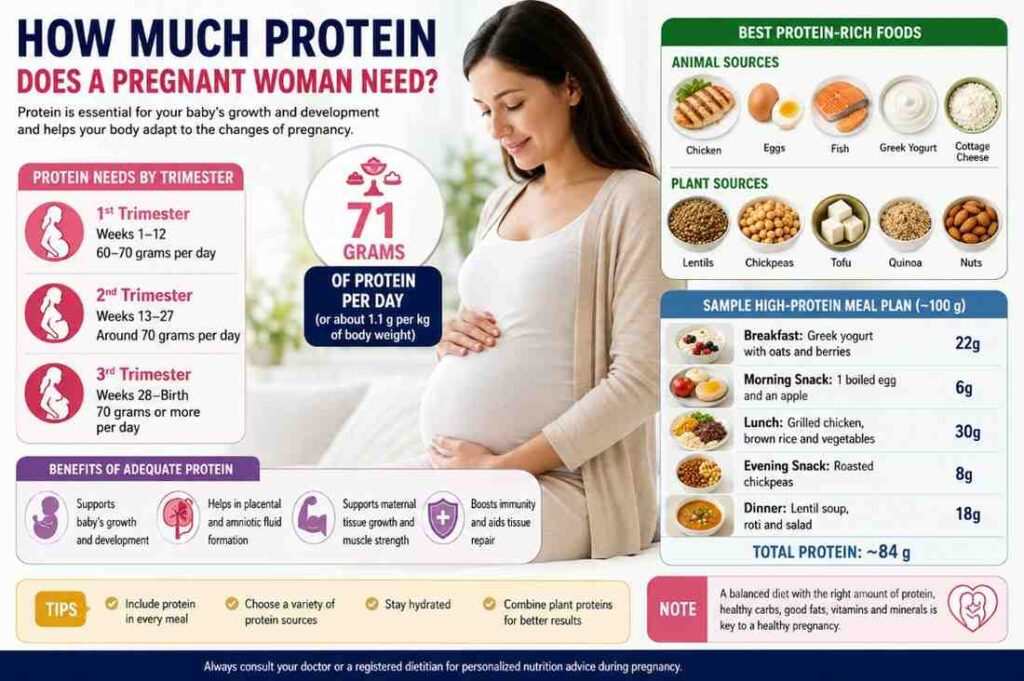
- 71 grams of protein per day
- Around 1.1 grams of protein per kilogram of body weight daily
This recommendation applies to women carrying a single baby.
For example:
| Body Weight | Daily Protein Need |
|---|---|
| 50 kg | 55–60 g |
| 60 kg | 66–72 g |
| 70 kg | 77–84 g |
| 80 kg | 88–96 g |
Women who exercise regularly, are underweight before pregnancy, or are expecting twins may require additional protein based on medical advice.
Protein Needs by Pregnancy Trimester
Protein requirements gradually increase as pregnancy progresses.
First Trimester (Weeks 1–12)
During early pregnancy, the baby is still very small.
Protein is needed for:
- Early cell division
- Formation of the neural tube
- Placenta development
Recommended intake:
Approximately 60–70 grams daily, depending on body weight.
Many women experience nausea during this stage, making it difficult to eat enough protein. Small, frequent meals often help.
Second Trimester (Weeks 13–27)
This is when rapid fetal growth begins.
Protein supports:
- Muscle growth
- Bone development
- Organ formation
- Increased blood volume
Daily intake generally reaches:
Around 70 grams or more.
Third Trimester (Weeks 28–Birth)
Protein demands are highest during the final months.
The baby gains weight quickly while the mother’s body prepares for labor and breastfeeding.
Protein supports:
- Brain development
- Fat storage
- Muscle growth
- Immune system development
Many healthcare professionals encourage consistent protein intake throughout this trimester.
Why Protein Requirements Increase During Pregnancy
Extra protein is needed because your body is creating new tissues every day.
Protein helps produce:
- Placenta
- Amniotic fluid
- Baby’s muscles
- Baby’s organs
- Baby’s bones
- Skin
- Hair
- Nails
- Maternal blood
- Breast tissue
- Uterus
Without enough dietary protein, your body cannot efficiently build these tissues.
Best High-Protein Foods for Pregnancy
A balanced diet should include protein from both animal and plant sources.
Animal Protein Sources
| Food | Protein (Approx.) |
|---|---|
| Chicken breast (100 g) | 31 g |
| Turkey | 29 g |
| Salmon | 22 g |
| Eggs (1 large) | 6 g |
| Greek yogurt (1 cup) | 20 g |
| Cottage cheese | 25 g |
| Milk (1 cup) | 8 g |
| Lean beef | 26 g |
| Tuna | 25 g |
Animal proteins provide all essential amino acids.
Plant-Based Protein Sources
| Food | Protein (Approx.) |
|---|---|
| Lentils (1 cup cooked) | 18 g |
| Chickpeas | 15 g |
| Kidney beans | 15 g |
| Black beans | 15 g |
| Tofu | 10–20 g |
| Tempeh | 20 g |
| Edamame | 17 g |
| Quinoa | 8 g |
| Oats | 6 g |
| Peanut butter (2 tbsp) | 8 g |
Combining different plant proteins throughout the day provides a complete amino acid profile.
Healthy Pregnancy Protein Meal Plan
Here’s an example of how to reach about 70 grams of protein in a day.
Breakfast
- Greek yogurt
- Oats
- Chia seeds
- Berries
Protein: 22 grams
Morning Snack
- Boiled egg
- Apple
Protein: 6 grams
Lunch
- Grilled chicken breast
- Brown rice
- Mixed vegetables
Protein: 30 grams
Evening Snack
- Handful of roasted chickpeas
Protein: 8 grams
Dinner
- Lentil soup
- Whole wheat roti
- Mixed salad
Protein: 18 grams
Total protein: Approximately 84 grams
This meal plan exceeds the minimum recommendation while providing fiber, vitamins, and minerals.
Protein-Rich Vegetarian Foods for Pregnancy
Vegetarian mothers can easily meet their protein needs by eating a variety of foods.
Good choices include:
- Lentils
- Chickpeas
- Kidney beans
- Soybeans
- Tofu
- Paneer
- Milk
- Yogurt
- Quinoa
- Pumpkin seeds
- Nuts
- Seeds
- Oats
Including dairy and soy products can make it easier to achieve daily protein goals.
Can Pregnant Women Eat Protein Powder?
Protein powders may be useful for women who cannot meet their needs through food due to severe morning sickness, food aversions, or certain medical conditions.
However, they are not necessary for most healthy pregnancies.
If using a protein supplement:
- Choose products tested for quality.
- Avoid products with herbal stimulants or unnecessary additives.
- Limit added sugars.
- Discuss supplement use with your healthcare provider.
Whole foods remain the preferred source of protein because they also provide vitamins, minerals, healthy fats, and fiber.
Signs You May Not Be Getting Enough Protein
Protein deficiency is uncommon in women with balanced diets, but it can occur.
Possible signs include:
- Fatigue
- Muscle weakness
- Slow wound healing
- Swelling
- Hair thinning
- Frequent infections
- Poor weight gain during pregnancy
- Reduced fetal growth
These symptoms can have many causes, so always consult a healthcare provider for proper evaluation.
Can You Eat Too Much Protein During Pregnancy?
Yes. Although protein is essential, extremely high-protein diets are generally not recommended during pregnancy.
Very high protein intake may:
- Reduce intake of healthy carbohydrates and fats
- Increase dehydration if fluid intake is inadequate
- Place unnecessary stress on the kidneys in people with kidney disease
A balanced diet that includes carbohydrates, healthy fats, fruits, vegetables, and protein is the healthiest approach.
Protein and Baby’s Brain Development
Protein contributes to the formation of neurotransmitters and supports the development of the baby’s nervous system.
Amino acids obtained from protein are used to build:
- Brain tissue
- Nerve cells
- Enzymes
- Hormones
Adequate protein intake works alongside nutrients like folate, iodine, choline, iron, and omega-3 fatty acids to support healthy brain development.
Does Protein Help Prevent Pregnancy Complications?
Protein alone cannot prevent pregnancy complications, but meeting recommended protein needs supports overall maternal and fetal health.
Adequate protein intake may contribute to:
- Healthy fetal growth
- Appropriate maternal weight gain
- Better muscle maintenance
- Tissue repair
- Recovery after delivery
A healthy pregnancy also depends on prenatal care, sufficient calories, hydration, regular physical activity (when approved by a healthcare provider), and intake of key nutrients such as iron, calcium, folate, vitamin D, and iodine.
Tips to Increase Protein Intake Naturally
If you’re struggling to meet your daily goal, try these simple strategies:
- Include protein with every meal.
- Add Greek yogurt to breakfast.
- Eat eggs several times per week if appropriate for your diet.
- Snack on roasted chickpeas, nuts, or seeds.
- Add lentils or beans to soups and salads.
- Choose milk instead of sugary beverages.
- Add tofu or paneer to vegetable dishes.
- Use nut butter on whole-grain toast.
- Include quinoa instead of refined grains occasionally.
Small changes throughout the day can significantly increase protein intake.
Common Myths About Protein During Pregnancy
Myth 1: More protein is always better.
Fact: Meeting recommended protein needs is beneficial, but consuming excessive amounts offers no proven advantage for healthy pregnancies and may displace other important nutrients.
Myth 2: Vegetarians cannot get enough protein.
Fact: A well-planned vegetarian diet can provide enough protein through legumes, dairy, soy products, whole grains, nuts, and seeds.
Myth 3: Every pregnant woman needs protein shakes.
Fact: Most women can meet their protein requirements through a balanced diet without supplements.
Myth 4: Protein only helps build muscles.
Fact: During pregnancy, protein supports nearly every aspect of fetal and maternal tissue growth, including organs, hormones, blood, skin, and the placenta.
FAQs
Is 70 grams of protein enough during pregnancy?
For many healthy women carrying one baby, around 70–71 grams per day meets current recommendations. Individual needs may vary depending on body weight, activity level, and medical conditions.
Can I get enough protein without eating meat?
Yes. Vegetarian diets that include dairy, eggs (if consumed), soy products, beans, lentils, whole grains, nuts, and seeds can provide adequate protein.
Is protein powder safe during pregnancy?
Some protein powders may be appropriate when recommended by a healthcare provider, but whole-food protein sources are generally preferred.
Does protein reduce morning sickness?
Protein does not cure morning sickness, but eating small, protein-containing meals throughout the day may help some women maintain energy levels and reduce nausea between meals.
What happens if I don’t eat enough protein while pregnant?
Long-term inadequate protein intake may affect maternal health and fetal growth. If you are concerned about your diet, speak with your obstetrician or a registered dietitian for personalized guidance.
Is too much protein harmful during pregnancy?
Extremely high-protein diets are not recommended. A balanced eating pattern that includes carbohydrates, healthy fats, fruits, vegetables, and protein is the healthiest approach for most pregnancies.
Can I get enough protein on a vegetarian pregnancy diet?
Yes. Dairy products, lentils, beans, soy foods, nuts, seeds, and whole grains can provide enough protein when eaten as part of a balanced diet.
Does protein help the baby’s brain development?
Yes. Protein provides amino acids that are essential for building brain tissue, nerves, hormones, and other cells needed for healthy fetal development.
Which trimester requires the most protein?
Protein needs are highest during the third trimester, when the baby’s growth and weight gain are at their fastest.
How can I get 100 grams of protein a day while pregnant?
Eat protein with every meal, including eggs, Greek yogurt, chicken, fish, lentils, beans, dairy, nuts, and seeds. Ask your healthcare provider before increasing your protein intake.
Does protein help a baby grow in the womb?
Yes. Protein supports your baby’s brain, muscles, organs, placenta, and overall growth throughout pregnancy.
Which protein is safe during pregnancy?
Safe options include eggs, lean meat, fish low in mercury, dairy, lentils, beans, tofu, nuts, and seeds. Use protein supplements only if recommended by your healthcare provider.
Final Thoughts
Protein is one of the most important nutrients during pregnancy because it supports the growth and development of your baby while helping your own body adapt to the demands of pregnancy. Most pregnant women need around 71 grams of protein per day, although individual requirements vary based on body weight and health status.
The best way to meet your protein needs is through a balanced diet that includes a variety of high-quality protein sources such as lean meats, fish, eggs, dairy products, legumes, soy foods, nuts, seeds, and whole grains. Rather than focusing on consuming large amounts of protein at once, aim to include a protein-rich food with every meal and snack.
Sources / References:
- American College of Obstetricians and Gynecologists (ACOG)
- World Health Organization (WHO)
- Academy of Nutrition and Dietetics
- National Institutes of Health – Office of Dietary Supplements
- U.S. Department of Agriculture (USDA)
- Centers for Disease Control and Prevention (CDC)
- Mayo Clinic
About the Author
Written by: Kirti Solanki (Health Content Researcher)
Kirti Solanki is a Health Content Researcher who creates evidence-based, easy-to-understand articles on nutrition, wellness, and healthy living using trusted medical sources.
Disclaimer
This guide is for informational purposes only and is not a substitute for professional medical advice. Always consult your healthcare provider before making dietary or health-related decisions during pregnancy.
Also Read: