
Pregnancy is a time when every choice you make can influence both your health and your baby’s development. While many expectant mothers focus on eating nutritious foods, taking prenatal vitamins, and attending regular prenatal checkups, one of the most important aspects of a healthy pregnancy is often overlooked—drinking enough water.
Water is essential for nearly every function in the body. During pregnancy, it plays an even greater role by helping your body produce extra blood, transport nutrients to your growing baby, regulate body temperature, support digestion, and maintain healthy amniotic fluid levels. As your pregnancy progresses, your body’s demand for fluids naturally increases.
Not drinking enough water can lead to dehydration, which may contribute to headaches, fatigue, constipation, urinary tract infections, dizziness, and in severe cases, pregnancy complications. On the other hand, staying properly hydrated can help reduce common pregnancy discomforts and support your baby’s healthy growth.
If you’ve ever wondered, “How much water should pregnant women drink each day?”, this comprehensive guide explains everything you need to know, including trimester-specific recommendations, factors that affect hydration needs, signs of dehydration, and practical ways to meet your daily fluid goals.
Why Water Is Important During Pregnancy
Water is much more than a thirst quencher. During pregnancy, it becomes one of the body’s most essential nutrients.
As your baby grows, your body undergoes significant changes. Blood volume increases by nearly 50%, organs work harder, and your baby’s developing organs rely on a steady supply of nutrients delivered through the placenta. Water supports each of these processes.
Proper hydration helps:
- Deliver oxygen and nutrients to your baby
- Form healthy amniotic fluid
- Build new tissues
- Support placenta function
- Maintain healthy blood circulation
- Regulate body temperature
- Improve digestion
- Reduce constipation
- Support kidney function
- Remove waste products
- Lubricate joints
- Reduce swelling caused by fluid imbalance
- Lower the risk of urinary tract infections
- Help prevent dehydration-related contractions
Without adequate water intake, both mother and baby may experience unnecessary health risks.
How Much Water Should Pregnant Women Drink Daily?
There isn’t a single amount that works for everyone because hydration needs vary depending on body size, climate, physical activity, and stage of pregnancy.
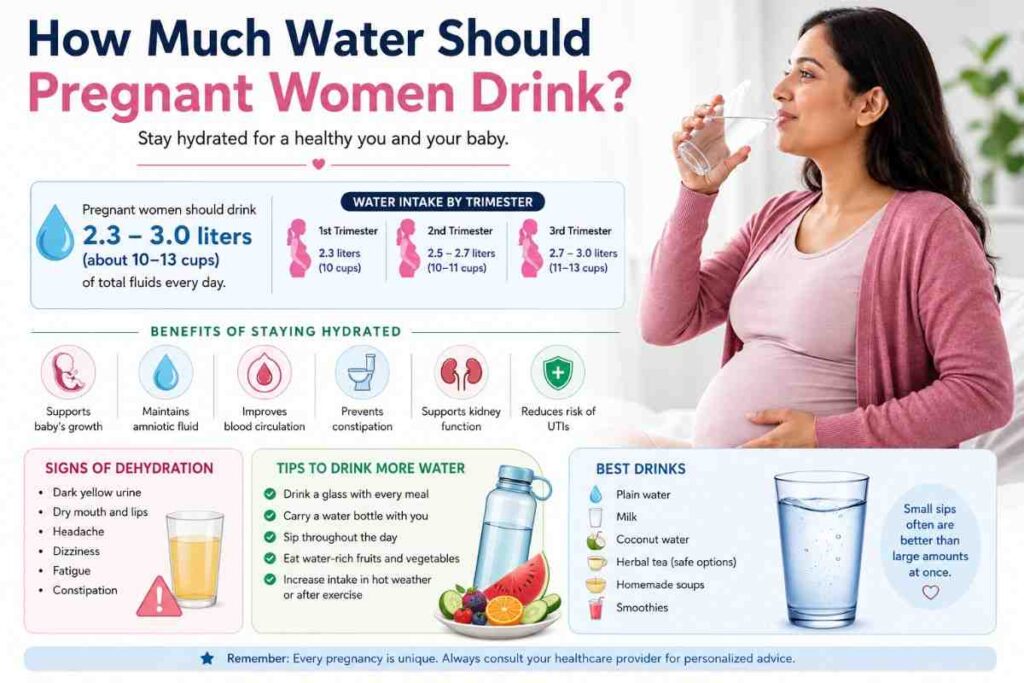
However, most health organizations recommend that pregnant women consume approximately 2.3–3.0 liters (about 10–13 cups) of total fluids daily, with around 2.3 liters (about 10 cups) coming from beverages and the remainder from water-rich foods such as fruits and vegetables.
Many healthcare providers simplify this advice by recommending:
- Aim for 8–12 cups (64–96 ounces) of fluids daily.
- Increase intake during hot weather or after exercise.
- Drink consistently throughout the day instead of consuming large amounts at once.
Remember that all fluids count toward hydration, including milk, soups, and herbal teas approved by your healthcare provider. However, plain water should remain your primary source of hydration.
Daily Water Intake Recommendations by Pregnancy Stage
| Pregnancy Stage | Recommended Daily Fluids* | Approximate Cups |
|---|---|---|
| First Trimester | 2.3 liters | 10 cups |
| Second Trimester | 2.5–2.7 liters | 10–11 cups |
| Third Trimester | 2.7–3.0 liters | 11–13 cups |
*Includes water and other healthy beverages.
Women carrying twins or multiples may require additional fluids based on their healthcare provider’s recommendations.
Water Needs During Each Trimester
First Trimester (Weeks 1–12)
Although your baby is still very small, your body is already making major adjustments. Hormonal changes increase blood production, your metabolism speeds up, and your kidneys work harder.
Many women also experience:
- Morning sickness
- Vomiting
- Nausea
- Fatigue
- Increased urination
These symptoms can lead to fluid loss, making hydration especially important.
Tips for the First Trimester
- Sip water throughout the day instead of drinking large amounts at once.
- Keep a water bottle nearby.
- If nausea makes plain water difficult to drink, try adding slices of lemon, cucumber, or mint.
- Eat water-rich fruits such as watermelon, oranges, and strawberries.
Second Trimester (Weeks 13–27)
For many women, the second trimester feels more comfortable. Morning sickness often improves, appetite returns, and energy levels increase.
At this stage, water supports:
- Rapid fetal growth
- Placenta function
- Increased blood circulation
- Healthy amniotic fluid levels
- Nutrient delivery
Because you’re likely eating more and becoming more active, your hydration needs also increase.
Tips for the Second Trimester
- Drink a glass of water with every meal.
- Carry a reusable water bottle when leaving home.
- Drink before you feel thirsty.
- Include milk or calcium-fortified beverages as part of your daily fluids.
Third Trimester (Weeks 28–Birth)
The final months of pregnancy place the greatest demands on your body.
Your baby grows rapidly, blood volume reaches its highest level, and the uterus puts more pressure on nearby organs.
Many women notice:
- Swelling
- Constipation
- Braxton Hicks contractions
- Heartburn
- Increased sweating
- Shortness of breath
Adequate hydration may help reduce several of these symptoms while supporting healthy circulation and amniotic fluid.
Tips for the Third Trimester
- Drink small amounts frequently.
- Increase fluids on hot days.
- Drink extra water after physical activity.
- Keep water beside your bed if you wake up thirsty at night.
What Counts Toward Your Daily Fluid Intake?
Many people assume only plain water counts, but several healthy beverages and foods also contribute to hydration.
Good sources include:
- Plain water
- Sparkling water (without added sugar)
- Milk
- Yogurt drinks
- Coconut water (in moderation)
- Homemade soups
- Smoothies made with whole fruits
- Herbal teas approved during pregnancy
- Water-rich fruits
- Vegetables with high water content
Foods that provide extra hydration include:
| Food | Approximate Water Content |
|---|---|
| Cucumber | 96% |
| Lettuce | 95% |
| Watermelon | 92% |
| Strawberries | 91% |
| Oranges | 87% |
| Tomatoes | 95% |
| Celery | 95% |
| Zucchini | 94% |
While these foods help, they shouldn’t replace drinking enough water.
Factors That Increase Water Needs During Pregnancy
Some pregnant women require more fluids than others. Your daily water needs may increase if you:
1. Live in a Hot Climate
High temperatures cause more sweating, increasing fluid loss. If you live in a warm or humid environment, you’ll likely need extra water throughout the day.
2. Exercise Regularly
Prenatal yoga, walking, swimming, and other pregnancy-safe exercises increase sweat loss. Drink water before, during, and after physical activity.
3. Experience Morning Sickness
Frequent vomiting can quickly lead to dehydration, especially during the first trimester. Small, frequent sips of water or oral rehydration solutions may help, but contact your healthcare provider if vomiting is severe or persistent.
4. Have a Fever or Illness
Fever, diarrhea, or infections can increase fluid requirements. Staying hydrated helps replace lost fluids and supports recovery.
5. Carry Twins or Multiples
Women expecting twins or higher-order multiples generally require additional fluids because of increased blood volume, greater amniotic fluid needs, and higher metabolic demands. Your obstetrician can provide individualized recommendations.
6. Spend Time Outdoors
Gardening, walking, shopping, or traveling in warm weather can increase sweating. Always carry a water bottle and drink regularly when outdoors.
7. Consume Caffeinated Beverages
Moderate caffeine intake is generally considered safe during pregnancy, but beverages such as coffee, tea, and some soft drinks should not replace water. Balancing caffeinated drinks with additional water can help maintain hydration.
8. Have a Physically Demanding Job
If your work involves standing for long hours, lifting, or working in warm environments, you may lose more fluids through sweat and require additional hydration throughout the day.
How Can You Tell If You’re Drinking Enough Water?
Your body often gives clues about your hydration status. While thirst is one signal, it’s better not to wait until you feel thirsty to drink.
Signs that you’re likely getting enough fluids include:
- Pale yellow or light straw-colored urine
- Regular urination throughout the day
- Moist lips and mouth
- Good energy levels
- Fewer headaches related to dehydration
- Healthy skin moisture
- Less constipation
- Feeling refreshed rather than excessively thirsty
Monitoring urine color is one of the easiest ways to estimate hydration. Dark yellow urine may indicate that it’s time to drink more fluids, though certain vitamins can also affect urine color.
Signs of Dehydration During Pregnancy
Even mild dehydration can make pregnancy more uncomfortable. If left untreated, moderate to severe dehydration may require medical attention and can increase the risk of complications.
Common signs of dehydration include:
- Dark yellow or amber-colored urine
- Dry mouth and lips
- Feeling unusually thirsty
- Headaches
- Dizziness or lightheadedness
- Fatigue or weakness
- Constipation
- Dry skin
- Muscle cramps
- Fast heartbeat
- Reduced urination
- Difficulty concentrating
Contact your healthcare provider immediately if you experience:
- Persistent vomiting and inability to keep fluids down
- Fainting
- Severe dizziness
- Very little or no urine for several hours
- High fever
- Painful contractions accompanied by signs of dehydration
- Decreased fetal movements (later in pregnancy)
Early treatment can help restore fluid balance and reduce the risk of complications.
Can You Drink Too Much Water During Pregnancy?
Although dehydration is more common, drinking excessive amounts of water in a short period can also be harmful.
Very high water intake may dilute sodium levels in the blood, a condition known as hyponatremia. While uncommon, it can become serious if large amounts of water are consumed rapidly.
Instead of forcing yourself to drink excessive amounts, aim for steady hydration throughout the day. Listen to your body’s thirst signals and follow your healthcare provider’s recommendations if you have a medical condition affecting fluid balance.
Practical Tips to Drink More Water During Pregnancy
Meeting your daily hydration goal doesn’t have to feel difficult.
Try these simple strategies:
- Start your morning with a glass of water.
- Carry a reusable water bottle wherever you go.
- Drink a glass of water with every meal and snack.
- Set reminders on your phone if you forget to drink.
- Flavor water naturally with fresh fruit or herbs.
- Eat fruits and vegetables with high water content.
- Drink before, during, and after exercise.
- Take small sips if nausea makes drinking difficult.
- Keep water beside your bed at night.
- Increase fluid intake during hot weather.
Small habits practiced consistently can make a big difference.
Sample Daily Hydration Schedule
| Time | What to Drink |
|---|---|
| After waking up | 1 glass of water |
| With breakfast | 1 glass of water or milk |
| Mid-morning | Water and a piece of fruit |
| Before lunch | 1 glass of water |
| With lunch | Water or homemade soup |
| Afternoon | Water or coconut water |
| Before dinner | 1 glass of water |
| With dinner | Water |
| Evening | Herbal tea (if approved) or water |
| Before bed | Small glass of water |
Adjust this schedule based on your thirst, activity level, weather, and your healthcare provider’s advice.
FAQs
Is drinking 2 liters of water enough during pregnancy?
For many women, 2 liters may not be enough. Most pregnant women need around 2.3 to 3 liters of total fluids per day, depending on the trimester, activity level, and climate.
Can I drink too much water while pregnant?
Yes, although it is uncommon. Drinking excessive amounts of water in a short time can dilute blood sodium levels. Aim for steady hydration throughout the day rather than consuming large amounts at once.
What is the best time to drink water during pregnancy?
It’s best to drink water consistently throughout the day instead of waiting until you feel thirsty. Drinking with meals and between meals can help maintain hydration.
How can I tell if I’m dehydrated?
Dark-colored urine, dry mouth, dizziness, headaches, fatigue, and infrequent urination are common signs of dehydration.
Can dehydration affect my baby?
Severe or prolonged dehydration may affect pregnancy health and increase the risk of complications. If you cannot keep fluids down or experience signs of severe dehydration, seek medical care promptly.
Does drinking more water reduce swelling?
Adequate hydration supports healthy fluid balance and may help reduce mild swelling in some pregnant women. However, swelling can also have other causes, so discuss persistent or severe swelling with your healthcare provider.
What fruits help with hydration during pregnancy?
Watermelon, oranges, strawberries, grapes, cantaloupe, cucumbers, and tomatoes are excellent choices because of their high water content.
Is coconut water safe during pregnancy?
Unsweetened coconut water is generally safe for most healthy pregnancies when consumed in moderation. If you have a medical condition such as gestational diabetes or kidney disease, ask your healthcare provider before adding it regularly.
Should I drink more water in summer?
Yes. Hot weather increases sweating and fluid loss, so additional water is usually needed during warmer months.
What happens if I don’t drink enough water while pregnant?
Not drinking enough water can lead to dehydration, headaches, constipation, dizziness, urinary tract infections, and may increase the risk of pregnancy complications.
Does coffee or tea count toward my daily water intake?
Yes, they contribute to your fluid intake. However, pregnant women should keep caffeine within the recommended daily limit advised by their healthcare provider.
What are the best drinks for pregnant women besides water?
Healthy options include milk, homemade soups, fruit-infused water, pregnancy-safe herbal teas, and smoothies made with whole fruits.
Should I drink more water during the third trimester?
Yes. Fluid needs often increase during the third trimester due to your baby’s rapid growth, increased blood volume, and higher amniotic fluid requirements.
How can I drink more water if I have morning sickness?
Take small sips throughout the day, try chilled or fruit-infused water, eat water-rich fruits, and avoid drinking large amounts at once.
Is sparkling water safe during pregnancy?
Yes, plain sparkling water without added sugar or artificial sweeteners is generally considered safe unless your healthcare provider advises otherwise.
Conclusion
Staying hydrated is one of the simplest yet most effective ways to support a healthy pregnancy. Water plays a vital role in your baby’s growth, maintains healthy amniotic fluid, supports digestion, improves circulation, and helps your body adapt to the many changes that occur during pregnancy.
While most pregnant women benefit from drinking approximately 10–13 cups (2.3–3 liters) of total fluids daily, individual needs can vary depending on your trimester, activity level, health conditions, and climate. Paying attention to your body’s signals, drinking consistently throughout the day, and eating water-rich foods can help you maintain healthy hydration.
Remember that every pregnancy is unique. If you have concerns about your fluid intake, persistent vomiting, swelling, or any medical condition that affects hydration, consult your obstetrician or healthcare provider for personalized advice.
Sources / References:
- American College of Obstetricians and Gynecologists (ACOG)
- Academy of Nutrition and Dietetics
- Centers for Disease Control and Prevention (CDC)
- Office on Women’s Health (U.S. Department of Health & Human Services)
- Mayo Clinic – Pregnancy Health
- National Institutes of Health (NIH)
- World Health Organization (WHO)
- National Academies of Sciences, Engineering, and Medicine – Dietary Reference Intakes for Water
About the Author:
Written by: Kirti Solanki (Health Content Researcher)
Kirti Solanki is a Health Content Researcher who creates evidence-based, easy-to-understand articles on nutrition, pregnancy, and healthy living using trusted medical sources and current health guidelines.
Disclaimer:
This guide is for informational purposes only and is not a substitute for professional medical advice, diagnosis, or treatment. Always consult your healthcare provider regarding any questions about your pregnancy, diet, or hydration needs.
Also Read: