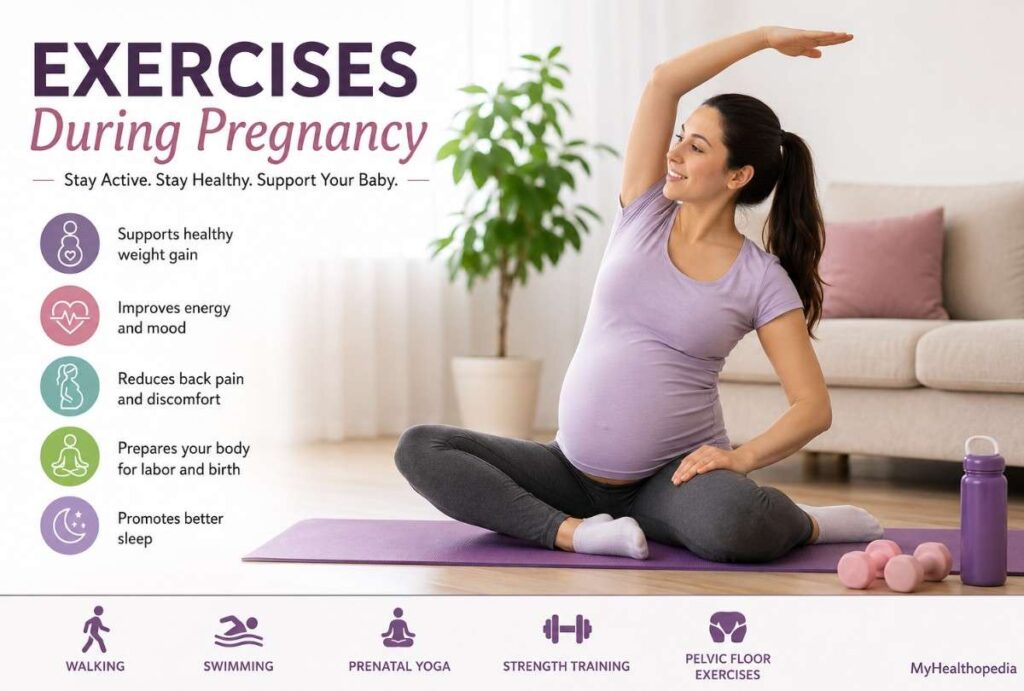

Pregnancy is a time of incredible physical and emotional changes. While many women wonder whether exercising is safe during pregnancy, the answer for most healthy pregnancies is yes. Regular, moderate physical activity can help improve energy levels, reduce common pregnancy discomforts, support healthy weight gain, prepare your body for labor, and promote faster recovery after childbirth.
However, pregnancy is not the time to push your body to its limits or begin an intense fitness routine without medical guidance. The key is choosing safe, pregnancy-friendly exercises that match your trimester, fitness level, and overall health.
In this guide, you’ll learn the benefits of exercising during pregnancy, the safest workouts for each trimester, exercises to avoid, warning signs to stop exercising, and expert tips for staying active throughout pregnancy.
What Are Exercises During Pregnancy?
Exercises during pregnancy are physical activities specifically designed or modified to support the changing needs of a pregnant body. These exercises focus on maintaining strength, flexibility, endurance, posture, balance, and cardiovascular health while minimizing risks to both mother and baby.
According to leading health organizations, including the American College of Obstetricians and Gynecologists (ACOG), most pregnant women should aim for at least 150 minutes of moderate-intensity exercise each week, unless advised otherwise by their healthcare provider.
Is It Safe to Exercise During Pregnancy?
For women with uncomplicated pregnancies, exercise is generally considered safe and beneficial.
Exercise is usually recommended if you have:
- A healthy, low-risk pregnancy
- Approval from your healthcare provider
- No pregnancy-related complications
- Normal blood pressure
- No signs of preterm labor
Women with certain medical conditions or pregnancy complications may require modified activity or complete rest under medical supervision.
15 Benefits of Exercising During Pregnancy
1. Reduces Back Pain
Strengthening your core and improving posture helps decrease pressure on the lower back.
2. Improves Circulation
Regular movement promotes healthy blood flow and may reduce swelling in the feet and ankles.
3. Helps Control Healthy Weight Gain
Exercise supports appropriate pregnancy weight gain when combined with balanced nutrition.
4. Lowers Risk of Gestational Diabetes
Physical activity improves insulin sensitivity and blood sugar control.
5. Supports Healthy Blood Pressure
Moderate exercise may reduce the risk of pregnancy-related hypertension.
6. Improves Sleep Quality
Many pregnant women report deeper and more restful sleep after regular exercise.
7. Boosts Mood
Exercise stimulates endorphin release, helping reduce stress and anxiety.
8. Increases Energy Levels
Regular activity can combat pregnancy-related fatigue.
9. Strengthens Muscles
Stronger muscles better support the growing uterus and changing posture.
10. Improves Endurance
Cardiovascular fitness helps prepare the body for labor and delivery.
11. Reduces Constipation
Movement encourages healthy bowel function.
12. Improves Balance
Targeted exercises strengthen stabilizing muscles that support changing body mechanics.
13. May Shorten Labor
Some research suggests physically active women may experience shorter labor and fewer interventions.
14. Promotes Faster Recovery
Maintaining fitness during pregnancy often supports postpartum recovery.
15. Supports Overall Well-Being
Exercise benefits both physical and mental health throughout pregnancy.
Best and Safe Exercises During Pregnancy
1. Walking
Walking is one of the safest and easiest pregnancy exercises.
Benefits:
- Low impact
- Improves heart health
- Supports circulation
- Suitable throughout pregnancy
Aim for 20–30 minutes most days of the week.
2. Swimming
Swimming provides a full-body workout while reducing pressure on joints.
Benefits:
- Relieves back pain
- Reduces swelling
- Supports body weight
- Improves endurance
3. Prenatal Yoga
Prenatal yoga combines stretching, breathing, and relaxation techniques.
Benefits:
- Improves flexibility
- Enhances posture
- Reduces stress
- Strengthens pelvic muscles
Avoid hot yoga during pregnancy.
4. Stationary Cycling
Indoor cycling provides cardiovascular benefits without the fall risk associated with outdoor cycling.
Benefits:
- Low-impact cardio
- Improves stamina
- Gentle on joints
5. Strength Training
Light resistance training helps maintain muscle mass.
Safe equipment includes:
- Resistance bands
- Light dumbbells
- Bodyweight exercises
Avoid lifting extremely heavy weights.
6. Pelvic Floor Exercises (Kegels)
Kegel exercises strengthen muscles that support the bladder, uterus, and bowel.
Benefits include:
- Reduced urinary leakage
- Better labor support
- Improved postpartum recovery
7. Prenatal Pilates
Modified Pilates strengthens core muscles while improving posture and flexibility.
Always choose pregnancy-safe modifications.
8. Stretching Exercises
Gentle stretching helps reduce muscle tightness and improve mobility.
Focus on:
- Hip flexors
- Hamstrings
- Shoulders
- Chest
- Calves
Avoid overstretching because pregnancy hormones increase joint flexibility.
Sample Weekly Pregnancy Exercise Routine
| Day | Activity |
|---|---|
| Monday | 30-minute walk |
| Tuesday | Prenatal yoga |
| Wednesday | Strength training (light weights) |
| Thursday | Swimming |
| Friday | Walking + Kegels |
| Saturday | Stretching + Pilates |
| Sunday | Gentle walk or rest |
Best Exercises by Trimester
First Trimester
Recommended exercises:
- Walking
- Swimming
- Prenatal yoga
- Light strength training
- Stationary cycling
Focus on maintaining your existing fitness level rather than increasing intensity.
Second Trimester
Many women feel more energetic during this stage.
Good choices include:
- Walking
- Pilates
- Swimming
- Resistance band exercises
- Kegels
As your belly grows, avoid exercises that require lying flat on your back for extended periods.
Third Trimester
Prioritize comfort and safety.
Recommended activities:
- Walking
- Stretching
- Prenatal yoga
- Pelvic floor exercises
- Breathing exercises
Reduce intensity as needed and focus on preparing for labor.
Safe Strength Exercises During Pregnancy
Some effective pregnancy-friendly strength exercises include:
- Bodyweight squats
- Wall push-ups
- Bird-dog
- Side-lying leg lifts
- Seated shoulder press with light weights
- Glute bridges (modified if appropriate)
- Resistance band rows
Use slow, controlled movements and avoid holding your breath.
Pelvic Floor Exercises
Kegels can be performed almost anywhere.
How to do them:
- Tighten the muscles used to stop urination.
- Hold for 5 seconds.
- Relax for 5 seconds.
- Repeat 10–15 times.
- Perform several sets daily.
Avoid routinely practicing Kegels while actually urinating, as this may interfere with normal bladder function.
Breathing Exercises During Pregnancy
Breathing exercises can help reduce stress and prepare for labor.
Try:
- Diaphragmatic breathing
- Slow belly breathing
- Deep inhalation through the nose
- Long, controlled exhalation through the mouth
Practice for 5–10 minutes daily.
Pregnancy Exercises for Back Pain
Helpful exercises include:
- Cat-Cow stretch
- Pelvic tilts
- Child’s Pose (modified)
- Bird-dog
- Wall stretches
Stop any movement that causes pain or dizziness.
Exercises That May Help Prepare for Labor
As you near your due date, your healthcare provider may recommend exercises such as:
- Walking
- Pelvic tilts
- Birth ball exercises
- Squats (if approved)
- Kegels
- Deep breathing
These exercises may improve mobility and comfort but should not be viewed as guaranteed ways to induce labor.
Exercises to Avoid During Pregnancy
Avoid activities that increase the risk of falls, abdominal trauma, or excessive strain.
These include:
- Contact sports
- Scuba diving
- Skydiving
- Horseback riding
- Downhill skiing
- Gymnastics
- Hot yoga
- Heavy weightlifting without supervision
- Exercises involving prolonged lying flat on your back after the first trimester
- Activities at high altitude without medical advice
Safety Tips for Exercising During Pregnancy
- Get medical clearance before starting.
- Warm up before every workout.
- Stay hydrated.
- Wear supportive shoes.
- Avoid overheating.
- Eat nutritious meals.
- Exercise in cool environments.
- Wear comfortable clothing.
- Avoid sudden position changes.
- Listen to your body.
Warning Signs to Stop Exercising Immediately
Stop exercising and contact your healthcare provider if you experience:
- Vaginal bleeding
- Fluid leaking from the vagina
- Severe abdominal pain
- Chest pain
- Shortness of breath before exertion
- Dizziness or fainting
- Painful contractions
- Severe headache
- Calf swelling or pain
- Reduced fetal movement (later in pregnancy)
Who Should Not Exercise During Pregnancy?
Exercise may not be recommended for women with:
- Significant heart or lung disease
- Placenta previa after 26 weeks
- Severe anemia
- Preeclampsia
- Cervical insufficiency
- Multiple pregnancy with risk factors for preterm labor
- Persistent vaginal bleeding
- Preterm labor in the current pregnancy
Always follow the guidance of your obstetrician or midwife.
How Much Exercise Is Recommended?
For most healthy pregnancies:
- Aim for 150 minutes of moderate-intensity activity per week.
- Spread exercise across at least 3–5 days.
- Include aerobic activity, strength training, flexibility, and pelvic floor exercises.
- You should be able to carry on a conversation while exercising (the “talk test”), indicating a moderate intensity.
Healthy Lifestyle Tips During Pregnancy
Exercise works best when combined with healthy habits:
- Eat a balanced diet rich in fruits, vegetables, whole grains, lean protein, and healthy fats.
- Stay well hydrated throughout the day.
- Get adequate sleep each night.
- Attend regular prenatal appointments.
- Avoid smoking, alcohol, and recreational drugs.
- Manage stress with relaxation techniques and social support.
FAQs
Which month to start exercise during pregnancy for normal delivery?
If your pregnancy is healthy and your healthcare provider approves, you can usually start safe, moderate exercise as early as the first trimester and continue throughout pregnancy to support overall health and prepare your body for labor, though exercise alone cannot guarantee a normal delivery.
Can I start exercising if I wasn’t active before pregnancy?
Yes. Begin with low-impact activities like walking or prenatal yoga and gradually increase your activity level after getting approval from your healthcare provider.
Is walking enough exercise during pregnancy?
Walking is an excellent exercise during pregnancy because it improves cardiovascular health, supports healthy weight gain, and is gentle on the joints. Adding strength and flexibility exercises can provide even greater benefits.
Is it safe to do strength training while pregnant?
Yes, light to moderate strength training with proper technique is generally safe for healthy pregnancies. Avoid heavy lifting, straining, or holding your breath during exercises.
Can I do abdominal exercises during pregnancy?
Yes, but choose pregnancy-safe core exercises such as pelvic tilts, bird-dog, and modified core strengthening. Avoid traditional sit-ups or exercises that place excessive pressure on the abdomen.
Can exercise help reduce pregnancy back pain?
Yes. Walking, prenatal yoga, stretching, pelvic tilts, and strengthening exercises can improve posture and reduce lower back discomfort.
Is swimming safe during pregnancy?
Yes. Swimming is one of the safest and most comfortable forms of exercise because it supports your body weight while reducing stress on the joints and back.
Can exercise make labor easier?
Regular exercise may improve endurance, strengthen muscles used during labor, and may contribute to a smoother labor and faster postpartum recovery, although every pregnancy is different.
Should I stop exercising if I feel tired?
It’s normal to adjust your routine based on your energy levels. Stop exercising immediately if you experience dizziness, chest pain, vaginal bleeding, contractions, fluid leakage, severe shortness of breath, or other concerning symptoms, and contact your healthcare provider.
Is prenatal yoga safe throughout pregnancy?
Yes. Prenatal yoga is generally safe when taught by a qualified instructor. Avoid hot yoga and poses that compress the abdomen or require prolonged lying flat on your back after the first trimester.
Are Kegel exercises important during pregnancy?
Yes. Kegel exercises strengthen the pelvic floor muscles, which may help reduce urinary leakage, support labor, and improve postpartum recovery.
Can I exercise every day during pregnancy?
Yes. Most healthy pregnant women can exercise daily, provided the activity is moderate, varied, and approved by their healthcare provider.
Can exercise harm my baby?
For healthy pregnancies, moderate exercise has not been shown to harm the baby and offers benefits for both mother and child.
When should I stop exercising?
Stop immediately if you experience warning signs such as bleeding, fluid leakage, severe pain, dizziness, chest pain, or contractions, and seek medical advice.
Can beginners exercise during pregnancy?
Yes. If you were not active before pregnancy, start with low-impact activities like walking and gentle stretching after consulting your healthcare provider.
Are squats safe during pregnancy?
Bodyweight squats can be beneficial for many pregnant women when performed with proper form and medical approval.
Key Takeaways
Regular exercise during pregnancy is one of the best ways to support your physical and mental well-being. Activities such as walking, swimming, prenatal yoga, light strength training, and pelvic floor exercises can improve fitness, reduce common pregnancy discomforts, and help prepare your body for labor and postpartum recovery. Every pregnancy is different, so always discuss your exercise plan with your healthcare provider, especially if you have any medical conditions or pregnancy-related complications. Staying active safely can contribute to a healthier pregnancy and a more positive birth experience.
Sources / References
- American College of Obstetricians and Gynecologists (ACOG). Physical Activity and Exercise During Pregnancy and the Postpartum Period
- World Health Organization (WHO). WHO Guidelines on Physical Activity and Sedentary Behaviour
- American College of Sports Medicine (ACSM). Exercise Guidelines for Pregnancy
- Centers for Disease Control and Prevention (CDC). Physical Activity During Pregnancy
- National Institute for Health and Care Excellence (NICE). Antenatal Care Guidelines
About the Author
Written by: Kirti Solanki (Health Content Researcher)
Kirti Solanki is a health content researcher who creates evidence-based, reader-friendly articles on nutrition, pregnancy, wellness, and preventive healthcare. Her content is developed using reputable medical guidelines and peer-reviewed research to provide accurate and practical health information for readers
Disclaimer:
This guide is for educational purposes only and is not a substitute for professional medical advice, diagnosis, or treatment. Always consult your obstetrician or qualified healthcare provider before starting or changing any exercise routine during pregnancy.
Also Read: