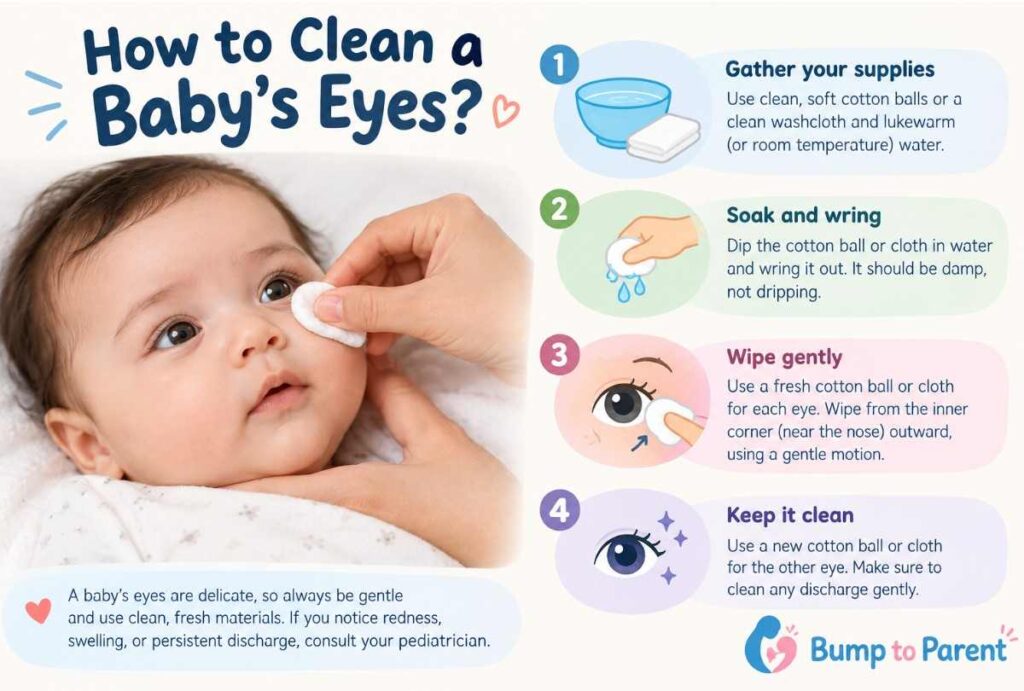

A baby’s eyes are delicate, and it is normal for parents to feel nervous when they notice a little dried mucus, watery eyes, or crust around the eyelashes. In many cases, gentle cleaning with clean water and a soft, clean material is all that is needed.
The key is to clean around the eyes gently without rubbing the eyeball, use a fresh piece of cotton or a clean section of cloth for each eye, and pay attention to symptoms that may require medical attention.
This guide explains how to clean a baby’s eyes safely, what to use, what to avoid, and when eye discharge may be a sign of infection.
Is It Normal for Babies to Have Eye Discharge?
A small amount of dried mucus or crust in the corner of a baby’s eye can be normal, particularly after sleeping. Some babies also have watery eyes because of a partially or temporarily blocked tear duct.
However, redness, significant swelling, or thick pus-like discharge should not simply be treated as normal eye crusting. Newborn eye infections can sometimes require prompt medical treatment.
What You Need to Clean a Baby’s Eyes
You usually do not need special eye-cleaning products.
Prepare:
- Clean, soft cotton wool or sterile cotton pads
- Clean, lukewarm water
- A clean towel
- A clean surface where you can safely hold or lay your baby
For newborns, some maternity and neonatal guidance recommends using sterile or cooled, boiled water when cleaning sticky eyes.
How to Clean a Baby’s Eyes Safely?
1. Wash Your Hands
Wash your hands thoroughly with soap and water before touching your baby’s face or eyes. This helps reduce the chance of transferring germs.
2. Make Your Baby Comfortable
Place your baby safely on their back or hold them securely. Choose a time when your baby is relatively calm.
You do not need to force the baby’s eye open. Work gently around the eyelids and eyelashes.
3. Moisten the Cotton or Soft Cloth
Dampen a clean piece of cotton wool or soft cloth with lukewarm water.
It should be damp rather than dripping wet.
4. Gently Wipe From the Inner Corner Outward
Starting near the inner corner of the eye, beside the nose, gently wipe outward toward the temple.
This direction is recommended in newborn-care guidance because it helps remove discharge without repeatedly dragging it toward the tear duct.
5. Use a Fresh Piece for the Other Eye
Never use the same piece of cotton for both eyes.
Use a fresh piece for the second eye, even if only one eye appears dirty. This helps prevent potentially infectious discharge from being transferred from one eye to the other.
6. Repeat if Necessary
If dried discharge remains, dampen a fresh piece of cotton or cloth and gently wipe again.
Do not scrape or pull hard at crusts.
If discharge is firmly stuck to the eyelashes, a warm, damp cloth can be held gently over the closed eye for a short time to soften it before wiping.
7. Gently Pat the Area Dry
After cleaning, gently pat the skin around the eye dry with a clean towel.
Avoid rubbing the eyelids or eyelashes.
How Often Should You Clean a Baby’s Eyes?
There is no need to clean a baby’s eyes repeatedly when they are clean and healthy.
Clean them when you notice visible mucus, crusting, or discharge around the eyelids. Frequent unnecessary wiping can irritate the delicate skin around the eyes.
If your baby regularly develops discharge, excessive watering, redness, or swelling, speak with a pediatrician rather than simply increasing the frequency of cleaning.
How to Clean a Baby’s Eyes During Bath Time?
During a sponge bath, you can gently clean your baby’s face using a damp, soft cloth.
Wash a baby’s face gently and being careful not to get water into the eyes. If soap or shampoo accidentally gets into the eyes, plain lukewarm water can be used to wipe them gently.
For routine eye cleaning, plain water is generally preferable to soaps, fragrances, or cosmetic products around the eyes.
Can You Use Cotton Buds to Clean a Baby’s Eyes?
It is better to avoid cotton buds around a baby’s eyes.
A soft cotton pad, cotton wool, or clean soft cloth gives you better control and reduces the risk of accidentally touching or scratching the eye.
The goal is to clean the eyelids and eyelashes, not to insert anything into the eye.
Can You Use Baby Wipes Around a Baby’s Eyes?
Baby wipes are generally not necessary for cleaning a baby’s eyes.
For delicate newborn skin, plain water is often the simplest choice. Some newborn skincare guidance recommends avoiding cleansing products during the early weeks and using plain water instead.
If a healthcare professional has recommended a particular product for your baby’s eyes, follow their instructions.
Can You Use Breast Milk to Clean a Baby’s Eyes?
Breast milk should not be used as a substitute for proper treatment of an eye infection.
If your baby has persistent discharge, redness, swelling, or other concerning symptoms, seek advice from a pediatrician rather than relying on home remedies.
What Causes Sticky Eyes in Babies?
Several things can cause a baby’s eyes to become watery or sticky.
1. Blocked Tear Duct
A blocked tear duct is relatively common in newborns. It may cause constant watering or tears running down the cheek, usually without significant redness or swelling.
2. Normal Eye Mucus
A small amount of cream-colored or dried mucus around the corner of the eye can occur, particularly after sleep.
3. Irritation
Dust, dirt, or other minor irritants can cause temporary watering and mucus.
4. Conjunctivitis
Conjunctivitis can cause redness, discharge, crusting, and swollen eyelids. In newborns, some causes of conjunctivitis can be serious and require medical treatment.
How to Tell the Difference Between Normal Eye Mucus and an Infection
| Sign | More likely normal | May need medical attention |
|---|---|---|
| Small amount of dried mucus | Yes | — |
| Mild watering without redness | Can occur with blocked tear duct | If persistent or worsening |
| Redness of the white of the eye | No | Yes |
| Swollen eyelids | No | Yes |
| Thick pus-like discharge | No | Yes |
| Eye repeatedly becoming stuck shut | No | Contact a healthcare professional |
| Baby seems to have eye pain | No | Prompt medical assessment |
| Light sensitivity | No | Prompt medical assessment |
The appearance of the eye alone cannot always determine the cause, so persistent or concerning symptoms should be assessed by a healthcare professional.
When Should You Contact a Doctor?
Contact your baby’s pediatrician if eye discharge keeps returning, becomes heavy, or is accompanied by redness or swelling.
A newborn with a red and sticky eye needs prompt medical assessment. The NHS specifically advises urgent evaluation for babies younger than 30 days who have red, sticky eyes. nhs.uk
Seek urgent medical advice if your baby has:
- A very red eye
- Thick or pus-like discharge
- Significant eyelid swelling
- Eye pain or obvious discomfort
- Sensitivity to light
- Difficulty opening the eye
- A cloudy-looking eye
- Symptoms that are rapidly getting worse
- Fever or appears generally unwell
Newborn conjunctivitis can have different causes, including bacterial and viral infections, and some infections can potentially damage the eye if not treated promptly.
What Should You Avoid When Cleaning a Baby’s Eyes?
1. Avoid Rubbing the Eyes
Rubbing can irritate the delicate tissues and skin around the eye.
2. Avoid Using the Same Cotton for Both Eyes
Use a fresh piece for each eye to reduce the possibility of transferring infection.
3. Avoid Putting Soap Directly Around the Eyes
Plain lukewarm water is usually sufficient for gently removing normal eye mucus.
4. Avoid Scraping Dried Discharge
Soften stubborn crusting with a clean, warm, damp cloth before gently wiping it away.
5. Avoid Using Unprescribed Eye Drops
Do not put antibiotic, steroid, redness-relief, or other medicated eye drops into a baby’s eyes unless they have been recommended by a healthcare professional.
6. Avoid Home Remedies for Red or Infected Eyes
If your baby’s eye is red, swollen, or producing thick discharge, cleaning alone may not address the underlying cause.
How to Prevent Eye Infections in Babies
Good hand hygiene is one of the simplest ways to reduce the spread of germs.
Wash your hands before touching your baby’s face and eyes, particularly after changing diapers or handling items that may be contaminated.
If your baby has an eye infection, avoid sharing towels and washcloths with other family members. Good hand hygiene also helps reduce the spread of infectious conjunctivitis.
FAQ’s
Can I clean my baby’s eyes with cotton?
Yes. Use a clean, soft cotton pad or cotton wool dampened with lukewarm water, and use a fresh piece for each eye.
Can I use boiled water to clean my baby’s eyes?
For newborns, some healthcare guidance recommends cooled, previously boiled water for cleaning sticky eyes. Allow the water to cool completely before use.
Should I clean both of my baby’s eyes if only one is dirty?
Yes, but use separate clean cotton or cloth for each eye. This helps reduce the risk of transferring germs between the eyes.
Why does my baby’s eye get sticky after sleeping?
A small amount of mucus or crust around the eyes after sleep can be normal. However, persistent thick discharge, redness, or swelling may indicate an infection.
Can a blocked tear duct cause sticky eyes in babies?
Yes. A blocked tear duct can cause watering and mucus buildup around the eye, often without significant redness or swelling.
Can I use saline water to clean my baby’s eyes?
Sterile saline may be recommended for certain situations, but plain clean or cooled boiled water is generally sufficient for routine removal of external mucus. Ask your baby’s healthcare professional before using products inside the eye.
Can I use eye drops for my baby’s eye discharge?
Do not use medicated or antibiotic eye drops unless they have been prescribed or specifically recommended by a healthcare professional for your baby.
What color eye discharge is concerning in babies?
Thick yellow or green discharge, especially when accompanied by redness or swollen eyelids, can be a sign of infection and should be evaluated by a healthcare professional.
Is it normal for a newborn to have watery eyes?
Watery eyes can occur in newborns, including because of a temporarily blocked tear duct. Persistent watering, redness, swelling, or discharge should be discussed with a pediatrician.
Can I massage my baby’s eye for a blocked tear duct?
A healthcare professional can show you whether a gentle tear-duct massage is appropriate and how to perform it safely. Avoid pressing directly on the eyeball.
What should I do if my baby’s eye is swollen?
Do not rub or apply home remedies. Contact your baby’s pediatrician, particularly if the swelling is significant, the eye is red, or there is thick discharge.
Is a red eye in a newborn serious?
A red eye in a newborn can sometimes indicate an infection that requires treatment. Prompt medical evaluation is recommended, especially when redness is accompanied by discharge or swelling.
What should I avoid when cleaning my baby’s eyes?
Avoid rubbing, scraping dried discharge, using the same cotton for both eyes, inserting cotton buds into the eye, and using unprescribed eye drops or home remedies.
Can I clean my baby’s eyes with warm water?
Yes. A clean piece of cotton or soft cloth dampened with lukewarm water can be used to gently remove mucus or crust from around the eyes.
Which direction should I wipe my baby’s eyes?
Gently wipe from the inner corner near the nose outward toward the temple.
Should I use separate cotton for each eye?
Yes. Use a fresh piece of cotton for each eye to help prevent transferring possible infection.
How do I remove dried mucus from my baby’s eyelashes?
Use a clean cloth or cotton dampened with lukewarm water. Allow the moisture to soften the crust before gently wiping it away rather than pulling or scraping.
Is eye discharge normal in newborns?
A small amount of dried mucus can be normal, but red eyes, swollen eyelids, or thick pus-like discharge can indicate a problem that needs medical assessment.
When is a baby’s sticky eye an emergency?
A baby younger than 30 days with a red, sticky eye should receive prompt medical assessment. Thick discharge, significant swelling, pain, light sensitivity, or a very red eye also warrant medical attention.
How do I clean my baby’s eyes if they have conjunctivitis?
Gently wipe discharge with clean cotton or a soft cloth dampened with lukewarm water, using a fresh piece for each eye, and contact a pediatrician for proper treatment.
Is it normal for newborns to have dirty eyes?
A small amount of mucus or crust around a newborn’s eyes can be normal, especially after sleeping, but redness, swelling, or thick discharge should be checked by a healthcare professional.
How to remove dirt from newborn eyes?
Wash your hands, dampen a clean soft cotton pad with lukewarm water, and gently wipe the eyelids and eyelashes from the inner corner outward without rubbing or touching the eyeball.
Final Takeaway
Cleaning a baby’s eyes does not need to be complicated. Wash your hands, use clean lukewarm water and a soft clean cotton pad or cloth, gently wipe from the inner corner outward, and use a fresh piece for each eye.
Most importantly, cleaning should not be used to mask symptoms of an eye infection. Redness, swelling, thick discharge, pain, or a sticky red eye in a newborn should be assessed by a healthcare professional.
Sources / References:
Disclaimer:
This guide is for general educational purposes and does not replace advice, diagnosis, or treatment from a qualified pediatrician or eye-care professional.
Also Read:



Pingback: How to Clean a Baby’s Tongue Safely: A Step-by-Step Guide
Pingback: What Are the Signs of High IQ in Babies? 12 Signs to Know