
Bringing a baby into the world is a life-changing experience. While much attention is given to pregnancy and childbirth, the postpartum period is equally important. The weeks after delivery are a time of healing, physical recovery, and emotional adjustment. Most women experience normal postpartum symptoms such as vaginal bleeding, fatigue, breast discomfort, and mood changes. However, some symptoms may signal a serious health problem that requires immediate medical attention.
Recognizing postpartum warning signs can help prevent severe complications and even save lives. Whether you’ve had a vaginal birth or a cesarean section, knowing what is normal—and what isn’t—is essential for your recovery.
In this guide, we’ll explain the most important postpartum warning signs, when to seek emergency care, and how to protect your health during the postpartum period.
What Are Postpartum Warning Signs?
Postpartum warning signs are symptoms that may indicate a serious medical condition after childbirth. These symptoms can appear within hours, days, or even several weeks after delivery.
Some postpartum complications develop suddenly and require emergency treatment, while others progress gradually. Early diagnosis significantly improves recovery and reduces the risk of long-term health problems.
Healthcare providers recommend that every new mother and her family learn these warning signs before leaving the hospital.
Why Are Postpartum Warning Signs Important?
Ignoring serious symptoms after childbirth can lead to complications such as:
- Severe infections
- Postpartum hemorrhage
- Blood clots
- Stroke
- Heart disease
- High blood pressure complications
- Mental health emergencies
- Organ damage
Seeking medical care early can prevent many of these complications from becoming life-threatening.
15 Serious Postpartum Warning Signs You Should Never Ignore
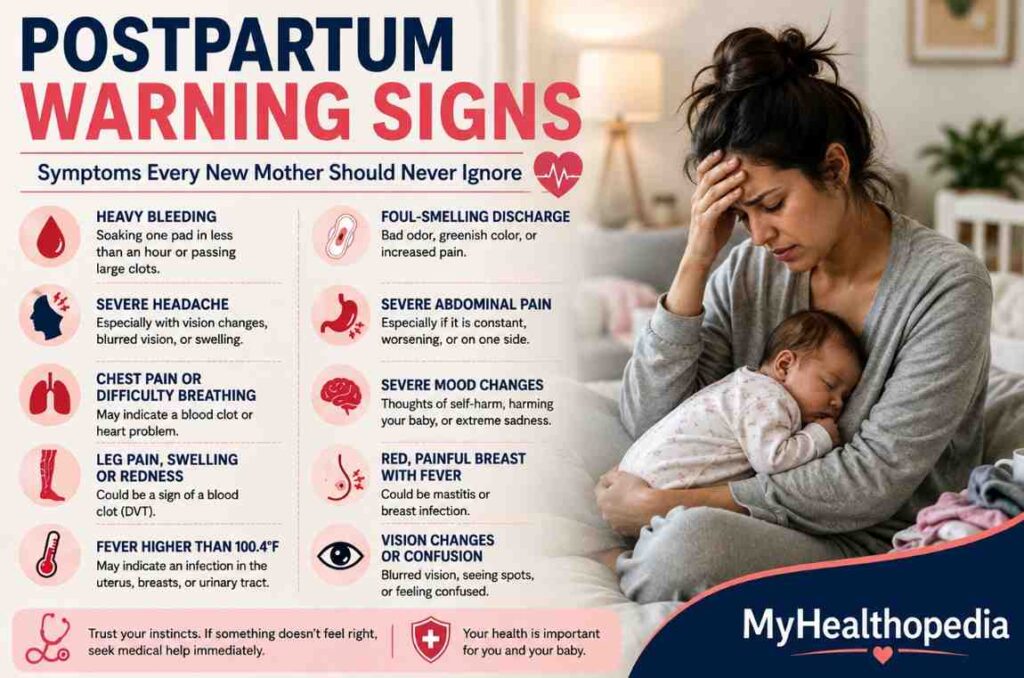
1. Heavy Vaginal Bleeding
Some bleeding (called lochia) is completely normal after childbirth. However, excessive bleeding is not.
Warning signs include:
- Soaking one sanitary pad in less than one hour
- Passing large blood clots larger than a golf ball
- Bleeding that suddenly becomes much heavier
- Feeling faint or dizzy while bleeding
Heavy bleeding may indicate postpartum hemorrhage, one of the leading causes of maternal emergencies.
Seek emergency medical care immediately.
2. Severe Headache That Doesn’t Go Away
Many women experience mild headaches after delivery due to fatigue or dehydration.
A severe headache accompanied by other symptoms may indicate:
- Postpartum preeclampsia
- High blood pressure
- Stroke
- Brain complications
Emergency symptoms include:
- Blurred vision
- Flashing lights
- Confusion
- Swelling
- High blood pressure
3. Chest Pain or Difficulty Breathing
Chest pain should never be ignored after childbirth.
Possible causes include:
- Blood clot in the lungs (pulmonary embolism)
- Heart attack
- Cardiomyopathy
- Severe infection
Call emergency medical services immediately if chest pain occurs with:
- Shortness of breath
- Rapid heartbeat
- Blue lips
- Severe dizziness
4. Pain, Swelling, or Redness in One Leg
Pregnancy and childbirth increase the risk of blood clots.
Watch for:
- Swelling in one calf
- Warm skin
- Redness
- Pain while walking
- Tenderness
These symptoms may indicate deep vein thrombosis (DVT).
Without treatment, the clot may travel to the lungs.
5. Fever Higher Than 100.4°F (38°C)
A persistent fever after delivery often indicates an infection.
Possible infections include:
- Uterine infection
- Urinary tract infection
- Cesarean wound infection
- Breast infection (mastitis)
Other symptoms include:
- Chills
- Body aches
- Foul-smelling vaginal discharge
- Increased pain
6. Foul-Smelling Vaginal Discharge
Normal postpartum discharge gradually changes from bright red to pink, then yellow-white.
Seek medical care if discharge:
- Smells rotten or fishy
- Becomes green
- Is associated with fever
- Causes severe pelvic pain
These symptoms may indicate an infection inside the uterus.
7. Severe Abdominal Pain
Mild cramping is expected as the uterus shrinks.
Seek urgent evaluation if pain is:
- Severe
- Constant
- Localized to one side
- Associated with fever
- Associated with heavy bleeding
Possible causes include infection, retained placenta, or internal bleeding.
8. High Blood Pressure Symptoms
Postpartum preeclampsia can develop even if blood pressure was normal during pregnancy.
Symptoms include:
- Severe headache
- Blurred vision
- Swelling of the face
- Swelling of hands
- Upper abdominal pain
- Nausea
- Vomiting
This condition requires emergency treatment.
9. Severe Mood Changes or Thoughts of Self-Harm
Baby blues usually improve within two weeks.
Seek immediate help if you experience:
- Extreme sadness
- Hopelessness
- Hallucinations
- Confusion
- Thoughts of harming yourself
- Thoughts of harming your baby
These symptoms may indicate postpartum depression or postpartum psychosis, both of which require urgent medical attention.
10. Red, Painful Breast with Fever
Breastfeeding mothers may develop mastitis.
Symptoms include:
- Breast redness
- Warm skin
- Pain
- Fever
- Flu-like symptoms
Prompt treatment usually prevents complications.
11. Painful Urination
Pain while urinating may indicate:
- Urinary tract infection
- Bladder injury
- Kidney infection
Symptoms include:
- Burning sensation
- Blood in urine
- Fever
- Frequent urination
12. Cesarean Incision Problems
Women recovering from a C-section should monitor the incision daily.
Warning signs include:
- Redness spreading around the wound
- Pus
- Bad odor
- Opening of stitches
- Fever
- Increasing pain
13. Vision Changes
Blurred vision, flashing lights, or temporary vision loss should never be ignored.
These symptoms may indicate:
- High blood pressure
- Stroke
- Postpartum preeclampsia
Seek emergency care immediately.
14. Persistent Dizziness or Fainting
Occasional lightheadedness may occur from lack of sleep or dehydration.
Medical evaluation is needed if dizziness is accompanied by:
- Heavy bleeding
- Chest pain
- Rapid heartbeat
- Confusion
- Shortness of breath
15. Seizures
A seizure after childbirth is a medical emergency.
Possible causes include:
- Eclampsia
- Stroke
- Severe infection
Call emergency medical services immediately.
Common Postpartum Complications
| Condition | Main Symptoms | Emergency? |
|---|---|---|
| Postpartum Hemorrhage | Heavy bleeding | Yes |
| Postpartum Preeclampsia | Headache, vision changes, swelling | Yes |
| Deep Vein Thrombosis | Leg pain and swelling | Yes |
| Pulmonary Embolism | Chest pain, difficulty breathing | Yes |
| Mastitis | Breast pain, fever | Usually urgent |
| Uterine Infection | Fever, pelvic pain, foul discharge | Yes |
| Urinary Tract Infection | Burning urination | Needs treatment |
| Postpartum Depression | Persistent sadness | Yes if severe |
| Postpartum Psychosis | Hallucinations, confusion | Emergency |
Normal Postpartum Symptoms vs Warning Signs
| Normal Recovery | Warning Sign |
|---|---|
| Mild cramping | Severe abdominal pain |
| Light bleeding | Heavy bleeding |
| Mild breast fullness | Painful breast with fever |
| Tiredness | Extreme weakness or fainting |
| Mild swelling | Sudden severe swelling |
| Emotional ups and downs | Thoughts of self-harm |
| Mild headache | Severe persistent headache |
Risk Factors for Postpartum Complications
Some mothers have a higher risk of postpartum complications.
Risk factors include:
- High blood pressure during pregnancy
- Diabetes
- Obesity
- Multiple pregnancy
- Cesarean birth
- Prolonged labor
- Heavy bleeding during delivery
- Previous postpartum complications
- Blood clotting disorders
- Smoking
Even without these risk factors, postpartum complications can still occur.
When Should You Go to the Emergency Room?
Go to the nearest emergency department immediately if you have:
- Heavy vaginal bleeding
- Chest pain
- Difficulty breathing
- Seizure
- Severe headache with vision changes
- Sudden confusion
- Fainting
- One-sided leg swelling
- High fever with severe pain
- Thoughts of harming yourself or your baby
Do not wait for symptoms to improve on their own.
How to Reduce the Risk of Postpartum Complications
Although not all complications can be prevented, these habits may lower your risk:
- Attend all postpartum follow-up appointments.
- Monitor your blood pressure if advised.
- Stay hydrated and eat nutritious meals.
- Walk regularly once your healthcare provider says it is safe.
- Take prescribed medications as directed.
- Practice good hygiene.
- Watch your cesarean incision or stitches daily.
- Rest whenever possible.
- Ask for help with baby care and household tasks.
- Contact your healthcare provider if something feels unusual.
Tips for Family Members and Caregivers
Family members often notice changes before the new mother does.
Watch for:
- Confusion
- Excessive sleepiness
- Trouble breathing
- Severe bleeding
- Mood changes
- Refusal to eat
- Hallucinations
- High fever
Never dismiss serious symptoms as “normal after childbirth.” Encourage prompt medical evaluation.
FAQs
How long should I watch for postpartum warning signs?
Most postpartum complications occur within the first six weeks after delivery, but some conditions can develop up to one year after childbirth.
Is heavy bleeding normal after delivery?
Light to moderate bleeding is normal. However, soaking one sanitary pad in less than an hour, passing large clots, or feeling dizzy while bleeding is not normal and requires immediate medical care.
Can postpartum preeclampsia happen after birth?
Yes. Postpartum preeclampsia can develop within days or weeks after delivery, even if your blood pressure was normal during pregnancy.
What are the signs of a postpartum infection?
Common signs include fever, chills, foul-smelling vaginal discharge, increasing pelvic pain, redness around a C-section incision, or painful breasts with fever.
Is a fever after childbirth normal?
No. A temperature of 100.4°F (38°C) or higher may indicate an infection and should be evaluated by your healthcare provider.
What does foul-smelling vaginal discharge mean after delivery?
It may indicate a uterine infection (endometritis) or another postpartum infection and should be assessed promptly.
Why is one leg swollen after giving birth?
Swelling, redness, warmth, or pain in one leg may be a sign of deep vein thrombosis (DVT), a blood clot that requires urgent medical attention.
When should I worry about a postpartum headache?
A severe or persistent headache, especially with vision changes, swelling, or high blood pressure, may indicate postpartum preeclampsia and needs immediate evaluation.
Can postpartum complications occur weeks after delivery?
Yes. Some complications, such as blood clots, infections, postpartum depression, and postpartum preeclampsia, may appear several weeks after childbirth.
What are the warning signs after a C-section?
Watch for increasing incision pain, redness, swelling, pus, fever, wound opening, heavy bleeding, chest pain, or difficulty breathing.
How can I reduce my risk of postpartum complications?
Attend postpartum checkups, stay hydrated, eat nutritious foods, follow your healthcare provider’s instructions, keep wounds clean, stay active as recommended, and seek medical help promptly if symptoms develop.
What should family members watch for after childbirth?
Family members should watch for heavy bleeding, confusion, severe headaches, fever, breathing difficulties, unusual behavior, extreme mood changes, or signs of depression.
What is the most serious postpartum emergency?
Postpartum hemorrhage is one of the most serious emergencies, but blood clots, postpartum preeclampsia, stroke, pulmonary embolism, and postpartum psychosis also require immediate medical attention.
What are normal symptoms after giving birth?
Normal symptoms include vaginal bleeding, cramps, tiredness, breast soreness, mood changes, and body aches as your body recovers.
What are the maternal danger signs in the postpartum period?
Danger signs include heavy bleeding, severe pain, fever, breathing problems, chest pain, seizures, and severe mood changes.
How to know if something is wrong after giving birth?
Seek medical help if you have worsening pain, unusual bleeding, fever, foul discharge, dizziness, or breathing issues.
What are the danger signs of postpartum bleeding?
Warning signs include soaking pads quickly, large blood clots, heavy bleeding, dizziness, or weakness.
What are signs of infection after birth?
Signs include fever, chills, bad-smelling discharge, increased pain, redness, swelling, or pus from a wound.
How do I know if my uterus has gone back to normal?
The uterus usually shrinks back within about 6 weeks, with reduced bleeding and less abdominal swelling.
When is it no longer considered postpartum?
Postpartum usually refers to the first 6 weeks after birth, though recovery can continue for months.
Key Takeaways
The postpartum period is a critical time for recovery, and while many symptoms are part of normal healing, others can indicate serious medical complications. Heavy bleeding, chest pain, severe headaches, breathing difficulties, fever, vision changes, seizures, or severe mood changes should never be ignored. Early recognition and timely medical care can significantly improve outcomes and protect the health of both mother and baby.
Listen to your body, attend your postpartum appointments, and don’t hesitate to seek medical advice if something doesn’t feel right. Prompt action can make a life-saving difference.
Sources / References:
- American College of Obstetricians and Gynecologists (ACOG)
- World Health Organization (WHO): Maternal Health
- Society for Maternal-Fetal Medicine (SMFM)
- MedlinePlus
- Mayo Clinic
About the Author:
Written by: Kirti Solanki (Health Content Researcher)
Kirti Solanki is a Health Content Researcher who creates evidence-based, reader-friendly articles on pregnancy, nutrition, wellness, and preventive healthcare. Her goal is to simplify complex medical topics using reliable scientific sources and current clinical recommendations to help readers make informed health decisions.
Disclaimer:
This article is intended for educational purposes only and should not replace professional medical advice, diagnosis, or treatment. Always consult your healthcare provider regarding any symptoms or concerns after childbirth. If you experience emergency warning signs, seek immediate medical care.
Also Read: