
The postpartum period is a major transition for the body. After pregnancy and delivery, your body needs time to heal, restore nutrient stores, support hormone changes, and adjust to the demands of caring for a newborn. If you are breastfeeding, your nutritional needs may be even greater because your body is also producing breast milk.
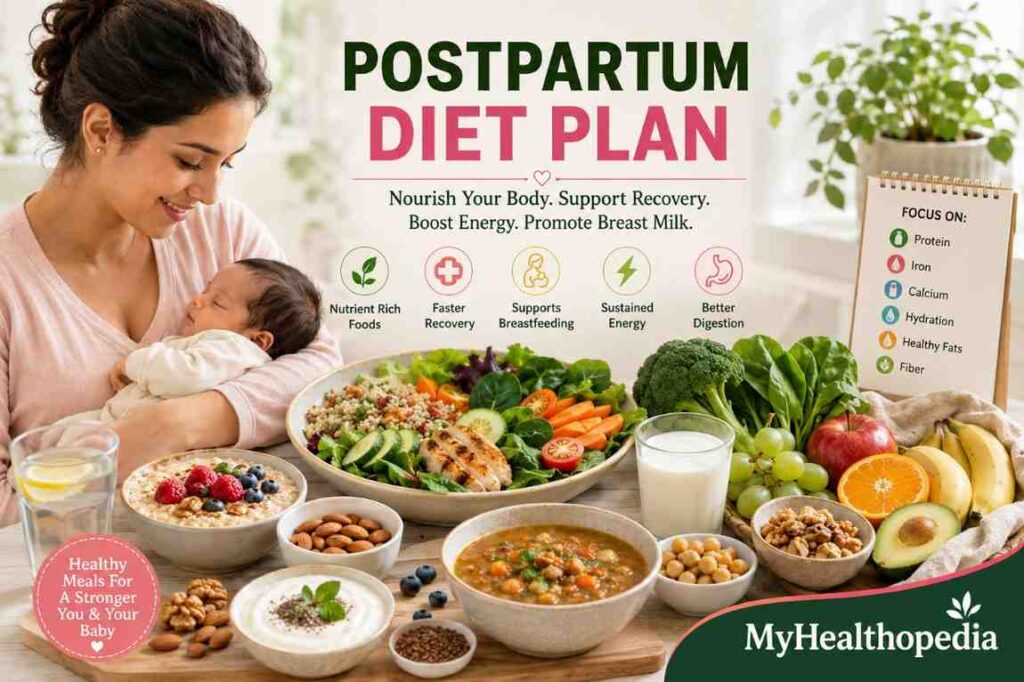
A good postpartum diet plan is not about eating very little or trying to lose pregnancy weight quickly. Instead, it should focus on nourishing your body with enough protein, fiber, healthy fats, vitamins, minerals, fluids, and overall calories. Whether you had a vaginal birth or a C-section, the basic goal is the same: eat regularly, choose nutrient-dense foods, stay hydrated, and give your body enough time to recover.
This guide explains what to eat after delivery, which nutrients matter most, provides a practical 7-day postpartum diet plan, and answers common questions about postpartum nutrition.
What Is a Postpartum Diet Plan?
A postpartum diet plan is a balanced eating pattern designed to support a woman’s nutritional needs after childbirth.
It should provide foods that can help support:
- Physical recovery after delivery
- Energy during the demanding newborn period
- Breast milk production when breastfeeding
- Healthy bowel movements
- Restoration of nutrient stores
- Muscle and tissue repair
- Bone health
- Immune function
- Gradual return to a healthy weight
There is no single postpartum diet that works for everyone. Your needs can vary depending on whether you are breastfeeding, your activity level, your pre-pregnancy health, the type of delivery you had, blood loss during delivery, dietary preferences, and any medical conditions.
The American College of Obstetricians and Gynecologists notes that breastfeeding generally increases energy needs, and recommends drinking plenty of fluids while breastfeeding. (ACOG)
Why Nutrition Matters After Childbirth
Pregnancy and childbirth can place considerable nutritional demands on the body. Recovery requires adequate energy and nutrients, while breastfeeding adds another nutritional responsibility.
Instead of thinking about postpartum food as a “weight-loss diet,” think of it as recovery nutrition.
A nourishing diet can make it easier to meet everyday demands when sleep is interrupted and your schedule revolves around your baby.
It can also help you establish sustainable eating habits rather than relying heavily on processed snacks, sugary drinks, or skipped meals.
The U.S. Department of Agriculture recommends that breastfeeding women consume a variety of fruits, vegetables, grains, protein foods, and dairy or fortified soy alternatives while limiting excess added sugars, saturated fat, and sodium. (MyPlate)
Important Nutrients in a Postpartum Diet
| Nutrient | Why It Matters | Food Sources |
|---|---|---|
| Protein | Supports tissue and muscle repair | Eggs, chicken, fish, lentils, beans, yogurt, tofu |
| Iron | Helps maintain healthy red blood cells | Lean meat, beans, lentils, spinach, fortified cereals |
| Calcium | Supports bones and muscles | Milk, yogurt, cheese, tofu, fortified plant milk |
| Iodine | Important for thyroid hormones and infant development during lactation | Iodized salt, dairy, eggs, seafood |
| Choline | Supports normal brain and nervous-system function | Eggs, meat, fish, dairy, beans, peanuts |
| Omega-3 fats | Important for overall health and a healthy diet | Salmon, sardines, walnuts, chia seeds, flaxseeds |
| Fiber | Supports digestion and regular bowel movements | Fruits, vegetables, whole grains, beans |
| Vitamin C | Supports normal immune function and helps absorb plant-based iron | Citrus fruits, guava, berries, peppers |
| Vitamin D | Important for bones and calcium metabolism | Fortified milk, fatty fish, eggs, sunlight exposure |
| Folate | Supports cell division and normal blood formation | Leafy greens, beans, citrus fruits, fortified grains |
| Fluids | Help maintain hydration, particularly during breastfeeding | Water, milk, soups, unsweetened beverages |
1. Protein-Rich Foods
Protein is particularly useful during postpartum recovery because the body needs amino acids to maintain and repair tissues.
Include a protein source with most meals.
Good options include:
- Eggs
- Chicken
- Fish
- Lean meat
- Greek yogurt
- Cottage cheese
- Milk
- Lentils
- Chickpeas
- Kidney beans
- Soybeans
- Tofu
- Paneer
- Nuts and seeds
Vegetarian mothers can combine foods such as lentils, beans, dairy, soy, nuts, and seeds throughout the day.
2. Iron-Rich Foods
Iron deserves special attention after childbirth, particularly if you experienced significant blood loss or were iron deficient during pregnancy.
Iron helps the body produce hemoglobin, which carries oxygen through the blood. The NIH Office of Dietary Supplements lists the recommended intake for breastfeeding women ages 19–50 as 9 mg of iron per day, although individual needs can differ depending on health status and recent blood loss. (ODSS)
Good food sources include:
- Lean red meat
- Chicken
- Fish
- Lentils
- Beans
- Spinach
- Peas
- Fortified cereals
- Nuts
- Seeds
For plant-based sources of iron, pairing them with vitamin C-rich foods such as oranges, guava, tomatoes, or bell peppers can improve absorption.
If you were prescribed an iron supplement after delivery, follow your healthcare professional’s instructions rather than replacing it with food alone.
3. Calcium-Rich Foods
Calcium is important for maintaining healthy bones and supporting normal muscle function.
Include foods such as:
- Milk
- Yogurt
- Cheese
- Calcium-fortified plant milk
- Tofu made with calcium
- Sesame seeds
- Leafy green vegetables
- Sardines with edible bones
A postpartum diet should not eliminate dairy unless you have an allergy, intolerance, or another reason to avoid it. Fortified alternatives can provide similar nutrients.
4. Iodine-Rich Foods
Iodine is particularly important during lactation because it is involved in thyroid hormone production and infant development.
The NIH lists 290 mcg per day as the recommended iodine intake for breastfeeding women. Food sources include seafood, dairy products, eggs, and iodized salt. (ODSS)
However, more iodine is not necessarily better. Avoid taking high-dose iodine supplements unless recommended by your healthcare professional.
5. Choline-Rich Foods
Choline is another nutrient worth paying attention to during breastfeeding.
The recommended intake for breastfeeding women is 550 mg per day. Foods that provide choline include eggs, meat, fish, dairy products, beans, peanuts, nuts, seeds, and some vegetables. (ODSS)
An egg-based breakfast, for example, can be an easy way to include choline in your daily diet.
6. Healthy Fats
Healthy fats provide energy and help make meals more satisfying.
Choose foods such as:
- Avocado
- Walnuts
- Almonds
- Chia seeds
- Flaxseeds
- Pumpkin seeds
- Olive oil
- Fatty fish
Fat should not be completely eliminated from a postpartum diet. Instead, focus on choosing nutritious sources and keeping highly processed fried foods and foods high in saturated fat as occasional choices.
7. Fruits and Vegetables
Postpartum meals should include plenty of colorful fruits and vegetables.
They provide fiber, vitamins, minerals, antioxidants, and fluids.
Good choices include:
- Berries
- Apples
- Bananas
- Oranges
- Guava
- Papaya
- Kiwi
- Carrots
- Spinach
- Broccoli
- Bell peppers
- Tomatoes
- Sweet potatoes
- Pumpkin
Try to include different colors throughout the week rather than relying on only one or two vegetables.
8. Whole Grains and High-Fiber Foods
Constipation can be uncomfortable during postpartum recovery, particularly after delivery or when certain medications are being used.
Fiber-rich foods can support regular bowel movements when combined with adequate fluid intake.
Good choices include:
- Oats
- Brown rice
- Whole-wheat roti
- Quinoa
- Barley
- Whole-grain bread
- Beans
- Lentils
- Fruits
- Vegetables
- Chia seeds
- Flaxseeds
Increase fiber gradually if your current diet is low in fiber.
How Many Calories Do You Need After Delivery?
There is no universal calorie number for every postpartum woman.
Your needs depend on factors such as:
- Age
- Height and weight
- Activity level
- Breastfeeding
- Whether you are exclusively breastfeeding
- Your metabolic needs
- Medical conditions
For breastfeeding women, ACOG states that approximately 450–500 additional calories per day may be needed for milk production. (ACOG)
The Dietary Guidelines for Americans use a slightly different calculation and estimate an average additional energy requirement during the first six months of lactation, depending on individual circumstances. (CDC)
Because of these differences, it is better to focus on hunger, fullness, nutritional quality, and individual medical advice rather than following a rigid calorie target.
7-Day Postpartum Diet Plan
This sample plan is intended as a general guide rather than a personalized medical diet.
| Day | Breakfast | Mid-Morning Snack | Lunch | Evening Snack | Dinner | Bedtime |
|---|---|---|---|---|---|---|
| Day 1 | Oatmeal with milk, banana, walnuts and chia seeds | Apple with peanut butter | Brown rice, dal, mixed vegetables, yogurt and salad | Roasted chickpeas with unsweetened tea | Whole-wheat roti with chicken or paneer, spinach and vegetables | Warm milk |
| Day 2 | Vegetable omelet, whole-grain toast and fruit | Yogurt with berries | Quinoa or brown rice with chickpeas, vegetables, avocado and yogurt | Fruit with almonds | Fish or tofu, sweet potato and steamed vegetables | Milk if hungry |
| Day 3 | Vegetable poha with peanuts and fruit | Guava or orange | Whole-wheat roti, dal, vegetable curry, paneer and salad | Greek yogurt with seeds | Chicken or tofu soup with whole-grain bread and vegetables | Warm milk if desired |
| Day 4 | Scrambled eggs or tofu, whole-grain toast and avocado | Banana with walnuts | Rice, rajma, vegetables, yogurt and salad | Fruit smoothie with milk or fortified soy milk | Roti with grilled chicken or paneer and mixed vegetables | Milk or yogurt |
| Day 5 | Overnight oats with yogurt, berries, chia seeds and nuts | Boiled egg and fruit | Vegetable dal khichdi with yogurt | Roasted makhana or chickpeas | Fish, tofu or beans with brown rice and vegetables | Warm milk |
| Day 6 | Vegetable upma, yogurt and fruit | Apple with almonds | Whole-wheat roti, chicken or chickpea curry, vegetables and salad | Yogurt with fruit and seeds | Vegetable soup with paneer or tofu and whole-grain bread | Milk if hungry |
| Day 7 | Eggs or paneer bhurji with whole-wheat toast and fruit | Orange, guava or berries | Brown rice, dal, vegetables, salad and yogurt | Nuts with fresh fruit | Grilled fish, chicken, tofu or beans with vegetables and whole grains | Warm milk if desired |
Simple Postpartum Diet Guidelines
- Protein: Include eggs, lentils, beans, dairy, paneer, tofu, chicken or fish throughout the day.
- Iron: Choose lentils, beans, leafy greens, meat, eggs and fortified foods, especially if you had significant blood loss during delivery.
- Calcium: Include milk, yogurt, cheese, fortified plant milk or calcium-rich tofu.
- Fiber: Eat fruits, vegetables, oats, whole grains, beans and lentils to support healthy digestion.
- Healthy fats: Add walnuts, almonds, chia seeds, flaxseeds, avocado and fish.
- Hydration: Drink water regularly, particularly while breastfeeding.
- Breastfeeding: Breastfeeding generally increases energy and nutrient needs, so avoid aggressive calorie restriction unless advised by your healthcare professional.
- Weight loss: Focus on recovery and nourishment first rather than trying to lose pregnancy weight quickly.
Easy Postpartum Snacks
New mothers may not always have time to prepare elaborate meals. Keeping nutritious snacks within reach can make eating regularly easier. Try:
- Fruit and yogurt
- Nuts and seeds
- Peanut butter on whole-grain toast
- Boiled eggs
- Roasted chickpeas
- Hummus with vegetables
- Cheese with whole-grain crackers
- Fruit smoothie
- Oatmeal
- Makhana
- Homemade energy bites made from oats, nuts, and seeds
Preparing snacks in advance can be particularly helpful during the first few weeks.
What to Drink After Delivery?
Water should be the main beverage.
Keep a bottle of water beside your bed, feeding chair, or wherever you spend time with your baby.
Other options can include:
- Milk
- Fortified soy milk
- Unsweetened smoothies
- Soups
- Coconut water
- Herbal teas that are appropriate for you
If breastfeeding, pay attention to thirst and urine color. ACOG recommends drinking plenty of fluids and increasing intake if urine becomes dark yellow. (ACOG)
You do not need to force excessive amounts of water to increase milk supply.
Foods to Avoid or Limit After Delivery
A postpartum diet does not need to be extremely restrictive. However, some foods and beverages are best limited.
1. Highly Processed Foods
Occasional convenience foods are completely understandable, especially with a newborn, but meals based heavily on highly processed foods may provide fewer nutrients.
2. Excess Added Sugar
Sugary drinks, sweets, and desserts can add calories without providing many essential nutrients.
3. Excessive Caffeine
If breastfeeding, discuss your caffeine intake with your healthcare professional, especially if your baby seems unusually irritable or has sleep difficulties.
4. High-Mercury Fish
Fish can be an excellent source of protein and omega-3 fats, but some fish contain high levels of mercury. ACOG recommends choosing lower-mercury seafood and avoiding certain high-mercury fish while breastfeeding. (ACOG)
5. Alcohol
If breastfeeding, alcohol consumption requires careful consideration. Discuss your individual situation with your healthcare professional, particularly if you plan to drink.
Should You Follow a Postpartum Weight-Loss Diet?
For many women, rapid weight loss should not be the immediate priority after childbirth.
Your body has just gone through pregnancy and delivery. Healing, sleeping when possible, eating well, and caring for your baby are more important early goals.
Once your healthcare professional confirms that recovery is progressing well, gradual changes in food choices and physical activity can support healthy weight management.
Avoid crash diets, prolonged fasting, or extremely low-calorie diets, particularly if breastfeeding.
A sustainable approach is usually more realistic: balanced meals, adequate protein, vegetables and fruit, whole grains, healthy fats, and regular movement when medically appropriate.
Postpartum Diet After a C-Section
A C-section is major abdominal surgery, so recovery may require additional attention.
Your meals should still emphasize:
- Protein
- Fiber
- Fluids
- Fruits and vegetables
- Iron-rich foods
- Healthy fats
- Adequate calories
Do not drastically reduce food intake because you are concerned about weight gain.
If constipation, abdominal pain, nausea, poor appetite, or other symptoms are persistent, speak with your healthcare professional.
Traditional Postpartum Foods: Are They Necessary?
Many cultures have traditional postpartum foods, including soups, porridges, lentil dishes, nuts, seeds, herbs, spices, and warm meals.
These foods can absolutely be part of a healthy postpartum diet when they are nutritionally balanced.
However, there is no single traditional food that every new mother must eat to recover or increase breast milk.
For example, foods such as fenugreek, fennel, or special lactation drinks are often promoted as milk-boosting foods, but they should not replace adequate overall nutrition or professional help when there is a genuine milk-supply concern.
If you are worried about milk supply, work with a qualified lactation professional or healthcare provider rather than relying solely on foods or supplements.
Practical Tips for Following a Postpartum Diet
- Prepare Food in Advance: Cook larger portions of dal, rice, vegetables, soups, or protein foods that can be reheated quickly.
- Keep Healthy Snacks Nearby: Place nutritious snacks where you commonly feed or care for your baby.
- Do Not Skip Breakfast: A simple breakfast can provide useful energy after a disrupted night’s sleep.
- Include Protein at Meals: Protein can make meals more satisfying and supports tissue maintenance and recovery.
- Drink Regularly: Keep water nearby throughout the day.
- Choose Whole Foods Most Often: Build most meals around minimally processed foods.
- Ask for Help: If family or friends want to help, asking them to prepare meals can be more useful than receiving unnecessary baby products.
- Listen to Hunger and Fullness: Your appetite may change after delivery, particularly while breastfeeding.
- Avoid Perfection: Some days may involve takeout, packaged food, or very simple meals. One imperfect meal does not make your diet unhealthy.
When Should You Talk to a Doctor or Dietitian?
A healthcare professional can help personalize your postpartum diet if you have:
- Significant blood loss during delivery
- Anemia or low iron
- Diabetes
- Thyroid disease
- High blood pressure
- Food allergies
- Celiac disease
- Vegetarian or vegan dietary restrictions
- Significant appetite loss
- Persistent vomiting or diarrhea
- Difficulty maintaining your weight
- Concerns about breast milk supply
- A history of nutritional deficiencies
FAQ’s
What foods help postpartum recovery?
Protein-rich foods, iron-containing foods, fruits, vegetables, whole grains, and healthy fats can support tissue repair, energy, and overall recovery.
What should I eat while breastfeeding?
Eat a varied diet with protein, vegetables, fruits, whole grains, dairy or fortified alternatives, and healthy fats. Breastfeeding generally increases your energy and nutrient needs.
Can I eat eggs after delivery?
Yes. Eggs are a convenient source of high-quality protein and provide nutrients such as choline.
Is milk good after delivery?
Yes. Milk provides protein, calcium, iodine, and other nutrients. Fortified plant-based milk can be an alternative if you avoid dairy.
Can I eat rice after delivery?
Yes. Rice can be included in a healthy postpartum diet. Brown rice and other whole grains can provide additional fiber.
What should I eat to increase breast milk?
Adequate overall food intake, fluids, and frequent breastfeeding or milk removal are more important than any single food. If you are concerned about milk supply, consult a lactation professional or healthcare provider.
How much water should I drink after delivery?
Drink regularly according to thirst and your body’s needs. Breastfeeding can increase fluid requirements, so keeping water nearby while feeding can be helpful.
Can I start a weight-loss diet after delivery?
Avoid crash diets or severe calorie restriction immediately after childbirth. Focus first on recovery and adequate nutrition, particularly if you are breastfeeding.
What should I eat after a C-section?
After a C-section, focus on protein, fiber, fluids, fruits, vegetables, whole grains, and iron-rich foods to support recovery.
What foods help with postpartum constipation?
Fiber-rich foods such as oats, fruits, vegetables, beans, lentils, whole grains, chia seeds, and flaxseeds can help support regular bowel movements when combined with adequate fluids.
Can I eat spicy food after delivery?
Most women can eat spicy foods if they tolerate them well. If breastfeeding, monitor whether a particular food appears to cause problems for your baby.
Is ghee good after delivery?
Ghee can be included in moderate amounts as part of a balanced diet, but it is not necessary for postpartum recovery and should not replace protein, vegetables, fruits, whole grains, and other nutrient-rich foods.
Can I drink tea after delivery?
Tea can generally be consumed in moderation. If breastfeeding, keep track of total caffeine intake and discuss concerns with your healthcare provider.
How long should I follow a postpartum diet?
Healthy eating should not have a strict end date. Continue a balanced diet as your body transitions from postpartum recovery into your usual lifestyle.
Can I eat sweets after delivery?
Yes, sweets can occasionally be enjoyed, but they should not replace nutrient-dense foods or become a major source of daily calories.
Do I need supplements after giving birth?
Some women may need supplements such as iron, vitamin D, or other nutrients depending on their diet, blood tests, pregnancy history, and breastfeeding status. Take supplements based on advice from your healthcare professional.
Do I need a special diet after a C-section?
There is no universal C-section diet, but adequate protein, fiber, fluids, fruits, vegetables, and nutrient-rich foods can support recovery. Your individual needs may vary depending on your recovery and medical history.
Final Thoughts
A healthy postpartum diet plan does not need to be complicated. The goal is to give your body enough nourishment while it recovers from pregnancy and childbirth.
Build meals around protein, colorful vegetables and fruits, whole grains, healthy fats, and nutrient-rich foods such as eggs, dairy or fortified alternatives, beans, lentils, fish, nuts, and seeds. Pay particular attention to nutrients such as iron, iodine, calcium, and choline, especially if you are breastfeeding.
Most importantly, do not pressure yourself to “bounce back” immediately. Postpartum recovery takes time. A nourishing meal, enough water, adequate rest when possible, and appropriate medical support are far more valuable than a restrictive diet.
Sources / References:
- American College of Obstetricians and Gynecologists — Breastfeeding Your Baby
- American College of Obstetricians and Gynecologists — My Postpartum Care Checklist
- NIH Office of Dietary Supplements — Iron Fact Sheet
- NIH Office of Dietary Supplements — Choline Fact Sheet
- Dietary Guidelines for Americans — Pregnancy and Lactation Nutrition Guidance
About the Author:
Written by: Kirti Solanki, Health Content Researcher
Kirti Solanki is a health content researcher focused on creating clear, reader-friendly content based on reliable health and nutrition sources. Her work emphasizes practical information while encouraging readers to consult qualified healthcare professionals for individualized medical advice.
Disclaimer:
This article is for general educational purposes only and is not a substitute for personalized medical advice, diagnosis, or treatment. Postpartum nutritional needs vary, especially after complications, significant blood loss, or during breastfeeding. Consult your doctor or a registered dietitian for individualized guidance.
Also Read: