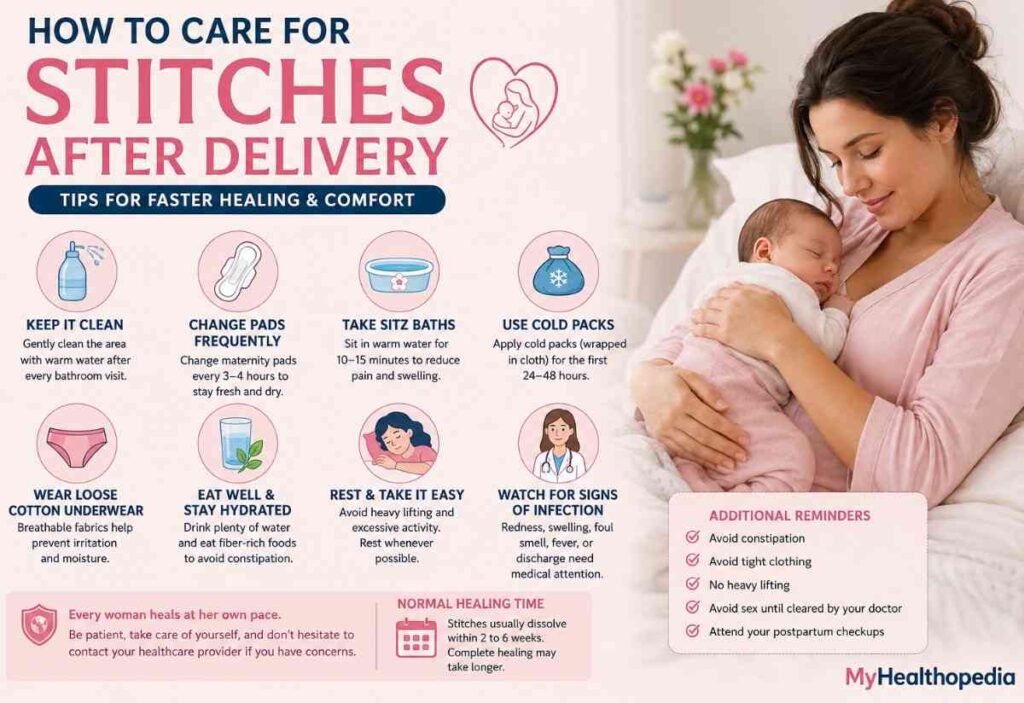

Giving birth is a life-changing experience, but your body also needs time to heal afterward. Many women receive stitches after a vaginal delivery due to a natural tear or an episiotomy (a small surgical cut made during childbirth). While these stitches usually dissolve on their own, proper care is essential to prevent infection, reduce discomfort, and support faster healing.
This guide explains everything you need to know about caring for stitches after delivery, including hygiene tips, pain management, healing stages, warning signs of infection, and when to contact your healthcare provider.
What Are Postpartum Stitches?
Postpartum stitches are dissolvable sutures used to repair tears in the vaginal or perineal area after childbirth. They help bring the tissue together, reduce bleeding, and promote proper healing.
You may need stitches if you experience:
- A first-, second-, third-, or fourth-degree tear
- An episiotomy
- Minor vaginal or labial tears
Most postpartum stitches dissolve naturally within 2 to 6 weeks, although complete healing may take longer depending on the severity of the tear.
Why Proper Stitch Care Matters
Taking care of your stitches helps:
- Reduce pain and swelling
- Prevent bacterial infections
- Speed up tissue healing
- Minimize scarring
- Lower the risk of wound reopening
- Improve comfort while sitting, walking, and breastfeeding
Proper postpartum care also helps you regain confidence during your recovery journey.
Types of Perineal Tears
| Tear Degree | Description | Healing Time |
|---|---|---|
| First-degree | Skin only | 1–2 weeks |
| Second-degree | Skin and muscle | 3–6 weeks |
| Third-degree | Extends to anal muscles | 6–12 weeks or longer |
| Fourth-degree | Extends into rectal lining | Several months |
The more severe the tear, the longer the recovery period.
Common Symptoms After Getting Stitches
It is normal to experience:
- Mild to moderate pain
- Swelling
- Bruising
- Tenderness
- Slight bleeding
- Tightness around stitches
- Mild itching during healing
- Discomfort while sitting
These symptoms usually improve gradually over the first two weeks.
20 Best Tips to Care for Stitches After Delivery
1. Keep the Area Clean
Wash the perineal area gently with warm water after using the toilet. Avoid harsh soaps that may irritate healing skin.
2. Change Maternity Pads Frequently
Replace sanitary pads every 3–4 hours or sooner if they become wet to reduce bacterial growth.
3. Always Wipe Front to Back
This prevents bacteria from the rectal area from reaching the stitches.
4. Use Warm Water While Urinating
Pour warm water over the stitches using a squeeze bottle while urinating to reduce burning.
5. Pat Dry Instead of Rubbing
Use a clean, soft towel or tissue to gently pat the area dry.
6. Wear Loose Cotton Underwear
Breathable fabrics improve airflow and reduce moisture buildup.
7. Apply Cold Packs
Ice packs wrapped in a cloth may reduce swelling during the first 24–48 hours.
Avoid placing ice directly on the skin.
8. Take Sitz Baths
Sitting in warm water for 10–15 minutes helps reduce soreness and promotes healing after the first day if recommended by your healthcare provider.
9. Avoid Heavy Lifting
Your pelvic muscles need time to heal. Avoid lifting anything heavier than your baby.
10. Rest Whenever Possible
Your body heals faster when you get enough sleep and rest.
11. Drink Plenty of Water
Proper hydration supports tissue repair and prevents constipation.
12. Eat Fiber-Rich Foods
Whole grains, fruits, vegetables, and legumes help soften stools and reduce strain.
13. Avoid Constipation
Your healthcare provider may recommend stool softeners during the first few days.
14. Take Prescribed Pain Medication
Only use medications approved by your doctor, especially if breastfeeding.
15. Avoid Tight Clothing
Tight pants increase friction and discomfort.
16. Avoid Sexual Activity Until Cleared
Most healthcare providers recommend waiting about six weeks or until healing is complete.
17. Perform Pelvic Floor Exercises
Gentle Kegel exercises improve circulation and strengthen pelvic muscles once approved by your provider.
18. Avoid Long Sitting Sessions
Stand up and walk every hour to improve blood circulation.
19. Watch for Signs of Infection
Check the stitches daily using a mirror if necessary.
20. Attend Your Postpartum Checkup
Never skip your postpartum appointment even if you feel well.
Daily Hygiene Routine for Faster Healing
Morning
- Shower with warm water
- Change maternity pad
- Wear clean cotton underwear
Throughout the Day
- Wash after every bathroom visit
- Drink plenty of water
- Eat healthy meals
- Rest between baby care
Night
- Clean the area before bed
- Change pad
- Sleep on your side if sitting becomes uncomfortable
Foods That Support Healing
A nutritious diet can speed up recovery.
Protein
- Eggs
- Chicken
- Fish
- Lentils
- Greek yogurt
Vitamin C
- Oranges
- Kiwi
- Strawberries
- Bell peppers
Zinc
- Pumpkin seeds
- Chickpeas
- Nuts
Iron
- Spinach
- Lean meat
- Beans
Fiber
- Oats
- Brown rice
- Apples
- Pears
- Vegetables
Healthy nutrition helps repair damaged tissues more efficiently.
How Long Do Stitches Take to Heal?
| Time After Delivery | What Happens |
|---|---|
| 1–3 Days | Swelling and soreness are highest |
| 1 Week | Pain gradually decreases |
| 2 Weeks | Most women feel significantly better |
| 4–6 Weeks | Stitches usually dissolve |
| 2–3 Months | Complete tissue healing in many women |
Recovery varies depending on the severity of the tear and your overall health.
Pain Relief Tips for Stitches
You may find relief by:
- Using cold compresses
- Taking prescribed pain medication
- Sitting on a soft cushion
- Taking warm sitz baths
- Avoiding prolonged standing
- Resting frequently
- Staying hydrated
What to Avoid While Healing Stitches?
Avoid:
- Bubble baths
- Scented soaps
- Vaginal douching
- Tampons
- Swimming until approved
- Heavy exercise
- Heavy lifting
- Tight jeans
- Smoking
- Ignoring severe pain
Signs Your Stitches Are Healing Normally
Healthy healing usually includes:
- Less pain each day
- Reduced swelling
- Mild itching
- Minimal bleeding
- No unusual odor
- Skin gradually closing
These are positive signs that recovery is progressing.
Signs of Stitches Infection
Contact your healthcare provider immediately if you notice:
- Fever
- Increasing pain
- Redness spreading around stitches
- Thick yellow or green discharge
- Bad odor
- Heavy bleeding
- Stitches opening
- Difficulty passing urine
- Severe swelling
Prompt treatment can prevent complications.
When Should You Call Your Doctor?
Seek medical advice if:
- Pain becomes worse instead of better
- Bleeding increases suddenly
- You cannot sit comfortably after several weeks
- You have a fever over 100.4°F (38°C)
- There is pus around the stitches
- Your wound separates
- Bowel movements become extremely painful
- You experience urinary problems
Can You Walk After Delivery Stitches?
Yes. Gentle walking is encouraged because it:
- Improves circulation
- Reduces blood clot risk
- Supports healing
- Prevents stiffness
Start slowly and avoid overexertion.
Can You Shower with Stitches?
Yes. Daily showers help keep the area clean. Let warm water run gently over the stitches and avoid vigorous scrubbing.
Can You Sit Normally?
You can sit, but you may feel discomfort initially.
Tips include:
- Sit on a soft cushion
- Lean slightly to one side
- Change positions regularly
- Avoid sitting for long periods
Breastfeeding and Stitch Recovery
Breastfeeding itself does not harm your stitches. However, nursing sessions may involve prolonged sitting.
Helpful tips:
- Use supportive pillows
- Change positions often
- Stay hydrated
- Eat nutritious meals
- Rest whenever possible
Emotional Recovery Matters Too
Healing after childbirth is not only physical.
Many mothers experience:
- Mood swings
- Anxiety
- Fatigue
- Feeling overwhelmed
Seek support from your partner, family, friends, or healthcare provider if emotional challenges persist. If you experience prolonged sadness, hopelessness, or difficulty caring for yourself or your baby, speak with a healthcare professional promptly.
FAQs
Is it normal for postpartum stitches to hurt?
Yes. Mild pain, soreness, swelling, and tenderness are common during the first few days and usually improve gradually.
Can I wash my stitches with soap?
Use warm water to clean the area. If soap is recommended, choose a mild, fragrance-free soap and rinse thoroughly.
How often should I change my maternity pad?
Change your maternity pad every 3–4 hours, or sooner if it becomes wet or heavily soiled.
Are sitz baths good for postpartum stitches?
Yes. A warm sitz bath may help relieve pain, reduce swelling, and promote healing when recommended by your healthcare provider.
Is itching around the stitches normal?
Yes. Mild itching is a common sign of healing. However, severe itching with redness or discharge should be checked by a healthcare provider.
Can stitches reopen after delivery?
Although uncommon, stitches can reopen due to infection, excessive strain, or heavy lifting. Contact your healthcare provider if you think your wound has opened.
How do I know if my stitches are infected?
Warning signs include increasing pain, redness, swelling, pus, foul-smelling discharge, fever, or the wound opening. Seek medical care promptly if these occur.
Is burning while urinating normal after delivery?
Yes. Mild burning can occur if urine comes into contact with healing tissue. Pouring warm water over the area while urinating may help reduce discomfort.
Do postpartum stitches dissolve on their own?
Yes. Most stitches used after vaginal delivery are dissolvable and do not need to be removed.
Will postpartum stitches leave a scar?
Most postpartum stitches heal with little or no noticeable scarring, especially when proper wound care is followed.
When can I exercise after delivery?
Gentle walking is generally safe soon after delivery, but strenuous exercise should wait until your healthcare provider says it is appropriate.
Is mild bleeding normal?
Yes. Light postpartum bleeding (lochia) is normal. However, heavy bleeding or large clots should be assessed by a healthcare provider.
How do you know if your stitches are healing after birth?
Healing signs include less pain, reduced swelling, mild itching, and no signs of infection.
How long should stitches stay in after birth?
Most dissolvable stitches disappear within 2–6 weeks.
How to sleep with stitches after birth?
Sleep on your side or in a comfortable position that avoids pressure on the stitches.
What should you avoid after normal delivery stitches?
Avoid heavy lifting, strenuous exercise, tampons, swimming, and sex until your healthcare provider approves.
What should you not do after getting stitches after birth?
Don’t strain, rub the stitches, ignore hygiene, or resume heavy activities too soon.
What are the side effects of stitches after birth?
Mild pain, swelling, tenderness, bruising, and itching are common during healing.
How many days should I bed rest after giving birth?
Rest for the first few days, but take gentle walks as advised by your healthcare provider.
How many stitches are needed in a normal delivery?
The number varies depending on the tear or episiotomy and is determined by your healthcare provider.
Final Thoughts
Recovering from childbirth takes time, patience, and proper self-care. Although postpartum stitches can feel uncomfortable during the first few weeks, they generally heal well with good hygiene, adequate rest, balanced nutrition, and regular follow-up with your healthcare provider.
Listen to your body, avoid activities that strain the healing area, and seek medical advice if you notice any warning signs. Every mother’s recovery is different, so focus on gradual healing rather than rushing back to normal activities.
Sources / References:
- World Health Organization (WHO)
- American College of Obstetricians and Gynecologists (ACOG)
- National Health Service (NHS)
- Royal College of Obstetricians and Gynaecologists (RCOG)
- MedlinePlus (U.S. National Library of Medicine)
About the Author:
Written by: Kirti Solanki – Health Content Researcher
Kirti Solanki is a Health Content Researcher who creates evidence-based, reader-friendly articles on pregnancy, women’s health, nutrition, and wellness. Her goal is to make medical information easy to understand while encouraging readers to consult qualified healthcare professionals for personalized advice.
Disclaimer:
This article is for educational purposes only and should not replace professional medical advice, diagnosis, or treatment. Always consult your obstetrician, midwife, or healthcare provider regarding postpartum recovery or any concerns about your stitches.
Also Read: