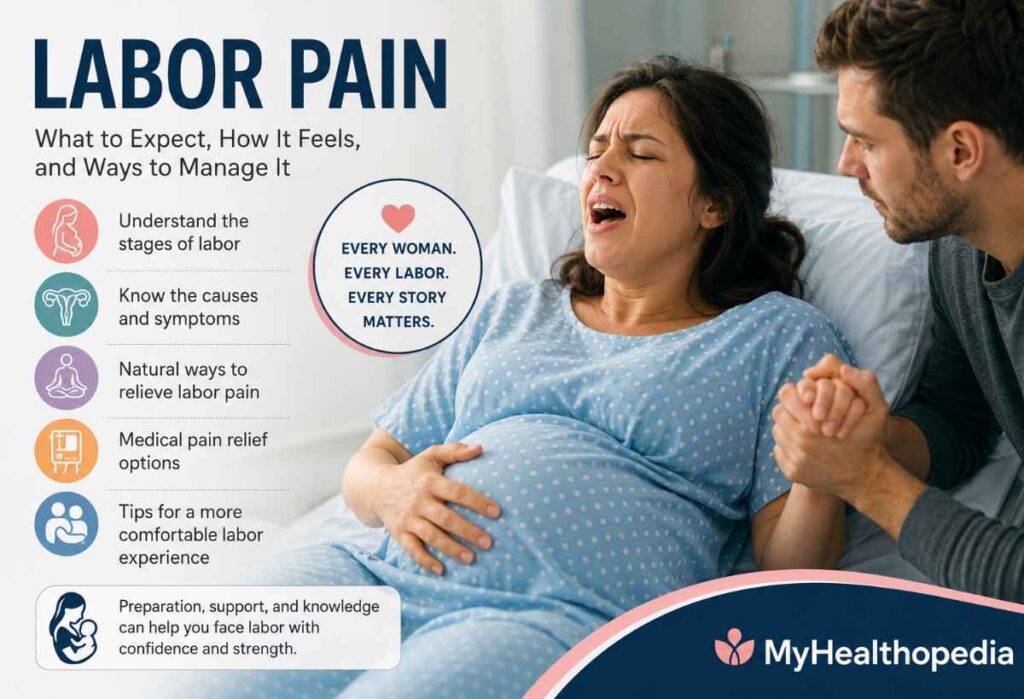

Labor pain is one of the most talked-about aspects of pregnancy, yet every woman’s experience is unique. Some describe it as intense menstrual cramps that gradually become stronger, while others compare it to powerful waves of pressure that come and go. Although labor pain can be physically demanding, it is also a natural part of childbirth that helps your baby move through the birth canal.
Understanding what causes labor pain, how it changes during each stage of labor, and the available pain relief options can help reduce anxiety and prepare you for delivery. Whether you’re planning a natural birth, considering an epidural, or simply want to know what to expect, learning about labor pain before your due date can make the experience feel more manageable.
In this guide, you’ll learn everything you need to know about labor pain, including its causes, stages, symptoms, pain management techniques, and when to seek medical attention.
What Is Labor Pain?
Labor pain is the physical discomfort that occurs as the uterus contracts to help dilate the cervix and push the baby through the birth canal. These contractions become stronger, longer, and more frequent as labor progresses.
Unlike pain caused by injury or illness, labor pain serves a purpose. It signals that your body is actively working to deliver your baby safely.
The intensity of labor pain varies depending on several factors, including:
- Baby’s position
- Labor duration
- Individual pain tolerance
- Previous childbirth experiences
- Emotional state and stress levels
- Medical interventions used during labor
What Causes Labor Pain?
Several physiological changes contribute to labor pain.
1. Uterine Contractions
The uterus contracts repeatedly to open the cervix and push the baby downward. These contractions are the primary source of labor pain.
2. Cervical Dilation
As the cervix gradually opens from 0 to 10 centimeters, surrounding tissues stretch, causing pressure and discomfort.
3. Pressure on Pelvic Structures
The baby’s head presses against the pelvis, bladder, rectum, pelvic floor muscles, nerves, and ligaments.
4. Stretching of Birth Canal
During delivery, the vagina and perineum stretch significantly, creating additional sensations of pressure and burning.
5. Hormonal Changes
Hormones such as oxytocin stimulate contractions, while endorphins help the body naturally cope with pain.
What Does Labor Pain Feel Like?
Every labor is different, but many women describe labor pain as:
- Strong menstrual cramps
- Tightening around the abdomen
- Lower back pain
- Pelvic pressure
- Wave-like contractions
- Intense pressure in the hips
- Pain radiating into the thighs
- Rectal pressure before pushing
Pain usually begins mildly and becomes more intense as labor progresses.
Stages of Labor Pain
Stage 1: Early Labor
During early labor:
- Cervix opens from 0–6 cm
- Contractions are mild to moderate
- Occur every 5–20 minutes
- Last 30–60 seconds
Many women can still walk, talk, eat light foods, and rest.
Stage 2: Active Labor
During active labor:
- Cervix dilates from 6–10 cm
- Contractions become stronger
- Occur every 2–5 minutes
- Last 45–90 seconds
Pain typically becomes much more intense during this stage.
Stage 3: Pushing and Delivery
Once the cervix reaches 10 cm:
- Strong urge to push
- Increased pelvic pressure
- Stretching sensation
- Burning (“ring of fire”) as the baby’s head crowns
The pain changes from contraction pain to pressure and stretching.
Stage 4: Delivery of the Placenta
After birth:
- Mild contractions continue
- Placenta separates
- Bleeding is monitored
- Uterus contracts to reduce blood loss
These contractions are usually much less painful.
Common Symptoms During Labor
Besides contractions, women may experience:
- Lower back pain
- Pelvic pressure
- Bloody show
- Water breaking
- Nausea
- Vomiting
- Diarrhea
- Shaking
- Sweating
- Leg cramps
- Fatigue
- Emotional changes
Signs That Labor Has Started
Common signs include:
- Regular contractions
- Increasing contraction intensity
- Water breaking
- Bloody mucus discharge
- Lower back pain
- Pelvic pressure
- Cervical dilation confirmed by healthcare provider
Types of Labor Pain
1. Visceral Pain
Occurs during early labor from uterine contractions and cervical dilation.
2. Somatic Pain
Occurs later as the vagina and pelvic tissues stretch.
3. Back Labor
Some women experience severe lower back pain, especially if the baby is facing upward (occiput posterior position).
10 Natural Ways to Manage Labor Pain
Many women choose non-medication techniques.
1. Breathing Exercises
Slow, controlled breathing can reduce tension and improve oxygen flow.
2. Walking
Movement may help labor progress while reducing discomfort.
3. Position Changes
Standing, kneeling, squatting, or using a birthing ball can relieve pressure.
4. Warm Shower or Bath
Warm water helps relax muscles and reduce pain.
5. Massage
Back massage and counter-pressure are particularly helpful during back labor.
6. Heat Therapy
Warm compresses on the lower back or abdomen can provide comfort.
7. Cold Therapy
Cool cloths help reduce overheating and promote relaxation.
8. Relaxation Techniques
Meditation, visualization, and mindfulness may lower stress hormones.
9. Music Therapy
Listening to calming music can create a more relaxed environment.
10. Continuous Labor Support
Support from a partner, family member, nurse, or doula has been associated with improved childbirth experiences.
Medical Pain Relief Options
1. Epidural
The most effective and commonly used medical pain relief method.
Benefits:
- Significant pain reduction
- Remain awake during delivery
- Adjustable medication levels
Possible drawbacks:
- Limited mobility
- Blood pressure changes
- Rare complications
2. Spinal Block
Provides fast pain relief, often used before cesarean delivery.
3. Combined Spinal-Epidural
Offers rapid onset with continued pain control.
4. Nitrous Oxide
Inhaled gas helps reduce anxiety and improve coping during contractions.
5. Intravenous Pain Medication
Certain medications may lessen pain but can also cause drowsiness.
Factors That Influence Labor Pain
Pain varies depending on:
- Baby’s size
- Baby’s position
- Length of labor
- Multiple pregnancy
- Previous births
- Stress levels
- Fatigue
- Medical complications
How Long Does Labor Pain Last?
Typical labor duration:
First baby
- Early labor: 6–12 hours
- Active labor: 4–8 hours
- Pushing: 30 minutes–3 hours
Subsequent pregnancies
Labor often progresses more quickly.
Can Labor Pain Be Reduced?
While labor pain cannot always be eliminated, it can often be managed through a combination of:
- Childbirth education
- Relaxation
- Support person
- Medication if needed
- Good hydration
- Position changes
- Breathing techniques
Possible Complications of Labor Pain
Seek immediate medical care if you experience:
- Heavy vaginal bleeding
- Severe abdominal pain between contractions
- Decreased fetal movement
- High fever
- Green or foul-smelling amniotic fluid
- Severe headache with vision changes
- Loss of consciousness
When to Go to the Hospital?
Contact your healthcare provider if:
- Contractions occur every 5 minutes for one hour (for first pregnancies)
- Water breaks
- Baby movements decrease
- Heavy bleeding occurs
- You have severe pain or concerning symptoms
Your provider may advise earlier evaluation depending on your medical history.
Tips for Coping With Labor Pain
- Attend prenatal childbirth classes.
- Practice breathing exercises before your due date.
- Stay hydrated during early labor if permitted.
- Eat light meals before active labor when advised.
- Bring supportive people with you.
- Keep an open birth plan, as labor can be unpredictable.
- Trust your healthcare team and ask questions when needed.
10 Labor Pain Myths and Facts
Myth 1: Labor pain is the same for every woman.
Fact: Every labor experience is unique. Pain intensity, duration, and location vary from person to person.
Myth 2: Your water always breaks before labor starts.
Fact: Many women begin labor with contractions before their water breaks. In some cases, the water doesn’t break until active labor or is broken by a healthcare provider.
Myth 3: An epidural completely eliminates all pain.
Fact: An epidural greatly reduces pain, but you may still feel pressure during contractions and while pushing.
Myth 4: If you’re induced, labor is always more painful.
Fact: Induced labor can feel more intense for some women, but pain levels vary and effective pain relief options are available.
Myth 5: First-time mothers always have very long labor.
Fact: While first labors are often longer, some first-time mothers have relatively short labors.
Myth 6: Screaming is necessary during labor.
Fact: Some women vocalize during labor, while others stay quiet. There is no “right” way to cope with labor pain.
Myth 7: You must lie on your back during labor.
Fact: Walking, squatting, kneeling, side-lying, and using a birthing ball may improve comfort and labor progress.
Myth 8: You can’t eat or drink anything during labor.
Fact: Depending on your medical situation and hospital policy, you may be allowed clear fluids or light foods during early labor. Follow your healthcare provider’s advice.
Myth 9: Natural childbirth is always better than pain medication.
Fact: There is no single “best” approach. The safest and most appropriate pain relief depends on your health, labor, and personal preferences.
Myth 10: Labor pain immediately stops after the baby is born.
Fact: Contraction pain usually ends after delivery, but mild uterine cramping and soreness are common during the early postpartum period.
FAQs
When does labor pain usually start?
Labor pain typically begins when regular uterine contractions start and the cervix begins to dilate, usually between 37 and 42 weeks of pregnancy.
How can I tell if it’s real labor pain?
Real labor contractions become stronger, longer, and more frequent and do not stop with rest or hydration. False labor contractions often ease when you change position or rest.
Is labor pain the same for every woman?
No. Every pregnancy and labor experience is different. Pain intensity, duration, and location vary from one woman to another.
Can labor pain start in the back?
Yes. Some women experience back labor, where pain is concentrated in the lower back, often because of the baby’s position.
Does an epidural completely remove labor pain?
An epidural significantly reduces pain for most women, but some may still feel pressure or mild discomfort during contractions and pushing.
Is labor pain worse than period cramps?
Labor pain is generally much stronger than menstrual cramps because contractions become more powerful and frequent as labor progresses.
Can I have a baby without severe labor pain?
Every labor is different. Some women experience milder labor, especially with effective pain management techniques or medication.
Can walking help with labor pain?
Yes. Walking during early labor may help encourage labor progression and make contractions easier to manage if your healthcare provider approves.
Does stress make labor pain worse?
High stress and anxiety can increase muscle tension and make labor feel more difficult. Relaxation techniques may help improve coping.
What is the most painful stage of labor?
The transition phase, when the cervix dilates from about 8 to 10 centimeters, is often considered the most intense stage of labor.
Can labor pain stop suddenly?
Contractions may temporarily slow or become less intense, but true labor usually continues until delivery unless medical intervention is needed.
How can I prepare for labor pain before my due date?
Attend childbirth classes, practice breathing and relaxation exercises, create a birth plan, stay physically active during pregnancy if approved by your healthcare provider, and discuss pain relief options before labor begins.
Is labor pain the worst pain?
Pain is highly individual. Many women describe labor as intense, but pain perception varies widely.
Can labor start without pain?
Yes. Some women first notice water breaking or mild contractions before significant pain develops.
Is back labor normal?
Yes. Back labor can occur when the baby’s position places extra pressure on the mother’s spine.
Can I have a natural birth without pain medication?
Yes. Many women successfully use breathing, movement, water therapy, massage, and support techniques without medication.
Can labor pain stop suddenly?
Contractions sometimes slow temporarily, but true labor usually resumes and progresses.
Is every contraction painful?
Most active labor contractions are painful, although intensity varies throughout labor.
Does labor pain disappear after birth?
Most contraction pain ends shortly after delivery, although mild uterine cramping can continue for several days, especially while breastfeeding.
What are the first signs of labor pain?
Regular contractions, lower back pain, pelvic pressure, a bloody show, and water breaking are common early signs.
How do I know if delivery is close?
Frequent contractions, cervical dilation, water breaking, and a strong urge to push usually mean delivery is near.
How painful is labor on a scale of 1 to 10?
Most women rate active labor pain between 7 and 10 out of 10, though it varies.
Do babies get more active before labor?
Some do, while others move less. Regular fetal movement should continue until labor.
What positions ease labor pain?
Walking, squatting, kneeling, side-lying, leaning forward, and using a birthing ball may help.
What is the most painful part of labor?
The transition phase (8–10 cm dilation) is often the most intense.
Which stage of labor lasts the longest?
The first stage of labor is usually the longest, especially for first-time mothers.
Key Takeaways
Labor pain is a normal part of childbirth and plays an essential role in helping your baby enter the world. Although every woman’s experience is different, understanding the stages of labor, recognizing the signs of progression, and learning both natural and medical pain relief options can make the process less overwhelming. Preparing ahead of time, staying informed, and working closely with your healthcare team can help you approach labor with greater confidence and realistic expectations.
Sources / References:
- World Health Organization (WHO)
- American College of Obstetricians and Gynecologists (ACOG)
- National Institute for Health and Care Excellence (NICE)
- March of Dimes
- Cleveland Clinic
About the Author:
Written by: Kirti Solanki (Health Content Researcher)
Kirti Solanki is a Health Content Researcher who creates evidence-based, reader-friendly articles on pregnancy, nutrition, wellness, and preventive healthcare. Her content is developed using reputable medical guidelines and trusted health organizations to provide accurate and practical information for readers.
Disclaimer:
This guide is for educational purposes only and should not replace professional medical advice, diagnosis, or treatment. Always consult your obstetrician, midwife, or healthcare provider regarding pregnancy, labor, or childbirth concerns.
Also Read: