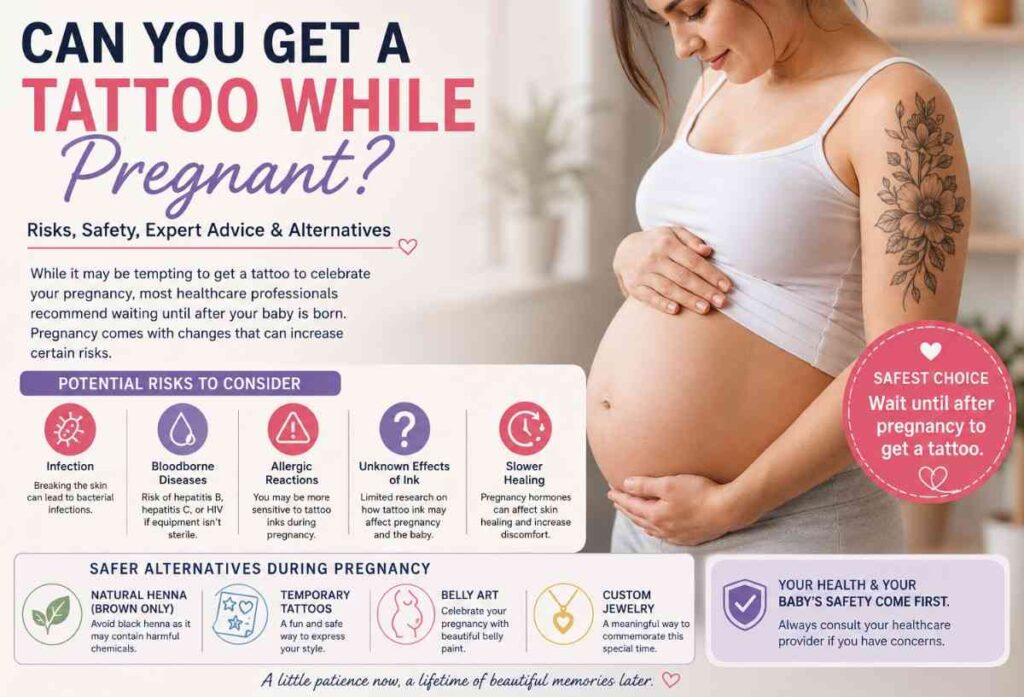

Pregnancy is a time filled with excitement, anticipation, and many important decisions. Along with preparing for your baby’s arrival, you may also think about personal milestones or meaningful ways to celebrate this special chapter of your life. For some, getting a tattoo to honor their pregnancy or future child seems like a beautiful idea.
But is it safe?
The short answer is that most healthcare professionals recommend waiting until after pregnancy before getting a tattoo. While tattoos are generally safe when performed by licensed professionals using sterile equipment, pregnancy introduces additional health considerations that make postponing a new tattoo the safest choice.
In this guide, we’ll explore everything you need to know about getting a tattoo while pregnant, including potential risks, expert recommendations, safer alternatives, and frequently asked questions.
Can You Get a Tattoo While Pregnant?
No, it’s generally not recommended.
Medical experts generally advise against it because there is limited research proving that getting tattooed during pregnancy is completely safe. Even though the chance of complications may be low at a reputable tattoo studio, pregnancy is not the ideal time to expose yourself to avoidable risks.
While there is no strong evidence that getting a tattoo directly harms your baby, healthcare professionals advise waiting until after pregnancy because getting a tattoo carries risks such as infection, allergic reactions, and possible exposure to bloodborne diseases. Because your immune system changes during pregnancy, even a minor skin infection can become more serious than usual. Additionally, there is limited research on the safety of tattoo ink during pregnancy.
Why Pregnancy Changes the Risk?
Pregnancy affects nearly every system in your body.
Some important changes include:
- Your immune system becomes less aggressive.
- Blood circulation increases.
- Skin becomes more sensitive.
- Hormonal changes affect healing.
- Pigmentation changes become more common.
- The body prioritizes protecting the developing baby.
These natural changes can influence how your skin heals after getting a tattoo.
Risks of Getting a Tattoo While Pregnant
1. Risk of Infection
Any tattoo involves breaking the skin thousands of times with tiny needles.
If equipment isn’t completely sterile or aftercare isn’t followed properly, bacteria can enter the skin.
Possible infections include:
- Cellulitis
- Staph infections
- Local skin infections
- Rare bloodstream infections
A serious infection during pregnancy could potentially affect both mother and baby.
2. Bloodborne Diseases
Although licensed tattoo studios follow strict hygiene practices, there is still a small risk if equipment is contaminated.
Possible infections include:
- Hepatitis B
- Hepatitis C
- HIV (extremely rare in regulated studios)
These infections can have significant consequences during pregnancy.
3. Allergic Reactions
Some people develop allergic reactions to tattoo pigments immediately or even years later.
Symptoms may include:
- Severe itching
- Swelling
- Redness
- Raised skin
- Pain
Treating allergic reactions during pregnancy may require medications that are not ideal for expectant mothers.
4. Unknown Effects of Tattoo Ink
Researchers still do not fully understand how tattoo pigments interact with the body during pregnancy.
Tiny particles of tattoo ink can travel through the lymphatic system after tattooing. Although there is no strong evidence that tattoo ink harms a developing baby, there also isn’t enough research confirming complete safety.
For this reason, healthcare providers recommend avoiding unnecessary exposure.
5. Slower Healing
Pregnancy hormones may change how your skin heals.
Some women experience:
- Increased swelling
- More irritation
- Longer healing times
- Increased itching
A tattoo that normally heals within a few weeks could become more uncomfortable.
6. Skin Stretching
Areas like the:
- Belly
- Breasts
- Hips
- Thighs
often stretch significantly during pregnancy.
Getting a tattoo on these areas may cause:
- Distorted designs
- Fading
- Uneven lines
- Permanent stretching
Waiting until after pregnancy allows your body to return closer to its normal shape.
7. Pain and Stress
Tattooing causes discomfort.
Pain may increase:
- Stress hormones
- Anxiety
- Fatigue
Although there is no evidence that tattoo pain directly harms a fetus, avoiding unnecessary physical stress is generally recommended during pregnancy.
What Do Medical Experts Recommend?
Organizations and healthcare providers generally advise postponing tattoos until after pregnancy.
Reasons include:
- Limited safety research
- Preventable infection risk
- Better healing after pregnancy
- Avoiding unnecessary procedures
If a tattoo can safely wait a few months, delaying it is considered the safest option.
Is Tattoo Ink Safe During Pregnancy?
There is currently no strong evidence proving tattoo ink is completely safe during pregnancy.
Tattoo inks may contain:
- Metal compounds
- Organic pigments
- Preservatives
- Color additives
Different manufacturers use different ingredients, and regulations vary by country.
Because research is limited, experts recommend avoiding new tattoo ink exposure while pregnant.
Can You Get a Tattoo During Early Pregnancy?
The first trimester is when the baby’s major organs are developing.
Although no studies show tattoos directly cause birth defects, the first trimester is considered the most sensitive stage of pregnancy.
Most healthcare professionals recommend avoiding tattoos throughout the entire pregnancy.
What About the Second or Third Trimester?
Some people believe the second trimester is safer.
However, there is no medical guideline that identifies any trimester as a safe time for getting tattooed.
The infection risk remains throughout pregnancy.
Can You Get a Tattoo If You Didn’t Know You Were Pregnant?
Many women discover they’re pregnant weeks after conception.
If you had a tattoo before realizing you were pregnant:
- Don’t panic.
- Most pregnancies continue normally.
- Contact your obstetrician.
- Monitor the tattoo for signs of infection.
- Attend all prenatal appointments.
Having a tattoo early in pregnancy does not automatically mean something is wrong.
Signs of a Tattoo Infection During Pregnancy
Seek medical care if you notice:
- Increasing redness
- Severe swelling
- Pus
- Fever
- Chills
- Worsening pain
- Red streaks around the tattoo
- Warm skin
Prompt treatment is important during pregnancy.
Can You Remove a Tattoo While Pregnant?
Laser tattoo removal is not recommended during pregnancy.
Reasons include:
- Limited safety studies
- Possible skin irritation
- Unknown effects of pigment breakdown
- Increased skin sensitivity
Most dermatologists recommend waiting until after delivery.
Can You Get Cosmetic Tattoos While Pregnant?
Cosmetic tattooing includes:
- Microblading
- Lip blushing
- Permanent eyeliner
These procedures also involve breaking the skin and carry similar infection risks.
Most professionals recommend postponing cosmetic tattoo procedures until after pregnancy.
What If You Already Have Tattoos?
Existing tattoos generally do not affect pregnancy.
However, pregnancy may cause:
- Stretching
- Fading
- Itching
- Temporary color changes
Keeping the skin moisturized may help reduce discomfort.
Can Epidurals Be Given If You Have a Lower Back Tattoo?
Many pregnant women worry that a tattoo on the lower back prevents an epidural.
Current evidence suggests that having a healed lower back tattoo usually does not prevent epidural anesthesia.
Your anesthesiologist will evaluate:
- Tattoo location
- Skin condition
- Presence of infection
An active skin infection near the injection site is a greater concern than the tattoo itself.
Is It Safe to Get a Tattoo While Breastfeeding?
Current evidence suggests breastfeeding itself is not generally considered a reason to avoid getting a tattoo, provided:
- You’re fully healed after childbirth.
- The tattoo is performed by a licensed professional.
- Proper hygiene is maintained.
However, some healthcare providers recommend waiting until breastfeeding is well established to avoid complications.
Discuss any concerns with your healthcare provider.
Safer Alternatives During Pregnancy
If you want to celebrate your pregnancy, consider these temporary options instead:
1. Henna (Natural Only)
Choose natural brown henna only.
Avoid black henna because it may contain para-phenylenediamine (PPD), which can cause severe skin reactions.
2. Temporary Tattoos
Temporary stick-on tattoos provide a fun alternative without needles.
3. Belly Art
Some parents enjoy professionally painted pregnancy belly art for maternity photos.
4. Custom Jewelry
Personalized necklaces or bracelets can commemorate your pregnancy until you’re ready for a permanent tattoo.
Tips If You Plan to Get a Tattoo After Pregnancy
Waiting until after pregnancy offers the safest experience.
Before getting tattooed:
- Wait until you’ve recovered from childbirth.
- Choose a licensed tattoo studio.
- Verify sterilization procedures.
- Ensure new needles are used.
- Follow aftercare instructions carefully.
- Stay hydrated.
- Avoid tattooing irritated skin.
Myths About Tattoos During Pregnancy
Myth: Tattoos Always Harm the Baby
There is no evidence that a tattoo directly harms the fetus, but the risks associated with infection make postponing the procedure the safer option.
Myth: Existing Tattoos Must Be Removed
Existing tattoos do not need removal during pregnancy.
Myth: Every Tattoo Causes Infection
Professional tattoo studios greatly reduce infection risk, but no procedure that breaks the skin is completely risk-free.
Myth: One Small Tattoo Is Completely Safe
Even a very small tattoo carries the same basic infection risks because the skin is still pierced.
FAQs
Is tattoo ink harmful to an unborn baby?
There is currently no conclusive evidence that tattoo ink harms a developing baby. However, because research is limited, experts recommend avoiding new tattoos until after pregnancy.
Can a tattoo cause a miscarriage?
There is no evidence that a tattoo itself causes miscarriage. However, severe infections from an unsafe tattoo could pose health risks during pregnancy.
Are tattoo infections dangerous during pregnancy?
Yes. Untreated infections can become serious and may affect both the mother and the baby. Seek medical attention immediately if you notice redness, swelling, pus, fever, or worsening pain.
Can I get a small tattoo while pregnant?
Even a small tattoo carries the same infection risks because the skin is still punctured. Healthcare providers generally recommend postponing all new tattoos during pregnancy.
Is it safe to get a cosmetic tattoo or microblading while pregnant?
Most professionals advise against cosmetic tattoo procedures, including microblading, lip blushing, and permanent eyeliner, until after pregnancy due to similar infection risks.
Will my existing tattoos affect my pregnancy?
No. Existing tattoos usually do not affect pregnancy. However, tattoos on the abdomen, breasts, or hips may stretch or change appearance as your body grows.
Can pregnancy permanently change the appearance of my tattoo?
Yes. Tattoos located on areas that stretch significantly during pregnancy may become distorted, faded, or develop stretch marks.
Are temporary tattoos safe during pregnancy?
Most temporary stick-on tattoos are generally considered safer than permanent tattoos because they do not break the skin. Always check the ingredients if you have sensitive skin.
How long should I wait after giving birth to get a tattoo?
It’s generally best to wait until you’ve fully recovered from childbirth. If you’ve had a cesarean section or are breastfeeding, discuss the timing with your healthcare provider.
Can pregnancy hormones affect tattoo healing?
Yes. Hormonal changes during pregnancy may make the skin more sensitive and can slow healing or increase itching and swelling.
Can tattoo ink reach my baby?
There is no strong evidence showing tattoo ink reaches the fetus in harmful amounts. However, research is limited, so experts recommend avoiding unnecessary exposure during pregnancy.
Is getting a tattoo painful during pregnancy?
Yes. Pregnancy may increase skin sensitivity, making the procedure feel more uncomfortable than usual.
Can I get a tattoo after giving birth?
Yes. Many people choose to wait until after delivery and recovery. If you’re breastfeeding, discuss timing with your healthcare provider.
Do tattoos stretch during pregnancy?
Yes. Tattoos on the abdomen, breasts, hips, and thighs may stretch as the skin expands.
Should I tell my doctor if I got a tattoo while pregnant?
Yes. Inform your healthcare provider so they can advise you and monitor for any complications if needed.
What happens if you get a tattoo while pregnant?
Getting a tattoo during pregnancy may increase the risk of infection, allergic reactions, and exposure to bloodborne diseases. Since there’s limited research on tattoo ink safety during pregnancy, healthcare providers generally recommend waiting until after delivery.
Can I get a tattoo 1 month before getting pregnant?
If you’re planning to become pregnant soon, it’s best to get your tattoo several weeks in advance to allow it to heal completely. A fully healed tattoo reduces the risk of infection before pregnancy begins.
Do tattoos affect birth?
No. Existing tattoos do not affect labor or childbirth. In most cases, they also do not prevent you from receiving an epidural, although your healthcare provider will assess the skin if the tattoo is on your lower back.
Do tattoos fade in pregnancy?
They can. Pregnancy-related skin stretching, weight gain, and hormonal changes may cause tattoos—especially on the abdomen, breasts, hips, and thighs—to appear stretched, faded, or slightly distorted. Many tattoos improve in appearance after the body recovers postpartum, but some changes may be permanent.
Key Takeaways
- Most healthcare professionals recommend waiting until after pregnancy before getting a tattoo.
- Infection is the primary concern during pregnancy.
- Research on tattoo ink safety during pregnancy remains limited.
- Existing tattoos usually do not affect pregnancy.
- Laser tattoo removal is also generally postponed until after pregnancy.
- Temporary alternatives like natural henna, belly art, or custom jewelry can help celebrate this special time safely.
- If you accidentally got a tattoo before knowing you were pregnant, contact your healthcare provider, but remember that this alone does not mean your pregnancy will have problems.
Final Thoughts
A tattoo can be a meaningful and lasting expression of love, identity, or an important life event. While the desire to commemorate pregnancy with new body art is understandable, the safest choice is usually to wait until after your baby is born and you’ve recovered.
Pregnancy is a temporary chapter, but your tattoo will last a lifetime. Waiting a few months allows you to reduce unnecessary risks, gives your body time to heal properly, and helps ensure the best possible outcome for both you and your baby. If you’re unsure about the right timing, speak with your obstetrician or a qualified healthcare professional who can provide guidance based on your individual health and pregnancy.
Sources / References:
- American College of Obstetricians and Gynecologists (ACOG)
- American Pregnancy Association
- Mayo Clinic – Pregnancy Health
- U.S. Food and Drug Administration (FDA) – Tattoos & Permanent Makeup
- NHS (UK) – Pregnancy Advice
- Society for Maternal-Fetal Medicine (SMFM)
About the Author:
Written by: Kirti Solanki (Health Content Researcher)
Kirti Solanki is a Health Content Researcher specializing in evidence-based health, nutrition, pregnancy, wellness, and preventive care. She creates well-researched, reader-friendly content using trusted medical sources to help readers make informed health decisions. Her articles are designed to support better understanding and should complement—not replace—professional medical advice.
Disclaimer:
This guide is for educational and informational purposes only and should not be considered medical advice. Always consult your obstetrician, healthcare provider, or a qualified medical professional before making decisions related to pregnancy, tattoos, or any medical procedure.
Also Read: