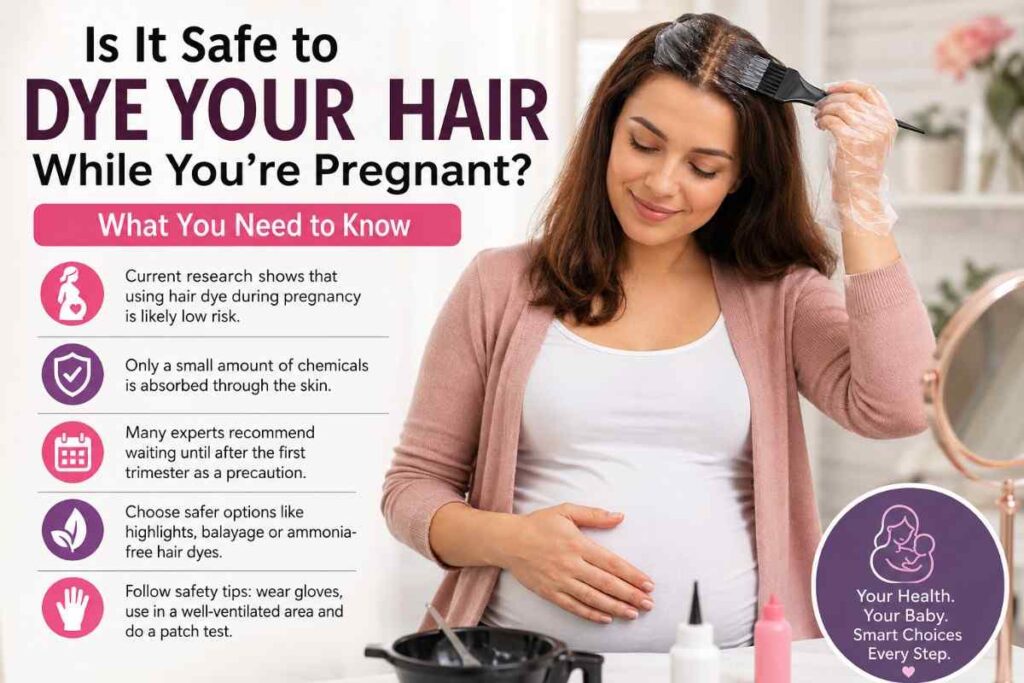

Pregnancy brings many exciting changes, but it also comes with countless questions about everyday activities. One of the most common concerns among expectant mothers is whether it’s safe to color or dye their hair during pregnancy.
Whether you regularly cover gray hair, maintain highlights, or simply want a fresh new look before your baby arrives, you may wonder if the chemicals in hair dye could affect your growing baby.
The reassuring news is that current research suggests that using hair dye during pregnancy is unlikely to pose a significant risk when used properly. However, experts still recommend taking certain precautions to minimize unnecessary exposure to chemicals.
This comprehensive guide explains what current scientific evidence says about hair dye during pregnancy, when it may be safest to color your hair, which products are better choices, and practical safety tips every expectant mother should know.
Can You Dye Your Hair While Pregnant?
Yes. Most healthcare professionals agree that using hair dye during pregnancy is generally considered safe, especially after the first trimester.
Only a very small amount of chemicals from hair dye is absorbed through healthy skin. Current studies have not found convincing evidence that occasional use of hair dye during pregnancy increases the risk of birth defects, miscarriage, or pregnancy complications.
However, because research involving pregnant women is naturally limited, many obstetricians recommend waiting until after the first 12 weeks of pregnancy whenever possible.
If you have a high-risk pregnancy or any medical concerns, discuss hair coloring with your obstetrician or midwife before your appointment.
Why Are Pregnant Women Concerned About Hair Dye?
Many permanent hair dyes contain chemicals such as:
- Ammonia
- Hydrogen peroxide
- Parabens (in some products)
- P-phenylenediamine (PPD)
- Resorcinol
- Persulfates
- Fragrances
These ingredients can sound alarming, especially during pregnancy.
Fortunately, the amount that enters the bloodstream through the scalp appears to be extremely low during normal cosmetic use.
The greatest concern is usually prolonged exposure among professional hairdressers rather than someone who colors their hair occasionally.
What Does Research Say?
Current evidence is reassuring.
Studies have shown:
- Very little hair dye is absorbed through intact skin.
- Animal studies have not demonstrated birth defects at doses far higher than humans would normally experience.
- Human studies have not consistently linked personal hair dye use during pregnancy with adverse pregnancy outcomes.
- Occupational exposure among salon workers may carry different risks due to repeated daily exposure, although evidence remains mixed.
Overall, organizations including the American College of Obstetricians and Gynecologists (ACOG) and the American Pregnancy Association indicate that occasional hair coloring appears to be low risk.
Is the First Trimester Different?
Yes.
The first trimester is when your baby’s organs are forming.
Although no strong evidence shows that hair dye causes birth defects, many healthcare providers recommend delaying cosmetic hair coloring until after week 12 simply as an extra precaution.
If coloring your hair is not essential during early pregnancy, waiting until the second trimester may provide additional peace of mind.
Which Types of Hair Dye Are Safest During Pregnancy?
1. Permanent Hair Dye
Permanent dyes penetrate the hair shaft and generally contain stronger chemicals.
Current evidence still suggests they are safe when used correctly, but minimizing scalp exposure is recommended.
2. Semi-Permanent Hair Dye
Semi-permanent products typically contain fewer harsh chemicals than permanent dyes.
Many pregnant women prefer these as a lower-exposure option.
3. Demi-Permanent Hair Color
These products contain less ammonia than permanent dyes and fade gradually.
They may be a suitable alternative for maintaining color during pregnancy.
4. Highlights
Highlights are often considered one of the safest options because the dye usually does not touch the scalp.
Less scalp contact means less opportunity for chemical absorption.
5. Balayage
Balayage uses hand-painted color primarily on the hair lengths rather than directly on the scalp.
Many hairstylists recommend balayage during pregnancy because it limits skin exposure.
6. Ombre
Like balayage, ombre coloring keeps most chemicals away from the scalp.
7. Temporary Hair Color
Temporary sprays, wash-out colors, and color-depositing shampoos coat the outside of the hair and generally involve the least chemical exposure.
Are Natural Hair Dyes Better?
Not always.
The word “natural” does not automatically mean safer.
Some natural dyes still contain ingredients capable of causing allergic reactions.
1. Pure Henna
Pure henna (Lawsonia inermis) is generally considered a safer alternative when it contains no added chemicals.
Always check ingredient labels carefully.
2. Black Henna
Avoid black henna.
It often contains high levels of PPD, which can trigger severe allergic reactions.
Hair Treatments to Be Careful With During Pregnancy
Some cosmetic treatments involve stronger chemicals or fumes than regular hair coloring.
Speak with your healthcare provider before undergoing:
- Hair bleaching
- Chemical straightening
- Brazilian blowouts
- Keratin treatments
- Hair relaxing treatments
- Perms
Some of these procedures release formaldehyde or formaldehyde-releasing chemicals into the air, which may increase inhalation exposure.
Tips for Dyeing Your Hair Safely During Pregnancy
1. Wait Until the Second Trimester
If possible, postpone coloring until after 12 weeks.
2. Choose a Well-Ventilated Area
Open windows or ensure good airflow to reduce inhalation of fumes.
3. Wear Gloves
Whether coloring at home or in a salon, gloves reduce unnecessary skin contact.
4. Follow Instructions Carefully
Never leave hair dye on longer than recommended.
5. Patch Test First
Pregnancy hormones may change your skin sensitivity.
Always perform an allergy test before using a new product.
6. Avoid Damaged Skin
Do not apply dye if your scalp has cuts, infections, eczema, or irritation.
Damaged skin may absorb more chemicals.
7. Rinse Thoroughly
Wash your scalp completely after processing.
8. Eat Before Coloring
Pregnancy can increase sensitivity to smells.
Eating beforehand may help reduce nausea.
9. Limit Frequent Coloring
Instead of monthly touch-ups, consider extending the time between appointments.
Can Hair Dye Harm the Baby?
Current evidence says this is unlikely.
Only tiny amounts of hair dye chemicals are absorbed into the mother’s body, making it difficult for meaningful amounts to reach the developing baby.
No large human studies have shown that occasional personal hair coloring causes birth defects.
Can Hair Dye Cause Miscarriage?
There is no strong scientific evidence that occasional hair dye use increases miscarriage risk.
Miscarriages are common and usually result from chromosomal abnormalities rather than cosmetic hair products.
Does Hair Dye Increase Birth Defect Risk?
Research has not shown a consistent increase in birth defects associated with personal hair dye use during pregnancy.
Scientists continue to monitor long-term safety, but current evidence remains reassuring.
What About Hairdressers Who Work While Pregnant?
Salon professionals may experience:
- Daily chemical exposure
- Frequent inhalation of fumes
- Long working hours
- Standing for extended periods
Pregnant hairstylists should:
- Wear protective gloves
- Improve salon ventilation
- Take regular breaks
- Follow workplace safety recommendations
- Discuss workplace exposure with their healthcare provider
Repeated occupational exposure differs from occasional personal use.
Can Pregnancy Affect Hair Color Results?
Yes.
Hormonal changes may cause:
- Hair to become thicker
- Increased dryness
- Oilier scalp
- Unexpected color results
- Faster fading
- Uneven coloring
Some women notice their usual hair dye produces slightly different shades during pregnancy.
Should You Dye Your Hair at Home or Visit a Salon?
Both options can be safe when proper precautions are followed.
Home Coloring
Advantages:
- Control over ventilation
- Less exposure to salon chemicals
- Lower cost
Disadvantages:
- Risk of improper application
- Possible scalp staining
- Limited professional guidance
Salon Coloring
Advantages:
- Professional application
- Better scalp protection
- Experienced colorists
Disadvantages:
- More exposure to other chemical fumes in the salon
Choose a reputable salon with good ventilation.
Signs You Should Stop Using Hair Dye Immediately
Seek medical advice if you experience:
- Severe itching
- Facial swelling
- Difficulty breathing
- Rash
- Blistering
- Persistent scalp burning
- Eye irritation
These symptoms may indicate an allergic reaction requiring prompt medical attention.
Pregnancy-Safe Hair Care Alternatives
If you prefer avoiding traditional dyes, consider:
- Highlights
- Balayage
- Temporary color sprays
- Root touch-up powders
- Hair mascara
- Color-depositing conditioners
- Scarves or stylish head coverings
- New hairstyles that camouflage roots
FAQs
When is the safest time to dye your hair during pregnancy?
Many healthcare providers recommend waiting until the second trimester, after the baby’s major organs have developed.
Can I dye my hair during the first trimester?
Although there is no strong evidence of harm, many experts advise delaying hair coloring until after the first 12 weeks as a precaution.
Is ammonia-free hair dye safe during pregnancy?
Ammonia-free hair dyes may reduce strong fumes, but they still contain other chemicals. They are generally considered a reasonable option when used as directed.
Can hair dye chemicals reach my baby?
Only a very small amount of hair dye chemicals is absorbed through healthy skin, making significant exposure to the baby unlikely.
Is bleaching hair safe during pregnancy?
Occasional hair bleaching is generally considered low risk, but it should be done in a well-ventilated area to minimize exposure to fumes.
Can I use henna while pregnant?
Pure, natural henna is generally considered safe. Avoid black henna because it may contain harmful chemicals like PPD.
Is it safe to get highlights while pregnant?
Yes. Highlights are often recommended because the dye usually does not touch the scalp.
Can I dye my hair while breastfeeding?
Yes. Very little hair dye is absorbed into the bloodstream, so it is considered compatible with breastfeeding when used as directed.
How often can I dye my hair while pregnant?
It is best to limit hair coloring to when it is necessary and avoid frequent treatments throughout pregnancy.
Can hair dye enter breast milk?
Very little hair dye is absorbed into the bloodstream, making significant transfer into breast milk unlikely.
Can pregnancy make me allergic to hair dye?
Yes. Pregnancy hormones can change your immune response, so perform a patch test before every coloring session.
What can happen if I dye my hair while pregnant?
Current research suggests that occasional hair dye use during pregnancy is unlikely to harm you or your baby. To minimize exposure, wait until the second trimester if possible and follow the product’s safety instructions.
What trimester is safest for dyeing hair?
The second trimester is generally considered the safest time to dye your hair because your baby’s major organs have already developed. Many healthcare providers recommend waiting until after the first 12 weeks.
Which hair color is safe during pregnancy?
Highlights, balayage, semi-permanent, and ammonia-free hair dyes are commonly considered safer options because they reduce scalp exposure or contain fewer harsh chemicals. Pure henna may also be an option if it contains no added chemicals.
Key Takeaways
Current scientific evidence suggests that occasional hair dye use during pregnancy is unlikely to harm either the mother or the developing baby when used according to instructions. Waiting until after the first trimester, choosing well-ventilated areas, wearing gloves, and minimizing scalp exposure are sensible precautions.
Highlights, balayage, and temporary colors may offer additional reassurance because they involve less direct contact with the scalp. If you have a high-risk pregnancy, skin conditions, or concerns about specific ingredients, consult your obstetrician or dermatologist before coloring your hair.
Sources / References:
- American College of Obstetricians and Gynecologists (ACOG)
- American Pregnancy Association
- MotherToBaby
- March of Dimes
- National Institute for Occupational Safety and Health (NIOSH)
About the Author:
Written by: Kirti Solanki (Health Content Researcher)
Kirti Solanki is a Health Content Researcher who creates evidence-based articles on pregnancy, nutrition, and wellness using trusted medical sources and current scientific research.
Disclaimer:
This guide is for informational purposes only and is not a substitute for professional medical advice, diagnosis, or treatment. Always consult your healthcare provider regarding any concerns during pregnancy.
Also Read: