
Pregnancy is an exciting journey, but it also brings many physical and emotional changes. One moment you may feel joyful and energetic, and the next you may feel overwhelmed, anxious, or tearful without an obvious reason. These emotional ups and downs are commonly known as pregnancy mood swings, and they are experienced by many expectant mothers.
Hormonal changes, physical discomfort, changing routines, and the anticipation of becoming a parent can all affect emotional well-being during pregnancy. While occasional mood swings are considered a normal part of pregnancy, understanding why they happen and learning healthy coping strategies can make this stage easier and less stressful.
If your emotions seem unpredictable during pregnancy, remember that you are not alone. Learning about pregnancy mood swings can help you recognize what’s normal, identify when additional support may be needed, and take positive steps to care for both your mental and physical health.
What Are Pregnancy Mood Swings?
Pregnancy mood swings are sudden or noticeable changes in emotions that occur during pregnancy. These emotional shifts can happen several times throughout the day and may range from happiness and excitement to sadness, frustration, irritability, anxiety, or emotional sensitivity.
Mood swings are especially common during the first trimester when hormone levels change rapidly. Many women also experience emotional changes again during the third trimester as childbirth approaches.
Mood swings are different from depression or anxiety disorders. They usually come and go, often triggered by hormones, fatigue, stress, or physical discomfort. However, if intense sadness, hopelessness, or anxiety continues for more than two weeks, it’s important to speak with a healthcare provider.
Why Do Pregnancy Mood Swings Happen?
Several physical and emotional factors work together to influence mood during pregnancy.
1. Rapid Hormonal Changes
Hormones such as estrogen and progesterone increase significantly during pregnancy. These hormones help support your growing baby, but they also affect brain chemicals that regulate emotions.
As hormone levels fluctuate, you may become more emotionally sensitive or react more strongly to everyday situations.
2. Physical Fatigue
Growing a baby requires tremendous energy. Fatigue is one of the most common pregnancy symptoms, especially during the first and third trimesters.
When you’re exhausted, even small challenges can feel overwhelming, making mood swings more noticeable.
3. Morning Sickness
Persistent nausea or vomiting can interfere with eating, sleeping, and daily activities. Feeling physically unwell for weeks can naturally affect emotional well-being.
4. Sleep Disturbances
Pregnancy often affects sleep due to:
- Frequent urination
- Back pain
- Leg cramps
- Heartburn
- Difficulty finding a comfortable sleeping position
- Anxiety about the baby
Poor sleep reduces emotional resilience and increases irritability.
5. Stress About Parenthood
Preparing for a new baby often brings excitement along with concerns about:
- Labor and delivery
- Financial responsibilities
- Parenting skills
- Work-life balance
- Relationship changes
- Baby’s health
These concerns can contribute to emotional ups and downs.
6. Physical Discomfort
As pregnancy progresses, common discomforts such as back pain, pelvic pressure, swelling, constipation, and shortness of breath may increase frustration or emotional sensitivity.
7. Body Image Changes
Weight gain, stretch marks, breast changes, and a growing belly are normal parts of pregnancy, but adjusting to these changes may affect self-confidence for some women.
8. Previous Mental Health History
Women who have experienced depression, anxiety, or mood disorders before pregnancy may be more likely to experience stronger emotional changes during pregnancy.
Causes of Pregnancy Mood Swings
Although hormones play a major role, several everyday factors can trigger emotional changes.
- Hormonal fluctuations
- Lack of sleep
- Pregnancy fatigue
- Morning sickness
- Poor nutrition
- Low blood sugar
- Physical discomfort
- Stress
- Anxiety
- Fear of labor
- Relationship challenges
- Financial concerns
- Work pressure
- Reduced physical activity
- Feeling overwhelmed by life changes
Often, mood swings result from several of these factors occurring together.
Symptoms of Pregnancy Mood Swings
Every pregnancy is different. Some women notice only mild emotional changes, while others experience stronger mood fluctuations.
Common symptoms include:
1. Sudden Changes in Mood
Feeling happy one moment and emotional the next without a clear reason.
2. Increased Irritability
Becoming frustrated more easily than usual.
3. Frequent Crying
Crying during movies, conversations, advertisements, or everyday situations that normally wouldn’t trigger tears.
4. Anxiety
Feeling worried about pregnancy, childbirth, or becoming a parent.
5. Emotional Sensitivity
Feeling hurt more easily by comments or situations.
6. Feeling Overwhelmed
Simple daily tasks may feel more difficult than before pregnancy.
7. Restlessness
Finding it difficult to relax because your mind feels constantly active.
8. Difficulty Concentrating
Hormonal changes and fatigue can make it harder to focus.
9. Reduced Patience
Feeling less tolerant of stress or unexpected changes.
10. Temporary Sadness
Experiencing occasional low moods that improve with rest, reassurance, or time.
When Do Pregnancy Mood Swings Start?
Mood swings can occur at any stage of pregnancy, but certain periods are more common.
First Trimester (Weeks 1-13)
The first trimester is often when mood swings are strongest because hormone levels rise rapidly.
You may experience:
- Excitement
- Nervousness
- Fatigue
- Morning sickness
- Emotional sensitivity
- Frequent crying
- Irritability
Many women notice emotional changes before they even realize they are pregnant.
Second Trimester (Weeks 14-27)
Many women feel emotionally more stable during the second trimester.
Reasons include:
- Hormones become more balanced.
- Morning sickness often improves.
- Energy levels increase.
- Sleep may improve.
- Parents become more comfortable with the pregnancy.
However, emotional ups and downs can still occur, especially during stressful periods.
Third Trimester (Weeks 28-Birth)
Mood swings may become more noticeable again as delivery approaches.
Common reasons include:
- Physical discomfort
- Difficulty sleeping
- Fear of labor
- Preparing for childbirth
- Nesting behaviors
- Increased fatigue
- Anxiety about caring for a newborn
Excitement and nervousness often occur together during this stage.
Risk Factors for Stronger Pregnancy Mood Swings
Some women are more likely to experience significant emotional changes during pregnancy.
Risk factors include:
- Previous depression or anxiety
- Family history of mood disorders
- High levels of stress
- Poor sleep quality
- Unplanned pregnancy
- Limited social support
- Relationship difficulties
- Pregnancy complications
- Financial stress
- Multiple pregnancy (twins or more)
- Chronic medical conditions
- Previous pregnancy loss
Having one or more risk factors does not mean you will experience severe mood swings, but it may increase the likelihood of needing additional emotional support.
Are Pregnancy Mood Swings Normal?
Yes. For most women, pregnancy mood swings are a normal part of pregnancy.
Your body is undergoing enormous hormonal, physical, and emotional changes over a relatively short period. Temporary emotional highs and lows are common and usually improve with adequate rest, healthy habits, and support from loved ones.
However, mood swings should not be ignored if they become severe or persistent. Contact your healthcare provider if you experience:
- Sadness lasting more than two weeks
- Loss of interest in activities you usually enjoy
- Constant anxiety or panic attacks
- Feelings of hopelessness
- Difficulty caring for yourself
- Changes in appetite unrelated to pregnancy
- Trouble sleeping even when you’re tired
- Thoughts of harming yourself or your baby
These symptoms may indicate prenatal depression or an anxiety disorder, both of which are treatable. Early support can improve the health and well-being of both mother and baby.
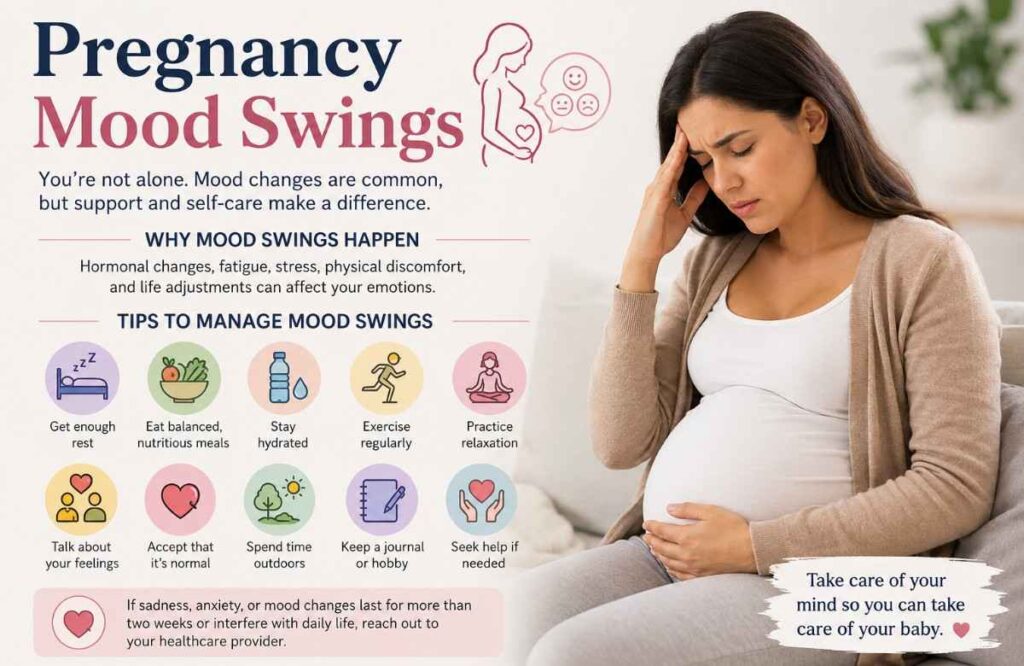
15 Practical Ways to Manage Pregnancy Mood Swings
Although pregnancy mood swings are common, there are many healthy ways to support your emotional well-being. Small lifestyle changes can make a meaningful difference in how you feel each day.
1. Get Enough Rest
Your body is working around the clock to support your baby’s growth, so adequate rest is essential. Aim for 7–9 hours of sleep each night and take short naps during the day if you’re feeling tired.
Good sleep habits include:
- Going to bed at the same time each night
- Using supportive pregnancy pillows
- Avoiding caffeine late in the day
- Keeping your bedroom cool, dark, and quiet
2. Eat Balanced, Nutritious Meals
Healthy nutrition supports both physical and emotional health.
Include foods rich in:
- Whole grains
- Fresh fruits
- Vegetables
- Lean proteins
- Healthy fats
- Calcium-rich foods
- Iron-rich foods
- Omega-3 fatty acids
Avoid skipping meals, as low blood sugar may increase irritability and fatigue.
3. Stay Hydrated
Dehydration can contribute to headaches, fatigue, and difficulty concentrating. Drink enough water throughout the day unless your healthcare provider recommends otherwise.
4. Exercise Regularly
Regular physical activity helps release endorphins, the body’s natural “feel-good” chemicals.
Pregnancy-safe activities may include:
- Walking
- Prenatal yoga
- Swimming
- Stretching
- Low-impact aerobics
Always consult your healthcare provider before starting a new exercise routine.
5. Practice Relaxation Techniques
Stress management can improve emotional balance.
Helpful relaxation methods include:
- Deep breathing
- Meditation
- Mindfulness
- Gentle stretching
- Listening to calming music
- Reading
- Taking warm (not hot) baths
6. Talk About Your Feelings
Sharing your emotions with your partner, trusted family members, or close friends can reduce feelings of isolation.
Remember that you don’t have to handle every emotion on your own.
7. Accept That Mood Swings Are Normal
Many pregnant women worry that emotional changes mean something is wrong.
Understanding that occasional mood swings are a normal response to pregnancy can help reduce unnecessary guilt and self-criticism.
8. Reduce Stress Where Possible
You may not be able to eliminate stress completely, but you can reduce unnecessary pressure.
Consider:
- Prioritizing important tasks
- Asking for help
- Saying no to extra commitments
- Taking regular breaks
- Creating a daily routine
9. Spend Time Outdoors
Fresh air and natural sunlight may help improve mood while encouraging gentle physical activity.
Even a 20–30 minute walk can be refreshing.
10. Stay Connected
Maintain regular contact with supportive people.
Talking with other expectant mothers or joining prenatal support groups can help you feel understood and reassured.
11. Limit Information Overload
Reading every pregnancy story online can increase anxiety.
Choose reliable, evidence-based health information and avoid comparing your pregnancy with someone else’s experience.
12. Continue Enjoyable Hobbies
Make time for activities that help you relax.
Examples include:
- Reading
- Gardening
- Painting
- Knitting
- Cooking
- Journaling
- Listening to podcasts
- Watching favorite movies
13. Prepare for Your Baby Gradually
Instead of trying to complete everything at once, prepare step by step.
Breaking larger tasks into smaller goals can reduce feelings of overwhelm.
14. Attend Prenatal Appointments
Regular prenatal checkups provide reassurance about your baby’s health and give you the opportunity to discuss emotional concerns with your healthcare provider.
15. Seek Professional Help When Needed
If mood changes become intense or interfere with daily life, don’t hesitate to seek support.
Your healthcare provider may recommend:
- Counseling
- Cognitive behavioral therapy (CBT)
- Support groups
- Mental health specialists
- Additional evaluation for prenatal depression or anxiety
Seeking help is a proactive step toward protecting both your health and your baby’s well-being.
How Long Do Pregnancy Mood Swings Last?
The duration of pregnancy mood swings varies from one woman to another. For many expectant mothers, mood swings begin during the first trimester, improve during the second trimester, and may become more noticeable again in the third trimester as the due date approaches.
There is no set timeline, as hormonal changes continue throughout pregnancy. Factors such as fatigue, stress, sleep quality, physical discomfort, and overall health can also influence how long mood swings last. In most cases, pregnancy mood swings are temporary and gradually improve after childbirth as hormone levels begin to return to their pre-pregnancy state.
Best Foods That May Support Emotional Health During Pregnancy
While no single food can prevent mood swings, a balanced diet provides nutrients that support brain function and overall wellness.
| Food | Benefits |
|---|---|
| Salmon (fully cooked) | Rich in omega-3 fatty acids |
| Eggs | Good source of choline and protein |
| Greek yogurt | Calcium and protein |
| Oats | Steady energy release |
| Spinach | Folate and iron |
| Bananas | Vitamin B6 and potassium |
| Walnuts | Healthy fats |
| Avocados | Healthy monounsaturated fats |
| Lentils | Iron and folate |
| Berries | Antioxidants and vitamin C |
Always follow food safety recommendations during pregnancy and discuss any dietary concerns with your healthcare provider.
How Partners and Family Can Help?
Pregnancy affects the entire family, not just the expectant mother. Emotional support from loved ones can make a significant difference.
Partners and family members can help by:
- Listening without judgment
- Being patient during emotional moments
- Helping with household responsibilities
- Attending prenatal appointments when possible
- Encouraging healthy habits
- Offering reassurance
- Respecting the mother’s need for rest
- Learning about pregnancy together
Simple acts of kindness and understanding often provide the greatest emotional support.
When Should You See a Doctor?
Occasional mood swings are normal, but certain symptoms require medical attention.
Contact your healthcare provider if you experience:
- Persistent sadness lasting longer than two weeks
- Severe anxiety or panic attacks
- Frequent crying that doesn’t improve
- Feeling hopeless or worthless
- Difficulty completing everyday activities
- Extreme changes in appetite
- Severe sleep problems unrelated to pregnancy discomfort
- Withdrawal from family and friends
- Thoughts of self-harm or harming your baby
These symptoms may indicate prenatal depression or another mental health condition that deserves prompt evaluation and treatment.
FAQs
Which trimester has the worst mood swings?
Mood swings are usually strongest in the first trimester and may return during the third trimester.
Can pregnancy mood swings affect my baby?
Occasional mood swings are normal, but severe or ongoing stress or depression should be discussed with your healthcare provider.
Can lack of sleep make mood swings worse?
Yes. Poor sleep can increase irritability, anxiety, and emotional sensitivity.
What foods may help improve mood during pregnancy?
Foods rich in omega-3 fats, whole grains, fruits, vegetables, lean proteins, and iron may support emotional well-being.
Is crying a lot during pregnancy normal?
Yes. Increased emotional sensitivity and occasional crying are common due to hormonal changes.
Can exercise help with pregnancy mood swings?
Yes. Pregnancy-safe activities like walking, swimming, and prenatal yoga may help improve mood.
Can pregnancy mood swings be a sign of depression?
Sometimes. Persistent sadness, hopelessness, or loss of interest in daily activities may indicate prenatal depression.
Do pregnancy mood swings stop after delivery?
For many women they improve after birth, but some may experience postpartum mood changes that require medical attention.
Can my partner help with pregnancy mood swings?
Yes. Patience, emotional support, open communication, and practical help can make a significant difference.
Is it safe to take medication for mood swings during pregnancy?
Some medications may be appropriate in certain situations, but they should only be taken under the guidance of a qualified healthcare provider who can weigh the benefits and potential risks.
When is the peak of mood swings in pregnancy?
Mood swings are usually at their peak during the first trimester due to rapid hormonal changes. They may also become more noticeable again in the third trimester as labor approaches.
How to deal with pregnancy emotions?
Manage pregnancy emotions by getting enough sleep, eating a balanced diet, staying active, practicing relaxation techniques, talking with loved ones, and seeking support from your healthcare provider if emotions become overwhelming.
When do you feel most hormonal during pregnancy?
Most women feel the most hormonal during the first trimester, when estrogen and progesterone levels rise rapidly. Hormonal changes continue throughout pregnancy but often become more stable during the second trimester.
Final Thoughts
Pregnancy mood swings are a natural response to the significant hormonal, physical, and emotional changes that occur while your body supports a growing baby. Feeling happy one moment and emotional the next is common and, in most cases, temporary.
Persistent sadness, overwhelming anxiety, or difficulty coping should never be ignored, as timely medical support can make a meaningful difference for both mother and baby. Every pregnancy is unique. Showing yourself patience, seeking help when needed, and maintaining open communication with your healthcare team are important steps toward a healthier pregnancy experience.
Sources / References:
- American College of Obstetricians and Gynecologists (ACOG)
- Centers for Disease Control and Prevention (CDC)
- National Institute of Mental Health (NIMH)
- Office on Women’s Health (U.S. Department of Health & Human Services)
- World Health Organization (WHO)
- March of Dimes
- NHS (National Health Service, UK)
About the Author:
Written by: Kirti Solanki (Health Content Researcher)
Kirti Solanki is a Health Content Researcher dedicated to creating clear, evidence-based, and reader-friendly health articles. She specializes in pregnancy, nutrition, wellness, and preventive healthcare, translating trusted medical information into practical guidance for everyday readers.
Disclaimer:
This guide is for informational purposes only and is not a substitute for professional medical advice. Always consult your healthcare provider regarding any concerns during pregnancy or before making health-related decisions.
Also Read: