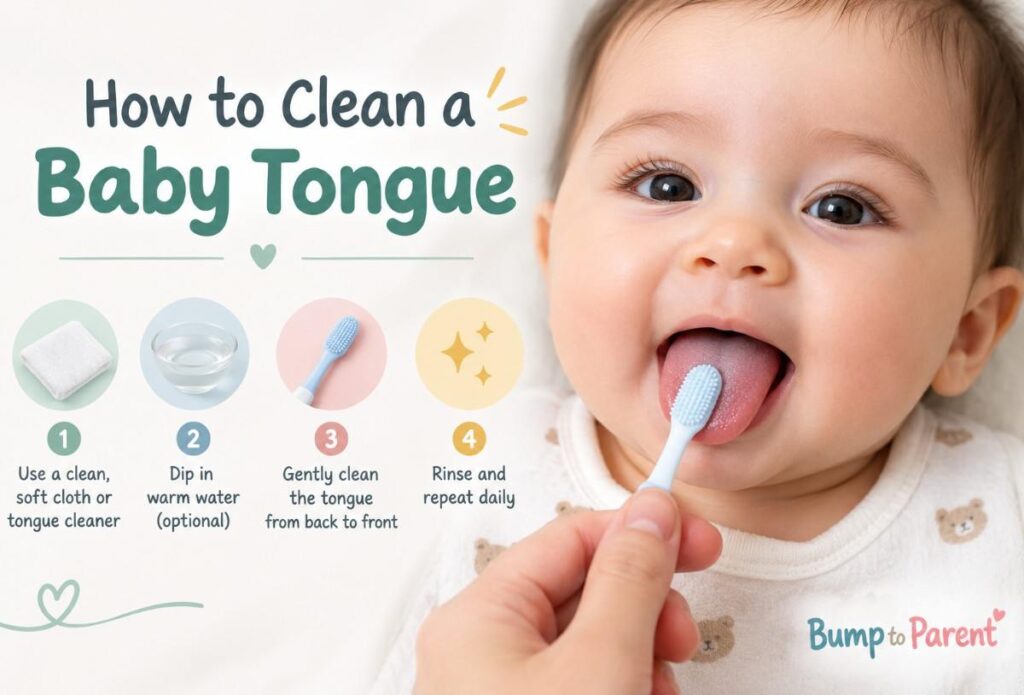

Cleaning your baby’s mouth is a small daily habit that can support good oral hygiene from the very beginning. Even before the first tooth appears, milk can leave a coating on the tongue, and gently cleaning the mouth helps parents become familiar with their baby’s oral health.
The good news is that cleaning a baby’s tongue does not require special equipment or harsh products. A clean, soft, damp cloth or gauze is usually enough for gentle mouth cleaning. The CDC also recommends wiping a baby’s gums with a soft, clean cloth twice a day, particularly after feeding and before bedtime.
However, a white tongue is not always something that needs to be scrubbed away. Sometimes it is simply milk residue; persistent white patches that do not wipe away easily may be a sign of oral thrush and should be evaluated by a healthcare professional.
How to Clean a Baby’s Tongue?
Follow these simple steps:
1. Wash Your Hands
Wash your hands thoroughly with soap and water before touching your baby’s mouth. This helps prevent unnecessary germs from entering the baby’s mouth.
2. Use a Clean, Soft Cloth
Take a soft, clean washcloth or sterile gauze and moisten it with clean water. The cloth should be damp rather than soaking wet.
3. Position Your Baby Comfortably
Hold your baby securely in your lap with their head supported. Choose a time when your baby is calm rather than hungry, tired, or actively crying.
4. Gently Open the Mouth
Using a clean finger, gently touch the baby’s lower lip or chin to encourage the mouth to open. Never force the mouth open.
5. Gently Wipe the Tongue
Wrap the damp cloth or gauze around your clean finger and gently wipe the visible surface of the tongue.
Use light movements. There is no need to scrub the tongue or try to remove every bit of coating.
6. Clean the Gums
Gently wipe along the upper and lower gums as well. Cleaning the gums is an important part of early oral hygiene, even before teeth appear. The CDC recommends wiping babies’ gums twice daily with a soft, clean cloth. CDC
7. Stop if Your Baby Becomes Uncomfortable
If your baby starts crying, gags, or strongly resists, stop and try again later. Mouth cleaning should be gentle and should not become a stressful experience.
Baby Tongue Cleaning by Age: What to Do at Every Stage
| Baby’s Stage | How to Clean the Tongue | What to Use | How Often |
|---|---|---|---|
| Newborn (0–1 month) | Gently wipe the visible tongue and gums without reaching toward the back of the mouth. | Clean, soft damp cloth or gauze | About twice daily |
| 1–3 months | Gently wipe away visible milk residue from the tongue and gums. Avoid scraping. | Soft damp cloth or gauze | About twice daily |
| 3–6 months | Continue gentle tongue and gum cleaning while your baby becomes familiar with oral care. | Clean damp cloth or gauze | About twice daily |
| 6–12 months, before teeth appear | Gently clean the tongue and gums and check the mouth regularly for unusual white patches or irritation. | Soft damp cloth or gauze | About twice daily |
| When the first tooth appears | Start brushing the tooth and continue gently cleaning the rest of the mouth. | Soft, small-bristled baby toothbrush and a tiny smear of fluoride toothpaste | Twice daily |
| 12 months and older | Brush teeth and gently clean the tongue as part of the normal oral-care routine. | Soft child-sized toothbrush and fluoride toothpaste | Twice daily |
Important: You do not need to scrub or scrape a baby’s tongue. If white patches do not wipe away easily, especially if they appear on the cheeks, gums, or roof of the mouth or your baby has feeding difficulties, speak with a pediatrician or dentist because this can be a sign of oral thrush.
How Often Should You Clean a Baby’s Tongue?
For babies without teeth, parents can make gentle mouth cleaning part of the daily routine. Cleaning the gums twice a day is recommended by the CDC, such as after the first feeding in the morning and before bed.
You do not need to repeatedly wipe the tongue throughout the day.
If your baby has just finished feeding, you can gently wipe the mouth when convenient, particularly if there is visible milk residue.
Should You Clean a Baby’s Tongue After Every Feeding?
It is not necessary to thoroughly clean your baby’s tongue after every feeding.
A gentle twice-daily oral-care routine is generally sufficient for babies who do not yet have teeth. If milk remains on the tongue after a feed, you can gently wipe it away, but avoid repeatedly rubbing the tongue because excessive cleaning can irritate the delicate tissues.
What Causes a White Tongue in Babies?
A white coating on a baby’s tongue is quite common.
One common explanation is milk residue, particularly after breastfeeding or formula feeding. If the coating wipes away easily and your baby is feeding normally, it may simply be milk coating the tongue.
However, not every white patch is milk.
Milk Coating
Milk residue generally appears as a light coating on the tongue and may come away relatively easily with gentle wiping.
Oral Thrush
Oral thrush is a fungal infection caused by an overgrowth of Candida. In babies, it can appear as creamy white patches on the tongue, gums, roof of the mouth, or inside the cheeks. These patches generally do not wipe away easily.
A baby with thrush may also become uncomfortable during feeding or feed less than usual.
Baby Tongue Cleaning vs. Oral Thrush: What’s the Difference?
| Feature | Milk Coating | Oral Thrush |
|---|---|---|
| Appearance | Thin white coating | Creamy or thick white patches |
| Wipes away | Usually comes away relatively easily | Usually does not wipe away easily |
| Location | Often mainly on the tongue | Tongue, gums, roof of mouth, inner cheeks |
| Feeding | Usually normal | Baby may become unsettled or reluctant to feed |
| What to do | Gentle oral cleaning | Contact a healthcare professional |
If you are unsure whether your baby’s white tongue is milk residue or thrush, avoid aggressively scraping it. A healthcare professional can help determine the cause.
Can You Use a Toothbrush to Clean a Newborn’s Tongue?
For a newborn who does not have teeth, a soft, clean damp cloth or gauze is a simple option for mouth cleaning.
Once the first tooth appears, oral care changes. The CDC recommends using a soft, small-bristled toothbrush when teeth come in.
The American Academy of Pediatrics also recommends beginning fluoride toothpaste when the first tooth erupts, using only a tiny smear about the size of a grain of rice.
When Should You Start Cleaning Your Baby’s Mouth?
You can begin gentle mouth cleaning before your baby’s first tooth appears.
Early mouth care helps establish a routine and allows parents to monitor the baby’s gums, tongue, and mouth for unusual changes. The CDC recommends cleaning a baby’s gums twice daily even before teeth appear.
Once teeth begin to erupt, shift the focus toward brushing the teeth twice daily with an appropriate soft toothbrush.
What Should You Avoid When Cleaning a Baby’s Tongue?
Baby mouths are delicate, so keep the routine simple.
Avoid:
- Scraping the tongue aggressively
- Using a hard toothbrush on a newborn’s mouth
- Using adult mouthwash
- Using alcohol-containing oral products
- Applying household remedies to white patches without medical advice
- Using baking soda, salt, or other substances to scrub the tongue
- Trying to forcibly remove stubborn white patches
- Putting your fingers deep into your baby’s mouth
The goal is gentle cleaning, not deep cleaning.
Can You Use Water to Clean a Baby’s Tongue?
For routine mouth cleaning, a clean cloth dampened with water is sufficient.
You do not need to give a young baby extra drinking water simply to clean the tongue. Breast milk or formula remains the primary source of nutrition for young infants, and parents should follow their pediatrician’s guidance regarding when water should be introduced.
What If Your Baby Gags During Tongue Cleaning?
A mild gagging response can happen because the back of the tongue is sensitive.
You can reduce the chance of gagging by:
- Cleaning only the visible portion of the tongue
- Using very gentle pressure
- Avoiding the back of the throat
- Keeping the cleaning session short
- Choosing a time when your baby is calm
Never force a cloth or finger toward the back of your baby’s mouth.
When Should You See a Doctor About a White Baby Tongue?
Contact your baby’s pediatrician or another healthcare professional if:
- White patches do not wipe away easily
- White patches are also present on the gums, cheeks, or roof of the mouth
- Your baby appears to have a sore mouth
- Your baby becomes unusually fussy during feeding
- Your baby refuses or struggles to feed
- You suspect oral thrush
- The condition keeps returning
Oral thrush is common in babies and is treatable, but it may require medication. The NHS specifically advises medical evaluation for babies under 4 months who show signs of oral thrush.
When Should a Baby First See a Dentist?
Parents do not need to wait until a child has several teeth before seeking dental care.
The American Academy of Pediatrics and American Academy of Pediatric Dentistry recommend establishing a dental home and having a first dental visit by the child’s first birthday.
An early visit can help parents learn about brushing, fluoride, feeding habits, teething, and prevention of tooth decay.
Simple Baby Mouth-Cleaning Routine
A simple routine can look like this:
- Morning: Gently wipe the gums and visible tongue with a clean, damp cloth.
- Evening: Repeat the gentle cleaning before bedtime.
- When the first tooth appears: Begin brushing twice daily with a soft, small-bristled toothbrush and an appropriate amount of fluoride toothpaste according to your child’s age and dentist or pediatrician’s guidance.
FAQ’s
Can I clean my newborn’s tongue with a wet cloth?
Yes, a clean, soft cloth dampened with water can gently clean your newborn’s tongue and gums.
Why is my baby’s tongue white?
A white tongue may be caused by milk residue, but persistent white patches that do not wipe away easily may indicate oral thrush.
How can I tell if my baby has thrush or milk residue?
Milk residue usually wipes away gently, while thrush often appears as white patches that are difficult to remove.
Can I scrape my baby’s white tongue?
No. Avoid scraping or aggressively rubbing the tongue because it can irritate or injure the delicate tissue.
When should I start brushing my baby’s teeth?
Start brushing as soon as the first tooth appears using a soft, small-bristled toothbrush and an appropriate amount of fluoride toothpaste.
Can I use toothpaste to clean my newborn’s tongue?
No. Before teeth appear, a clean, damp cloth is generally sufficient for gentle mouth cleaning.
How can I clean my baby’s tongue naturally?
Gently wipe the visible tongue and gums with a clean, soft cloth or gauze dampened with water.
What if I don’t clean my baby’s tongue?
Skipping tongue cleaning is unlikely to cause an immediate problem, but regular oral hygiene helps keep the mouth clean and establishes healthy habits before teeth appear.
Why is my 1-year-old sticking out their tongue?
A 1-year-old may stick out their tongue because of normal exploration, imitation, teething, or developing oral habits, but persistent tongue protrusion should be discussed with a pediatrician or dentist.
When should I worry about my baby’s tongue?
Seek medical advice if your baby has persistent white patches, swelling, sores, unusual discoloration, difficulty feeding, breathing problems, or persistent tongue protrusion.
Is it normal for a 5-month-old baby to stick out their tongue?
Yes, occasional tongue sticking is common at 5 months as babies explore their mouths and develop new movements.
Do babies with autism stick their tongue out?
Tongue sticking alone is not a sign of autism; autism is identified through a broader pattern of differences in social communication, interaction, and repetitive or restricted behaviors.
Final Takeaway
Cleaning a baby’s tongue is simple: use a clean, soft, damp cloth or gauze, gently wipe the visible tongue and gums, and avoid scrubbing or forcing anything into the mouth. Establishing gentle oral-care habits before the first tooth appears can make later tooth brushing easier.
Most importantly, don’t assume every white tongue is thrush. If white patches do not wipe away easily, spread to other parts of the mouth, or are associated with feeding problems, consult your baby’s healthcare professional.
Sources / References:
Disclaimer:
This guide is for general educational purposes only and does not replace professional medical advice. Consult your pediatrician or dentist if your baby has persistent white patches, mouth pain, feeding difficulties, or other concerning symptoms.
Also Read:


Pingback: What Are the Signs of High IQ in Babies? 12 Signs to Know