
You took the test. Or maybe you haven’t yet, but something feels… different. Your body has started sending signals you can’t quite explain, and you’re not sure whether to get excited, get nervous, or just get more sleep.
Early pregnancy is one of those experiences that is equal parts thrilling and bewildering. The symptoms can be subtle. They can be loud. Sometimes they feel suspiciously like PMS, and sometimes they feel like nothing you’ve ever experienced before. If you’re wondering whether what you’re feeling is a sign of pregnancy, you’ve come to the right place.
In this guide, we’ll walk through the most common early pregnancy symptoms — what they feel like, why they happen, and when they tend to show up. We’ll keep it honest, warm, and medically grounded. No scare tactics, no fluff.
When Do Early Pregnancy Symptoms Start?
This is the first thing most people want to know, and the honest answer is: it varies.
Some people notice symptoms as early as one week after conception. Others don’t feel much of anything until six or eight weeks in. A few people sail through the first trimester without a single noticeable symptom and only realise they’re pregnant when a test confirms it.
Conception typically happens around day 14 of a 28-day cycle, though this varies depending on your cycle length. After that, the fertilised egg travels to the uterus and implants — usually around days 6 to 12 after fertilisation. Once implantation happens, your body starts producing human chorionic gonadotropin (hCG), the hormone that pregnancy tests detect. And it’s largely this hormone, along with rising progesterone and estrogen levels, that drives early pregnancy symptoms.
So when people say “I knew before the test,” they’re not imagining things. Hormonal changes really do begin almost immediately after implantation.
15 Most Common Early Pregnancy Symptoms
1. A Missed Period
Let’s start with the big one. A missed period is often the first sign that prompts people to take a pregnancy test — and for good reason. If you have a regular cycle and your period doesn’t arrive when expected, pregnancy is one of the most common explanations.
That said, missed or late periods can also be caused by stress, significant weight changes, thyroid issues, polycystic ovary syndrome (PCOS), or intense physical activity. So while a missed period is a strong signal, it’s not conclusive on its own.
If your period is late and you’ve had unprotected sex in the past month, a home pregnancy test is the quickest next step.
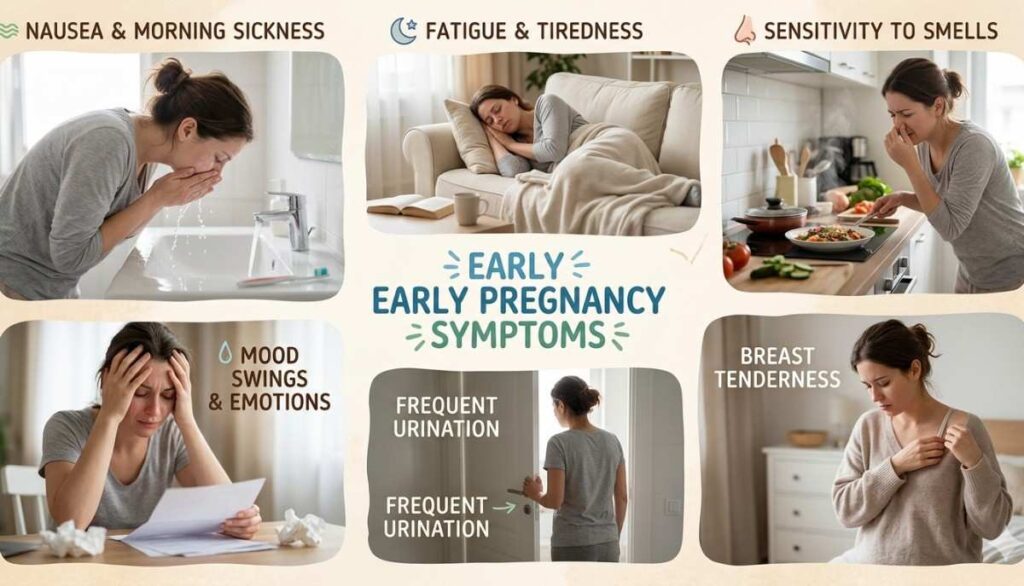
2. Breast Tenderness and Changes
Your breasts might be the first thing that tips you off. Many people describe a heaviness, fullness, or tenderness in their breasts that feels more intense than the usual premenstrual soreness. The nipples may become more sensitive, darker, or larger. Tiny bumps called Montgomery tubercles — the small raised spots around the nipple — may become more prominent.
This happens because rising estrogen and progesterone levels cause increased blood flow and changes in the breast tissue, preparing your body for eventual breastfeeding. It usually starts within one to two weeks of conception and often eases as the first trimester progresses.
3. Fatigue
Bone-deep, fall-asleep-on-the-couch-at-7pm fatigue.
First-trimester exhaustion is real and it is relentless for many people. Your body is doing something extraordinary — growing an entirely new human being from scratch — and the energy demands are significant. Rising progesterone levels have a sedative effect, your blood volume is increasing, your heart is working harder, and your metabolism is shifting.
The result? You feel tired in a way that a good night’s sleep doesn’t fully fix. This is normal. It’s not a sign that something is wrong. Most people find that energy levels improve considerably in the second trimester.
If you’re pregnant and exhausted: rest when you can. You’re not being lazy. You’re growing a person.
4. Nausea (With or Without Vomiting)
Commonly called “morning sickness,” this symptom is somewhat misleadingly named — it can strike at any hour of the day or night. For many people, it’s more of an all-day low-grade queasiness, punctuated by sudden waves of more intense nausea.
Nausea typically begins around weeks 6 to 8, though some people feel it earlier. It’s thought to be triggered primarily by hCG levels, which peak in the first trimester, as well as heightened sensitivity to smells and a slowdown in digestion caused by progesterone.
About 70–80% of pregnant people experience nausea during the first trimester. A smaller percentage experience hyperemesis gravidarum — a severe form of pregnancy nausea involving persistent vomiting that can lead to dehydration and weight loss. This requires medical attention.
For typical morning sickness, some strategies that help:
- Eating small, frequent meals rather than large ones
- Keeping plain crackers or dry toast by the bed to eat before getting up
- Staying hydrated, even if just sipping gently
- Avoiding triggers like strong smells, greasy food, or an empty stomach
- Ginger — in tea, chews, or supplements — has some evidence behind it
Nausea generally peaks around weeks 8 to 10 and begins to ease by weeks 12 to 16 for most people, though some continue experiencing it into the second trimester.
5. Implantation Bleeding
Around the time of implantation — usually 6 to 12 days after conception — some people notice light spotting or very light bleeding. This is called implantation bleeding, and it can be easy to confuse with an early, light period.
The difference is usually in the colour (implantation bleeding tends to be pink or brownish rather than bright red), the flow (lighter and shorter than a period), and the timing (slightly earlier than your expected period would be).
Not everyone experiences implantation bleeding, and its absence doesn’t indicate anything is wrong. But if you notice unexplained spotting around the time your period might be due, it could be a sign.
6. Frequent Urination
If you’ve suddenly found yourself making many more trips to the bathroom — especially at night — early pregnancy may be the reason.
During pregnancy, your kidneys process more blood than usual, which means they produce more urine. The growing uterus also begins to press on the bladder, reducing its capacity. Hormonal changes play a role too.
This symptom often appears in the first few weeks after conception and tends to intensify as pregnancy progresses. It’s inconvenient, but it’s normal.
7. Mood Swings
One moment you’re fine; the next you’re crying at an advert featuring a puppy. Or you’re inexplicably irritated by the sound of someone chewing.
Rapid hormonal changes in early pregnancy — particularly the surges in estrogen and progesterone — can affect the brain’s chemistry and mood regulation. Many people also experience heightened anxiety, emotional sensitivity, or low mood alongside the more positive excitement of early pregnancy.
If you’re feeling emotionally wobbly, you’re not being dramatic. This is biology. Talk to people you trust, take care of your nervous system, and reach out to a healthcare provider if you’re experiencing persistent sadness or anxiety that feels hard to manage.
8. Heightened Sense of Smell
Suddenly unable to stand the smell of coffee you’ve been drinking happily for years? Finding your partner’s cologne unbearable? This is a very commonly reported early pregnancy symptom, though its exact cause isn’t fully understood.
One theory is that the heightened sense of smell is an evolutionary adaptation — a way of steering pregnant people away from foods or substances that might be harmful. Whatever the mechanism, it can be intensely disruptive and often feeds into nausea.
If smells are making you feel sick, try to identify your triggers and minimise exposure where possible. Breathing through your mouth rather than your nose, and keeping windows open for ventilation, can also help.
9. Food Aversions and Cravings
Closely related to the smell sensitivity, food aversions are remarkably common in early pregnancy. Foods you previously loved — meat, eggs, coffee, spicy food — may suddenly seem revolting. In their place, you might develop strong cravings for other foods, sometimes surprising ones.
Cravings and aversions are thought to be connected to hormonal changes and, in the case of aversions, potentially to the body’s way of avoiding certain foods during a vulnerable developmental period. Cravings for non-food items (ice, clay, chalk, or dirt) — a condition called pica — should always be reported to a doctor, as they can indicate nutritional deficiencies.
As long as your aversions aren’t leading to severe restriction and your cravings aren’t for harmful substances, these are normal features of the first trimester. Eat what you can stomach and try to get your nutrients in where possible.
10. Bloating and Gas
Early pregnancy can leave you feeling puffy and gassy in a way that’s reminiscent of PMS — but often more pronounced. Progesterone relaxes smooth muscle throughout the body, including the digestive tract, which slows digestion. This leads to bloating, gas, and sometimes constipation.
It’s not glamorous, but it’s normal. Eating slowly, avoiding gas-producing foods like beans and cruciferous vegetables if they’re making things worse, staying hydrated, and doing gentle movement can all help.
11. Constipation
Following on from the above: constipation is common in early pregnancy for the same reason — progesterone slowing down the digestive system. This can sometimes be compounded by prenatal vitamins, particularly iron supplements.
Adequate water intake, fibre from fruits, vegetables and whole grains, and gentle exercise like walking all support bowel health during pregnancy. Speak to your doctor before taking any laxatives.
12. Headaches
Some people experience increased headaches in early pregnancy. These are thought to be related to hormonal changes, increased blood volume, dehydration, caffeine reduction (especially if you’ve cut back after finding out you’re pregnant), and fatigue.
Staying well hydrated, getting regular rest, and maintaining regular small meals can help manage pregnancy headaches. Paracetamol (acetaminophen) is generally considered safe in pregnancy for pain relief; ibuprofen and aspirin should be avoided unless specifically advised by a doctor.
13. Dizziness and Light-Headedness
Feeling dizzy when you stand up quickly, or occasionally light-headed during the day, is another common early pregnancy experience. This happens because your cardiovascular system is adapting — your blood volume is increasing, blood vessels are dilating, and blood pressure often drops slightly in the first trimester.
Standing slowly, staying hydrated, and not skipping meals all help. If dizziness is severe or accompanied by vaginal bleeding or abdominal pain, contact your healthcare provider promptly.
14. Slight Cramping
Mild cramping in very early pregnancy can feel similar to period cramps, which often causes confusion and anxiety. This cramping can be caused by implantation, the uterus beginning to stretch and change, or increased blood flow to the pelvic area.
Mild, occasional cramping without bleeding is generally normal in early pregnancy. However, severe cramping, cramping that is one-sided, or cramping accompanied by bleeding should always be evaluated by a doctor, as these can be signs of complications such as miscarriage or ectopic pregnancy.
15. Basal Body Temperature Staying Elevated
If you’ve been tracking your basal body temperature (BBT) as part of fertility awareness, you may notice that your temperature doesn’t drop as it normally would after ovulation. If BBT stays elevated for more than 18 days after ovulation, it’s a strong indicator of pregnancy.
This is because progesterone — which keeps BBT elevated after ovulation — remains high in early pregnancy rather than dropping as it would if you weren’t pregnant.
Symptoms That Are Less Often Talked About
Beyond the well-known ones, some people report:
- Metallic taste in the mouth — a strange, persistent metallic sensation, thought to be related to hormonal changes
- Excess saliva — sometimes accompanying nausea
- Acne or skin changes — hormonal fluctuations can trigger breakouts
- Vivid dreams — many pregnant people report unusually vivid or intense dreams, possibly related to hormonal changes and disrupted sleep
- Nasal congestion — increased blood flow can cause swelling of the mucous membranes
- Veins becoming more visible — especially on the breasts and abdomen, due to increased blood volume
What If I Have No Symptoms
This is something many people worry about, particularly those who’ve read about the wealth of symptoms pregnancy can bring and are experiencing very little.
Here’s the reassuring truth: a lack of noticeable symptoms does not mean anything is wrong. Every body is different. Every pregnancy is different. Some people genuinely have very mild or undetectable symptoms, particularly in the very early weeks.
Symptom intensity is not a measure of how healthy a pregnancy is.
If you’ve had a positive pregnancy test and are concerned about a sudden disappearance of symptoms after they were previously present, speak with your healthcare provider — not because this always signals a problem, but because it can occasionally warrant investigation, and your peace of mind matters.
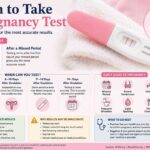
When to Take a Pregnancy Test
If you’re experiencing several of the symptoms above and your period is late, taking a home pregnancy test is the logical next step.
Home pregnancy tests work by detecting hCG in your urine. Most are accurate from the first day of a missed period, and some early-response tests can detect pregnancy a few days before that.
For the most accurate result:
- Use the first urine of the morning (it’s most concentrated)
- Read the result within the timeframe specified on the packaging
- If you get a negative result but your period still doesn’t arrive, test again in a few days
A positive test, no matter how faint the second line, means hCG is present — and hCG is only produced in pregnancy.
When to See a Doctor
You should make an appointment with your GP or midwife as soon as you get a positive pregnancy test. They’ll confirm the pregnancy, discuss your medical history, and arrange early pregnancy care — including your dating scan, typically around weeks 10 to 14.
Seek urgent medical attention if you experience:
- Heavy vaginal bleeding
- Severe abdominal pain, especially one-sided pain
- Shoulder tip pain (which can indicate internal bleeding from an ectopic pregnancy)
- Severe vomiting that prevents you from keeping any fluids down
- Fainting or severe dizziness
- High fever
These symptoms need to be assessed promptly.
A Note on the Emotional Side
Early pregnancy — whether planned, unexpected, or the result of a long journey to conceive — comes with a complex emotional landscape. Excitement, anxiety, joy, fear, and disbelief can all coexist, sometimes within the same hour.
There is no right way to feel. However you’re feeling, it’s valid. Give yourself space to process it, lean on people you trust, and don’t hesitate to speak to a healthcare professional if you’re struggling emotionally as well as physically.
The Bottom Line
Early pregnancy symptoms are your body’s way of signalling that something remarkable is happening inside it. From the subtle (a metallic taste, slightly sore breasts) to the unmistakable (overwhelming nausea, a missed period), these signs are the result of rapid hormonal changes as your body shifts into a new mode entirely.
Not everyone will experience every symptom. Not everyone will experience any. What matters is paying attention to your body, taking a test when you suspect you might be pregnant, and connecting with good healthcare support early.
If you’re in the early days of pregnancy — or wondering if you might be — we hope this guide has given you some clarity, and a little comfort too.
FAQ’s
Q: What are the very first signs of pregnancy?
Breast tenderness, fatigue, light spotting (implantation bleeding), mild cramping, and a heightened sense of smell are often the earliest signs. Some people also notice a metallic taste or unusual emotional sensitivity. These occur because hCG and progesterone begin rising shortly after the fertilised egg implants — usually 6–12 days after conception.
Q: How early can pregnancy symptoms start?
As early as 1–2 weeks after conception, around implantation. Most people notice signs around weeks 4–6 of pregnancy. Some don’t feel anything until week 8 or later — that’s completely normal too.
Q: Can I experience pregnancy symptoms before a missed period?
Yes — implantation bleeding, breast soreness, fatigue, and mild nausea can all appear before your period is due. They’re easy to confuse with PMS, though. Home tests are most reliable from the first day of a missed period; testing earlier risks a false negative.
Q: How soon after sex can pregnancy symptoms appear?
Conception can happen within 12–24 hours of ovulation, and implantation takes another 6–12 days. Symptoms begin after implantation, so the absolute earliest you’d notice anything is about 1 week after conception — though most people won’t feel symptoms until weeks 4–6.
Q: What does early pregnancy fatigue feel like?
A heavy, bone-deep tiredness that sleep doesn’t fully fix. It’s driven by rising progesterone and the metabolic demands of early pregnancy, and usually improves around weeks 12–14.
Q: Can I be pregnant and have no symptoms at all?
Yes. Many people have minimal or no symptoms in the first trimester. Absence of symptoms doesn’t mean something is wrong — what matters is a positive test, not how you feel.
Q: When does morning sickness start and end?
Nausea typically begins around weeks 6–8, peaks at weeks 8–10, and eases by weeks 12–16 for most people. Some experience it into the second trimester; a small number (those with hyperemesis gravidarum) need medical treatment throughout pregnancy.
Q: Why is it called morning sickness if it happens all day?
It’s a misnomer. Nausea can strike any time — morning, afternoon, or night. The name stuck because symptoms are often worst on an empty stomach, which typically means morning, but most people experience it throughout the day.
Q: Can certain foods help with early pregnancy nausea?
Bland foods like crackers, dry toast, and bananas tend to be well-tolerated. Eating small amounts frequently, choosing cold foods over hot, and trying ginger (tea, chews, or supplements) can all help. Vitamin B6 is also commonly recommended by doctors.
Q: Is severe morning sickness dangerous?
Standard morning sickness isn’t dangerous if you’re keeping some fluids down. But if you can’t keep anything down for 24+ hours or are losing weight rapidly, see a doctor — this may be hyperemesis gravidarum, which is treatable and shouldn’t be pushed through.
Q: When is the best time to take a pregnancy test?
From the first day of a missed period, using first morning urine. Some early-response tests work 4–5 days before a missed period, but the earlier you test, the higher the chance of a false negative.
Q: Can I have a negative pregnancy test and still be pregnant?
Yes, if you tested too early. hCG levels may still be below the detection threshold. Test again in 3–5 days if your period doesn’t arrive. Still negative? Your doctor can run a blood test, which detects lower hCG levels than urine tests.
Q: How accurate are home pregnancy tests?
Around 99% accurate when used correctly from the day of a missed period. The most common errors are testing too early or using diluted urine. A faint second line is still a positive — any hCG detected means pregnancy.
Q: What’s the difference between implantation bleeding and a period?
Implantation bleeding is lighter (spotting only), shorter (1–2 days vs. 3–7), and pinkish or brownish rather than bright red. It occurs 6–12 days after conception — slightly earlier than an expected period. Not everyone experiences it.
Q: Is cramping in early pregnancy normal?
Mild, occasional cramping is common and usually caused by implantation or the uterus expanding. It’s generally nothing to worry about without bleeding. Severe, one-sided, or cramps paired with bleeding need prompt medical attention — they can signal miscarriage or ectopic pregnancy.
Q: What does implantation cramping feel like?
A mild, pulling or tingling sensation in the lower abdomen — lighter and shorter than period cramps. It may come and go over a few hours. Many people feel nothing at all.
Q: Can stress cause pregnancy-like symptoms?
Yes — stress can delay a period, trigger fatigue, nausea, and bloating, all of which mimic early pregnancy. If you’ve had unprotected sex, take a test to rule it out. Stress alone can’t produce a positive pregnancy test.
Q: Is it safe to exercise during early pregnancy?
For most uncomplicated pregnancies, yes. Walking, swimming, and prenatal yoga are great choices. Ease off if you’re spotting or cramping, avoid high-impact or contact sports, and always check with your doctor or midwife.
Q: What should I avoid in early pregnancy?
Alcohol, smoking, raw/undercooked meat and fish, unpasteurised dairy, high-mercury fish, and raw eggs. Cap caffeine at 200mg/day. Avoid ibuprofen and aspirin — paracetamol (acetaminophen) is the safer choice for pain relief.
Q: When should I call a doctor during early pregnancy?
Seek prompt care for heavy bleeding, severe or one-sided abdominal pain, shoulder tip pain, inability to keep fluids down, fainting, or high fever. For anything less urgent, book your first prenatal appointment as soon as you get a positive test.
Q: Are pregnancy symptoms worse with twins?
Often, yes — higher hCG with multiples can intensify nausea, fatigue, and breast tenderness. But it varies widely. An early ultrasound around weeks 6–8 is the only way to confirm twins.
Q: Do pregnancy symptoms differ with boy vs girl babies?
No reliable evidence supports this. Folk theories (girls cause worse nausea, etc.) haven’t held up in clinical research. Baby sex can only be confirmed through genetic testing or an anatomy scan around weeks 18–20.
Sources / References
- National Health Service (NHS) – Symptoms of Pregnancy
- National Institute of Child Health and Human Development (NICHD) – Pregnancy Overview
- American College of Obstetricians and Gynecologists (ACOG) – Pregnancy FAQ
- MedlinePlus – Pregnancy
- Centers for Disease Control and Prevention (CDC) – Pregnancy Basics
- World Health Organization (WHO) – Maternal Health
Disclaimer: This article is intended for informational purposes only and does not constitute medical advice. Always consult a qualified healthcare provider with any questions or concerns about your pregnancy.