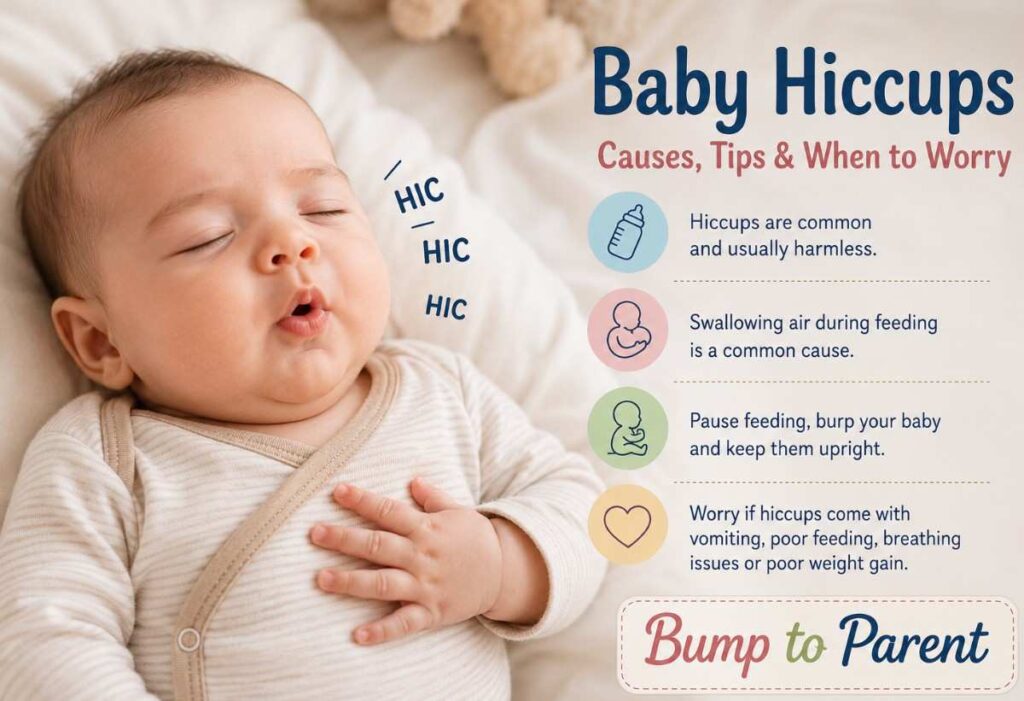

Baby hiccups are one of those tiny newborn behaviors that can make new parents stop and wonder, “Is my baby okay?” The little rhythmic “hic, hic, hic” sounds can happen after feeding, during sleep, or seemingly for no reason at all. They can even begin before birth, which is why some parents remember feeling their baby hiccupping during pregnancy.
The good news is that baby hiccups are usually normal and harmless. Newborns and young infants commonly experience hiccups because their feeding patterns, digestive systems, and nervous systems are still developing. In most cases, hiccups disappear on their own without treatment.
However, frequent hiccups can sometimes occur alongside feeding difficulties or symptoms of reflux. Understanding why baby hiccups happen, what you can safely do, and which warning signs deserve medical attention can make those first months much less stressful.
What Are Baby Hiccups?
A hiccup is an involuntary contraction or spasm of the diaphragm, the large muscle involved in breathing. When the diaphragm suddenly contracts, air is drawn in and the vocal cords close quickly, producing the familiar “hic” sound.
Babies can develop hiccups at any age, including before birth. After delivery, they may occur particularly often during or shortly after feeding.
Unlike adults, babies usually do not find ordinary hiccups particularly uncomfortable. In fact, pediatric guidance notes that hiccups often concern parents more than they bother the baby.
Why Do Babies Get Hiccups?
There is not always one specific cause of baby hiccups. Several normal processes can trigger the diaphragm.
1. Swallowing Air During Feeding
Babies can swallow air while breastfeeding or bottle-feeding. If too much air enters the stomach, the stomach can become distended and may irritate the diaphragm, contributing to hiccups.
2. Feeding Too Quickly
When babies are very hungry, they may suck rapidly and swallow more air. Feeding while a baby is already crying or fussing can also increase swallowed air. Pausing feeding when a baby becomes upset because continued feeding while crying can lead to even more air swallowing.
3. A Full Stomach
A baby’s stomach is small, so even a relatively modest amount of milk can make it feel full. Overfeeding or feeding very quickly may contribute to stomach expansion and hiccups.
4. Normal Immaturity of the Digestive System
Young babies are still developing coordination between breathing, swallowing, and digestion. This is one reason hiccups, burping, spit-up, and other digestive sounds are so common during infancy.
5. Reflux
Reflux occurs when stomach contents move back toward the esophagus. Hiccups can occur with reflux, especially around feeding time. However, hiccups by themselves do not necessarily mean a baby has reflux disease. Reflux is more concerning when it occurs with symptoms such as frequent vomiting, feeding difficulty, irritability, coughing, or poor weight gain.
Are Baby Hiccups Normal?
Yes. Occasional hiccups are considered a normal part of infancy.
Healthy newborns make many unusual sounds and movements, including hiccups, sneezes, grunts, sighs, and gurgling noises. These behaviors are often part of normal newborn development.
If your baby is feeding normally, gaining weight appropriately, breathing comfortably, sleeping normally, and otherwise behaving like themselves, occasional hiccups are generally not something to worry about.
How Long Do Baby Hiccups Last?
Baby hiccups can last for a few minutes or sometimes longer. There is no single “normal” duration that applies to every baby.
Some babies may have hiccups several times a day, while others rarely experience them. What matters more than the exact number of episodes is whether your baby seems comfortable and whether hiccups are accompanied by other symptoms.
If your baby continues to feed well and seems comfortable, hiccups usually do not require medical treatment.
Baby Hiccups After Feeding
Hiccups after feeding are particularly common. Feeding changes the size and contents of the stomach, and babies may also swallow air while sucking.
If hiccups begin during a feeding, you can pause the feeding, change your baby’s position, and try to burp them. The American Academy of Pediatrics recommends allowing the baby to relax before continuing. If hiccups disappear, you can generally resume feeding.
Best Position for Baby Hiccups
The best position is usually an upright position. Hold your baby against your chest with their head supported over your shoulder, keeping their body comfortably upright. Gently pat or rub their back to help release swallowed air.
You can also try:
- Upright on your lap: Sit your baby upright on your lap, supporting their head, neck, and chest with one hand while gently rubbing their back.
- Pause during feeding: If hiccups start while feeding, stop briefly and allow your baby to settle before continuing.
- Keep baby upright after feeding: Holding your baby upright for about 10–15 minutes after feeding may help reduce spit-up and feeding-related discomfort.
Important: Never place a baby face-down or prop them in an inclined position to treat hiccups. For sleep, always place your baby on their back on a firm, flat, separate sleep surface, even if they have hiccups or reflux.
How to Stop Baby Hiccups Safely?
Most baby hiccups stop naturally, so you do not have to eliminate every episode. Still, if your baby seems bothered or hiccups are interrupting a feeding, a few gentle approaches may help.
1. Pause the Feeding
If hiccups start while your baby is feeding, temporarily stop and give your baby a chance to settle. Continuing to feed while a baby is fussing can cause additional air swallowing.
2. Burp Your Baby
Burping can help release swallowed air and may reduce feeding-related hiccups.
For bottle-fed babies, the American Academy of Pediatrics suggests trying to burp after approximately 2 to 3 ounces (60 to 90 mL). Breastfed babies can often be burped when switching breasts, although some breastfed babies swallow very little air and may not need to burp every time.
3. Keep Your Baby Upright After Feeding
Holding your baby upright for a short period after feeding may help reduce spit-up and discomfort. Keeping babies upright for about 10 to 15 minutes after feeding.
Remember that this is different from sleep positioning. Babies should still be placed on their backs on a firm, flat sleep surface for sleep, even if they experience reflux or spit-up.
4. Feed Before Your Baby Becomes Extremely Hungry
A baby who is extremely hungry may suck more quickly and swallow additional air. If your baby’s hiccups frequently happen during feeding, offering feeds when your baby is calm may help.
5. Check the Feeding Position
A more upright feeding position may help some babies swallow less air. Make sure your baby’s head and neck are properly supported during feeding.
For bottle-feeding, check that the nipple flow is appropriate for your baby’s age and feeding ability. If your baby is gulping, coughing, choking, or struggling during feeds, discuss the feeding technique with your pediatrician or feeding professional.
6. Give Your Baby Time
Sometimes the best treatment is simply waiting.
Most ordinary baby hiccups stop without intervention. Trying too many techniques can actually make a baby more upset, so gentle handling is preferable.
What Not to Do for Baby Hiccups?
Because hiccups are usually harmless, parents do not need to use aggressive methods to stop them.
Avoid frightening, startling, shaking, or startling your baby intentionally. Never hold your baby’s breath or apply pressure to the chest or neck.
You should also avoid giving a young baby food, water, herbal remedies, or other products specifically to stop hiccups unless your pediatrician recommends them.
For babies who are not yet developmentally ready for water or other foods, introducing something simply to stop hiccups is unnecessary and may be inappropriate.
Can You Give Water to a Baby for Hiccups?
Parents sometimes hear that a few sips of water can stop hiccups. However, young babies generally do not need water as a treatment for hiccups.
Breast milk or infant formula should remain the primary source of nutrition for young infants unless a healthcare professional recommends otherwise.
Rather than trying to treat hiccups with water, focus on appropriate feeding, burping, and keeping your baby comfortable.
Baby Hiccups and Reflux
Hiccups can sometimes occur with gastroesophageal reflux. Infant reflux is common because the muscle between the esophagus and stomach is still developing. Many babies eventually outgrow ordinary reflux. (nhs.uk)
Hiccups alone do not mean your baby has GERD.
Look for other symptoms, such as:
- Frequent spit-up or vomiting
- Coughing during or after feeds
- Fussiness during feeding
- Back arching during or after feeding
- Repeated swallowing or gulping
- Refusing feeds
- Difficulty feeding
- Poor weight gain
- Significant discomfort after feeding
If hiccups repeatedly occur alongside these symptoms, talk with your baby’s pediatrician.
Baby Hiccups and Spit-Up: Are They the Same?
No. Hiccups and spit-up are different things, although they can happen around the same time.
Hiccups are caused by involuntary contractions of the diaphragm.
Spit-up occurs when milk or stomach contents come back up through the esophagus and mouth.
Spit-up is also very common during infancy. A baby may spit up because they have eaten more than their stomach can comfortably hold or because milk comes up during burping.
Occasional spit-up in a comfortable, growing baby is usually not concerning. However, repeated vomiting, feeding problems, or poor weight gain should be discussed with a healthcare professional.
When Should You Worry About Baby Hiccups?
Most hiccups are harmless, but parents should pay attention to the baby’s overall condition rather than focusing only on the hiccups.
Contact your pediatrician if your baby’s hiccups are accompanied by:
- Difficulty feeding
- Refusal to feed
- Frequent or forceful vomiting
- Significant irritability
- Poor weight gain
- Persistent coughing during feeds
- Breathing problems
- Unusual sleepiness
- A noticeable change in normal behavior
The NHS recommends seeking medical advice when a baby has difficulty feeding, refuses feeds, repeatedly brings milk back up and appears uncomfortable, or is not gaining weight as expected. (nhs.uk)
For newborns, changes in feeding or behavior deserve particular attention. HealthyChildren.org advises contacting a doctor when a newborn under 1 month looks or acts abnormal or has a significant change in feeding.
When Are Baby Hiccups an Emergency?
Hiccups themselves are rarely an emergency. However, a baby who has hiccups along with serious symptoms may need urgent medical attention.
Seek emergency help if your baby has severe difficulty breathing, becomes blue or gray around the lips or face, is extremely difficult to wake, is unusually weak, or appears seriously ill.
The important point is that the associated symptoms—not ordinary hiccups—are what make the situation concerning.
Can Babies Sleep With Hiccups?
In most cases, yes. If your baby is comfortable, breathing normally, and otherwise well, hiccups generally do not require you to wake the baby.
Do not change safe-sleep practices simply because your baby has hiccups or reflux. Babies should be placed on their backs on a firm, flat sleep surface. Elevating the mattress, using pillows, or placing a baby in an inclined sleep position can be unsafe.
Do Baby Hiccups Mean the Baby Is Hungry?
Not necessarily.
Hiccups can happen around feeding time, but they are not a reliable sign of hunger. A baby may develop hiccups after feeding because of swallowed air, a full stomach, or normal digestive activity.
Instead of feeding solely because your baby has hiccups, look for normal hunger cues such as rooting, bringing hands toward the mouth, or becoming increasingly alert and interested in feeding.
Do Breastfed Babies Get Hiccups?
Yes. Breastfed babies can absolutely get hiccups.
They may swallow air while nursing, especially if they are feeding rapidly or becoming upset. However, some breastfed babies swallow relatively little air and may not need frequent burping.
If hiccups regularly occur while breastfeeding, consider discussing positioning, latch, milk flow, and feeding patterns with a pediatrician or qualified lactation professional.
Do Formula-Fed Babies Get More Hiccups?
Both breastfed and formula-fed babies can experience hiccups.
HealthyChildren.org notes that swallowing air during feeding occurs in both breastfed and bottle-fed infants and is seen more often with bottle feeding.
This does not mean formula feeding is unhealthy or that every bottle-fed baby will have frequent hiccups. Feeding technique and the individual baby are more important than assuming one feeding method will prevent hiccups.
How Can Parents Prevent Frequent Baby Hiccups?
You may not be able to prevent every episode, and you do not need to.
However, if your baby frequently develops hiccups around feeding, try these practical habits:
- Feed your baby when they are calm rather than extremely hungry.
- Pause during feeding if your baby becomes fussy.
- Burp your baby during and after feeding when appropriate.
- Avoid rushing feeds.
- Keep your baby comfortably upright after feeding.
- Pay attention to signs of overfeeding.
- Discuss frequent feeding difficulties with your pediatrician.
These approaches focus on reducing swallowed air and feeding-related discomfort rather than trying to force the hiccups to stop.
FAQ’s
Why does my baby get hiccups after feeding?
Hiccups after feeding may happen because your baby swallows air, feeds quickly, or has a full stomach. Burping and feeding more slowly may help.
Are baby hiccups a sign of reflux?
Hiccups can occur with reflux, but hiccups alone do not mean your baby has reflux. Watch for frequent spit-up, vomiting, feeding difficulties, or poor weight gain.
Can babies hiccup while sleeping?
Yes. Babies can hiccup while asleep, and occasional hiccups usually do not require waking them.
Are baby hiccups painful?
Normal hiccups generally do not cause significant pain. If your baby seems very uncomfortable, cries excessively, arches their back, or refuses feeds, contact a pediatrician.
Should I worry if my baby gets hiccups every day?
Daily hiccups can be normal. If your baby is feeding well, growing normally, breathing comfortably, and otherwise acting normally, frequent hiccups are usually not concerning.
Can I use gripe water to stop baby hiccups?
Hiccups usually do not require gripe water or other remedies. Do not give supplements or digestive products to a baby unless recommended by a healthcare professional.
Why does my newborn hiccup so much?
Newborns have developing digestive and nervous systems and may swallow air during feeding. These factors can make hiccups particularly common during the first months of life.
Should I burp my baby when they have hiccups?
Yes, you can gently try to burp your baby, particularly if hiccups started during or shortly after feeding. If your baby becomes comfortable, allow the hiccups to pass naturally.
Can overfeeding cause baby hiccups?
A very full stomach may contribute to hiccups. Feeding your baby at a comfortable pace and paying attention to hunger and fullness cues may help reduce feeding-related episodes.
Can I lay my baby down after hiccups?
If your baby is comfortable, you can put them down for sleep following safe-sleep recommendations. Always place a baby on their back on a firm, flat sleep surface.
Are frequent hiccups dangerous for newborns?
Frequent hiccups by themselves are usually not dangerous. The concern is when they occur together with symptoms such as breathing problems, repeated vomiting, feeding difficulties, or poor growth.
What is the best way to prevent baby hiccups?
You cannot always prevent hiccups, but feeding your baby calmly, avoiding rushed feeds, burping when appropriate, and keeping your baby upright briefly after feeding may reduce feeding-related hiccups.
Is it normal for a newborn to have hiccups every day?
Yes. Some newborns have hiccups frequently, even daily. If your baby is feeding well, behaving normally, breathing comfortably, and growing appropriately, frequent uncomplicated hiccups are generally not a reason for concern.
Should I stop feeding my baby when they get hiccups?
If hiccups begin during a feed, you can pause briefly, change your baby’s position, and try burping. Once the hiccups settle, feeding can generally resume.
When should I call a doctor about baby hiccups?
Contact your pediatrician if hiccups are accompanied by feeding difficulties, repeated vomiting, poor weight gain, significant discomfort, coughing, breathing problems, or unusual behavior. For a newborn, any significant change in feeding or behavior deserves prompt attention.
Final Thoughts
Baby hiccups can look dramatic, especially when you are caring for a newborn for the first time, but they are usually a normal part of infancy. They can happen because babies swallow air, feed quickly, have a full stomach, or simply have developing digestive and nervous systems.
In most situations, the best approach is surprisingly simple: stay calm, pause feeding if necessary, burp your baby, keep them comfortable, and let the hiccups pass naturally.
Parents should avoid trying forceful or unproven methods to stop hiccups. More importantly, pay attention to the whole picture. Hiccups accompanied by feeding difficulties, repeated vomiting, poor growth, breathing problems, unusual sleepiness, or significant changes in behavior deserve medical attention.
When in doubt—particularly with a very young newborn—it is appropriate to contact your baby’s pediatrician. A healthcare professional can assess your baby’s feeding, growth, reflux symptoms, and overall health rather than relying on hiccups alone.
Sources / References:
- American Academy of Pediatrics – HealthyChildren.org: Baby Burping, Hiccups & Spit-Up
- American Academy of Pediatrics – HealthyChildren.org: How Your Newborn Behaves
- NHS: Reflux and Bottle Feeding
- Cleveland Clinic: What to Do When Your Baby Has the Hiccups
- HealthyChildren.org: Newborn Illness – How to Recognize It
About the Author:
Written by: Kirti Solanki, Health Content Researcher
Kirti Solanki creates reader-friendly health content based on reputable medical and public-health references, with a focus on making complex health information easier for families to understand.
Disclaimer:
This article is for general educational purposes only and does not replace advice, diagnosis, or treatment from a qualified pediatrician. Seek professional medical care if your baby has concerning symptoms or you are worried about their health.
Also Read: