
Giving birth is one of the biggest physical and emotional experiences a person can go through. Whether you have a vaginal delivery or a C-section, your body needs time to heal. At the same time, you are adjusting to feeding, soothing, and caring for a newborn, often while getting very little sleep.
So, how long should you rest after delivery?
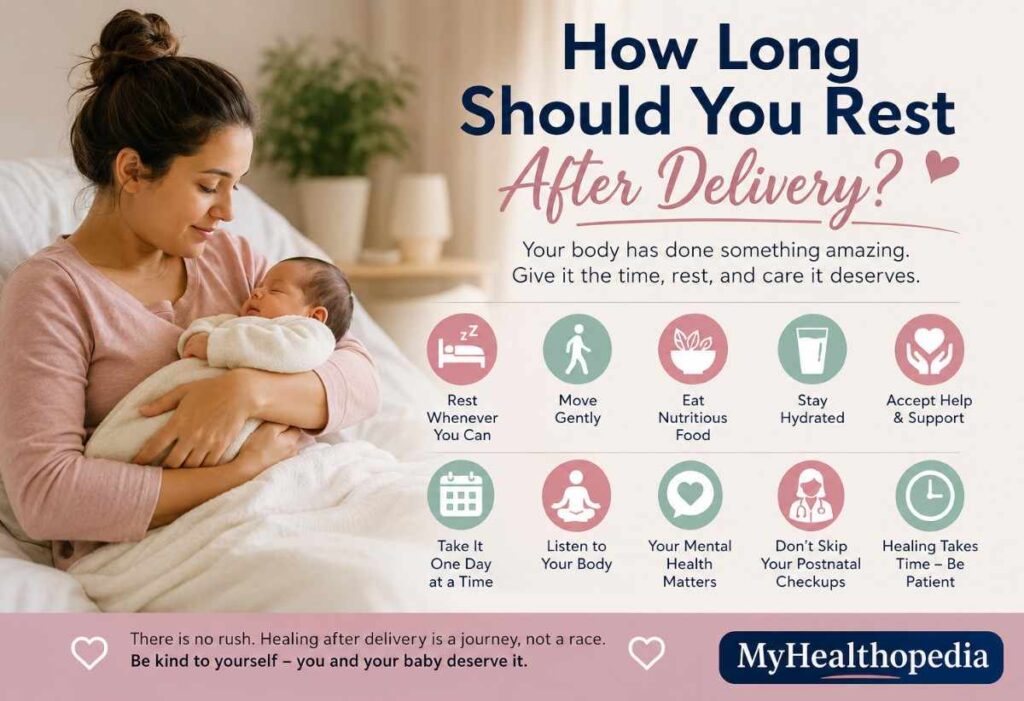
There is no single number of days that works for every new mother. Most people need several weeks of gradual recovery, and the first 6 weeks are particularly important. However, postpartum recovery does not necessarily end at six weeks. Some changes, including pelvic floor weakness, abdominal muscle recovery, fatigue, and emotional adjustment, can take several months.
Rest does not mean staying in bed all day. In most uncomplicated deliveries, gentle movement can actually support recovery. The goal is to balance rest, sleep, nutrition, hydration, gentle activity, and help from others.
How Long Should You Rest After Delivery?
In general, plan to give yourself at least 6 weeks of gradual recovery after childbirth, while understanding that you may need more time depending on how your delivery went.
For a straightforward vaginal birth, light daily activities and gentle walking can usually be introduced as soon as you feel physically ready. More strenuous exercise and high-impact activities should be introduced gradually and according to your healthcare professional’s advice. (nhs.uk)
Recovery after a C-section generally requires additional care because you are healing from major abdominal surgery. You may need several weeks before comfortably returning to many normal activities, and strenuous activity should be avoided until your healthcare provider says it is appropriate. (Mayo Clinic)
The important point is that six weeks is not a deadline for feeling completely normal.
Some women feel considerably better by six weeks, while others continue to experience fatigue, soreness, pelvic floor symptoms, breastfeeding challenges, or emotional changes for longer.
Why Is Rest Important After Giving Birth?
Pregnancy and childbirth place considerable demands on the body. After delivery, your uterus needs to shrink back toward its pre-pregnancy size, tissues damaged or stretched during birth need to heal, hormone levels change rapidly, and your body begins adapting to breastfeeding if you choose to breastfeed.
You may also experience:
- Vaginal bleeding or discharge
- Perineal soreness
- Abdominal cramps
- Breast tenderness
- Muscle soreness
- Fatigue
- Sleep deprivation
- Constipation
- Pelvic floor weakness
- Emotional changes
Postpartum recovery can involve physical symptoms as well as emotional changes, making adequate rest and support an important part of recovery.
Rest gives your body an opportunity to repair itself while helping you conserve energy for newborn care.
How Much Rest Do You Need After a Vaginal Delivery?
After an uncomplicated vaginal birth, you may be able to move around relatively soon. However, being able to walk does not mean you should immediately return to your normal workload.
During the first few days, prioritize:
Sleep and naps: Try to sleep or rest whenever you have an opportunity, especially if nighttime sleep is frequently interrupted.
Short periods of movement: Gentle walking around your home can help prevent excessive stiffness and support circulation.
Avoiding heavy lifting: Give your pelvic floor and abdominal muscles time to recover.
Limiting household work: Cooking, cleaning, laundry, shopping, and other responsibilities can be shared with family members or friends.
Listening to your body: Increased bleeding, pain, dizziness, or exhaustion after activity can be a sign that you are doing too much.
You do not have to prove that you are “back to normal” immediately after having a baby.
How Long Should You Rest After a C-Section?
A C-section requires recovery from both childbirth and abdominal surgery.
You may experience incision pain, abdominal tenderness, fatigue, difficulty getting up, and limited mobility during the early days. ACOG advises people recovering from cesarean birth to limit activities and ask family or friends for help. (ACOG)
Getting enough rest while continuing appropriate movement after a C-section. During the first couple of weeks, lifting anything heavier than the baby may be restricted depending on your medical instructions.
Your recovery may be slower if you experienced:
- A difficult or prolonged labor
- Significant blood loss
- Infection
- High blood pressure complications
- Severe tearing
- A complicated C-section
- Other pregnancy or delivery complications
Your healthcare provider can give you individualized restrictions based on your surgery and recovery.
Is Bed Rest Recommended After Delivery?
For most people, complete bed rest is not routinely recommended after an uncomplicated delivery.
Resting is important, but staying completely inactive for long periods is generally not the goal. Gentle movement, such as walking around the house, can be beneficial when you feel able.
Gentle activity after childbirth and explains that walking, gentle stretching, and pelvic floor exercises can be introduced when you feel ready after a straightforward birth.
After a C-section, gentle movement is also encouraged when medically appropriate because mobility can help reduce the risk of complications such as blood clots. However, you should avoid overexertion and follow your healthcare team’s instructions.
The better approach is relative rest: rest frequently while maintaining gentle, appropriate movement.
A Simple Postpartum Rest Timeline
Every recovery is different, but this general timeline can help you understand what to expect.
| Postpartum Period | What to Focus On |
|---|---|
| First 24–72 hours | Rest, hydration, nutrition, pain management, feeding support and short gentle movements |
| Week 1 | Plenty of rest, short walks, personal hygiene, newborn care and avoiding unnecessary household work |
| Weeks 2–3 | Gradually increase comfortable daily activities while continuing to prioritize sleep and recovery |
| Weeks 4–6 | Continue gradual activity; avoid pushing through pain or significant fatigue |
| Around 6–8 weeks | Postnatal assessment and discussion about exercise, sex, contraception and ongoing symptoms |
| 8–12 weeks | Gradual return toward normal activities depending on recovery and medical advice |
| Beyond 12 weeks | Continue addressing persistent pelvic floor, pain, fatigue or emotional concerns |
Postpartum care beginning early and continuing through the first 12 weeks, rather than treating one appointment as the end of recovery.
What Should You Avoid During the First Few Weeks?
You do not necessarily need to avoid all activity. Instead, avoid activities that place excessive strain on your healing body.
Depending on your delivery and healthcare provider’s advice, this may include:
- Heavy lifting
- High-impact exercise
- Running
- Intense abdominal workouts
- Excessive stair climbing
- Long periods of standing
- Moving heavy furniture
- Doing all household chores yourself
- Exercising through pain
- Ignoring significant bleeding or worsening symptoms
If an activity causes pain, pressure, increased bleeding, dizziness, or significant exhaustion, stop and rest.
When Can You Start Walking After Delivery?
For many women with an uncomplicated vaginal delivery, gentle walking can begin as soon as they feel comfortable.
Walking does not need to mean taking a long outdoor walk. In the beginning, simply walking around your home for a few minutes may be enough.
Start slowly and increase your activity according to how your body responds.
After a C-section, your healthcare team may encourage gentle movement relatively early, but your pace should be guided by your pain level, incision healing, and medical instructions.
The goal is not to reach a certain number of steps. The goal is to move comfortably without overloading your recovering body.
When Can You Exercise After Delivery?
Exercise should be introduced gradually.
For uncomplicated vaginal births, gentle activities such as walking, stretching, and pelvic floor exercises may be appropriate when you feel ready. The NHS recommends seeking advice before returning to high-impact activities such as running or aerobics.
If you had a C-section, extensive vaginal repair, or a complicated delivery, ask your healthcare provider when it is appropriate to begin an exercise program.
Do not feel pressured to exercise simply because you want to lose pregnancy weight. Your initial goal should be healing and rebuilding strength, not rapid weight loss.
How Can You Get More Rest With a Newborn?
“Sleep when the baby sleeps” sounds simple, but it is not always realistic. Babies wake frequently, and there may be feeding, pumping, household chores, or other responsibilities.
Instead, think about creating opportunities for rest.
1. Accept Help
If someone offers to prepare food, wash dishes, do laundry, or hold the baby while you shower, consider accepting the help.
Your support network can make a major difference during postpartum recovery. ACOG specifically highlights the importance of having practical and emotional support during the postpartum period.
2. Reduce Household Expectations
Your home does not need to be perfectly clean.
For the first few weeks, prioritize:
- Your recovery
- Your baby’s basic needs
- Food and hydration
- Sleep and rest
- Essential household tasks
Everything else can wait.
3. Share Nighttime Responsibilities
If possible, share diaper changes, soothing, burping, household tasks, or bottle preparation with your partner or support person.
Even if you are breastfeeding, another person may be able to handle tasks before and after feeding.
Nutrition and Hydration Matter Too
Rest is only one part of postpartum recovery.
Your body needs adequate nutrition to support healing and, if breastfeeding, milk production. Try to include a variety of:
- Protein-rich foods
- Whole grains
- Fruits
- Vegetables
- Healthy fats
- Iron-rich foods
- Calcium-rich foods
- Adequate fluids
Keep water nearby, especially during breastfeeding sessions.
If you had significant blood loss during delivery, ask your healthcare professional whether you need evaluation or treatment for anemia rather than assuming tiredness is simply part of new motherhood.
What If You Still Feel Extremely Tired?
Some fatigue is expected after delivery, especially because newborns often wake throughout the night.
However, extreme or persistent exhaustion deserves attention.
Talk with your healthcare provider if fatigue is severe, worsening, or accompanied by symptoms such as dizziness, shortness of breath, racing heartbeat, unusually heavy bleeding, fever, or significant weakness.
Postpartum fatigue can have many causes, including sleep deprivation, anemia, infection, thyroid problems, mental health conditions, or other medical issues.
Emotional Rest Is Just as Important
Postpartum recovery is not only physical.
You may experience mood swings, crying, irritability, anxiety, or feeling overwhelmed. Hormonal changes, lack of sleep, pain, breastfeeding difficulties, and the enormous adjustment to caring for a newborn can all contribute.
Postpartum mental health deserves attention and that postpartum depression is a serious condition requiring treatment.
If you feel persistently sad, hopeless, unusually anxious, disconnected from your baby, or unable to cope with everyday tasks, contact your healthcare professional.
You do not have to wait until your postpartum checkup to ask for help.
Warning Signs That Need Medical Attention
Resting at home is appropriate for normal recovery, but certain symptoms should not be ignored.
Seek prompt medical advice for symptoms such as:
- Heavy or rapidly increasing vaginal bleeding
- Severe or worsening abdominal or pelvic pain
- Fever or chills
- Foul-smelling vaginal discharge
- Increasing redness, swelling, pain, or drainage from a C-section incision
- Severe headache, especially with vision changes
- Chest pain
- Difficulty breathing
- Fainting or severe dizziness
- New swelling or pain in one leg
- Severe emotional distress
- Thoughts of harming yourself or your baby
Some postpartum complications can become serious quickly. For example, NHS guidance advises contacting a healthcare professional for heavy bleeding, severe pain, wound changes, breathing problems, or leg swelling after a C-section. (nhs.uk)
When Should You Have a Postpartum Checkup?
Postpartum care should not necessarily wait until six weeks.
Contact with an obstetric care provider within the first three weeks after birth, followed by ongoing care as needed and a comprehensive postpartum visit no later than 12 weeks.
The NHS generally recommends a postnatal check around 6 to 8 weeks after birth.
Your appointments may cover:
- Physical recovery
- Blood pressure
- Bleeding
- C-section or vaginal wounds
- Pelvic floor symptoms
- Breastfeeding
- Sleep and fatigue
- Mental health
- Contraception
- Sexual health
- Exercise
- Future pregnancy planning
Do not hesitate to contact your healthcare provider earlier if something does not feel right.
Does Everyone Need the Same Amount of Rest?
No.
A first-time mother with an uncomplicated vaginal delivery may have a very different recovery from someone who had a C-section, severe tearing, postpartum hemorrhage, infection, or other complications.
Even two people with similar deliveries can recover at different speeds.
Factors that can affect recovery include:
- Type of delivery
- Perineal tearing
- C-section incision
- Blood loss
- Pregnancy complications
- Previous health conditions
- Sleep quality
- Breastfeeding demands
- Emotional well-being
- Available family support
- Nutrition
- Overall physical condition
This is why postpartum recovery should be individualized rather than based on a strict calendar.
10 Practical Tips for Resting After Delivery
1. Rest before you become exhausted. Taking short breaks throughout the day can prevent you from reaching complete exhaustion.
2. Keep essential items nearby. Water, snacks, diapers, feeding supplies and medications can be kept within easy reach.
3. Let others handle household chores. Your recovery is more important than keeping everything perfectly organized.
4. Avoid comparing your recovery with someone else’s. Healing times vary significantly.
5. Move gently. Appropriate movement can be part of recovery rather than something you need to avoid completely.
6. Eat regularly. Nutritious meals support healing and energy.
7. Stay hydrated. Keep water available throughout the day.
8. Protect your sleep whenever possible. Ask for help so you can get longer stretches of rest when available.
9. Pay attention to symptoms. Pain, bleeding, dizziness, or exhaustion that worsens with activity should not simply be pushed through.
10. Ask for professional help when needed. Your doctor, midwife, pelvic health physiotherapist, lactation professional, or mental health professional can help with specific postpartum concerns.
Final Thoughts:
So, how long should you rest after delivery?
For most new mothers, the first 6 weeks should be treated as a gradual recovery period, but healing can continue well beyond that. A vaginal delivery may allow a quicker return to gentle activity, while a C-section or complicated birth may require more time and restrictions.
The key is not complete inactivity. Instead, aim for a balance of plenty of rest, gentle movement, nutritious food, hydration, sleep, emotional support, and gradual increases in activity.
Most importantly, do not treat the six-week mark as a deadline. Feeling better at six weeks is wonderful, but needing more time does not mean you are recovering incorrectly.
Your body has spent months growing and supporting a baby and then gone through childbirth. It deserves time, patience, and care.
FAQ’s
Can I do household work after delivery?
Light tasks may be possible, but avoid overexertion and heavy lifting during early recovery. Ask family or friends to help with cooking, cleaning, laundry, and shopping.
How much sleep does a new mother need?
There is no exact postpartum sleep requirement, but getting as much quality sleep and rest as possible is important. Accept help so you can rest when your baby sleeps or when another caregiver is available.
When does the body fully recover after childbirth?
Many physical changes improve during the first 6–12 weeks, but complete recovery can take several months. Recovery varies depending on the type of delivery and individual health.
How long should I avoid heavy lifting after delivery?
The appropriate restriction depends on your delivery and recovery. After a C-section, your healthcare provider may recommend avoiding heavy lifting for several weeks.
When can I resume normal activities after childbirth?
Normal activities should be resumed gradually rather than all at once. Your comfort, symptoms, delivery type, and healthcare provider’s advice should guide your recovery.
Is it normal to feel very tired after giving birth?
Yes, fatigue is common because of physical recovery, hormonal changes, and interrupted sleep. Severe, persistent, or worsening fatigue should be discussed with a healthcare professional.
When should I call a doctor after delivery?
Contact your healthcare provider for heavy bleeding, fever, severe or worsening pain, breathing difficulties, chest pain, severe headache, significant dizziness, leg swelling or pain, wound problems, or concerning emotional symptoms.
Can I climb stairs after delivery?
Occasional stair climbing is usually possible if you feel well, but avoid repeated trips and stop if you experience pain, dizziness, or increased bleeding.
When can I bend down after giving birth?
You can generally bend when comfortable, but move slowly and avoid positions that cause pain or pressure, particularly after a C-section.
Can I sit for long periods after delivery?
Long periods of sitting may increase discomfort, especially after vaginal tearing or a C-section. Change positions regularly and use comfortable support.
How long does vaginal delivery recovery take?
Many women notice significant improvement within the first 6 weeks, although some symptoms and physical changes can take several months to resolve.
Why am I still tired weeks after giving birth?
Interrupted sleep, hormonal changes, breastfeeding, anemia, and the physical demands of childbirth can contribute to fatigue. Persistent or severe tiredness should be discussed with a healthcare professional.
Can I rest too much after giving birth?
Complete inactivity is generally unnecessary after an uncomplicated birth. Gentle movement can support recovery, but the amount of activity should increase gradually.
Sources / References:
- American College of Obstetricians and Gynecologists
- NHS – Keeping Fit and Healthy With a Baby
- Mayo Clinic – Postpartum Care
About the Author:
Written by: Kirti Solanki (Health Content Researcher)
Kirti Solanki is a health content researcher focused on creating reader-friendly, evidence-informed articles covering pregnancy, postpartum health, nutrition, and general wellness. Content is developed using reputable medical and public-health references and is written for educational purposes.
Disclaimer:
This article is for general educational purposes only and does not replace personalized medical advice. Every postpartum recovery is different. Contact your doctor, midwife, or other qualified healthcare professional for advice based on your delivery, symptoms, and medical history.
Also Read: