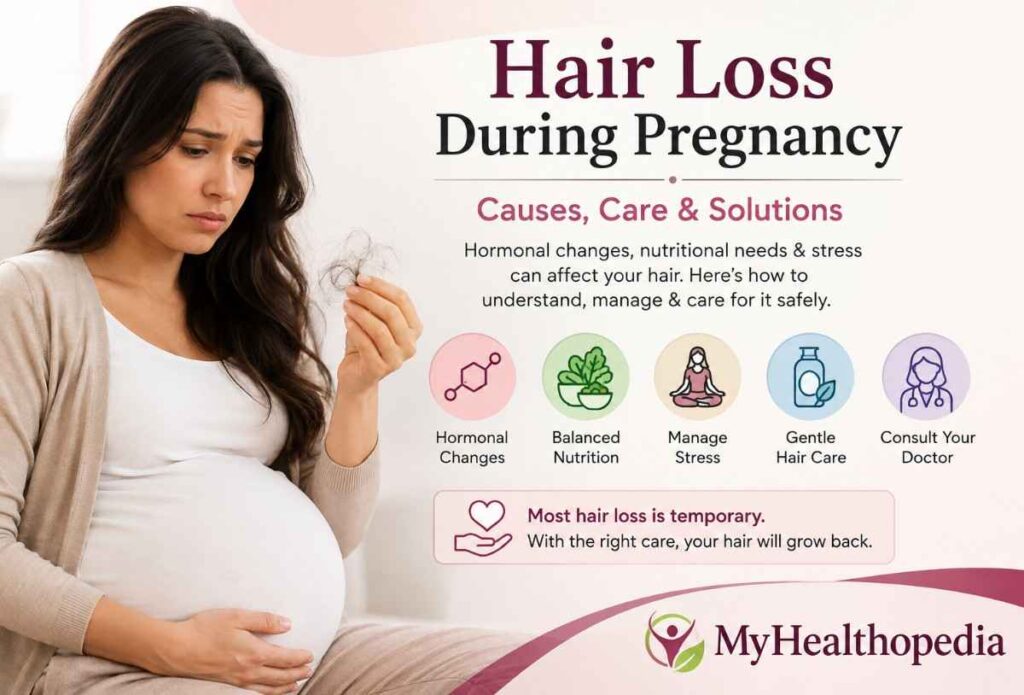

Pregnancy brings many visible changes to the body, from a growing belly and changing skin to thicker or faster-growing hair. For some women, however, pregnancy can bring an unexpected concern: hair loss during pregnancy.
Finding extra strands on your pillow, in the shower drain, or on your hairbrush can be worrying, especially when you are already experiencing so many physical changes. The good news is that changes in hair growth can occur during pregnancy because of hormonal shifts, nutritional demands, stress, thyroid problems, iron deficiency, and other factors. The pattern and timing of the hair loss can help determine what may be happening.
It is also important to distinguish hair shedding during pregnancy from postpartum hair loss. Many women actually notice increased shedding several months after giving birth rather than during pregnancy. This guide explains the possible causes of hair loss during pregnancy, what symptoms to watch for, pregnancy-safe hair-care habits, nutrition, treatments to discuss with your doctor, and when hair loss deserves medical attention.
What Is Hair Loss During Pregnancy?
Hair loss during pregnancy refers to noticeable thinning, shedding, breakage, or loss of scalp hair while a woman is pregnant.
Normally, hair moves through a natural growth cycle consisting of:
- Anagen phase: The active growth stage.
- Catagen phase: A short transition stage.
- Telogen phase: The resting stage, after which the hair eventually sheds.
Hormonal changes can alter this cycle. Pregnancy hormones often cause many women to experience thicker-looking hair because fewer hairs enter the shedding phase. However, not every pregnancy affects hair in the same way.
If you experience significant hair shedding while pregnant, it should not automatically be blamed on pregnancy hormones. Nutritional deficiencies, thyroid disorders, stress, illness, scalp conditions, medications, and other causes can also contribute to hair loss. (Cleveland Clinic)
Is Hair Loss Normal During Pregnancy?
Some changes in hair growth are normal during pregnancy, but significant or sudden hair loss should not simply be assumed to be a normal pregnancy symptom.
Hormonal changes during pregnancy may cause hair on the head and body to grow differently or become thicker. After delivery, changing hormone levels can lead to noticeable scalp shedding, often beginning around three months after childbirth. (ACOG)
If you are losing substantially more hair than usual while pregnant, particularly if you have bald patches, scalp symptoms, fatigue, or other changes in your health, speak with your obstetrician, primary-care clinician, or dermatologist.
What Causes Hair Loss During Pregnancy?
Several factors may contribute to hair thinning or shedding during pregnancy.
1. Hormonal Changes
Pregnancy causes major hormonal changes throughout the body. These hormones influence the hair-growth cycle as well as skin and nail growth.
Although increased estrogen often supports the growing phase of hair, individual responses vary. Hormonal fluctuations may contribute to changes in texture, thickness, oiliness, and shedding.
After childbirth, estrogen levels fall, and many hairs that remained in the growth phase during pregnancy enter the resting phase. This can result in noticeable postpartum shedding.
2. Iron Deficiency
Pregnancy significantly increases the body’s nutritional demands. Iron is particularly important because it supports the production of hemoglobin and helps transport oxygen throughout the body.
Low iron stores can be associated with hair shedding. If you have symptoms such as unusual tiredness, weakness, dizziness, or increased hair shedding, your healthcare professional may recommend blood tests to check your iron status.
Do not start high-dose iron supplements on your own. Your doctor can determine whether supplementation is appropriate.
3. Inadequate Protein Intake
Hair is primarily made from a protein called keratin. During pregnancy, adequate protein is important for the health of both mother and developing baby.
A restrictive diet, severe nausea and vomiting, poor appetite, or insufficient protein intake may make it harder to meet nutritional needs.
Good sources of protein include eggs, dairy products, fish, poultry, beans, lentils, tofu, nuts, seeds, and other appropriate foods.
4. Thyroid Problems
Thyroid disorders can affect hair growth.
Both an underactive thyroid and an overactive thyroid may cause changes in hair texture or shedding. Pregnancy itself also changes thyroid physiology, which is one reason thyroid health may be monitored when clinically indicated.
If hair loss occurs alongside unusual fatigue, changes in weight, feeling unusually cold or hot, rapid heartbeat, constipation, or other concerning symptoms, talk to your healthcare provider.
5. Physical or Emotional Stress
Pregnancy can place physical and emotional demands on the body.
Severe stress, significant illness, fever, surgery, major dietary changes, and other physical stressors can trigger telogen effluvium, a type of excessive hair shedding.
Telogen effluvium typically appears after a delay rather than immediately after the triggering event.
6. Pregnancy-Related Illness
Some illnesses during pregnancy can temporarily disrupt the normal hair cycle.
Fever, infections, significant nutritional problems, and other health challenges can act as physical stressors. If your hair shedding began after a significant illness, mention the timing to your healthcare provider.
7. Hair Breakage
Not all apparent hair loss comes from the follicle.
Frequent heat styling, chemical treatments, aggressive brushing, tight hairstyles, and damaged hair can cause strands to break.
This may make your hair look thinner even when the follicles themselves are still producing hair.
8. Scalp Conditions
Dandruff, dermatitis, fungal infections, psoriasis, and other scalp conditions can affect the scalp and sometimes contribute to hair loss.
Scalp itching, redness, scaling, pain, burning, or crusting should not be ignored.
9. Genetic Hair Loss
Pregnancy does not eliminate the possibility of hereditary hair loss.
Female-pattern hair loss usually develops gradually and may appear as widening of the central part or diffuse thinning around the top of the scalp.
If thinning continues or becomes progressively noticeable, a dermatologist can help determine whether genetics are contributing.
Hair Loss During Pregnancy vs. Postpartum Hair Loss
These two conditions are often confused.
| Feature | Hair Loss During Pregnancy | Postpartum Hair Loss |
|---|---|---|
| Timing | Can occur at any stage of pregnancy | Commonly begins a few months after delivery |
| Main cause | May involve nutrition, hormones, illness, thyroid problems, stress, or other causes | Mainly related to hormonal changes after delivery |
| Pattern | Depends on the underlying cause | Usually diffuse shedding |
| Common type | May have several possible causes | Often telogen effluvium |
| Duration | Depends on the cause | Usually temporary |
| Regrowth | Depends on the underlying condition | Hair generally regrows with time |
ACOG reports that most women notice scalp hair loss around three months after childbirth and that hair generally returns to its usual state within several months. (ACOG)
The American Academy of Dermatology Association also describes postpartum shedding as temporary excessive shedding associated with falling estrogen levels. Most women regain their normal fullness by their baby’s first birthday. (American Academy of Dermatology)
Symptoms of Hair Loss During Pregnancy
Hair loss can look different from person to person. Common signs include:
1. More Hair on Your Brush
You may notice more strands than usual when brushing or combing your hair.
2. Increased Hair in the Shower
A larger amount of hair collecting around the drain can indicate increased shedding.
3. Thinner Ponytail
Your ponytail may feel smaller or less dense than it was previously.
4. Wider Hair Part
Diffuse thinning can make the central part of the scalp look more visible.
5. Increased Hair on Your Pillow
Finding loose strands on your pillow in the morning can be another sign of increased shedding.
6. Hair Breakage
Short broken strands may indicate damage rather than shedding from the root.
7. Bald or Thinning Patches
Clearly defined patches are less typical of simple diffuse shedding and should be evaluated by a healthcare professional.
Can Pregnancy Cause Sudden Hair Loss?
Pregnancy-related hormonal changes can influence hair growth, but sudden or severe hair loss deserves evaluation rather than being automatically considered normal.
Telogen effluvium can cause rapid, diffuse shedding after a physical or emotional stressor. Childbirth itself is a well-known trigger, but other events such as significant illness, fever, nutritional deficiencies, or major stress can also contribute.
If you suddenly lose large amounts of hair, develop bald patches, or notice scalp inflammation, contact your healthcare provider.
How to Prevent Hair Loss During Pregnancy?
You cannot prevent every type of pregnancy-related hair shedding. However, several habits can help maintain healthier hair and reduce avoidable breakage.
1. Eat a Balanced Pregnancy Diet
Focus on a varied diet containing protein, iron-rich foods, fruits, vegetables, whole grains, healthy fats, and other nutrients recommended during pregnancy.
2. Get Enough Protein
Include appropriate protein sources throughout the day, such as eggs, yogurt, milk, beans, lentils, tofu, poultry, fish, nuts, and seeds.
3. Follow Your Prenatal Vitamin Plan
Take prenatal vitamins according to your healthcare provider’s recommendations.
Do not add separate hair-growth supplements without discussing them with your doctor.
4. Avoid Crash Diets
Restrictive diets can make it difficult to obtain enough calories, protein, iron, and other nutrients.
Pregnancy is not the time for aggressive weight-loss diets unless specifically recommended and medically supervised.
5. Be Gentle With Wet Hair
Wet hair can be more vulnerable to breakage. Use a wide-tooth comb and avoid aggressively pulling through tangles.
6. Avoid Tight Hairstyles
Repeatedly wearing very tight ponytails, buns, or braids can place tension on the hair follicles. The American Academy of Dermatology notes that hairstyles that repeatedly pull on the hair can contribute to hair loss.
7. Reduce Excessive Heat
Frequent use of straighteners, curling irons, and high-temperature blow dryers can weaken the hair shaft.
Use lower temperatures whenever possible.
8. Limit Harsh Chemical Treatments
If your hair is already fragile, frequent bleaching, relaxing, perming, or other chemical processes may increase breakage.
Discuss cosmetic hair treatments with your pregnancy care provider if you have concerns.
9. Choose Gentle Hair Products
A mild shampoo and conditioner suited to your scalp and hair type can help maintain comfort without unnecessary irritation.
What to Eat for Healthy Hair During Pregnancy?
There is no single food that can stop pregnancy-related hair shedding. Instead, focus on overall nutritional adequacy.
1. Iron-Rich Foods
Examples include lean meat, poultry, beans, lentils, spinach, fortified cereals, and other iron-containing foods.
2. Protein-Rich Foods
Eggs, dairy products, fish, poultry, tofu, beans, lentils, nuts, and seeds can contribute protein.
3. Vitamin C Foods
Oranges, strawberries, guava, bell peppers, tomatoes, and other fruits and vegetables provide vitamin C and can complement an iron-rich diet.
4. Omega-3 Sources
Fatty fish that are considered safe during pregnancy can provide omega-3 fatty acids. Choose fish according to pregnancy-specific seafood guidance from your healthcare provider.
5. Zinc Sources
Meat, dairy products, legumes, nuts, seeds, and fortified foods can contribute zinc.
The goal is not to consume huge amounts of individual nutrients. A varied, balanced pregnancy diet is generally more useful than focusing on a single “hair growth” food.
Home Care Tips for Hair Loss During Pregnancy
Simple hair-care changes can help protect your existing hair.
- Use a gentle shampoo appropriate for your scalp.
- Condition the lengths and ends regularly.
- Avoid aggressive brushing.
- Detangle hair carefully from the ends upward.
- Minimize very tight hairstyles.
- Reduce frequent heat styling.
- Avoid repeatedly pulling or twisting your hair.
- Trim severely split ends if desired.
- Use a soft hair tie rather than tightly securing the hair.
- Protect your scalp from excessive sun exposure.
- Maintain adequate nutrition and hydration.
- Treat dandruff or scalp irritation with advice from your healthcare professional.
These measures cannot necessarily stop hormonal shedding, but they can reduce additional mechanical damage and breakage.
Can Hair Oils Stop Pregnancy Hair Loss?
Hair oils can make hair feel softer and may reduce friction and dryness, depending on the product and your hair type. However, there is no strong evidence that simply applying an oil to the scalp can prevent pregnancy-related hormonal hair shedding.
If you want to use coconut oil, almond oil, or another cosmetic hair oil, consider using it primarily for conditioning and hair-shaft care rather than expecting it to treat the underlying cause.
Be cautious with concentrated essential oils during pregnancy. “Natural” does not automatically mean pregnancy-safe. Discuss medicinal or concentrated herbal products with your healthcare professional before using them.
Is Minoxidil Safe During Pregnancy?
Minoxidil is a medication used for certain types of hair loss. However, pregnancy is different from treating routine hair thinning.
Cleveland Clinic advises that minoxidil should not be used during pregnancy or breastfeeding. (Cleveland Clinic)
Therefore, do not start minoxidil during pregnancy unless your healthcare provider specifically tells you otherwise.
If you are already using a hair-loss medication and become pregnant, tell your obstetrician or prescribing clinician so they can advise you appropriately.
Should You Take Biotin for Pregnancy Hair Loss?
Biotin is frequently marketed as a hair-growth supplement, but taking more is not necessarily better.
Most people can obtain adequate biotin through a balanced diet, and high-dose supplements should not be taken routinely without medical advice.
Some supplements can also interfere with laboratory testing. Always tell your healthcare provider about all vitamins, supplements, herbal products, and medications you take during pregnancy.
When Should You See a Doctor?
Speak with your healthcare provider if you experience:
- Sudden or severe hair loss.
- Clearly defined bald patches.
- Rapidly widening areas of thinning.
- Significant scalp itching or burning.
- Redness, scaling, pain, or sores on the scalp.
- Hair loss involving eyebrows or eyelashes.
- Severe fatigue or weakness.
- Symptoms that could suggest thyroid problems.
- Hair loss associated with significant dietary restriction.
- Persistent shedding that does not improve.
- Hair loss that continues well beyond the expected postpartum period.
How Is Hair Loss During Pregnancy Diagnosed?
Your healthcare professional will usually begin by asking about:
- When the hair loss started.
- How quickly it developed.
- Whether the shedding is diffuse or patchy.
- Recent illnesses or fever.
- Pregnancy stage.
- Diet and nutritional intake.
- Medications and supplements.
- Family history of hair loss.
- Menstrual and reproductive history when relevant.
- Other symptoms.
A clinician may examine your scalp and hair closely. Depending on your symptoms and medical history, blood tests may be considered to investigate possible nutritional deficiencies or thyroid problems.
The goal is to identify the cause, rather than simply treating the visible shedding.
Treatment for Hair Loss During Pregnancy
Treatment depends on why the hair is falling out.
1. Nutritional Deficiency
If testing identifies a deficiency, your healthcare provider can recommend an appropriate dietary or supplement strategy.
2. Thyroid Disorder
If a thyroid condition is contributing to hair changes, treatment of the thyroid disorder may help restore normal hair cycling.
3. Scalp Condition
A dermatologist may recommend pregnancy-appropriate treatment for conditions such as dermatitis or infection.
4. Telogen Effluvium
When excessive shedding is caused by a temporary stressor, treatment often focuses on correcting the underlying trigger and supporting overall health. Telogen effluvium frequently resolves once the triggering factor is addressed.
5. Hair Damage
If breakage is contributing to apparent thinning, reducing heat, chemical treatments, and mechanical tension can help protect new and existing hair.
How Long Does Pregnancy-Related Hair Loss Last?
The duration depends on the cause.
Temporary shedding caused by telogen effluvium often improves after the underlying trigger has resolved. Cleveland Clinic reports that telogen effluvium generally lasts several months, with hair regrowth occurring afterward. (Cleveland Clinic)
Postpartum shedding has a different timeline. It commonly begins around three months after delivery and generally improves over the following months. ACOG reports that hair usually grows back completely within about three to six months after postpartum hair loss begins, while the AAD notes that most women regain normal fullness by their child’s first birthday. (ACOG)
Individual recovery can vary.
Will Hair Grow Back After Pregnancy?
In many cases, yes.
Temporary hormonal shedding generally does not permanently damage the hair follicles. As the hair-growth cycle normalizes, new strands can grow.
However, not every type of hair loss associated with pregnancy is temporary. If another condition such as thyroid disease, iron deficiency, autoimmune hair loss, genetic hair loss, or a scalp disorder is involved, additional treatment may be needed.
This is why persistent or unusual hair loss should be assessed rather than automatically attributed to pregnancy.
Myths About Hair Loss During Pregnancy
Myth 1: All Pregnant Women Have Thicker Hair
Not necessarily. Pregnancy affects everyone differently. Some women notice thicker hair, while others experience changes in texture, oiliness, or shedding.
Myth 2: Hair Loss Always Means Something Is Wrong With the Baby
Hair changes alone do not indicate that something is wrong with the baby. However, significant hair loss may sometimes signal a maternal nutritional or medical issue that deserves evaluation.
Myth 3: Cutting Your Hair Stops Hair Loss
Cutting hair can make it look thicker and reduce the appearance of split ends, but it does not change the hair-growth cycle inside the follicle.
Myth 4: Hair Oil Can Cure Hormonal Hair Loss
Hair oils may condition the hair shaft, but they cannot reliably correct hormonal, thyroid, nutritional, or other internal causes of hair shedding.
Myth 5: More Supplements Mean Faster Hair Growth
High doses of vitamins or minerals are not automatically beneficial. Some can be harmful during pregnancy or interfere with medical testing. Supplements should be taken according to professional advice.
FAQs
Does low iron cause hair loss during pregnancy?
Iron deficiency can contribute to hair shedding, especially during pregnancy when iron requirements increase.
When does postpartum hair loss start?
Postpartum hair shedding commonly begins around three months after delivery.
Can I use hair oil during pregnancy?
Many cosmetic hair oils can be used, but concentrated essential oils should be discussed with your healthcare provider.
Can prenatal vitamins prevent hair loss?
Prenatal vitamins help meet nutritional needs during pregnancy but cannot prevent every cause of hair loss.
Can stress cause hair loss during pregnancy?
Yes. Significant physical or emotional stress can trigger temporary excessive shedding.
Can pregnancy cause hair thinning?
Yes. Pregnancy-related hormonal and physical changes can affect the hair-growth cycle. However, noticeable thinning should be discussed with a healthcare professional if it is significant or persistent.
How can I reduce hair breakage during pregnancy?
Use gentle hair care, avoid tight hairstyles, reduce high heat, limit harsh chemical treatments, condition regularly, and detangle carefully.
When does pregnancy hair loss start?
Hair loss can occur at any stage of pregnancy, but significant shedding is not considered a typical pregnancy symptom. If it starts suddenly or becomes severe, talk to your doctor.
Do we get hair fall in early pregnancy?
Some women may notice hair shedding in early pregnancy, although hormonal changes during pregnancy more commonly cause thicker-looking hair. Hair fall can also be linked to stress, iron deficiency, thyroid problems, or poor nutrition.
How can I increase hair growth during pregnancy?
Support healthy hair growth by eating a balanced, protein-rich diet, getting enough iron and other nutrients, taking your prenatal vitamins as recommended, avoiding tight hairstyles and excessive heat, and treating any underlying deficiency with your doctor’s guidance.
Can pregnancy hormones make hair fall out?
Pregnancy hormones can change the normal hair-growth cycle. However, noticeable shedding may have other contributing factors.
Is hair loss during pregnancy a sign of a vitamin deficiency?
It can be associated with nutritional deficiencies, but hair loss can have many causes. Blood tests may help identify a deficiency.
Does pregnancy cause a receding hairline?
Pregnancy itself does not typically cause a receding hairline, but hormonal changes or another type of hair loss may make the hairline appear thinner.
Can I use anti-hair-loss shampoo during pregnancy?
A gentle shampoo is generally preferable. Medicated or treatment-focused products should be discussed with your healthcare provider before use.
Is coconut oil good for hair loss during pregnancy?
Coconut oil may help condition and reduce hair dryness or breakage, but it has not been proven to treat the underlying causes of pregnancy-related hair loss.
Can dehydration cause hair loss during pregnancy?
Severe dehydration can affect overall health, but it is not usually the main cause of pregnancy-related hair shedding. Maintaining adequate fluid intake is important during pregnancy.
Can I color my hair if I am experiencing hair loss during pregnancy?
If your hair is fragile or breaking, reducing chemical treatments may help minimize additional damage. Discuss any concerns with your healthcare provider.
Why is my hair falling out in clumps during pregnancy?
Hair falling out in large amounts or clumps is not something to ignore. It may be related to excessive shedding, nutritional problems, thyroid issues, or another condition and should be evaluated.
Can thyroid problems cause hair loss during pregnancy?
Yes. Both underactive and overactive thyroid conditions can affect hair growth and cause shedding.
Does eating more protein help pregnancy hair growth?
Adequate protein supports normal hair formation and overall pregnancy nutrition, but eating extra protein beyond your nutritional needs will not necessarily stop hair loss.
Can lack of sleep cause hair loss during pregnancy?
Poor sleep and stress can affect overall health and may contribute indirectly to hair shedding, although they are not usually the only cause.
How often should I wash my hair during pregnancy?
There is no fixed schedule. Wash your hair according to your scalp’s needs and use a gentle shampoo if your scalp becomes sensitive or dry.
Can hair loss during pregnancy be permanent?
Temporary shedding often improves, but persistent hair loss can have other causes, such as genetic hair loss, thyroid disease, or scalp disorders, which may require treatment.
Sources / References:
- American Academy of Dermatology Association – Hair Loss in New Moms
- Cleveland Clinic – Postpartum Hair Loss
- American College of Obstetricians and Gynecologists – Skin Conditions During Pregnancy
- NHS – Ferrous Sulfate During Pregnancy
- American Academy of Dermatology – Female Pattern Hair Loss
About the Author:
Written by: Kirti Solanki (Health Content Researcher)
Kirti Solanki creates research-based health and wellness content designed to make complex health information easier for general readers to understand. Content is developed using reputable medical and healthcare sources.
Disclaimer:
This article is for educational purposes only and does not replace professional medical advice. If you are pregnant and experiencing significant, sudden, or persistent hair loss, consult your obstetrician, physician, or dermatologist for personalized evaluation and treatment.
Also Read: