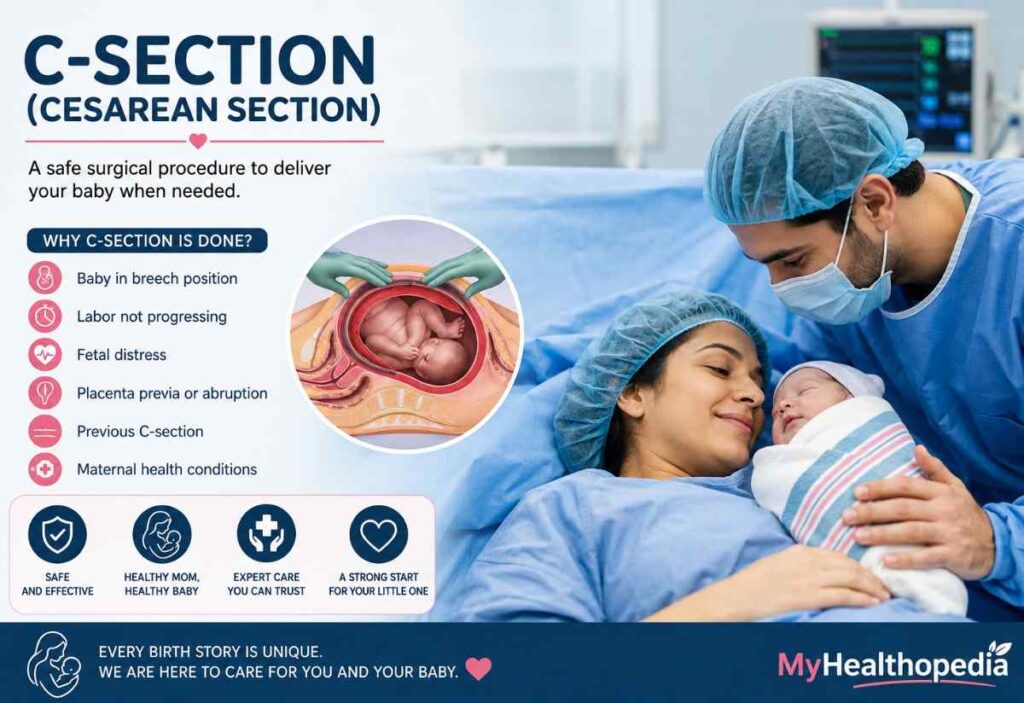

A Cesarean section, commonly called a C-section, is one of the most frequently performed surgical procedures worldwide. While many pregnancies result in vaginal birth, a C-section can be a life-saving procedure for both the mother and baby when complications arise. In some cases, it is planned in advance, while in others, it becomes necessary during labor due to unexpected medical concerns.
Understanding why a C-section is performed, how the procedure works, its benefits, potential risks, and the recovery process can help parents feel more informed and prepared.
This comprehensive guide explains everything you need to know about C-sections using evidence-based information and practical advice.
What Is a C-Section?
A Cesarean section (C-section) is a surgical procedure used to deliver a baby through incisions made in the mother’s abdomen and uterus instead of through the birth canal.
It may be:
- Planned (elective)
- Medically recommended before labor
- Performed as an emergency during labor
Modern C-sections are generally safe when performed by experienced healthcare professionals in a hospital setting.
Quick Facts About C-Sections
| Feature | Details |
|---|---|
| Procedure Type | Major abdominal surgery |
| Typical Duration | 45–60 minutes |
| Baby Delivery Time | Usually within first 5–15 minutes |
| Hospital Stay | 2–4 days |
| Full Recovery | Around 6–8 weeks |
| Anesthesia | Usually spinal or epidural |
| Common Incision | Horizontal bikini-line incision |
| Performed By | Obstetrician and surgical team |
| Suitable For | Planned or emergency delivery |
Why Is a C-Section Needed?
A C-section may be recommended when vaginal delivery may pose risks. Common reasons include:
1. Baby Is in Breech Position
If the baby’s feet or buttocks are positioned to come out first.
2. Labor Is Not Progressing
The cervix stops dilating despite strong contractions.
3. Fetal Distress
The baby’s heart rate suggests insufficient oxygen.
4. Placenta Previa
The placenta covers the cervix, blocking vaginal delivery.
5. Placental Abruption
The placenta separates from the uterus before delivery.
6. Multiple Pregnancy
Twins, triplets, or higher-order multiples sometimes require surgical delivery.
7. Previous C-Section
Depending on the type of uterine incision and other factors.
8. Umbilical Cord Problems
Cord prolapse or compression may require immediate surgery.
9. Large Baby (Macrosomia)
A very large baby may increase delivery complications.
10. Maternal Health Conditions
Examples include severe preeclampsia, uncontrolled diabetes, active genital herpes, or certain heart conditions.
Types of C-Sections
1. Planned (Elective) C-Section
Scheduled before labor begins due to known medical reasons or previous delivery history.
2. Emergency C-Section
Performed urgently after labor starts because of complications affecting the mother or baby.
3. Repeat C-Section
Done when someone has had one or more previous C-sections.
4. Gentle or Family-Centered C-Section
A modified approach that may allow immediate skin-to-skin contact, lowered surgical drapes at birth, and greater parental involvement when medically appropriate.
How Is a C-Section Performed?
The procedure generally follows these steps:
Step 1: Preparation
- Medical evaluation
- IV line placement
- Monitoring
- Consent
- Abdomen cleaned
Step 2: Anesthesia
Most women receive:
- Spinal anesthesia
- Epidural anesthesia
General anesthesia is used only in certain emergencies.
Step 3: Incision
A horizontal incision is usually made just above the pubic hairline.
Step 4: Delivery
The baby is carefully delivered through the uterine incision.
Step 5: Placenta Removal
The placenta is removed after birth.
Step 6: Closing the Incisions
The uterus and abdominal layers are stitched carefully.
Benefits of a C-Section Delivery
1. Can Save Lives
It can prevent life-threatening complications for mother and baby.
2. Prevents Difficult Vaginal Deliveries
Reduces risks associated with obstructed labor.
3. Useful for High-Risk Pregnancies
Provides a safer option for certain medical conditions.
4. Controlled Timing
Planned procedures help healthcare teams prepare.
5. Reduces Birth Trauma
May lower the risk of some birth injuries in selected situations.
6. Helpful for Breech Babies
Avoids complications related to breech vaginal birth.
7. Lower Risk of Emergency Labor Complications
A scheduled procedure can reduce some labor-related emergencies.
8. Protects Babies in Certain Medical Situations
Especially when oxygen supply may be compromised.
9. Allows Specialized Care
Medical specialists can be available when needed.
10. Provides Predictability
Families often appreciate knowing the delivery date for planned procedures.
Possible Side Effects and Risks of a C-Section
Although generally safe, C-sections carry risks because they involve surgery.
1. Infection
Incisions or the uterus may become infected.
2. Bleeding
Blood loss is typically greater than with vaginal birth.
3. Blood Clots
There is an increased risk of deep vein thrombosis (DVT).
4. Anesthesia Complications
Rare allergic or medication-related reactions may occur.
5. Injury to Nearby Organs
The bladder or bowel can rarely be injured during surgery.
6. Longer Recovery
Healing usually takes longer than after vaginal birth.
7. Scar Formation
Internal and external scar tissue may develop.
8. Future Pregnancy Risks
The risk of placenta previa, placenta accreta spectrum, and uterine rupture may increase after prior C-sections.
9. Temporary Breathing Problems in Newborns
Some babies born by C-section may have short-term breathing difficulties.
10. Pain After Surgery
Incisional discomfort is common during recovery.
What Happens Immediately After Birth?
After the baby is delivered:
- Baby’s breathing and heart rate are assessed.
- Skin-to-skin contact is encouraged if possible.
- Breastfeeding can often begin soon after surgery.
- Mother’s vital signs are closely monitored.
- Pain medication is provided as needed.
Recovery After a C-Section
Recovery differs for every individual.
First 24 Hours
- Monitoring
- Pain management
- Walking with assistance
- Fluids and light meals
First Week
- Rest
- Gentle walking
- Incision care
- Adequate hydration
Weeks 2–6
- Increased mobility
- Reduced pain
- Gradual return to daily activities
Around 6–8 Weeks
Most women receive medical clearance after a follow-up examination, though recovery time varies.
C-Section Recovery Tips
- Follow your doctor’s instructions.
- Keep the incision clean and dry.
- Avoid lifting heavy objects.
- Eat a balanced, protein-rich diet.
- Drink plenty of water.
- Walk a little every day.
- Get enough sleep.
- Accept help from family or friends.
- Take medications exactly as prescribed.
- Attend all postpartum appointments.
Foods That Support Recovery
Healthy nutrition promotes healing.
Recommended foods include:
- Lean protein
- Eggs
- Fish (low in mercury)
- Chicken
- Lentils
- Beans
- Fruits
- Leafy green vegetables
- Whole grains
- Dairy products
- Nuts
- Seeds
Limit:
- Highly processed foods
- Excess sugary snacks
- Alcohol (especially if breastfeeding)
- Excessive caffeine
Incision Care Tips
- Wash gently with mild soap and water.
- Keep the incision dry.
- Wear loose clothing.
- Avoid scratching the incision.
- Watch for redness, swelling, pus, or increasing pain.
- Contact your healthcare provider if you notice signs of infection.
C-Section Cost (Average Estimates)
The cost of a Cesarean section varies depending on the country, hospital, doctor, room type, insurance coverage, and whether the procedure is planned or performed as an emergency.
| Country | Estimated C-Section Cost |
|---|---|
| India | ₹40,000–₹2,50,000+ |
| United States | $15,000–$35,000+ (before insurance) |
| United Kingdom | Covered by the NHS when medically necessary; private care typically costs £5,000–£9,000+ |
| Canada | Covered by provincial healthcare plans when medically necessary |
| Australia | Public hospitals are generally covered by Medicare; private hospitals may cost AUD $8,000–$15,000+ depending on insurance and provider |
Factors That Affect C-Section Cost
- Hospital location and reputation
- Government vs. private hospital
- Obstetrician’s fees
- Anesthesia charges
- Operating room charges
- Hospital room type (shared, private, deluxe)
- Length of hospital stay
- Medications and medical supplies
- Newborn care or NICU admission (if needed)
- Emergency versus planned C-section
- Health insurance coverage
Note: These are approximate estimates and can vary significantly based on the city, hospital, individual medical needs, and insurance coverage. Always contact your chosen hospital for an accurate cost estimate.
When Should You Call a Doctor?
Seek medical care immediately if you experience:
- Fever over 100.4°F (38°C)
- Heavy vaginal bleeding
- Severe abdominal pain
- Difficulty breathing
- Chest pain
- Leg swelling or pain
- Foul-smelling discharge
- Redness or drainage from the incision
- Persistent vomiting
- Severe headache with vision changes
Can You Breastfeed After a C-Section?
Yes. Many mothers successfully breastfeed after a C-section.
Helpful positions include:
- Football hold
- Side-lying position
- Laid-back breastfeeding
Pain medication prescribed after surgery is often compatible with breastfeeding, but always confirm with your healthcare provider.
Can You Have a Vaginal Birth After a C-Section (VBAC)?
Some women may be candidates for Vaginal Birth After Cesarean (VBAC).
Eligibility depends on:
- Type of previous uterine incision
- Number of prior C-sections
- Current pregnancy
- Hospital resources
- Overall maternal health
Your obstetrician can help determine whether a trial of labor after cesarean (TOLAC) is appropriate.
Emotional Recovery Matters Too
Physical healing is only part of recovery. Some parents feel disappointed if they had hoped for a vaginal birth, while others feel relieved that a C-section ensured a safe delivery. Hormonal changes, sleep deprivation, and adjusting to life with a newborn can also affect emotional well-being.
Talk to your healthcare provider if you experience persistent sadness, anxiety, overwhelming worry, or symptoms of postpartum depression. Early support from family, friends, counselors, or support groups can make a significant difference.
FAQs
Is a C-section 100% safe?
Yes. A Cesarean section is generally considered a safe procedure when performed by experienced healthcare professionals, although it carries the usual risks associated with major surgery.
Is C-section delivery painful?
You should not feel pain during the surgery because anesthesia is used. However, some pain and soreness are common during the recovery period.
How long does a C-section take?
A Cesarean section usually takes about 45 to 60 minutes, while the baby is often delivered within the first 5 to 15 minutes of the procedure.
Why do doctors recommend a C-section?
A Cesarean section may be recommended due to breech position, fetal distress, placenta previa, prolonged labor, multiple pregnancy, previous C-section, or certain maternal health conditions.
How long does it take to recover from a C-section?
Most women recover within 6 to 8 weeks, although light daily activities can usually be resumed much sooner with medical guidance.
How many days do you stay in the hospital after a C-section?
Most mothers stay in the hospital for 2 to 4 days, depending on their recovery and any medical complications.
When can I walk after a C-section?
Walking is usually encouraged within 12 to 24 hours after surgery, as it helps improve circulation and reduces the risk of blood clots.
Can I climb stairs after a C-section?
Yes, but limit stair climbing during the first few days and move slowly while holding the handrail.
When can I drive after a C-section?
Most healthcare providers recommend waiting about 2 to 6 weeks, depending on your recovery and your ability to brake comfortably.
When can I exercise after a C-section?
Light walking is recommended soon after surgery, while strenuous exercise should usually wait until your healthcare provider approves, often around 6 weeks.
How should I care for my C-section incision?
Keep the incision clean and dry, wear loose clothing, avoid heavy lifting, and watch for signs of infection such as redness, swelling, or discharge.
Does a C-section affect future pregnancies?
Most women have healthy future pregnancies, but previous Cesarean sections may increase the risk of placenta previa, placenta accreta spectrum, adhesions, or uterine rupture in certain cases.
Can I lift my baby after a C-section?
Yes. You can usually lift your newborn, but avoid lifting anything heavier than your baby until your doctor advises it is safe.
How long should I wait before getting pregnant again after a C-section?
Many experts recommend waiting at least 18 to 24 months before becoming pregnant again to allow the uterus adequate time to heal.
Is a C-section more painful than vaginal delivery?
The surgery itself is usually not painful because of anesthesia, but recovery may involve more discomfort than recovery after an uncomplicated vaginal birth.
How many C-sections can a woman have?
There is no fixed limit. However, each additional Cesarean section may increase the risk of surgical complications and placental disorders. Your healthcare provider will discuss individual risks.
What should I avoid eating the night before a C-section?
Avoid solid food for 6–8 hours before surgery and follow your doctor’s fasting instructions.
Which is better: C-section or normal delivery?
A vaginal delivery usually has a quicker recovery, while a Cesarean section is safest when medically needed.
Can I push to poop after a C-section?
Yes, but avoid straining. Stay hydrated and eat fiber-rich foods.
How should I sleep after a C-section?
Sleep on your back or side with pillows for support.
How long does C-section pain last?
Pain improves within 1–2 weeks, with most recovery occurring by 6–8 weeks.
What is the hardest day of C-section recovery?
The second or third day is often the most uncomfortable.
How do I pee after a C-section?
After the catheter is removed, drink fluids and urinate regularly.
How should I sit after a C-section?
Sit slowly with back support and avoid twisting movements.
When can I shower after a C-section?
Usually within 24–48 hours, unless your doctor advises otherwise.
How many stitches are used in a C-section?
The number varies, with internal stitches and skin stitches, staples, or glue used to close the incision.
Why is the C-section injection painful?
The spinal or epidural injection may cause brief discomfort in the lower back.
What should I do the night before a C-section?
Follow fasting instructions, pack your hospital bag, and get plenty of rest.
What clothes are best after a C-section?
Wear loose, soft, high-waisted clothing that doesn’t rub the incision.
Can I wear jeans after a C-section?
Avoid tight jeans until your incision has healed.
Can I wash my clothes after a C-section?
Yes, but avoid lifting heavy laundry during recovery.
When can I wear normal pants after a C-section?
Most women can wear normal pants comfortably after 4–6 weeks.
What fruits should I avoid after a C-section?
No fruits are strictly off-limits unless they cause discomfort or allergies.
Can I eat coconut after a C-section?
Yes. Coconut and coconut water are safe to enjoy in moderation.
Final Thoughts
A C-section is a common surgical birth method that has helped save countless lives. Whether it is planned or performed in an emergency, the primary goal is the health and safety of both mother and baby.
Understanding why a Cesarean section is recommended, what happens during the procedure, and how to recover afterward can reduce anxiety and help families prepare for childbirth. Every birth experience is unique, and the best delivery method is the one that offers the safest outcome based on individual medical circumstances.
Sources / References:
- World Health Organization (WHO)
- American College of Obstetricians and Gynecologists (ACOG)
- MedlinePlus
- Mayo Clinic
- National Health Service (NHS)
About the Author:
Written by: Kirti Solanki – Health Content Researcher
Kirti Solanki is a health content researcher dedicated to creating evidence-based, reader-friendly articles on pregnancy, nutrition, wellness, and preventive healthcare. Her goal is to simplify complex medical information using reliable scientific sources while encouraging readers to consult qualified healthcare professionals for personalized medical advice.
Disclaimer:
This article is intended for educational and informational purposes only and should not replace professional medical advice, diagnosis, or treatment. Always consult your obstetrician, gynecologist, or another qualified healthcare provider regarding pregnancy, childbirth, or any medical concerns.
Also Read: