
Pregnancy is an exciting journey, but it also brings many physical and emotional changes. While most pregnancy symptoms—such as nausea, fatigue, and mild swelling—are completely normal, some signs can indicate a serious health problem that requires immediate medical attention.
Knowing the warning signs during pregnancy can help protect both you and your baby. Acting quickly when something feels wrong may prevent complications and improve pregnancy outcomes.
In this guide, you’ll learn which symptoms are considered emergency warning signs, why they happen, when to seek medical care, and how to maintain a healthy pregnancy.
Why Knowing Pregnancy Warning Signs Is Important?
Every pregnancy is unique. Some women experience very few symptoms, while others notice frequent discomfort throughout pregnancy. However, certain symptoms should never be ignored because they may indicate conditions such as:
- Miscarriage
- Ectopic pregnancy
- Preterm labor
- Preeclampsia
- Placental abruption
- Gestational hypertension
- Infection
- Blood clots
- Reduced oxygen supply to the baby
Early diagnosis often leads to better treatment and healthier outcomes for both mother and baby.
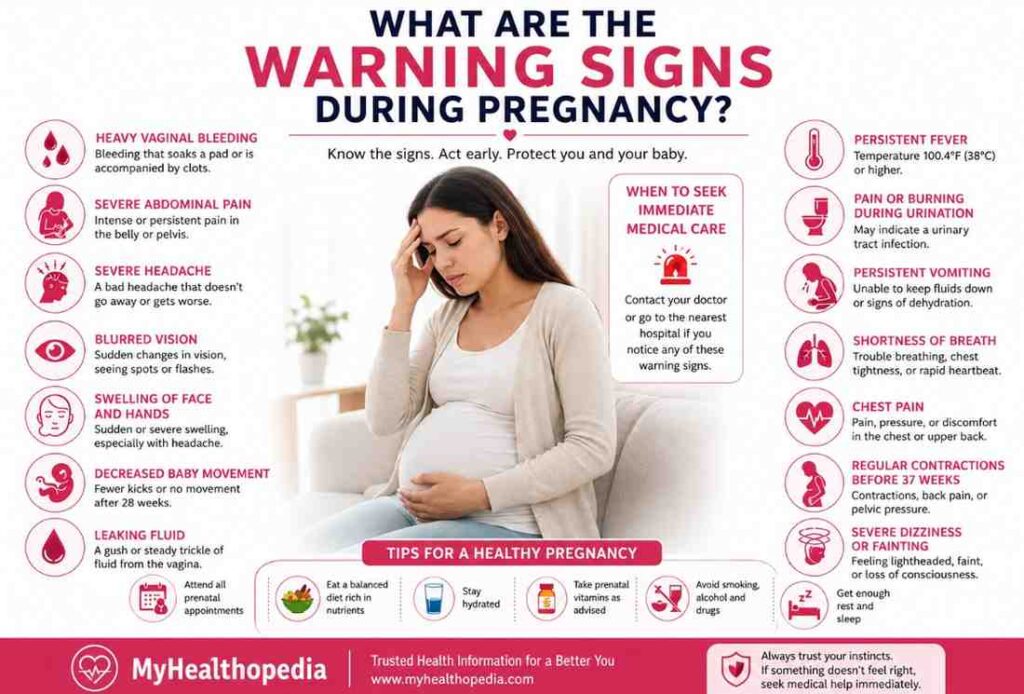
15 Warning Signs During Pregnancy That Need Medical Attention
1. Heavy Vaginal Bleeding
Light spotting can occur during early pregnancy and is not always dangerous. However, heavy bleeding similar to a menstrual period or heavier requires immediate medical evaluation.
It may indicate:
- Miscarriage
- Placenta previa
- Placental abruption
- Preterm labor
- Cervical complications
Seek emergency care if bleeding is accompanied by severe pain, dizziness, or fainting.
2. Severe Abdominal Pain or Persistent Cramping
Mild stretching pains are common as the uterus grows.
Severe or persistent abdominal pain is not normal.
Possible causes include:
- Ectopic pregnancy
- Placental abruption
- Appendicitis
- Gallbladder disease
- Preterm labor
Sudden sharp pain, especially with bleeding or fever, should be evaluated immediately.
3. Severe Headache That Doesn’t Go Away
Occasional headaches are common because of hormonal changes.
However, a severe headache that doesn’t improve after rest or hydration may signal:
- High blood pressure
- Preeclampsia
- Stroke (rare)
Seek urgent care if the headache is accompanied by vision changes or swelling.
4. Blurred Vision or Vision Changes
Temporary blurry vision may occur from fatigue, but sudden vision problems require immediate attention.
Examples include:
- Blurred vision
- Double vision
- Flashing lights
- Loss of vision
- Seeing spots
These symptoms may indicate preeclampsia or dangerously high blood pressure.
5. Swelling of the Face and Hands
Mild swelling in the feet and ankles is common.
Sudden swelling involving the:
- Face
- Hands
- Eyes
may indicate preeclampsia, especially when combined with headache or high blood pressure.
6. Decreased Baby Movement
Most pregnant women begin feeling fetal movements between 18 and 24 weeks.
If you notice:
- Fewer kicks
- No movement
- Significant reduction in activity
contact your healthcare provider immediately.
Reduced fetal movement can sometimes indicate fetal distress.
7. Leaking Fluid from the Vagina
A sudden gush or continuous trickle of clear fluid may mean your water has broken.
Premature rupture of membranes before labor increases the risk of infection and preterm birth.
Always contact your healthcare provider if you suspect leaking amniotic fluid.
8. Persistent Fever
A temperature of 100.4°F (38°C) or higher during pregnancy should never be ignored.
Fever may result from:
- Influenza
- COVID-19
- Urinary tract infection
- Kidney infection
- Other bacterial or viral infections
Untreated infections can affect both mother and baby.
9. Pain or Burning During Urination
Urinary tract infections are common during pregnancy.
Symptoms include:
- Burning while urinating
- Frequent urination
- Pelvic pain
- Blood in urine
- Fever
Without treatment, a simple UTI can progress to a kidney infection and increase the risk of premature labor.
10. Persistent Vomiting
Morning sickness is common, especially during the first trimester.
However, seek medical care if you:
- Cannot keep fluids down
- Vomit continuously
- Lose weight
- Feel dizzy
- Show signs of dehydration
This may indicate hyperemesis gravidarum, a severe form of pregnancy-related nausea.
11. Severe Shortness of Breath
Mild breathlessness can happen as pregnancy progresses.
Seek emergency care if you experience:
- Difficulty breathing
- Chest pain
- Blue lips
- Rapid heartbeat
- Sudden inability to catch your breath
These symptoms could indicate a blood clot, heart problem, or lung condition.
12. Chest Pain
Chest pain during pregnancy is never considered a normal symptom.
Potential causes include:
- Heart disease
- Blood clot in the lungs
- Severe acid reflux
- High blood pressure complications
Always seek emergency evaluation.
13. Regular Contractions Before 37 Weeks
Regular contractions before full-term pregnancy may indicate preterm labor.
Watch for:
- Tightening every few minutes
- Pelvic pressure
- Lower back pain
- Vaginal discharge changes
- Fluid leakage
Early treatment may help delay labor.
14. Severe Itching, Especially at Night
General itching is common because the skin stretches.
However, severe itching without a rash—especially on the palms and soles—may indicate intrahepatic cholestasis of pregnancy.
This liver condition requires medical monitoring because it may increase pregnancy risks.
15. Sudden Dizziness or Fainting
Occasional lightheadedness may occur due to hormonal changes.
Seek medical care if dizziness is:
- Severe
- Recurrent
- Associated with bleeding
- Accompanied by chest pain
- Followed by fainting
This could indicate anemia, internal bleeding, dehydration, or low blood pressure.
Symptoms That Need Immediate Emergency Care
Go to the nearest emergency department or call emergency medical services if you experience:
- Heavy vaginal bleeding
- Severe abdominal pain
- Loss of consciousness
- Difficulty breathing
- Chest pain
- Seizures
- Severe headache with vision changes
- Sudden swelling of the face
- High fever
- No fetal movement after previously feeling regular movement
How to Reduce Pregnancy Complications?
Although not all complications can be prevented, healthy habits can reduce many risks.
1. Attend Every Prenatal Visit
Regular prenatal checkups allow healthcare providers to monitor:
- Blood pressure
- Baby’s growth
- Urine protein
- Blood sugar
- Fetal heartbeat
Early detection often prevents serious complications.
2. Eat a Balanced Diet
Focus on foods rich in:
- Fruits
- Vegetables
- Whole grains
- Lean protein
- Healthy fats
- Calcium
- Iron
- Folate
Proper nutrition supports fetal growth and maternal health.
3. Stay Hydrated
Drink enough water throughout the day to:
- Prevent dehydration
- Support amniotic fluid
- Reduce constipation
- Improve circulation
4. Take Prenatal Vitamins
Prenatal vitamins provide essential nutrients including:
- Folic acid
- Iron
- Vitamin D
- Calcium
- Iodine
Only take supplements recommended by your healthcare provider.
5. Monitor Baby’s Movements
During the third trimester, many providers recommend tracking fetal kicks.
If movements decrease significantly, contact your provider immediately.
6. Avoid Smoking, Alcohol, and Recreational Drugs
These substances increase the risk of:
- Miscarriage
- Birth defects
- Low birth weight
- Premature birth
- Stillbirth
7. Know Your Risk Factors
Women with the following conditions may require closer monitoring:
- High blood pressure
- Diabetes
- Kidney disease
- Heart disease
- Multiple pregnancy
- Previous pregnancy complications
When Should You Call Your Doctor?
Contact your healthcare provider immediately if you notice:
- Bleeding
- Fluid leakage
- Severe headache
- Blurred vision
- Persistent vomiting
- Fever
- Painful urination
- Severe swelling
- Decreased baby movement
- Regular contractions before 37 weeks
- Severe abdominal pain
Never hesitate to seek medical advice if something doesn’t feel right. Trusting your instincts is important during pregnancy.
FAQs
Is spotting normal during pregnancy?
Light spotting can be normal, especially in early pregnancy. However, heavy bleeding or bleeding with severe pain should be evaluated immediately.
How can I tell if my baby is moving less than normal?
If you notice a significant decrease in your baby’s usual movement pattern after 28 weeks, contact your healthcare provider as soon as possible.
Can headaches be normal during pregnancy?
Yes. Mild headaches are common, especially in the first trimester. However, severe headaches that do not improve or are accompanied by vision changes or swelling require immediate medical evaluation.
Is swelling normal during pregnancy?
Mild swelling of the feet and ankles is common. Sudden swelling of the face, hands, or around the eyes may be a sign of preeclampsia.
What should I do if my water breaks before labor starts?
Contact your healthcare provider or go to the hospital immediately, especially if you are less than 37 weeks pregnant.
Can a fever affect my pregnancy?
Yes. A fever of 100.4°F (38°C) or higher may indicate an infection and should be assessed promptly by a healthcare professional.
What are the signs of preterm labor?
Signs include regular contractions before 37 weeks, lower back pain, pelvic pressure, fluid leakage, and changes in vaginal discharge.
Is severe vomiting dangerous during pregnancy?
Yes. Persistent vomiting that causes dehydration or weight loss may be a sign of hyperemesis gravidarum and requires medical treatment.
Can reduced fetal movement be a warning sign?
Yes. A noticeable decrease or absence of fetal movements may indicate fetal distress and should be reported to your healthcare provider immediately.
What causes heavy bleeding during pregnancy?
Heavy bleeding may be caused by miscarriage, placenta previa, placental abruption, or preterm labor and requires immediate medical evaluation.
What are the biggest red flags during pregnancy?
Heavy vaginal bleeding, severe abdominal pain, reduced fetal movement, severe headache, blurred vision, chest pain, and leaking amniotic fluid are among the most important warning signs that require immediate medical attention.
Is abdominal pain always dangerous during pregnancy?
No. Mild stretching discomfort is common, but severe, persistent, or one-sided pain should always be evaluated by a healthcare professional.
How many baby kicks are considered normal?
There is no single “normal” number. Instead, pay attention to your baby’s usual movement pattern. If you notice a significant decrease, contact your healthcare provider.
Final Thoughts
Most pregnancies progress without major complications, but recognizing warning signs can make a critical difference. Heavy bleeding, severe pain, persistent headaches, vision changes, leaking fluid, reduced fetal movement, chest pain, and high fever should never be ignored.
Prompt medical care can help protect both mother and baby and may prevent serious complications. If you ever feel unsure about a symptom, contact your healthcare provider. It is always better to be evaluated than to delay care.
Sources / References:
- American College of Obstetricians and Gynecologists (ACOG)
- Centers for Disease Control and Prevention (CDC)
- National Institute for Health and Care Excellence (NICE)
- World Health Organization (WHO)
- March of Dimes
- Mayo Clinic
About the Author:
Written by: Kirti Solanki (Health Content Researcher)
Kirti Solanki is a Health Content Researcher who creates evidence-based articles on pregnancy, nutrition, and wellness using trusted medical sources to provide accurate and reliable health information.
Disclaimer:
This guide is for informational purposes only and is not a substitute for professional medical advice, diagnosis, or treatment. Always consult your healthcare provider with any pregnancy-related concerns or symptoms.
Also Read: