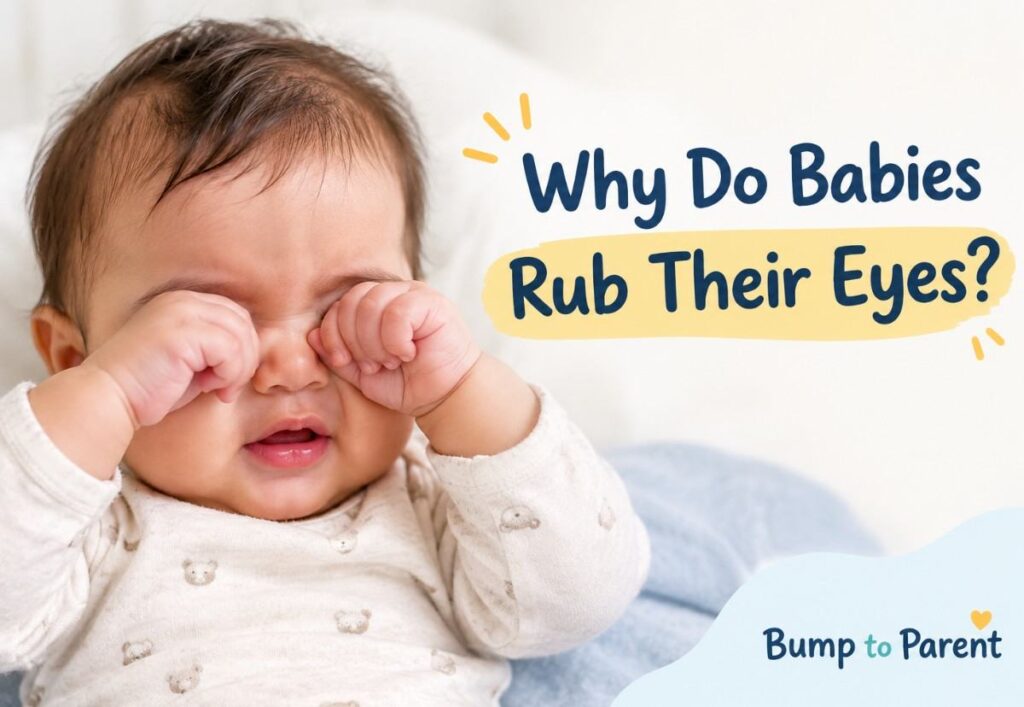

Watching your baby rub their eyes with their tiny hands can be adorable, especially when they are getting ready for a nap. However, if your baby rubs their eyes frequently, you may wonder whether they are tired, uncomfortable, or experiencing an eye problem.
In most cases, eye rubbing is a normal behavior in babies. It often happens when they feel sleepy, overstimulated, or irritated by something around their eyes. Babies also use movements to communicate their needs before they can express themselves with words.
However, persistent eye rubbing, particularly when accompanied by redness, swelling, excessive tearing, or unusual discharge, may indicate an issue that needs medical attention.
Understanding why babies rub their eyes can help you recognize their sleep cues, make them more comfortable, and know when to contact a pediatrician.
Why Do Babies Rub Their Eyes?
Babies commonly rub their eyes because they are tired, sleepy, overstimulated, or experiencing mild irritation. Eye rubbing may also occur because of dry skin, allergies, an eye infection, or something irritating the eye.
The reason often becomes clearer when you observe your baby’s behavior. For example, a baby who rubs both eyes, yawns, and becomes fussy around bedtime is probably tired. A baby who repeatedly rubs one eye while tearing up or showing redness may have irritation that needs attention.
9 Common Reasons Why Babies Rub Their Eyes
1. They Are Feeling Sleepy
One of the most common reasons babies rub their eyes is tiredness. As babies become sleepy, they may rub their eyes, yawn, look away, become fussy, or lose interest in their surroundings.
According to the American Academy of Pediatrics, rubbing the eyes can be one of the signs that an infant has had enough stimulation and needs rest.
What you can do: Watch for your baby’s early sleep cues and begin a calming bedtime routine. Depending on your baby’s age, this may include dimming the lights, reducing noise, feeding if appropriate, and gently rocking them.
2. They Are Overtired
Sometimes, babies rub their eyes because they have stayed awake longer than they can comfortably manage. An overtired baby may become increasingly fussy, cry more, resist settling down, and rub their face or eyes repeatedly.
When babies become overtired, it can be harder for them to settle into sleep. Eye rubbing may become more frequent as they struggle to relax.
What you can do: Try to recognize tiredness before your baby becomes very upset. Offer a quiet environment and follow an age-appropriate sleep routine rather than waiting until your baby is exhausted.
3. Their Eyes Feel Irritated
Dust, smoke, strong fragrances, soap, shampoo, and other environmental irritants can make a baby’s eyes uncomfortable. Babies may respond by rubbing their eyes, blinking frequently, or becoming restless.
If the rubbing begins after a bath, a change of laundry detergent, exposure to smoke, or time in a dusty room, consider whether an irritant could be responsible.
What you can do: Move your baby away from possible irritants. If soap or shampoo has entered the eye, gently rinse it with clean, lukewarm water. Seek medical advice if redness, discomfort, or excessive tearing continues.
4. They Have Dry or Sensitive Skin
Babies have delicate skin that can become dry or irritated, particularly around the eyelids and cheeks. Dryness, eczema, or irritation from skincare products may make the area around the eyes itchy.
Your baby may rub their eyes or cheeks more often if the surrounding skin feels uncomfortable. You might also notice dry patches, flaking, or redness.
What you can do: Use gentle, fragrance-free baby skincare products and avoid applying creams or ointments close to the eyes unless a healthcare professional recommends them. If the skin becomes inflamed, cracked, or persistently itchy, consult your pediatrician.
5. They May Have Allergies
Although eye rubbing alone does not prove that a baby has allergies, itching can be a symptom of an allergic reaction. Allergens such as pollen, dust mites, or animal dander may irritate sensitive eyes.
Other possible signs include watery eyes, redness, sneezing, or a runny nose. Allergic conjunctivitis often affects both eyes.
What you can do: Notice whether symptoms appear after exposure to a particular environment or substance. Avoid suspected triggers when practical and discuss persistent symptoms with your baby’s doctor. Do not give allergy medication or use medicated eye drops without appropriate medical guidance.
6. They Have an Eye Infection
An eye infection, including conjunctivitis (pink eye), can cause discomfort that encourages a baby to rub their eyes. Depending on the cause, the eyes may appear red, watery, swollen, or irritated.
You may also notice yellow or green discharge, crusting around the eyelids, or eyelids sticking together after sleep.
What you can do: Contact your pediatrician if your baby’s eye becomes red or develops unusual discharge. Wash your hands before and after cleaning around the eyes, and use a clean cloth for each eye. Avoid using leftover antibiotic drops or another person’s eye medication.
Redness or discharge in a newborn should be assessed promptly because some newborn eye infections require urgent treatment.
7. They Are Exploring Their Body
Babies gradually discover their hands, fingers, face, and other body parts. Eye rubbing may sometimes be part of this natural exploration.
Young infants do not always have precise control over their movements. They may accidentally touch their eyes while moving their hands around their faces, particularly when sleepy or settling down.
What you can do: If your baby seems comfortable and there are no signs of irritation, simply observe the behavior. Keep their hands clean and their fingernails short to reduce the risk of accidental scratches.
8. They Are Overstimulated
Bright lights, loud sounds, frequent handling, and busy surroundings can sometimes overwhelm a baby. When they need a break, they may look away, become fussy, close their eyes, or rub their face.
Eye rubbing in this situation may be one of several signals that your baby needs less stimulation rather than more attention.
What you can do: Move your baby to a quieter space, soften the lighting, and reduce noise. Give them time to relax before offering another activity.
9. Something May Be in Their Eye
A loose eyelash, dust particle, or other small object can irritate the eye and trigger rubbing, blinking, or tearing. This is particularly worth considering if your baby suddenly starts rubbing only one eye.
An object trapped in the eye or a scratch on the eye’s surface can cause more significant discomfort. Persistent tearing, redness, and sensitivity to light may be warning signs.
What you can do: Do not try to remove an object that appears stuck in the eye, and do not let your baby continue rubbing it. Seek prompt medical assessment if the irritation persists or you suspect an eye injury.
Is It Normal for Babies to Rub Their Eyes?
Yes, occasional eye rubbing is usually normal, particularly when babies are tired or getting ready to sleep.
The important thing is to look at the overall pattern rather than focusing on the movement alone.
Eye rubbing is generally less concerning when your baby:
- Rubs their eyes mainly before naps or bedtime.
- Appears comfortable and behaves normally afterward.
- Has no unusual redness, swelling, or discharge.
- Stops rubbing once they have rested.
Frequent or persistent eye rubbing deserves more attention if it occurs throughout the day, affects mainly one eye, interrupts sleep or feeding, or happens alongside other symptoms.
Why Does My Baby Rub Their Eyes When Tired but Not Sleep?
A baby may rub their eyes when tired but still struggle to fall asleep for several reasons. They may be overtired, overstimulated, uncomfortable, hungry, or in need of reassurance.
Eye rubbing is a sleep cue, not a guarantee that a baby will fall asleep immediately. If your baby seems tired but remains alert or fussy, try reducing stimulation and following a predictable calming routine.
Also check for other sources of discomfort, such as a wet diaper, temperature discomfort, or signs of illness. If your baby repeatedly struggles to settle and appears uncomfortable, discuss the pattern with your pediatrician.
When Should You Worry About a Baby Rubbing Their Eyes?
Eye rubbing alone is usually not an emergency. However, certain accompanying symptoms require prompt medical attention.
Contact a pediatrician promptly if your baby has:
- Persistent redness in one or both eyes.
- Unusual yellow or green eye discharge.
- Swollen or inflamed eyelids.
- Frequent tearing that does not settle.
- Repeated rubbing of only one eye.
- Ongoing discomfort, excessive blinking, or sensitivity to light.
- A persistent change in eye alignment or difficulty following objects appropriate for their age.
Seek urgent medical care if:
- The eyelid becomes very red or significantly swollen.
- Your baby appears to have severe eye pain or cannot tolerate light.
- You suspect an eye injury or a foreign object is lodged in the eye.
- Your baby seems seriously unwell or has other concerning symptoms.
A newborn younger than three months who develops a fever of 38°C (100.4°F) or higher needs immediate medical evaluation. Do not wait to see whether the eye rubbing improves.
How to Stop a Baby From Rubbing Their Eyes
You do not necessarily need to stop occasional eye rubbing when it is a normal sign of tiredness. Instead, focus on identifying the reason and keeping your baby comfortable.
Here are some practical steps:
- Follow sleep cues: Offer naps or bedtime when your baby starts showing signs of tiredness.
- Keep hands clean: Wash your baby’s hands regularly and trim their fingernails carefully.
- Reduce irritation: Keep your baby away from cigarette smoke, dust, strong fragrances, and other suspected irritants.
- Use gentle skincare: Choose mild, fragrance-free products and avoid getting soap or creams in the eyes.
- Clean the eye area gently: If there is mild discharge, use clean gauze or a soft cloth dampened with clean, lukewarm water. Wipe gently without rubbing the eyeball.
- Avoid unprescribed eye drops: Do not use antibiotic, allergy, or redness-relieving drops unless a healthcare professional advises you to do so.
- Observe the pattern: Note when the rubbing happens, whether one or both eyes are affected, and whether other symptoms appear.
If your baby continues rubbing their eyes despite these measures, arrange a medical assessment to identify the underlying cause.
Can Rubbing Eyes Damage a Baby’s Eyes?
Gentle, occasional eye rubbing is unlikely to cause harm. However, frequent or forceful rubbing can irritate the delicate skin around the eyes and may worsen existing inflammation.
Rubbing can also aggravate an eye injury or introduce germs from the hands. If your baby has a stye or another eyelid problem, rubbing may make the irritation worse.
Keep your baby’s hands clean and gently redirect their hands if they are rubbing forcefully. If the behavior is persistent, investigate the cause instead of repeatedly trying to stop the movement.
FAQ’s
Is eye rubbing a sign that a baby is sleepy?
Yes, eye rubbing is a common sleep cue, especially when accompanied by yawning, fussiness, or looking away.
Why does my baby rub their eyes when not sleepy?
Babies may rub their eyes because of dry skin, irritation, allergies, or natural exploration of their faces.
Can teething cause babies to rub their eyes?
Eye rubbing is not a specific sign of teething, although babies may rub their faces when they feel uncomfortable.
Why does my baby rub only one eye?
Rubbing one eye may indicate localized irritation, a loose eyelash, or an eye injury. Persistent rubbing with redness or tearing should be checked by a pediatrician.
Do babies rub their eyes when they have allergies?
Yes, itchy eyes caused by allergies can lead to rubbing, often alongside watery eyes, redness, sneezing, or a runny nose.
Is it normal for newborns to rub their eyes?
Newborns may rub their eyes because they are sleepy or exploring their movements. However, eye redness or discharge in a newborn requires prompt medical assessment.
Why does my baby rub their eyes after waking up?
Babies may rub their eyes after waking because they are still sleepy, adjusting to being awake, or responding to mild irritation. If the rubbing continues or is accompanied by redness or discharge, consult your pediatrician.
Why does my baby rub their eyes while feeding?
Some babies rub their eyes during feeding because they are tired, overstimulated, or ready for a break. If your baby repeatedly rubs one eye or seems uncomfortable while feeding, look for signs of irritation or illness.
Should I stop my baby from rubbing their eyes?
Occasional gentle rubbing associated with tiredness is generally harmless. However, discourage forceful rubbing gently, keep your baby’s hands clean, and seek medical advice if the behavior is persistent or accompanied by other symptoms.
When do babies stop rubbing their eyes?
There is no specific age at which babies stop rubbing their eyes. The behavior may change as they grow, develop better coordination, and learn other ways to communicate tiredness or discomfort. Persistent rubbing should be assessed based on its cause rather than age alone.
Do autistic babies rub their eyes?
Yes, autistic babies may rub their eyes, but this behavior is also common in babies who are not autistic. Eye rubbing alone is not a sign of autism; developmental patterns and other behaviors should be considered.
What age do babies start rubbing their eyes when tired?
Babies may start rubbing their eyes when tired during the first few months of life, although the timing varies. As they grow, eye rubbing may become a more noticeable sign that they need sleep.
Is it normal for a 2-year-old to rub their eyes?
Yes, it is normal for a 2-year-old to rub their eyes occasionally, especially when tired or sleepy. However, frequent rubbing accompanied by redness, itching, swelling, or excessive tearing may indicate irritation or an eye problem that needs medical attention.
Final Thoughts
Babies rub their eyes for many reasons, but tiredness, overstimulation, and mild irritation are among the most common. In many cases, the behavior is simply your baby’s way of showing that they need sleep or a quieter environment.
Pay attention to when the rubbing occurs and whether your baby has other symptoms. Redness, swelling, unusual discharge, persistent tearing, or repeated rubbing of one eye should not be ignored.
Sources and References:
Disclaimer:
This article is for educational purposes only and is not a substitute for professional medical advice, diagnosis, or treatment. Consult your baby’s pediatrician if you have concerns about eye rubbing or other symptoms.
Also Read:



Pingback: Why Do Babies Stick Their Tongue Out? 10 Reasons
Pingback: Why Do Babies Arch Their Back? 10 Causes & When to Worry
Pingback: Why Do Babies Pull Their Ears? 10 Causes & When to Worry